




































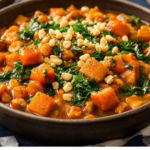





West African Peanut Stew with Vegetables
Prep: 15m Cook: 35 – 40m Total: 50 – 55m Serves: 4 – 6
West African Peanut Stew, often called groundnut stew or maafe, is more than just a dish; it’s a reflection of heritage, trade, adaptation, and community-centered cooking across West Africa.
While peanuts are now a defining ingredient, they were introduced to West Africa between the 16th and 18th centuries through transatlantic trade, eventually becoming a staple crop across regions such as Mali, Senegal, and Ghana. Over time, local cooks transformed ground nuts into rich sauces, combining them with vegetables, meats, and spices to create deeply nourishing stews that could feed families and communities.
Traditionally, peanut stew varies by region:
- In Senegal (maafe), it often includes meat and is served with rice
- In Ghana, it may be thinner and served as a soup
- In Mali, it’s known for its rich, thick consistency and bold flavor
Despite variations, the heart of the dish remains the same: resourceful cooking that transforms simple ingredients into something deeply satisfying and sustaining.
This vegetable-forward version honors that tradition while offering a modern, accessible take that still captures the soul, richness, and balance of the original dish.
Expected Result:
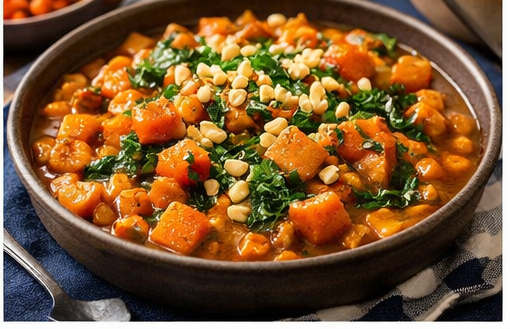
A velvety, peanut-rich stew layered with warm spices, tender vegetables, and a balanced savory-sweet profile, comforting, deeply flavorful, and rooted in tradition with every bite.
Why This Recipe Works
- Peanut butter creates a naturally creamy base without dairy
- Layered aromatics (onion, garlic, ginger) build depth from the start
- Tomatoes add acidity, balancing the richness of peanuts
- Slow simmering allows flavors to develop and meld
- Vegetables absorb the sauce, creating a cohesive dish
This method results in a stew that is balanced, nourishing, and deeply satisfying.
Ingredients
Stew Base
- 2 tbsp olive oil
→ Helps sauté aromatics and build flavor - 1 medium onion, diced
→ Foundation of flavor - 3 cloves garlic, minced
→ Adds depth and aroma - 1 tbsp fresh ginger, grated
→ Adds warmth and brightness
Flavor Base
- 1 can (14 oz) diced tomatoes
→ Adds acidity and balance - 3 cups vegetable broth
→ Forms the liquid base - ¾ cup natural peanut butter (unsweetened)
→ Creates creamy, rich texture
Vegetables
- 2 cups sweet potatoes, peeled and cubed
→ Adds natural sweetness and body - 1 red bell pepper, chopped
→ Adds color and mild sweetness - 2 cups spinach or kale
→ Adds nutrients and texture
Seasoning
- 1 tsp ground cumin
→ Adds earthy depth - 1 tsp smoked paprika
→ Adds warmth and subtle smokiness - ½ tsp cayenne pepper (optional)
→ Adds heat - 1 tsp salt (adjust to taste)
- ½ tsp black pepper
Finish
- 1 tbsp lime juice
→ Brightens the dish - Optional: chopped cilantro or peanuts
Directions
Step 1 – Build the Flavor Base
Heat olive oil in a large pot over medium heat (325–350°F / 163–177°C).
Add diced onion and cook for 4–5 minutes until softened and slightly translucent.
Add garlic and ginger and cook for 1–2 minutes until fragrant.
Why this matters: This step creates the foundation of the stew’s flavor.
—
Step 2 – Add Tomatoes & Spices
Stir in:
- Diced tomatoes
- Cumin
- Smoked paprika
- Cayenne (optional)
Cook for 3–5 minutes, allowing tomatoes to break down slightly.
—
Step 3 – Add Liquid & Peanut Butter
Pour in vegetable broth and stir well.
Add peanut butter and whisk or stir continuously until fully dissolved.
Texture cue: Smooth, creamy broth with no lumps.
—
Step 4 – Add Vegetables
Add:
- Sweet potatoes
- Bell pepper
Bring to a gentle simmer.
—
Step 5 – Simmer the Stew
Reduce heat to low-medium (around 300°F simmer).
Simmer uncovered for 20–25 minutes, stirring occasionally, until:
- Sweet potatoes are fork-tender
- Stew thickens slightly
—
Step 6 – Add Greens
Stir in spinach or kale and cook for 3–5 minutes until wilted.
—
Step 7 – Finish & Adjust
Add lime juice and adjust salt/pepper to taste.
Optional: Add more broth if the stew is too thick.
—
Step 8 – Rest & Serve
Let the stew sit for 5 minutes before serving.
This helps flavors settle and deepen.
—
🔥 Pro Tips
- Use natural peanut butter (no added sugar/oils)
- Stir frequently to prevent sticking
- Adjust thickness with broth as needed
- Let the stew rest before serving for the best flavor
—
⚠️ Common Mistakes to Avoid
- Using sweetened peanut butter → alters flavor balance
- Skipping simmer time → underdeveloped flavor
- Too high heat → burning or splitting sauce
- Not stirring → sticking at the bottom
—
🔄 Variations
- Add chickpeas for extra protein
- Include chicken for a traditional variation
- Make it spicier with chili paste
- Add okra for an authentic texture
🧊 Storage & Reheating
- Cool completely before storing
- Store in an airtight container in the refrigerator for up to 4–5 days
- Freeze for up to 2 months
Note: Flavor deepens over time, often tastes better the next day
Reheating Methods:
Stovetop (Best Method)
- Heat over medium-low heat (300–325°F)
- Stir frequently
- Add water or broth to loosen the consistency
Microwave
- Heat in 1-minute intervals
- Stir between intervals
From Frozen
- Thaw overnight in the refrigerator
- Reheat on the stovetop
⚠️ Avoid
- High heat → sauce separation
- Not stirring → uneven heating
🔁 Pro Tip
Add a splash of broth and stir well while reheating to restore creamy texture.
🍽 Suggested Pairings
- Steamed rice
- Quinoa
- Flatbread
- Roasted plantains
