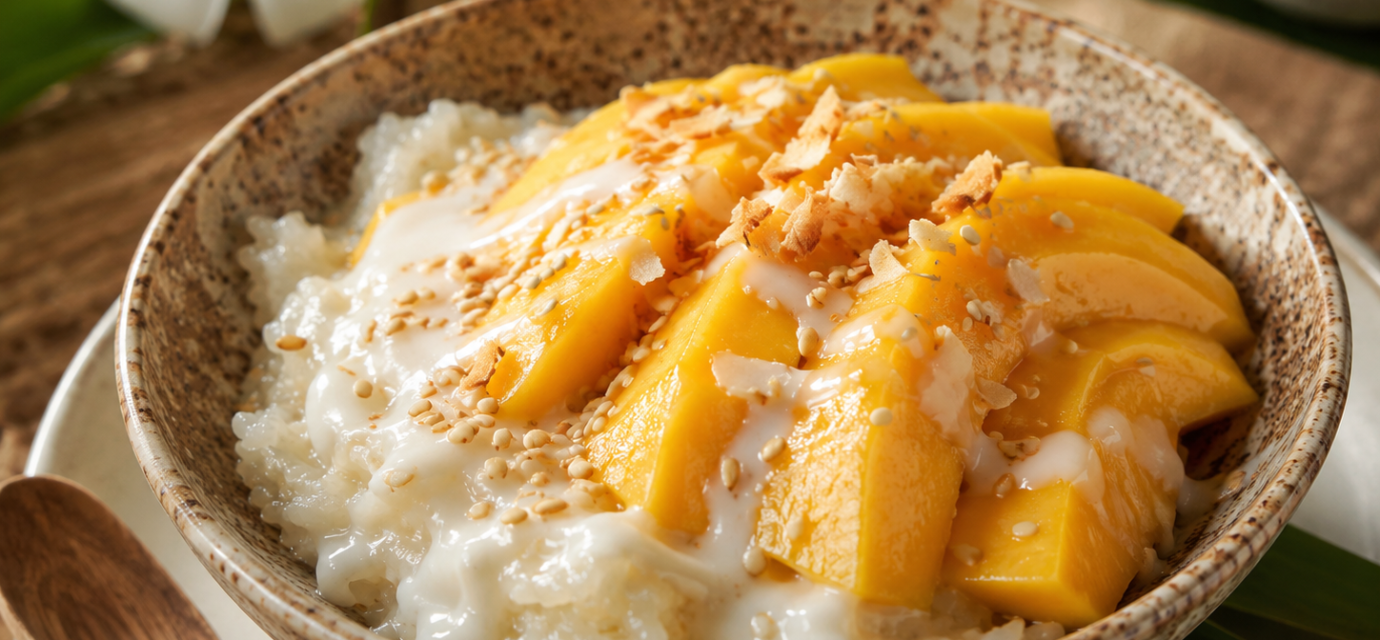
Coconut Mango Rice Pudding with Sweet Sticky Rice
Creamy coconut rice, golden mango, and a tiny pinch of salt can turn a simple dessert into something that feels sunny, comforting, and generous. This Coconut Mango Rice Pudding is inspired by the beloved flavors of Thai mango sticky rice, but written for the home cook who wants a soft, spoonable dessert with a little more pudding-style creaminess.
The beauty of this recipe is in the balance. Coconut milk gives the rice a silky richness, ripe mango brings bright tropical sweetness, and salt keeps the whole dish from tasting flat. Each spoonful should feel creamy, fragrant, lightly chewy, and fresh at the same time.
This is not a heavy custard-style rice pudding. Instead, it leans toward the traditional coconut-and-mango pairing found across Southeast Asian dessert traditions, especially Thailand’s khao niao mamuang, while keeping the texture soft enough to enjoy warm, room temperature, or gently chilled.
Serve it after a family dinner, for a spring or summer gathering, or anytime you want a dessert that feels peaceful, golden, and made with care.
Quick Recipe Snapshot
- Prep Time: 15 minutes, plus 4-8 hours soaking time
- Cook Time: 30-35 minutes
- Total Time: About 45-50 minutes active time
- Servings: 4-6
- Difficulty Level: Easy to moderate
- Best For: Summer desserts, global sweets, family gatherings, make-ahead treats, coconut lovers, and mango season
- Expected Result: Tender, chewy sweet rice coated in warm coconut sauce with juicy mango, a silky pudding-style finish, and a gentle sweet-salty balance.
Why You’ll Love This Recipe
- It uses simple ingredients with beautiful flavor: rice, coconut milk, sugar, salt, and ripe mango.
- The texture is creamy and spoonable without needing eggs or heavy cream.
- It is naturally dairy-free when made with coconut milk and water.
- It honors the coconut-mango rice dessert tradition while staying approachable for home kitchens.
- It can be served warm, room temperature, or chilled.
- It is beautiful enough for guests but comforting enough for a quiet night in.
- The recipe includes safe storage guidance for cooked rice and coconut milk leftovers.
Cultural and Seasonal Background
Coconut mango rice pudding is best understood as a modern, home-kitchen variation inspired by coconut sticky rice desserts rather than a single ancient recipe. In Thailand, mango sticky rice, often called khao niao mamuang, is a treasured dessert made with glutinous rice, coconut milk or coconut cream, sugar, salt, and ripe mango. It is especially loved when mangoes are at their sweetest.
Rice is central to many food cultures around the world, and it holds deep importance across East and Southeast Asia. Encyclopaedia Britannica notes that rice is a major staple for much of the world’s population, including many communities in East and Southeast Asia. Thailand’s landscape also includes fertile central rice fields and tropical growing regions, which help explain why rice and tropical fruit are so important in Thai foodways.
This recipe respects that foundation by using Thai sweet rice, also called glutinous rice or sticky rice. Despite the name, glutinous rice does not mean the rice contains gluten. The word refers to the sticky, cohesive texture created when this type of rice cooks. Traditional mango sticky rice is usually steamed, then folded with sweetened coconut milk and served with mango. This Fly By Eats version keeps that spirit but allows a slightly creamier, pudding-like finish for readers who love rice pudding.
Because culinary history is often shared through homes, markets, and memory before it is written down, it is best to describe this dish with care: Thai-inspired, coconut-rich, mango-forward, and rooted in the broader tradition of sweet rice desserts enjoyed across many cultures.
Why This Recipe Works
The texture begins with the rice. Thai sweet rice has a naturally sticky, chewy quality that makes it ideal for coconut rice desserts. Soaking the rice before cooking helps the grains hydrate more evenly, which leads to a tender center and a better final texture.
Steaming the rice instead of boiling it protects the grain structure. The rice becomes tender and chewy without turning watery. Once the rice is hot, it absorbs the warm coconut sauce like a sponge. This step is important because warm rice takes in flavor more easily than cold rice.
The coconut sauce is simple but powerful. Coconut milk brings fat and richness, sugar adds gentle sweetness, and salt creates balance. Without salt, the dessert can taste one-dimensional. With just enough salt, the mango tastes brighter, and the coconut tastes fuller.
The mango is added at serving time so it stays fresh, juicy, and fragrant. Stirring ripe mango directly into hot rice can make it break down too much, so this recipe keeps the mango mostly on top or lightly folded in right before serving.
Understanding Rice Varieties, Types, and Forms
Ingredients
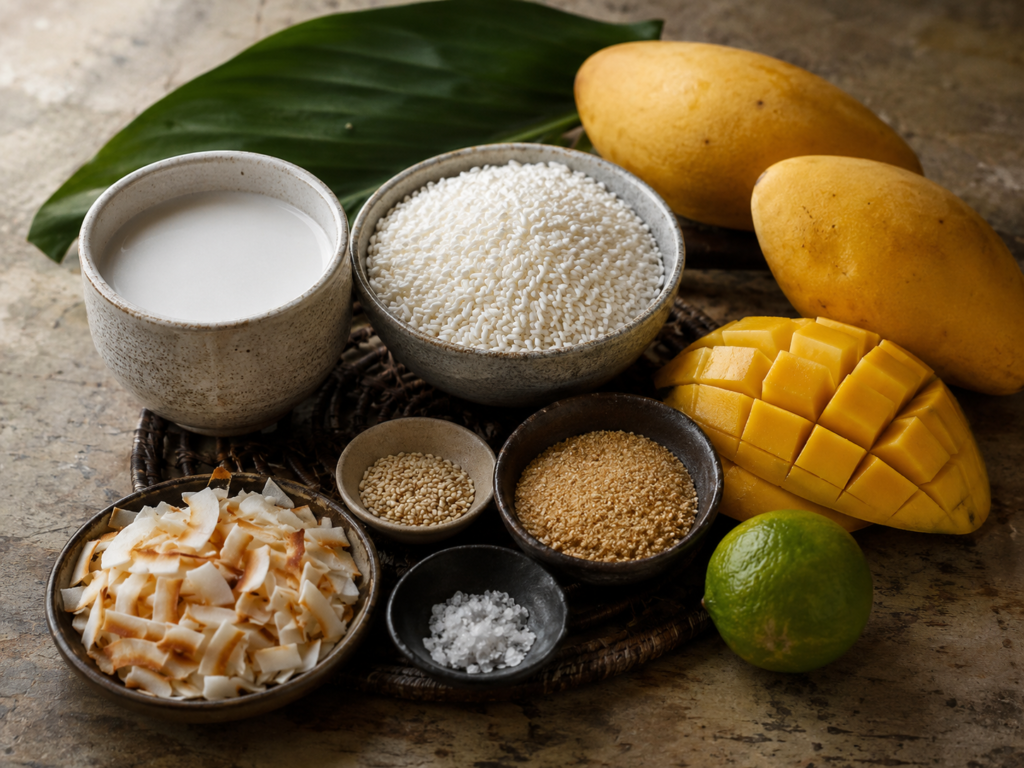
Ingredients for coconut mango rice pudding including sticky rice, coconut milk, mango, sugar, salt, and sesame seeds.
1 ½ cups Thai sweet rice, also labeled glutinous rice or sticky rice
This is the heart of the recipe. It creates the chewy, tender texture associated with coconut sticky rice desserts. Avoid long-grain rice for this version because it will not give the same clingy texture.
Water, for soaking and steaming
Water hydrates the rice before cooking and creates steam. Soaking helps the rice cook evenly.
1 can full-fat coconut milk, 13.5 ounces
Full-fat coconut milk gives the pudding richness, aroma, and body. Shake the can before opening, or stir the thick cream and liquid together.
⅓ cup granulated sugar, plus more to taste
Sugar sweetens the coconut sauce without overpowering the mango. Adjust depending on how sweet your mangoes are.
½ teaspoon fine sea salt
Salt is essential. It balances the sweetness and brings out the coconut flavor.
1 tablespoon cornstarch mixed with 2 tablespoons water, optional
Use this only if you want a thicker, more pudding-like coconut topping. Traditional versions often rely on coconut cream and rice starch, but this option helps home cooks control consistency.
2 large ripe mangoes, peeled and sliced or diced
Ripe mango adds sweetness, fragrance, and freshness. The fruit should give slightly when pressed and smell fragrant near the stem end.
1–2 tablespoons toasted sesame seeds or toasted split mung beans, optional
These add a traditional-style crunch and nutty finish. Sesame seeds are easier to find in most grocery stores.
2 tablespoons toasted coconut flakes, optional
This adds extra texture and coconut aroma.
Fresh lime zest or a small squeeze of lime juice, optional
Lime is not required, but a little zest or juice can brighten the dessert, especially if the mango is very sweet.
Ingredient Notes and Smart Substitutions
For the most traditional texture, use Thai sweet rice or glutinous rice. Sushi rice or short-grain rice can work in a pinch, but the texture will be softer and less chewy. Jasmine rice will taste fragrant, but it will not create the same sticky dessert texture.
Use full-fat coconut milk for the best flavor. Light coconut milk can make the sauce thinner and less rich. Coconut cream can be used for an extra-luxurious topping, but it may need a splash of water to loosen it.
If mangoes are not in season, use thawed frozen mango. Pat it dry before serving so the extra moisture does not water down the coconut rice.
For a vegan version, no changes are needed as long as your sugar is vegan-friendly. This recipe does not use dairy, eggs, or butter.
For a nut-free dessert, avoid adding nut toppings. Sesame seeds are seeds, not tree nuts, but always consider your guests’ allergy needs and check labels for cross-contact warnings.
Equipment You’ll Need
- Medium mixing bowl
- Fine-mesh strainer
- A steamer basket, a bamboo steamer, or a metal sieve that fits over a pot
- Medium saucepan
- Wooden spoon or silicone spatula
- Measuring cups and spoons
- Knife and cutting board
- Airtight storage containers
Step-by-Step Directions
1. Rinse the rice.
Place the sweet rice in a bowl and cover it with cool water. Swirl with your hand, then drain. Repeat 3-5 times, until the water is less cloudy. This removes extra surface starch and helps the rice cook cleanly.
2. Soak the rice.
Cover the rinsed rice with several inches of cool water. Soak for at least 4 hours or overnight. The grains should look slightly swollen and feel less brittle. Soaking helps the rice steam evenly.
3. Drain and prepare the steamer.
Drain the soaked rice well. Line a steamer basket with cheesecloth, parchment with small holes, or a clean, thin kitchen towel if needed. Spread the rice into an even layer so steam can move through it.
4. Steam until tender.
Bring water to a steady simmer in the pot under the steamer. Cover and steam the rice for 25-30 minutes, or until the grains are tender, glossy, and chewy. If the rice still tastes firm in the center, steam for another 5 minutes.
5. Make the coconut sauce.
While the rice steams, combine coconut milk, sugar, and salt in a saucepan over medium-low heat. Stir until the sugar dissolves. Do not boil hard; a gentle steam and small bubbles around the edge are enough. Boiling too aggressively can make coconut milk separate.
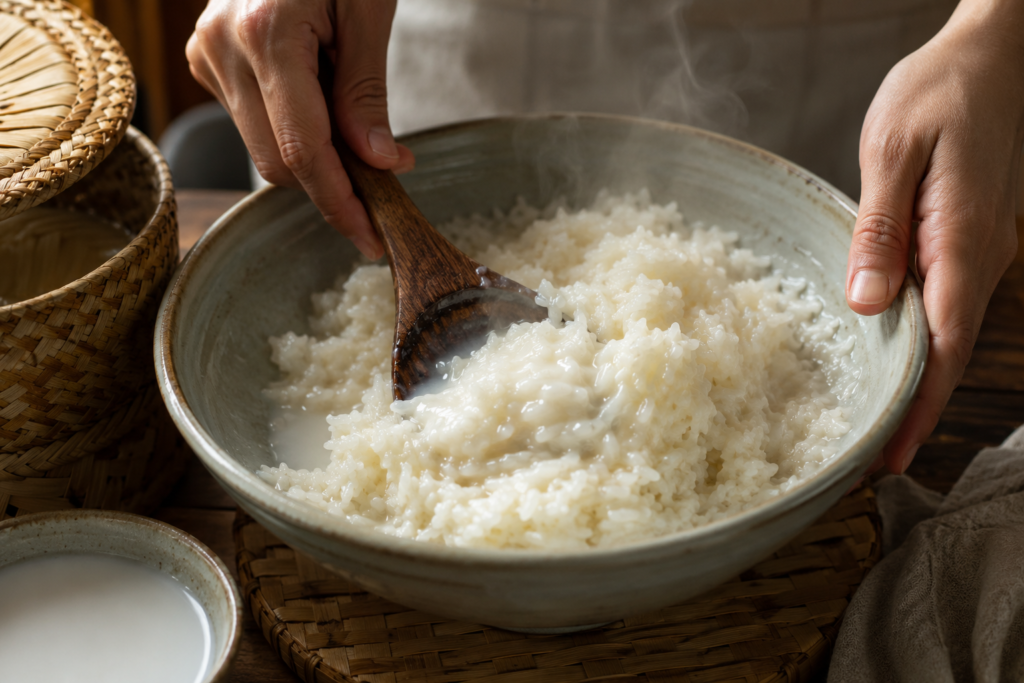
Steamed sticky rice being mixed with warm coconut sauce for coconut mango rice pudding.
6. Reserve a little sauce for topping.
Remove about ½ cup of the warm coconut sauce and set it aside. This will be drizzled over the finished dessert.
7. Fold hot rice with coconut sauce.
Transfer the hot steamed rice to a bowl. Pour the remaining warm coconut sauce over it and gently fold until coated. Cover and let it rest for 15-20 minutes. This resting time allows the rice to absorb the coconut flavor.
8. Thicken the reserved topping, if desired.
For a more pudding-style finish, return the reserved ½ cup coconut sauce to low heat. Stir in the cornstarch slurry and cook for 1-2 minutes, just until glossy and lightly thickened. If it gets too thick, add a splash of water or coconut milk.
9. Prepare the mango.
Peel and slice or dice the mango. Keep it separate until serving so it stays fresh and juicy.
10. Serve.
Spoon the coconut rice into bowls. Add mango on top or alongside. Drizzle with the reserved coconut sauce and finish with sesame seeds, toasted coconut, or toasted mung beans. Serve warm, room temperature, or chilled.
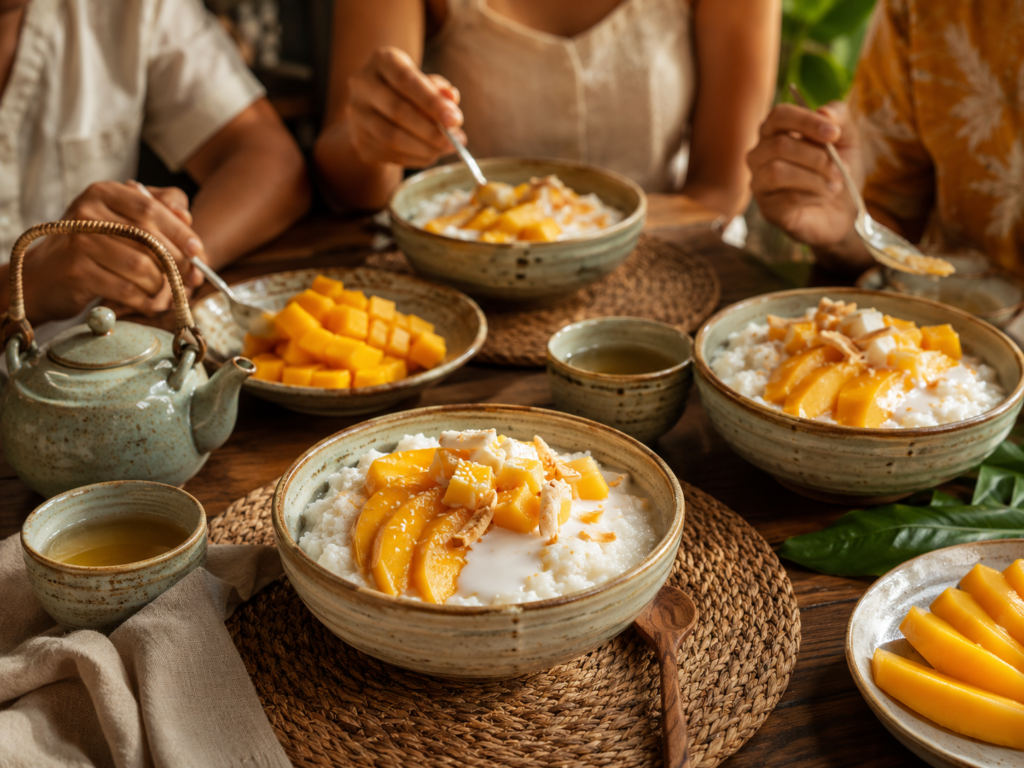
Cozy dessert table with coconut mango rice pudding, mango slices, and jasmine tea.
Pro Tips for Best Results
- Use Thai sweet rice for the best chewy texture.
- Do not skip the soaking step; it helps the rice cook evenly.
- Keep coconut milk at a gentle heat to avoid separation.
- Add salt even if you are making a dessert. It balances the sweetness.
- Let the rice rest after adding the coconut sauce so the grains absorb flavor.
- Use ripe mangoes that smell sweet and give slightly when pressed.
- Store the mango separately if making the dessert ahead.
- For a softer pudding texture, add a little extra warm coconut milk before serving.
- For a thicker topping, use the optional cornstarch slurry.
- Serve in shallow bowls for quick cooling if storing leftovers.
Common Mistakes to Avoid
Using regular long-grain rice:
Long-grain rice cooks fluffy and separate, not chewy and sticky. Use Thai sweet rice when possible.
Skipping the soak:
Unsoaked sticky rice can cook unevenly, leaving hard centers.
Boiling coconut milk too hard:
High heat can cause coconut milk to separate. Use gentle heat.
Adding mango too early:
Hot rice can soften the mango too much. Add mango at serving time.
Forgetting the salt:
Without salt, coconut desserts can taste overly sweet or flat.
Storing in a deep hot container:
Cooked rice should cool quickly. Use shallow containers before refrigerating.
Leaving rice pudding out too long:
Cooked rice and coconut milk are perishable. Refrigerate within 2 hours, or within 1 hour if the room or outdoor temperature is above 90°F.
Flavor Variations
Pandan Coconut Mango Rice Pudding:
Add one pandan leaf to the coconut sauce as it warms, then remove before serving.
Lime Coconut Mango Rice Pudding:
Add lime zest to the topping for a brighter finish.
Cardamom Coconut Mango Rice Pudding:
Add a small pinch of ground cardamom for a gentle South Asian-inspired aroma.
Toasted Coconut Version:
Top each bowl with toasted coconut flakes for extra texture.
Passion Fruit Mango Rice Pudding:
Spoon a little passion fruit pulp over the mango for tart contrast.
Black Sticky Rice Variation:
Use black glutinous rice, but soak it overnight and expect a longer cooking time.
Serving Suggestions
Serve this coconut mango rice pudding in small ceramic bowls with mango fanned across the top. A drizzle of glossy coconut sauce makes it feel elegant without much effort.
For a family-style dessert, spread the coconut rice on a platter, arrange mango slices around it, and sprinkle with sesame seeds or toasted coconut. It looks beautiful for spring brunch, summer dinner parties, or a tropical dessert board.
Pair it with unsweetened iced tea, jasmine tea, ginger tea, or a light citrus drink. If serving after a rich meal, keep the portions small and let the mango bring freshness to the table.
Storage, Freezing, and Reheating
Cooked rice and coconut milk desserts should be handled like perishable leftovers. Refrigerate within 2 hours of cooking, or within 1 hour if the temperature is above 90°F. Store in shallow airtight containers so the rice cools quickly.
Refrigerate the coconut rice for up to 3-4 days. Store mango separately for the freshest flavor and texture. Keep your refrigerator at or below 40°F and your freezer at 0°F.
To reheat, add a splash of coconut milk or water and warm gently on the stovetop over low heat, stirring often. If using the microwave, heat in short intervals, stirring between each one. Reheat leftovers to 165°F if serving hot.
Freezing is possible, but the texture may become firmer or slightly grainy after thawing. Freeze the coconut rice without mango for up to 2 months for the best quality. Thaw in the refrigerator overnight and reheat with extra coconut milk to loosen the texture.
Make-Ahead Tips
You can soak the rice the night before, then drain and steam it the next day. You can also make the coconut sauce one day ahead and refrigerate it in a covered container.
For entertaining, cook the rice and fold it with the coconut sauce a few hours before serving. Keep it refrigerated if making it far in advance, then gently rewarm with a splash of coconut milk. Slice the mango shortly before serving so it stays glossy and fresh.
If serving chilled, portion the coconut rice into small cups, cover, and refrigerate. Add mango, coconut sauce, and toppings just before serving.
Frequently Asked Questions
Is coconut mango rice pudding the same as Thai mango sticky rice?
Not exactly. This recipe is inspired by Thai mango sticky rice, but it is written with a slightly creamier, pudding-style finish. Traditional khao niao mamuang usually uses steamed glutinous rice, sweetened coconut milk, and fresh mango.
What rice is best for coconut mango rice pudding?
Thai sweet rice, also called glutinous rice or sticky rice, gives the best chewy texture. Short-grain rice can work, but it will not be quite the same.
Does glutinous rice contain gluten?
No. The word “glutinous” refers to the sticky texture of the cooked rice, not wheat gluten.
Can I make this recipe without dairy?
Yes. This recipe is naturally dairy-free when made with coconut milk and water.
Can I use canned mango?
Fresh ripe mango is best, but canned mango can work if drained well. Choose mango packed in juice rather than heavy syrup if you want a fresher flavor.
Can I serve this cold?
Yes. It can be served warm, room temperature, or chilled. Chilled sticky rice firms up, so stir in a splash of coconut milk before serving if needed.
Why did my coconut milk separate?
Coconut milk can separate when boiled too hard. Warm it gently over medium-low heat and avoid a rolling boil.
How long can coconut mango rice pudding sit out?
Do not leave it at room temperature for more than 2 hours. If the temperature is above 90°F, refrigerate within 1 hour.
Final Thoughts
Coconut Mango Rice Pudding is the kind of dessert that feels gentle but memorable. It does not need layers of frosting, complicated decorations, or a long list of ingredients to feel special. A bowl of tender rice, warm coconut sauce, and ripe mango can carry its own kind of beauty.
What makes this recipe so comforting is the way it holds contrast. The rice is soft and chewy. The coconut is rich and silky. The mango is bright, juicy, and fragrant. A pinch of salt quietly pulls everything together, reminding us that even sweet dishes need balance.
For Fly By Eats, this is exactly the kind of recipe that belongs at the meeting place of kitchen, culture, and flavor. It invites readers to cook with curiosity, but also with respect. It gives a nod to Thai mango sticky rice and the wider world of coconut rice desserts while still being practical for everyday home kitchens.
Make it when mangoes are golden and fragrant. Make it when you want something cozy but not heavy. Make it when dinner needs a soft landing. And if you share it, serve it slowly. Let the coconut sauce shine, let the mango glow, and let the table feel just a little warmer because something simple was made with care.
Quick Recipe Card
Recipe Name: Coconut Mango Rice Pudding with Sweet Sticky Rice
Description:
A creamy, Thai-inspired coconut mango rice pudding made with sweet sticky rice, warm coconut sauce, ripe mango, and toasted toppings. It is soft, fragrant, lightly chewy, and perfect served warm or chilled.
Prep Time: 15 minutes, plus soaking time
Cook Time: 30-35 minutes
Total Time: About 45-50 minutes active time
Servings: 4-6
Ingredients:
- 1 ½ cups Thai sweet rice, glutinous rice, or sticky rice
- Water, for rinsing, soaking, and steaming
- 1 can full-fat coconut milk, 13.5 ounces
- ⅓ cup granulated sugar, plus more to taste
- ½ teaspoon fine sea salt
- 1 tablespoon cornstarch mixed with 2 tablespoons water, optional
- 2 large ripe mangoes, peeled and sliced or diced
- 1-2 tablespoons toasted sesame seeds or toasted split mung beans, optional
- 2 tablespoons toasted coconut flakes, optional
- Lime zest or a small squeeze of lime juice, optional
Instructions:
- Rinse the sweet rice several times until the water is less cloudy.
- Soak the rice in cool water for at least 4 hours or overnight.
- Drain the rice and spread it in a lined steamer basket.
- Steam over simmering water for 25-30 minutes, until tender, glossy, and chewy.
- In a saucepan, warm coconut milk, sugar, and salt over medium-low heat until dissolved. Do not boil hard.
- Reserve ½ cup of coconut sauce for topping.
- Fold the remaining warm coconut sauce into the hot rice. Cover and rest for 15-20 minutes.
- For a thicker topping, warm the reserved coconut sauce with the cornstarch slurry for 1-2 minutes until glossy.
- Slice or dice the mango.
- Serve the coconut rice with mango, reserved sauce, and optional toppings.
Notes:
- Thai sweet rice gives the best texture.
- Do not skip soaking; it helps the rice cook evenly.
- Add mango at serving time for the freshest flavor.
- Add a splash of coconut milk if the rice thickens too much.
Storage:
Refrigerate leftovers in shallow airtight containers within 2 hours, or within 1 hour if the temperature is above 90°F. Store for up to 3-4 days. Keep mango separate when possible. Reheat with a splash of coconut milk or water until hot, reaching 165°F if serving reheated leftovers.
Nutrition Disclaimer:
Nutrition information, if provided, is an estimate and may vary based on ingredients and preparation methods.
References
- Britannica. (2026, March 31). Rice. Encyclopaedia Britannica. https://www.britannica.com/plant/rice
- Chongchitnant, P. (2025, May 29). Thai mango sticky rice recipe. Hot Thai Kitchen. https://hot-thai-kitchen.com/mango-sticky-rice/
- Gritzer, D. (2026, February 12). Khao niao mamuang (Thai coconut sticky rice with mango) recipe. Serious Eats. https://www.seriouseats.com/thai-coconut-sticky-rice-mango-recipe
- U.S. Department of Agriculture, Food Safety and Inspection Service. (2020, July 31). Leftovers and food safety. https://www.fsis.usda.gov/food-safety/safe-food-handling-and-preparation/food-safety-basics/leftovers-and-food-safety
- U.S. Food and Drug Administration. (2023, January 18). Are you storing food safely? https://www.fda.gov/consumers/consumer-updates/are-you-storing-food-safely
- U.S. Food and Drug Administration. (2024, March 5). Refrigerator thermometers: Cold facts about food safety. https://www.fda.gov/food/buy-store-serve-safe-food/refrigerator-thermometers-cold-facts-about-food-safety
- U.S. Rice Federation. (n.d.). Mango sticky rice. Think Rice. https://www.usarice.com/thinkrice/recipes/mango-sticky-rice
- U.S. Rice Federation. (n.d.). Part II: All about rice: Science, types & nutrition [PDF]. Think Rice. https://www.usarice.com/docs/default-source/thinkrice/rice-in-the-culinary-classroom/part_ii_all_about_rice.pdf