Caribbean Rum Banana Bread: A Sweet Island-Inspired Loaf
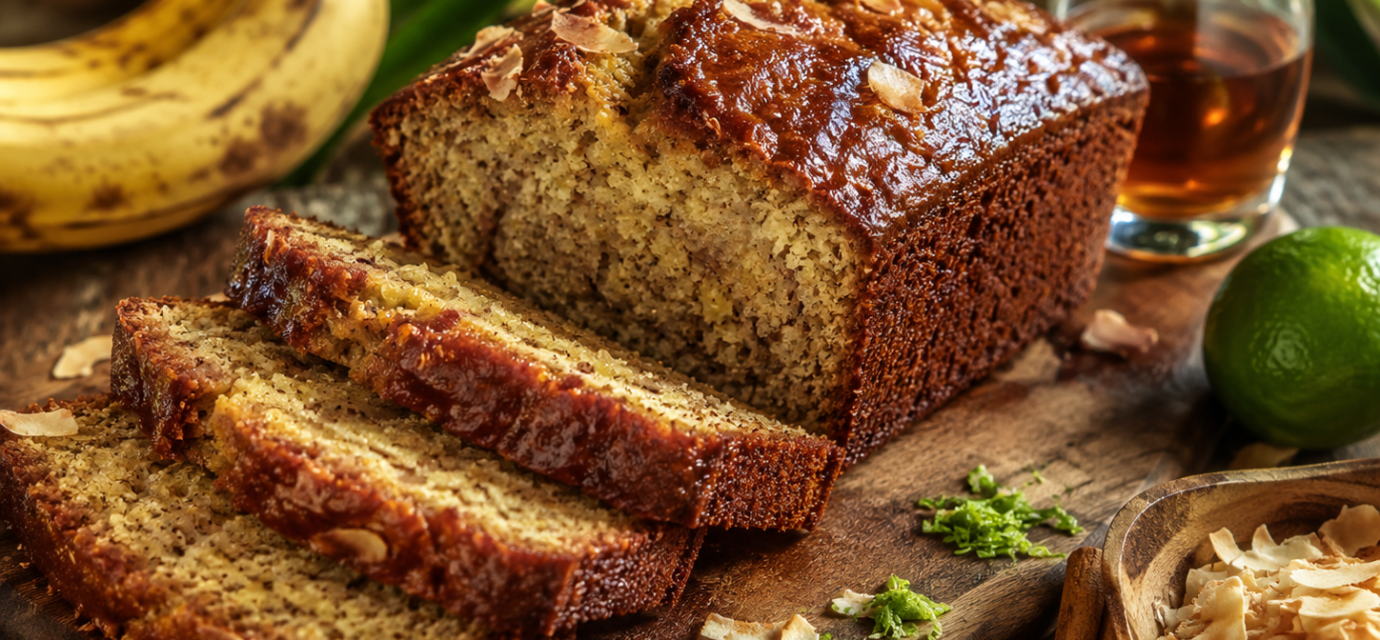
Golden banana bread already has a way of making a kitchen feel softer. Add a little dark rum, brown sugar, warm spice, toasted coconut, and bright lime zest, and the loaf becomes something deeper: still familiar, still easy, but layered with the kind of flavor that makes people pause after the first bite.
This Caribbean rum banana bread is not meant to claim one single island tradition as its own. Instead, it is a respectful Caribbean-inspired quick bread that brings together ingredients with strong ties to tropical kitchens: ripe bananas, sugarcane rum, spice, coconut, and citrus. The result is a tender loaf with caramel-like edges, a moist crumb, and a subtle rum warmth that supports the banana instead of overpowering it.
It is the kind of bake that fits many moments. Slice it for a slow weekend breakfast, set it out with coffee after dinner, wrap it for a neighbor, or serve it beside fresh fruit and tea when family is visiting. The loaf feels comforting, but the flavor has a little sunshine in it.
Quick Recipe Snapshot
- Prep Time: 15 minutes
- Cook Time: 55-65 minutes
- Total Time: 1 hour 10 minutes to 1 hour 20 minutes
- Servings: 8-10 slices
- Difficulty Level: Beginner-friendly
- Best For: Brunch, dessert, holidays, potlucks, tea time, gifting, using ripe bananas
- Expected Result: A moist, tender banana bread with warm spice, caramel notes, a soft crumb, and gentle rum flavor.
Why You’ll Love This Recipe
- It uses very ripe bananas, so the loaf tastes naturally rich and full.
- Dark brown sugar and rum create a warm, caramel-like depth.
- Lime zest brightens the sweetness and keeps the flavor from feeling heavy.
- The recipe is easy enough for beginner bakers but flavorful enough for guests.
- Toasted coconut or nuts add texture without making the loaf complicated.
- It includes alcohol-free substitution notes for readers who avoid rum.
- It stores and freezes well, making it a practical make-ahead treat.
Cultural Roots: Rum, Banana, and the Caribbean Baking Table
Caribbean rum banana bread sits at a meaningful crossroads: it is comforting like a familiar home-baked loaf, but its flavor carries echoes of the Caribbean’s sugarcane fields, spice routes, tropical fruit traditions, and complicated colonial history. The rum in this recipe is not just a flavoring. It points back to sugarcane, molasses, trade, labor, survival, celebration, and the way Caribbean cooks have long transformed humble ingredients into food with depth, memory, and presence.
Rum has a long and layered history across the Caribbean. The Smithsonian National Museum of American History notes that by the early 1600s, sugar planters in the Caribbean were turning sugar-making byproducts into rum. That detail matters because rum was born from molasses, a byproduct of sugar production, and sugar itself became one of the most powerful and painful industries in the Atlantic world. Caribbean sugar plantations generated immense wealth for European planters and merchants, but that wealth was built through the forced labor of enslaved Africans. Because of that, any recipe inspired by rum and sugarcane should be written with care. The goal is not to romanticize the past, but to acknowledge that Caribbean foodways carry both beauty and burden.
That tension is part of what makes Caribbean culinary history so powerful. Across the region, food became a form of creativity under pressure. African, Indigenous, European, South Asian, Chinese, and Middle Eastern influences shaped island kitchens in different ways, depending on the country, migration history, available ingredients, and family tradition. The Caribbean is not one single food culture. Jamaica, Trinidad and Tobago, Barbados, Puerto Rico, Haiti, the Dominican Republic, Cuba, Saint Lucia, Grenada, and many other islands and coastal communities each have their own flavors, stories, and techniques. Still, ingredients like sugarcane, rum, banana, coconut, nutmeg, allspice, citrus, and warm baking spices appear again and again in different forms across the region’s sweet and savory tables.
Bananas also hold an important place in tropical foodways. Encyclopaedia Britannica describes bananas as one of the world’s major fruit crops, grown widely in humid tropical climates. In Caribbean kitchens, bananas and plantains are not used in just one way. Ripe dessert bananas may be eaten fresh, folded into cakes, blended into drinks, or baked into sweets. Plantains and other cooking bananas often show up boiled, fried, roasted, mashed, or stewed, depending on ripeness and regional style. That range matters because it shows how one fruit family can move between breakfast, dinner, dessert, street food, and celebration.
Banana bread itself is best understood as a quick bread, not as a traditional Caribbean black cake, rum cake, pone, sweet potato pudding, or festival bread. That honesty is important. This loaf is not claiming to be a centuries-old island recipe passed down unchanged. Instead, it is a Caribbean-inspired banana bread that respectfully borrows from flavors closely associated with the region: dark rum, brown sugar, ripe banana, lime zest, coconut, cinnamon, nutmeg, and allspice. It carries the ease of a modern home-baked quick bread while nodding to the deeper flavor language of Caribbean sweets.
The beauty of this recipe is in that bridge. It takes something many home cooks already know, banana bread, and gives it a warmer, more soulful flavor profile. The rum brings molasses-like depth. Brown sugar reinforces that caramel note. Lime zest cuts through the sweetness. Coconut adds tropical texture. Nutmeg and allspice create the kind of warmth often found in Caribbean-style holiday baking. Together, those ingredients create a loaf that feels familiar but not ordinary, simple but not flat, sweet but not careless.
So while this Caribbean rum banana bread is not a replacement for traditional Caribbean rum cake or black cake, it can still honor the spirit of island-inspired baking: resourceful, fragrant, generous, and full of layered flavor. It is a reminder that food can be both comforting and complicated, joyful and reflective. A slice of banana bread may seem simple, but when made with respect for the ingredients and the history behind them, even a humble loaf can invite us to taste more thoughtfully.
Why This Recipe Works
A good banana bread needs balance. Too much banana can make the center heavy and damp, while too much flour can make the loaf dry. This recipe uses about 1 ½ cups mashed banana, which gives moisture and flavor without turning the bread gummy.
Melted butter adds richness, while brown sugar helps keep the crumb soft. Baking soda gives the loaf lift, and a small amount of baking powder supports a rounded rise. Warm spices bring out the molasses notes in dark rum, and lime zest adds freshness.
The most important technique is gentle mixing. Quick breads rely on chemical leavening rather than yeast, so once the flour meets the wet ingredients, the batter should be folded only until combined. Overmixing develops gluten, which can make banana bread tough instead of tender.
Ingredients
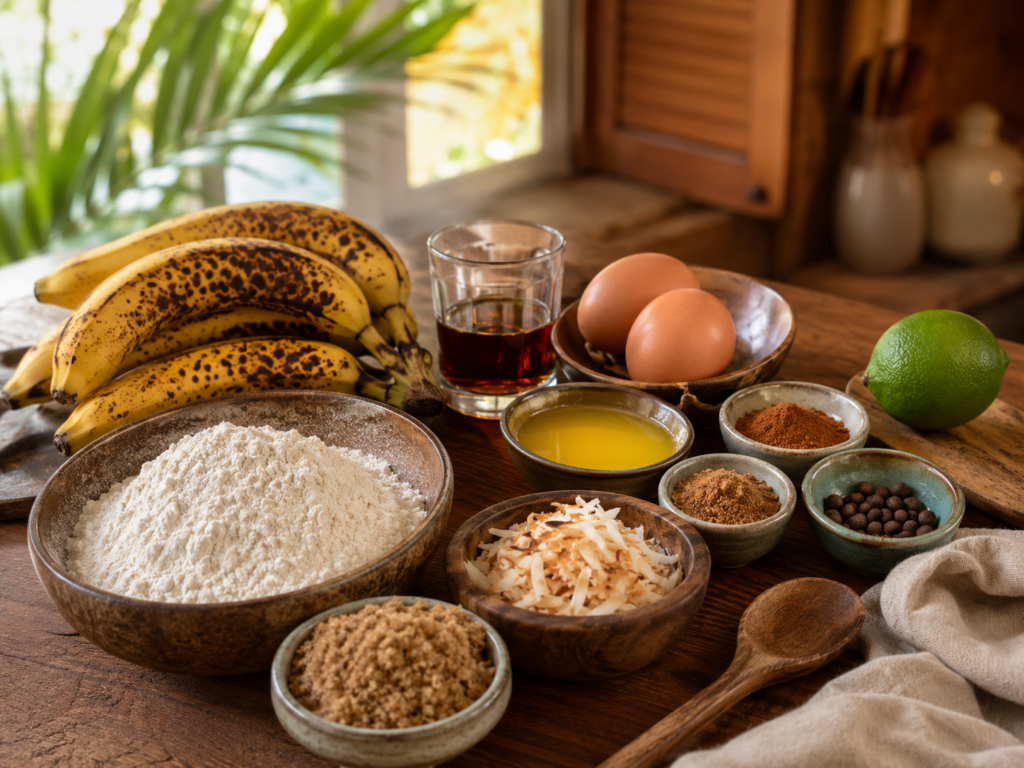
Ingredients for Caribbean rum banana bread with ripe bananas, rum, spices, brown sugar, lime, and coconut
For the Banana Bread
- 1 ¾ cups all-purpose flour
Gives the loaf structure while keeping the crumb soft. - 1 teaspoon baking soda
Helps the bread rise and supports browning. - ½ teaspoon baking powder
Adds extra lift for a lighter, quick-bread texture. - ½ teaspoon fine sea salt
Balances sweetness and brings the banana and spice forward. - 1 teaspoon ground cinnamon
Adds warm, familiar depth. - ¼ teaspoon ground allspice
Brings a Caribbean-inspired warmth that pairs beautifully with rum. - ¼ teaspoon ground nutmeg
Adds a cozy bakery-style aroma. - 3 large very ripe bananas, mashed, about 1 ½ cups
The main source of moisture, sweetness, and banana flavor. - ½ cup unsalted butter, melted and slightly cooled
Adds richness and a tender crumb. - ¾ cup packed dark brown sugar
Gives the loaf a caramel flavor and a deeper color. - 2 large eggs, room temperature
Help bind the loaf and provide structure. - 2 tablespoons dark rum
Adds warm sugarcane depth. Use a good-quality dark or aged rum you enjoy. - 1 teaspoon pure vanilla extract
Rounds out the banana and spice. - 1 teaspoon fresh lime zest
Brightens the loaf and balances the sweetness. - ½ cup toasted unsweetened shredded coconut, optional
Adds tropical flavor and light chew. - ½ cup chopped toasted pecans or walnuts, optional
Adds crunch and a nutty finish.
Optional Coconut-Lime Glaze
- ½ cup powdered sugar
- 1-2 tablespoons lime juice or coconut milk
- Pinch of lime zest
Safe Handling of Raw Produce and Fresh-Squeezed Fruit and Vegetable Juices
Ingredient Notes and Smart Substitutions
- Rum substitute: Use 1 tablespoon non-alcoholic rum extract plus 1 tablespoon milk, coconut milk, or orange juice. You can also use 2 tablespoons of pineapple juice with ¼ teaspoon of vanilla for a softer tropical note.
- Butter substitute: Use melted coconut oil or neutral oil for a slightly different texture. Coconut oil adds more tropical flavor.
- Sugar: Dark brown sugar gives the richest flavor, but light brown sugar works too.
- Coconut: Skip it if you prefer a classic banana bread texture.
- Nuts: Pecans, walnuts, or macadamia nuts all work. Leave them out for a nut-free version.
- Gluten-free option: Use a 1:1 gluten-free baking flour blend designed for quick breads. Texture may vary.
- Dairy-free option: Use coconut oil or a dairy-free baking stick instead of butter.
Equipment You’ll Need
- 9×5-inch loaf pan
- Parchment paper
- Mixing bowls
- Whisk
- Rubber spatula
- Fork or potato masher
- Measuring cups and spoons
- Microplane or zester
- Wire cooling rack
- Toothpick, cake tester, or instant-read thermometer
Step-by-Step Directions
1. Prepare the pan and oven.
Preheat the oven to 350°F. Grease a 9×5-inch loaf pan and line it with parchment paper, leaving a little overhang so the loaf can lift out easily. Preheating matters because quick breads need steady heat to rise properly.
2. Mash the bananas.
Peel the bananas and mash them in a large bowl until mostly smooth with a few small soft pieces. You want about 1 ½ cups of mashed banana. Too many bananas can make the center overly wet, so measure if your bananas are very large.
3. Mix the dry ingredients.
In a separate bowl, whisk together the flour, baking soda, baking powder, salt, cinnamon, allspice, and nutmeg. Whisking helps distribute the leavening evenly so the loaf rises without bitter pockets of baking soda.
4. Combine the wet ingredients.
To the mashed bananas, add melted butter, brown sugar, eggs, rum, vanilla, and lime zest. Whisk until the mixture looks glossy and evenly combined.
5. Fold wet and dry together.
Add the dry ingredients to the banana mixture. Use a rubber spatula to fold gently until no dry streaks remain. Stop as soon as the batter comes together. A few small lumps are fine.
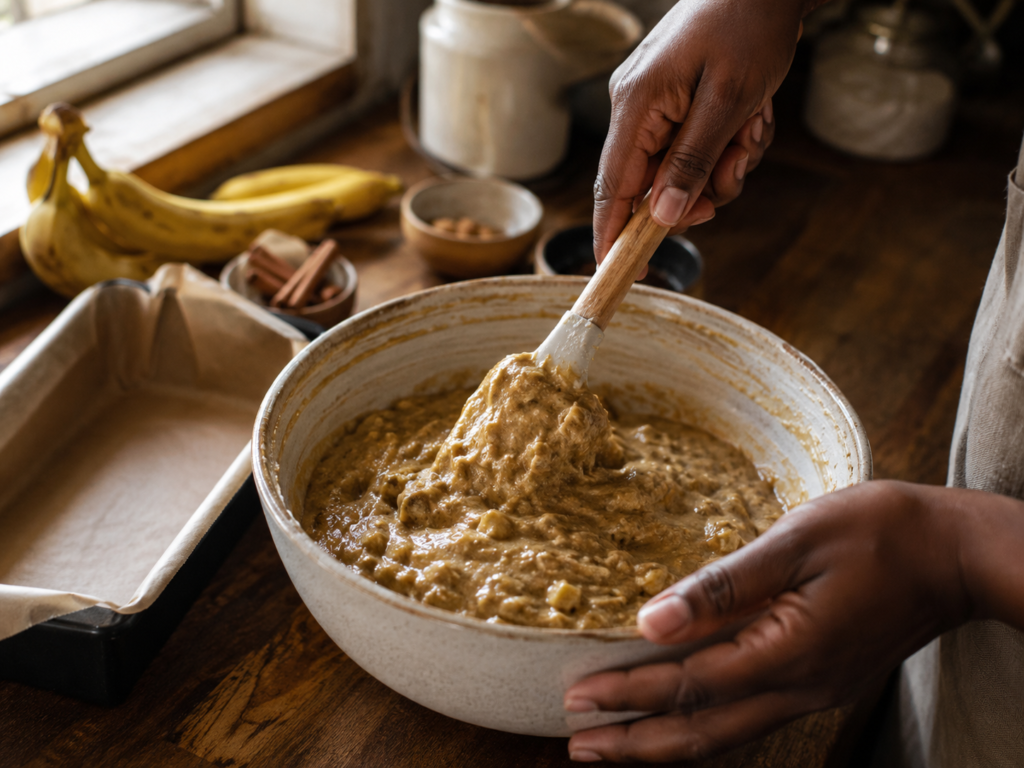
Hands folding Caribbean rum banana bread batter before baking
6. Add coconut or nuts.
Fold in toasted coconut or chopped nuts if using. Toasting them first gives the loaf a better flavor and keeps the texture from tasting flat.
7. Fill the pan.
Scrape the batter into the prepared loaf pan and smooth the top. Tap the pan gently on the counter once or twice to settle the batter.
8. Bake.
Bake for 55-65 minutes, or until the top is deep golden, the center springs back lightly, and a toothpick inserted into the middle comes out clean or with a few moist crumbs. If using a thermometer, the center should be around 200-205°F. If the top browns too quickly, tent it loosely with foil for the final 15-20 minutes.
9. Cool properly.
Let the bread cool in the pan for 15 minutes. Lift it out and place it on a wire rack to cool for at least 45 minutes before slicing. Cooling allows the crumb to set, which helps prevent crumbling or gumminess.
10. Glaze if desired.
Stir powdered sugar with lime juice or coconut milk until smooth. Drizzle over the cooled loaf. For the cleanest slices, let the glaze set before cutting.
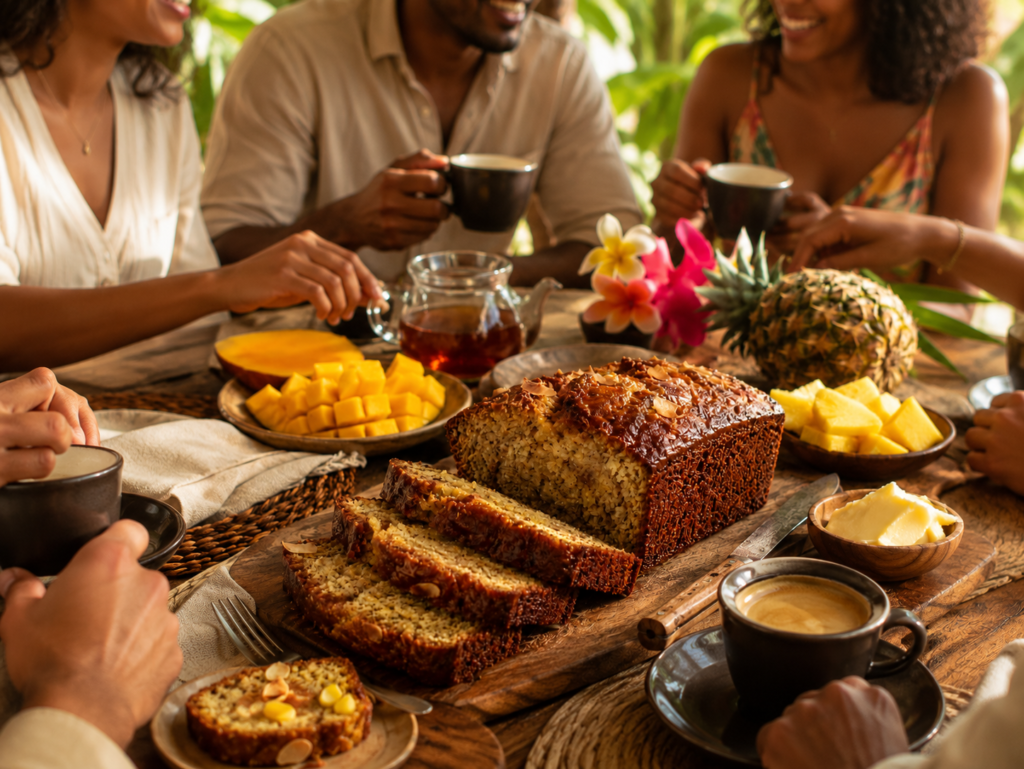
Caribbean rum banana bread served on a cozy brunch table with coffee and tropical fruit
Pro Tips for Best Results
- Use bananas with plenty of brown spots for the best sweetness and aroma.
- Measure flour using the spoon-and-level method, not by scooping directly from the bag.
- Toast coconut or nuts before adding them to deepen the flavor.
- Do not overmix once the flour is added.
- Use dark rum for a richer flavor, not harsh overproof rum.
- Let the loaf cool before slicing so the center sets.
- Bake on the center rack for even heat.
- Tent with foil if the top gets dark before the center is done.
- For cleaner slices, chill the loaf for 20 minutes after cooling.
- Make it a day ahead if possible; banana bread often tastes even better after resting.
Common Mistakes to Avoid
- Using underripe bananas: The loaf will taste bland and less moist. Use spotted or mostly brown bananas.
- Adding too much banana: More is not always better. Too much can create a wet, heavy center.
- Overmixing the batter: This can make the bread dense or rubbery. Fold gently.
- Underbaking: Banana bread may look done before the middle is ready. Test the center.
- Slicing too soon: Hot banana bread can collapse or crumble. Let it cool.
- Using too much rum: More rum can throw off the liquid balance and make the flavor sharp.
- Skipping salt: Salt keeps sweet baked goods from tasting flat.
Flavor Variations
- Coconut Rum Banana Bread: Add toasted coconut and replace butter with melted coconut oil.
- Chocolate Rum Banana Bread: Fold in ½ cup dark chocolate chips.
- Pineapple Banana Bread: Add ⅓ cup well-drained crushed pineapple and reduce mashed banana slightly.
- Ginger-Spice Banana Bread: Add 1 tablespoon finely chopped crystallized ginger.
- Nutty Island Loaf: Use toasted pecans, walnuts, or macadamia nuts.
- Alcohol-Free Tropical Banana Bread: Replace rum with pineapple juice, orange juice, or coconut milk plus a splash of vanilla.
Serving Suggestions
Serve thick slices slightly warm with salted butter, honey butter, or a spoonful of coconut yogurt. For dessert, add whipped cream, caramelized bananas, toasted coconut, or a scoop of vanilla ice cream.
For brunch, pair it with fresh mango, pineapple, berries, coffee, black tea, or chai. For a holiday table, slice it on a wooden board with citrus wedges, toasted nuts, and a small bowl of softened butter. It also makes a thoughtful food gift when wrapped in parchment and tied with kitchen twine.
Storage, Freezing, and Reheating
Let the loaf cool completely before storing. Warm bread trapped in a container can create condensation, which affects texture and may encourage spoilage.
- Room temperature: Store tightly wrapped or in an airtight container for up to 3 days.
- Refrigerator: Store up to 5 days for longer freshness, especially if your kitchen is warm.
- Freezer: Wrap the whole loaf or individual slices tightly and freeze up to 3 months for best quality.
- Reheating slices: Warm in a toaster oven at 300°F for 5-8 minutes or microwave for 10-15 seconds.
- Food safety note: If you add a dairy-based frosting, cream cheese topping, or perishable filling, refrigerate the loaf.
Alcohol note: Baking does not guarantee that all alcohol disappears. Anyone avoiding alcohol for personal, health, religious, pregnancy, recovery, or family reasons should use the alcohol-free substitution.
Make-Ahead Tips
This banana bread is excellent when made one day ahead. Bake it, cool it completely, wrap it tightly, and let it rest at room temperature overnight. The flavor becomes deeper, and the crumb slices more neatly.
You can also mash bananas in advance and refrigerate them in an airtight container for 1 day. For longer storage, freeze mashed bananas in measured portions, then thaw and stir before using.
Frequently Asked Questions
Can I make Caribbean rum banana bread without alcohol?
Yes. Replace the rum with pineapple juice, orange juice, coconut milk, or a non-alcoholic rum alternative. Add a little extra vanilla if you want more warmth.
What kind of rum is best for banana bread?
Dark or aged rum works best because it has deeper molasses, vanilla, and spice notes. Avoid overproof rum, which can taste too strong.
Does the alcohol bake out of rum banana bread?
Not completely. Some alcohol may remain after baking, so use a non-alcoholic substitute if serving anyone who avoids alcohol.
Why is my banana bread gummy in the middle?
It may be underbaked, overmixed, or made with too much banana. Bake until the center tests clean, and let it cool before slicing.
Can I use frozen bananas?
Yes. Thaw them first, then drain off excess watery liquid if needed. Measure about 1 ½ cups of mashed banana.
Can I make this recipe into muffins?
Yes. Divide the batter into a lined muffin pan and bake at 350°F for about 18-24 minutes, depending on size.
Can I add a rum glaze?
You can, but keep in mind that a glaze with uncooked rum will retain alcohol. For a family-friendly option, use lime juice or coconut milk instead.
How do I know when banana bread is fully baked?
The top should be golden, the center should spring back lightly, and a toothpick should come out clean or with a few moist crumbs. An internal temperature of about 200-205°F is a helpful cue.
Final Thoughts
Caribbean rum banana bread is the kind of recipe that reminds us how simple ingredients can carry a lot of feeling. A few ripe bananas on the counter, a spoonful of brown sugar, a warm pinch of spice, and a splash of rum can turn an everyday quick bread into something that feels generous and memorable.
What makes this loaf special is not just the rum. It is the way the flavors work together. The banana gives softness and comfort. The brown sugar brings a caramel-like richness. The lime zest adds brightness. The cinnamon, allspice, and nutmeg give the bread warmth without making it heavy. The rum sits in the background, rounding everything out with a sugarcane depth that feels cozy and grown-up.
It is also a recipe that gives you room to make it your own. Add coconut if you want more tropical texture. Add nuts if you love a little crunch. Keep it plain if you want something simple with coffee. Make the alcohol-free version if that better fits your table. Good home cooking does not have to be rigid to be meaningful.
At Fly By Eats, recipes like this are about more than filling a loaf pan. They are about paying attention to flavor, honoring where ingredients come from, and creating food that feels welcoming. Bake it slowly, let it cool, slice it thick, and share it with someone who could use a little sweetness. Sometimes the most comforting recipes are the ones that feel familiar at first, then surprise you with just enough warmth to make you come back for another slice.
Quick Recipe Card
Recipe Name: Caribbean Rum Banana Bread
Description: A moist Caribbean-inspired banana bread made with ripe bananas, dark rum, brown sugar, warm spices, lime zest, and optional toasted coconut or nuts.
Prep Time: 15 minutes
Cook Time: 55-65 minutes
Total Time: 1 hour 10 minutes – 1 hour 20 minutes
Servings: 8-10 slices
Ingredients
- 1 ¾ cups all-purpose flour
- 1 teaspoon baking soda
- ½ teaspoon baking powder
- ½ teaspoon fine sea salt
- 1 teaspoon ground cinnamon
- ¼ teaspoon ground allspice
- ¼ teaspoon ground nutmeg
- 3 large very ripe bananas, mashed, about 1 ½ cups
- ½ cup unsalted butter, melted and slightly cooled
- ¾ cup packed dark brown sugar
- 2 large eggs, room temperature
- 2 tablespoons dark rum
- 1 teaspoon pure vanilla extract
- 1 teaspoon fresh lime zest
- ½ cup toasted unsweetened shredded coconut, optional
- ½ cup chopped toasted pecans or walnuts, optional
Instructions
- Preheat oven to 350°F. Grease and line a 9×5-inch loaf pan with parchment paper.
- Mash bananas in a large bowl until mostly smooth.
- In another bowl, whisk flour, baking soda, baking powder, salt, cinnamon, allspice, and nutmeg.
- Add melted butter, brown sugar, eggs, rum, vanilla, and lime zest to the bananas. Whisk until combined.
- Fold dry ingredients into wet ingredients just until no dry streaks remain.
- Fold in coconut or nuts if using.
- Pour batter into prepared pan and smooth the top.
- Bake 55-65 minutes, tenting with foil if needed, until the center tests done.
- Cool in the pan for 15 minutes, then transfer to a wire rack. Cool before slicing.
Notes
- Use very ripe bananas for the best flavor.
- Do not overmix the batter.
- For an alcohol-free version, replace rum with pineapple juice, orange juice, coconut milk, or non-alcoholic rum alternative.
- Baking does not guarantee all alcohol is removed.
Storage
Store tightly wrapped at room temperature for up to 3 days, refrigerate up to 5 days, or freeze slices up to 3 months for best quality.
Nutrition Disclaimer: Nutrition information, if provided, is an estimate and may vary based on ingredients and preparation methods.
References
- Encyclopaedia Britannica. (2026). Banana. https://www.britannica.com/plant/banana-plant
- Encyclopaedia Britannica. (2026). Plantain. https://www.britannica.com/plant/plantain
- Smithsonian National Museum of American History. (n.d.). Rum. Smithsonian Institution. https://americanhistory.si.edu/explore/exhibitions/on-the-water/online/living-atlantic-world/new-tastes-new-trades/rum
- Smithsonian National Museum of American History. (n.d.). The sugar trade. Smithsonian Institution. https://americanhistory.si.edu/explore/exhibitions/on-the-water/online/living-atlantic-world/new-tastes-new-trades/sugar-trade
- U.S. Department of Agriculture, Agricultural Research Service. (2020). Nutrient retention factors. https://www.ars.usda.gov/northeast-area/beltsville-md-bhnrc/beltsville-human-nutrition-research-center/methods-and-application-of-food-composition-laboratory/mafcl-site-pages/nutrient-retention-factors/
- U.S. Department of Agriculture, Food Safety and Inspection Service. (2020). Leftovers and food safety. https://www.fsis.usda.gov/food-safety/safe-food-handling-and-preparation/food-safety-basics/leftovers-and-food-safety
- U.S. Food and Drug Administration. (2024). Selecting and serving produce safely. https://www.fda.gov/food/buy-store-serve-safe-food/selecting-and-serving-produce-safely
- Utah State University Extension. (2024). What is quick bread? 6 tips for baking the perfect loaf every time. https://extension.usu.edu/createbetterhealth/blog/whatisquickbread