Hanoi’s Bowl Worth the Wait: Why Phở Gia Truyền Still Owns the Sidewalk
Some meals ask you to sit down and be impressed.
Others ask you to stand in line first.
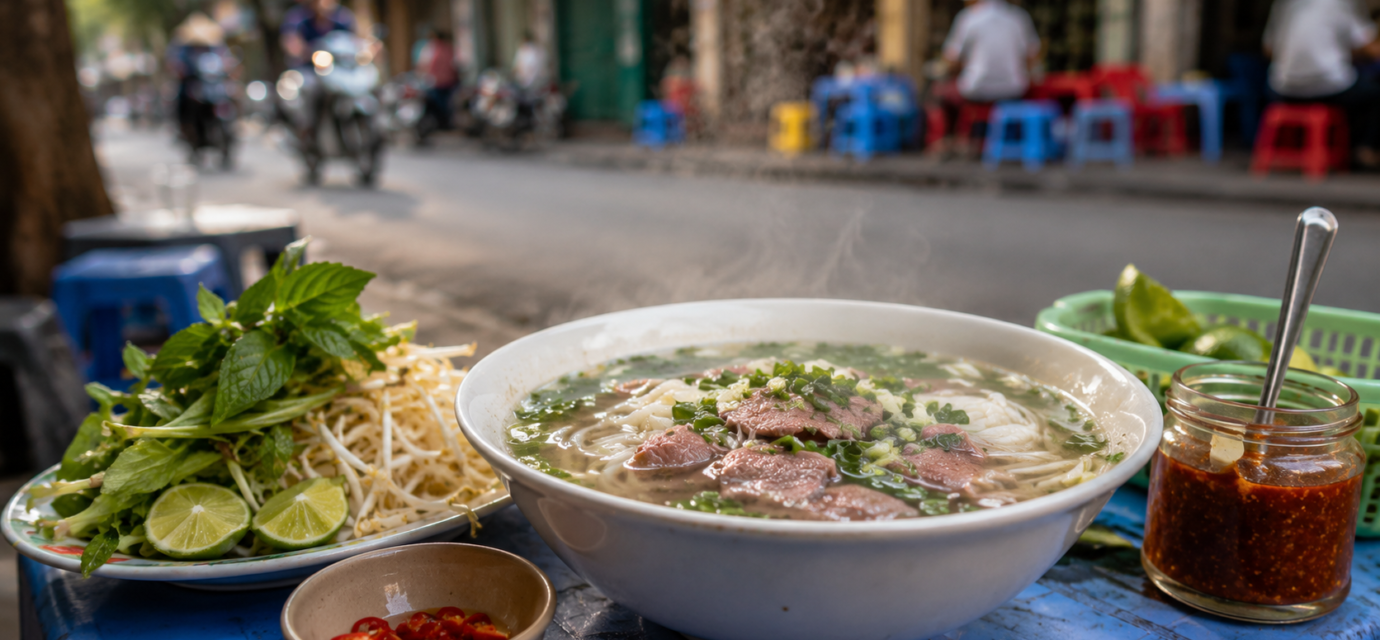
At Phở Gia Truyền Bát Đàn, the line is not a flaw in the experience. It is the first chapter. You arrive on Bát Đàn Street in Hanoi’s Old Quarter, and before the broth even reaches your hands, you feel the rhythm of the place: motorbikes slipping past, diners leaning over hot bowls, cash moving quickly at the counter, and steam rising into the morning air like the restaurant is breathing.
This is not a restaurant built around luxury. It is built around trust.
Located at 49 Bát Đàn Street in Hoàn Kiếm, Hanoi, Phở Gia Truyền is listed by the MICHELIN Guide as a Bib Gourmand restaurant, a distinction given for good quality and good value cooking. MICHELIN also describes it as one of Hanoi’s iconic eateries and notes its Northern-style beef phở options, including rare flank, medium-rare round, and well-done brisket.
But what makes Phở Gia Truyền special is not just recognition. It is the feeling that the bowl has not been overly polished for visitors. The shop still carries a no-nonsense charm: order, pay, pick up your bowl, find a seat, eat while it is hot, and understand why people keep coming back.
This is Hanoi in a bowl: practical, soulful, direct, and quietly unforgettable.
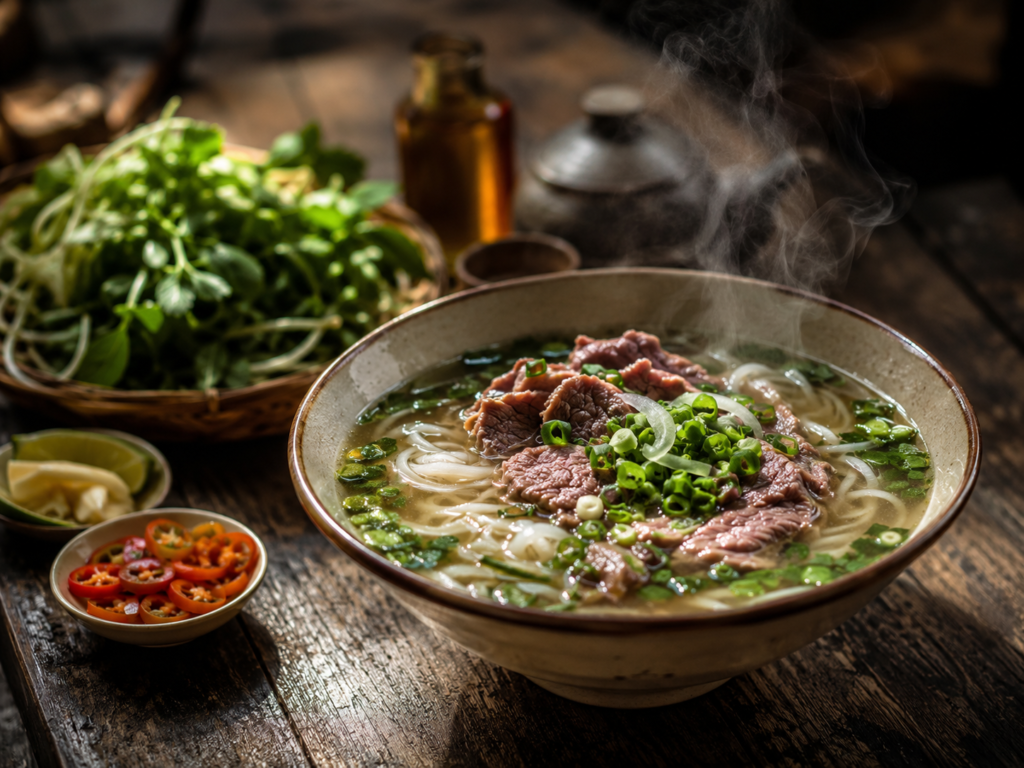
Bowl of Northern Vietnamese beef phở
The First Lesson: Let the Broth Speak
A great bowl of phở does not need to shout.
At Phở Gia Truyền, the broth is the center of everything. It is clear, deeply savory, and built to be tasted slowly. Not heavy. Not overly sweet. Not crowded with too many distractions. Just warm, beefy, aromatic depth.
That restraint is one of the signatures of Northern Vietnamese phở. Compared with the more herb-heavy, sauce-friendly bowls many travelers associate with Southern Vietnam, Hanoi-style phở often feels more disciplined. It leans into the stock, the noodles, the beef, and a few well-chosen garnishes rather than turning the table into a full condiment garden.
Vietnam’s official tourism site traces phở’s history to the late 19th century, noting that French colonial demand increased beef availability in Vietnam and helped create a surplus of beef bones that vendors used to deepen broth. Serious Eats also explains that phở is generally understood to have emerged in northern Vietnam between the late 19th and early 20th centuries, though its exact origin remains debated.
That history matters here because Phở Gia Truyền does not feel like a trend. It feels like a living memory.
Every spoonful carries the patience of bones simmered down, aromatics softened into the stock, and beef sliced thin enough to become part of the broth’s rhythm. It is not flashy food. It is a focused food.
And sometimes, focus is what makes a meal powerful.
The History of Pho in 10 Facts | Mental Floss
The Sidewalk Is Not a Waiting Room: It Is Part of the Story
One of the biggest mistakes visitors can make is judging Phở Gia Truyền by comfort alone.
Yes, you may wait. Yes, the seating can feel tight. Yes, you may need to carry your own bowl. Yes, the service is fast and practical rather than soft and chatty. But that is exactly where the character lives.
Flavors of Hanoi describes Phở Gia Truyền as a well-known Old Quarter stop at 49 Bát Đàn Street, with morning and evening service hours listed as 6:00–10:00 and 17:00–21:30. Because small restaurants can change hours, travelers should still verify current times before visiting.
The self-service rhythm is part of the identity. You order at the counter. You pay. You receive your bowl. You look for space. You sit beside strangers. You eat before the noodles soften too much.
There is something honest about it.
No one is trying to turn the meal into a performance, yet the whole place feels theatrical in its own way. The counter is the stage. The broth pot is the spotlight. The line outside is the audience waiting for their turn.
And when your bowl arrives, everything gets quiet.
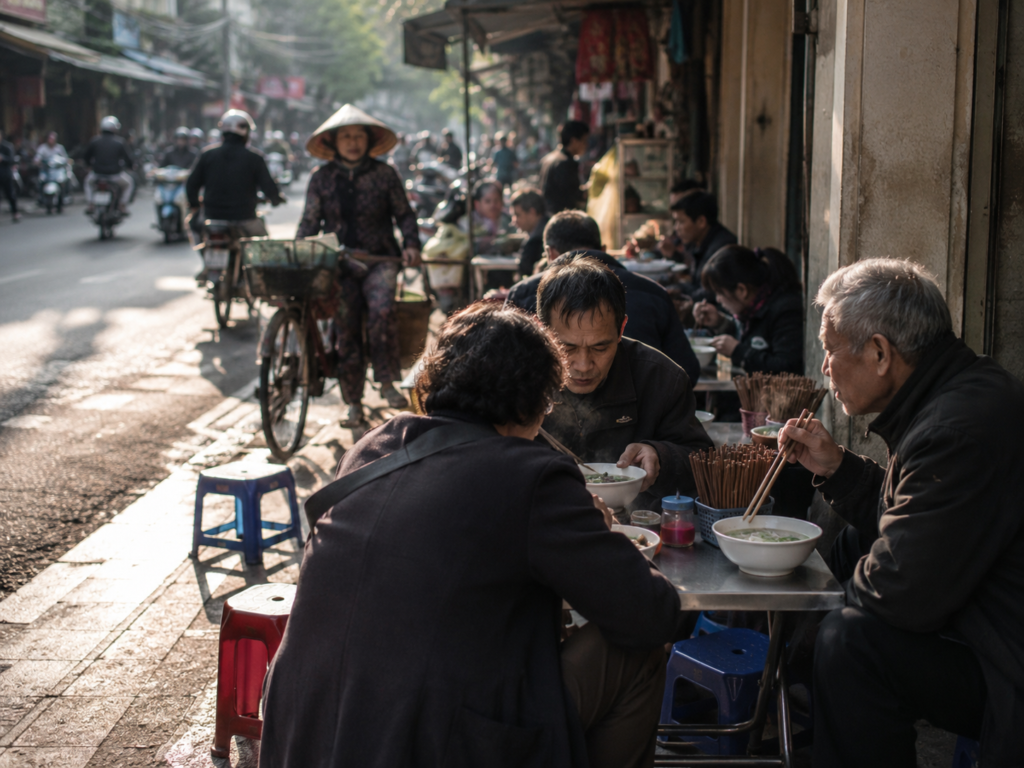
Diners waiting outside Phở Gia Truyền Bát Đàn in Hanoi’s Old Quarter.
What to Order at Phở Gia Truyền
The menu is beautifully simple, which is one reason the restaurant feels so confident.
MICHELIN notes three main beef options: rare flank, medium-rare round, and well-done brisket. Diners can also add crispy quẩy, a fried dough stick often dipped into the broth, or a golden egg yolk for extra richness.
For first-time visitors, here is a simple ordering guide:
Tái – rare or lightly cooked beef, tender and delicate.
Chín – well-done beef or brisket, comforting and fuller in texture.
Tái nạm – a mix of rare and well-done beef, ideal if you want contrast.
Quẩy – crispy fried dough for dipping into the broth.
Trứng gà – egg yolk, for a richer, silkier bowl.
A great first order is tái nạm with quẩy. It gives you tenderness, chew, crunch, broth, noodles, and warmth in one balanced experience.
Do not over-season immediately. Taste the broth first. That first spoonful tells you what the kitchen intended.
Then, if needed, add a small touch of chili, lime, or vinegar to brighten the bowl without overpowering it.
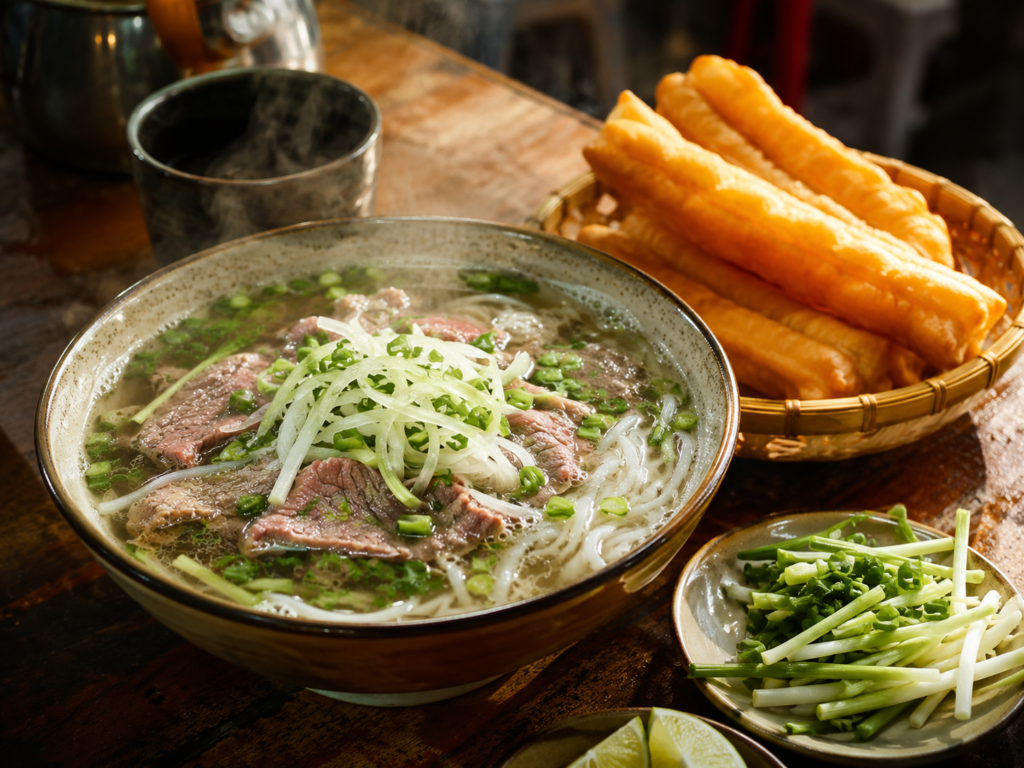
Hanoi beef phở with crispy quẩy
Why This Bowl Feels Different From Many Other Bowls of Phở
The magic of Phở Gia Truyền is not that it reinvents phở.
It does the opposite.
It reminds you why the original idea is still enough.
The bowl is not trying to be modern, oversized, fusion-driven, or social-media perfect. It is trying to be correct. That is a different kind of beauty. The broth is clear but layered. The noodles are soft but not lost. The beef brings body without making the bowl feel heavy. The scallions give freshness. The condiments are there if you need them, but the bowl does not depend on them.
That kind of restraint can feel almost radical in a food world that often rewards excess.
At Phở Gia Truyền, more is not always better. Better is better.
Better broth. Better timing. Better balance. Better memory.
This is the type of meal that proves comfort food does not have to be complicated to be profound.
Phở Bò Bát Đàn Gia Truyền Thơm Ngon Nồi Nước Dùng Hầm Xương Liên Tục Khách Đông Kín Chổ
A Bowl That Teaches You How to Travel Better
Some travelers visit famous food places only to say they have been there.
Phở Gia Truyền asks for something more.
It asks you to observe.
Watch how locals move through the line. Watch how quickly bowls are assembled. Watch how little people talk once they start eating. Watch how the sidewalk becomes a shared dining room. Watch how strangers make space, finish their bowls, and leave so the next person can sit.
There is humility in eating this way.
You are not the center of the experience. The bowl is. The place is. The rhythm is.
That is what makes street food so meaningful when it is done well. It is not only about flavor. It is about entering a city’s everyday life without asking it to rearrange itself for you.
At Phở Gia Truyền, the lesson is simple: respect the line, respect the broth, respect the pace.
Hanoi will meet you there.
Visitor Tips Before You Go
Address: 49 Bát Đàn Street, Hoàn Kiếm, Hanoi, Vietnam.
Best time to visit: Early morning for the classic Hanoi breakfast feeling, or early evening before peak dinner crowds.
Bring: Cash, patience, and a willingness to move with the flow.
Best order for first-timers: Tái nạm with quẩy.
Good to know: MICHELIN lists the restaurant as cash only, so do not rely on card payment.
Best for: Travelers who want authentic local rhythm, simple food done well, and a memorable Old Quarter food stop.
Not ideal for: Diners looking for a quiet, spacious, slow-service restaurant experience.
Why Phở Gia Truyền Still Owns the Sidewalk
A lot of restaurants become famous because they change with the times.
Phở Gia Truyền feels famous because it has resisted changing too much.
The shop still feels direct. The bowl still feels honest. The line still feels earned. And the sidewalk still feels like the right place to understand why Hanoi’s food culture has such a deep hold on people.
This is not the kind of meal you remember because everything was comfortable.
You remember it because everything felt alive.
The heat of the bowl. The movement of the line. The sound of the street. The first spoonful of broth. The small stool. The stranger sitting beside you. The way the noodles disappear faster than you expected.
And then, somewhere between the last sip and the moment you stand up, you realize why people wait.
Because some bowls are not just eaten.
They are witnessed.
Fly By Eats Reflections: What a Bowl of Phở Teaches Us About Place, Patience, and Respect
Phở Gia Truyền is more than a famous bowl in Hanoi. It is a reminder that food does not have to be dressed up to be meaningful. Sometimes, the deepest meals are the ones served without ceremony, without explanation, and without trying to impress anyone who has not yet learned how to listen.
A bowl of phở may appear simple at first glance: broth, noodles, beef, scallions, and steam. But in Hanoi, simplicity is not emptiness. It is discipline. It is memory. It is the result of generations learning what to leave in, what to leave out, and how to let a few ingredients carry the weight of a whole city’s rhythm.
At Phở Gia Truyền, the line outside is part of the lesson. It asks you to slow down before you eat. It asks you to notice the people around you, the way locals move through the space, the way the staff keep the bowls coming, and the way the sidewalk becomes a shared table. This is not a place that rearranges itself for visitors. Instead, it invites visitors to step respectfully into its pace.
That matters.
Travel food is not just about finding the “best” dish or the most famous restaurant. It is about understanding that every bowl comes from somewhere. It comes from a neighborhood, a family tradition, a regional style, a history of migration, work, adaptation, and care. When we eat with that awareness, we become more than consumers. We become guests.
And being a guest requires humility.
The beauty of Phở Gia Truyền is that it does not over-explain itself. It trusts the broth. It trusts the queue. It trusts the people who know why they came. For travelers, that kind of confidence is worth paying attention to. It reminds us that some of the world’s most powerful food experiences are not built around luxury, but around continuity.
A bowl of phở in Hanoi can warm you, feed you, and satisfy you. But if you let it, it can also teach you something quieter: that culture often lives in repetition, in patience, in the hands that prepare the same dish day after day, and in the people who return because the bowl still tastes like home.
At Fly By Eats, this is the kind of meal we believe is worth honoring, not because it is trendy, but because it is rooted. Not because it is perfect for photos, but because it carries a feeling. Not because it performs culture, but because it belongs to one.
Phở Gia Truyền reminds us that the most unforgettable meals are not always the ones that ask for attention.
Sometimes, they are the ones who ask for respect.
References
- Flavors of Hanoi. (n.d.). Phở Gia Truyền Bát Đàn – Hanoi’s family heirloom beef noodle soup. Flavors of Hanoi. This source supports the restaurant’s address, Old Quarter location, long queue, self-service experience, beef phở focus, Hanoi-style preparation, quẩy/fried dough add-on, and listed service hours.
- MICHELIN Guide. (n.d.). Phở Gia Truyền (Hoàn Kiếm) – Hanoi. The MICHELIN Guide. This source supports the restaurant’s Bib Gourmand recognition, 49 Bát Đàn Street location, “worth queueing for” note, street-food classification, beef cut options, quẩy and egg yolk add-ons, and cash-only service note.
- Vietnam National Authority of Tourism. (n.d.). The story of Vietnamese phở. Vietnam Travel. This source supports the historical context of phở, including its late-19th-century development, French colonial influence on beef availability, and the use of beef bones to deepen broth flavor.
- Mental Floss. (n.d.). The history of phở in 10 facts [Video]. YouTube. This source can support the article’s embedded educational video section on phở history, cultural exchange, migration, and culinary evolution.
- Real Simple. (2018). Is pho healthy? Here are the top benefits, according to nutritionists. Real Simple. This source can support general wellness context, including that phở can be a balanced meal depending on portion size, broth, noodles, protein, herbs, and sodium levels.