

New Year’s Day Hoppin’ John: A Southern Bowl of Good Luck, Comfort, and New Beginnings
Tender black-eyed peas, smoky seasoning, fluffy rice, and a New Year’s tradition rooted in comfort, resilience, and the kind of meal that feels like a fresh beginning.
A Comforting New Year’s Day Recipe with a Story Behind It
Hoppin’ John is one of those dishes that feels simple at first glance, but the deeper you sit with it, the more meaning it carries.
At its heart, Hoppin’ John is a warm Southern dish made with black-eyed peas, rice, onion, smoky seasoning, and sometimes pork, smoked turkey, or sausage. But for many families, especially across the American South, it is also a New Year’s Day ritual. A pot of peas simmering on January 1st feels like a quiet prayer for provision, stability, protection, and better days ahead.
The Southern Foodways Alliance notes that Southern cooks have long prepared Hoppin’ John with peas and rice seasoned with onion, pork, peppers, and spices, while connecting the dish to Lowcountry South Carolina and New Year’s Day good-fortune traditions.
That is what makes this dish so meaningful. It is not only rice and peas. It is a reminder that humble ingredients can become a meal of memory, culture, survival, and hope.
This Fly By Eats version keeps the dish familiar while making it approachable for today’s home kitchen. The peas are simmered gently with smoky turkey or ham hock, the vegetables build a savory base, and the rice is cooked separately so every bowl stays fluffy, comforting, and easy to serve.
The History of Hoppin’ John: A New Year’s Southern Tradition
Why This Recipe Works
Black-eyed peas are naturally creamy, earthy, and comforting, but they need enough seasoning and time to become deeply flavorful. This recipe starts with onion, celery, bell pepper, and garlic, which gives the pot a savory foundation before the peas ever go in.
A smoked turkey leg, smoked turkey wing, ham hock, or smoked sausage adds richness without making the dish feel heavy. The peas simmer slowly until tender, while the broth absorbs the smoky flavor, herbs, and spices.
Traditional versions of Hoppin’ John are often tied to Carolina rice traditions. Food writer Robert Moss explains that older versions of Hoppin’ John were connected to rice-and-pea cookery in the Carolina Lowcountry, and that the dish has changed over time as ingredients and home cooking methods changed.
This version keeps the spirit of the dish while using a reliable method for modern kitchens: cook the peas and rice separately, then serve them together. That keeps the rice from becoming mushy and allows each person to decide how brothy, hearty, or rice-heavy they want their bowl.
Recipe Details
Prep Time: 20 minutes
Soak Time: 8 hours or overnight
Cook Time: 1 hour 10 minutes to 1 hour 30 minutes
Total Time: About 9 hours, including soaking
Servings: 8
Course: Main Dish, Side Dish, Holiday Recipe
Cuisine: Southern American
Best For: New Year’s Day, Sunday dinner, winter comfort meals, family gatherings, cultural food traditions
Ingredients
For the Black-Eyed Peas
- 1 pound dried black-eyed peas, rinsed and soaked overnight
- 1 tablespoon olive oil or neutral cooking oil
- 1 medium yellow onion, diced
- 2 celery stalks, diced
- 1 green bell pepper, diced
- 3 garlic cloves, minced
- 1 smoked turkey leg, smoked turkey wing, or meaty ham hock
- 6 cups low-sodium chicken broth, vegetable broth, or water
- 1 bay leaf
- 1 teaspoon smoked paprika
- 1 teaspoon dried thyme
- 1/2 teaspoon black pepper
- 1/2 teaspoon cayenne pepper, optional
- 1 teaspoon kosher salt, plus more to taste
- 1 tablespoon apple cider vinegar or pepper vinegar, optional but recommended
- 2 green onions, sliced, for serving
- Hot sauce, for serving
For the Rice
- 1 1/2 cups long-grain white rice
- 3 cups water or broth
- 1 tablespoon butter or olive oil
- 1/2 teaspoon salt
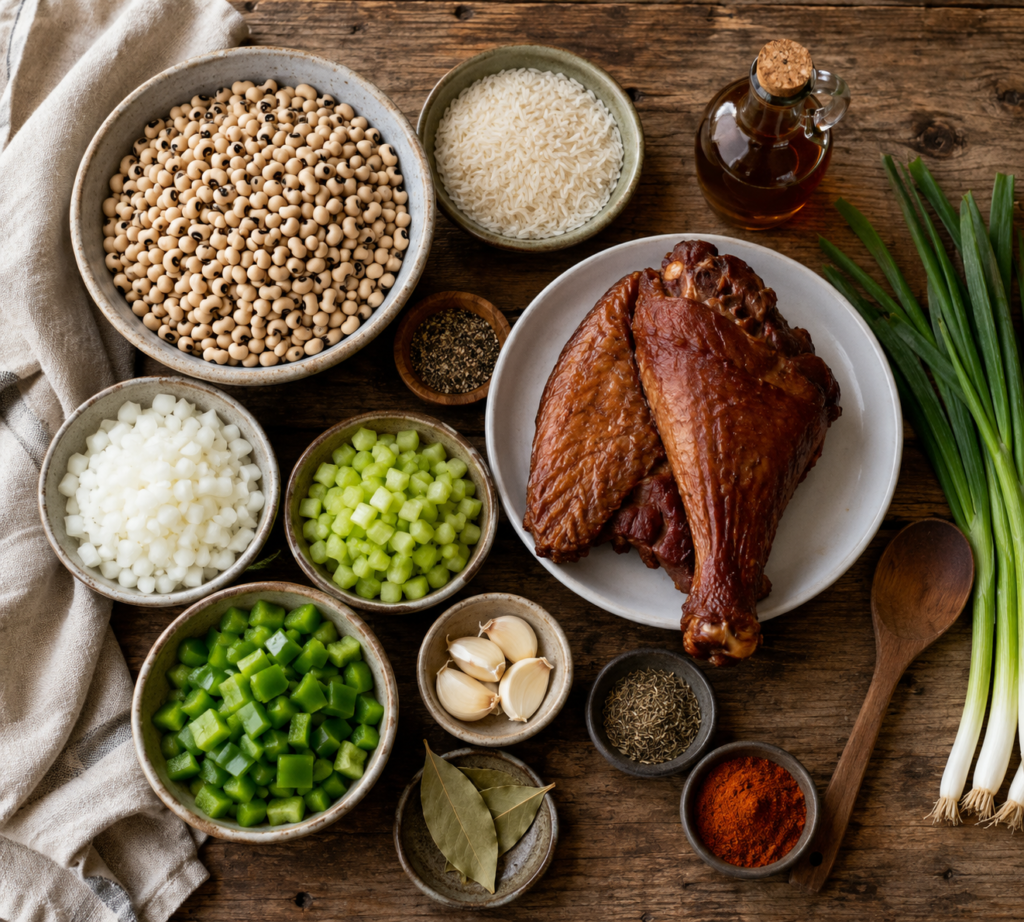
Ingredients for New Year’s Day Hoppin’ John with black-eyed peas, rice, vegetables, smoked turkey, and Southern seasonings.
Food Safety Note Before You Start
If using smoked turkey, ham hock, sausage, or any cooked smoked meat, keep it refrigerated until ready to use. Avoid leaving meat or cooked food at room temperature for long periods.
The USDA Food Safety and Inspection Service recommends refrigerating leftovers within 2 hours of cooking or serving. Food left out longer than that should be discarded for safety.
When reheating leftovers, warm them thoroughly until hot. FoodSafety.gov lists 165°F as the safe reheating temperature for leftovers.
Directions
1. Soak the black-eyed peas.
Place the dried black-eyed peas in a large bowl and cover them with several inches of cool water. Let them soak overnight.
The next day, drain and rinse the peas before cooking.
Soaking helps the peas cook more evenly and shortens the simmering time. If you forget to soak them, you can still make the recipe, but the peas will likely need more time to become tender.
2. Start the flavor base.
Heat the oil in a large Dutch oven or heavy-bottomed pot over medium heat. Add the onion, celery, and green bell pepper.
Cook for 6 to 8 minutes, stirring occasionally, until the vegetables soften and begin to smell sweet and savory.
Add the garlic and cook for about 30 seconds, just until fragrant.
3. Add the peas, smoked meat, broth, and seasonings.
Add the soaked black-eyed peas, smoked turkey or ham hock, broth, bay leaf, smoked paprika, thyme, black pepper, cayenne pepper, and salt.
Stir gently to combine.
Bring the pot to a light boil, then immediately reduce the heat to low.
4. Simmer gently.
Cover the pot partially and let the peas simmer for 45 to 60 minutes, or until they are tender but not falling apart.
The liquid should bubble softly, not aggressively. A hard boil can break the peas down too quickly and make the texture uneven.
Check the pot occasionally. If the peas begin to look dry before they are tender, add a little more broth or water.
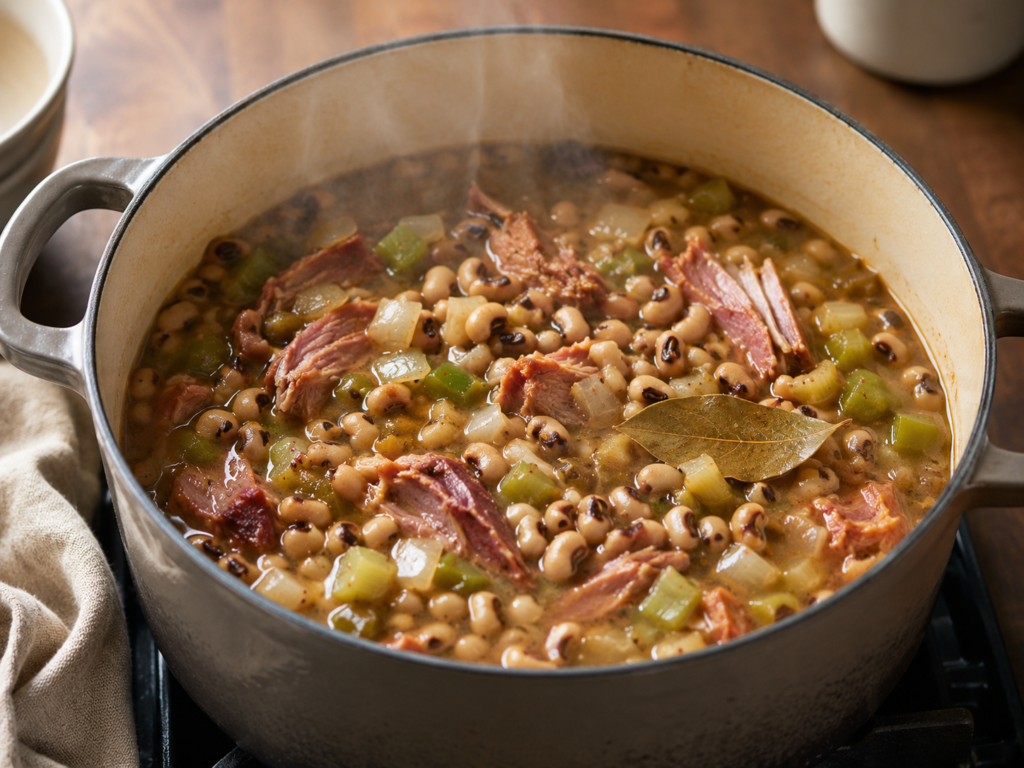
Black-eyed peas simmering with smoked turkey, vegetables, herbs, and broth for Southern Hoppin’ John.
5. Shred the smoked meat.
Once the peas are tender, carefully remove the smoked turkey or ham hock from the pot.
Let it cool slightly, then pull the meat from the bone. Discard the bone, skin, and any tough pieces.
Return the shredded meat to the pot and stir gently.
6. Add brightness.
Taste the peas and adjust the seasoning with more salt, black pepper, hot sauce, or vinegar.
A small splash of apple cider vinegar or pepper vinegar helps wake up the flavor and balance the smoky richness.
7. Cook the rice separately.
While the peas simmer, rinse the rice until the water runs mostly clear.
Add the rice, water or broth, butter or olive oil, and salt to a saucepan. Bring to a boil, then reduce the heat to low.
Cover and cook for 15 minutes. Remove from heat and let the rice rest, still covered, for 10 minutes.
Fluff with a fork before serving.
8. Serve warm.
Spoon fluffy rice into bowls and ladle the black-eyed peas and smoky broth over the top.
Finish with sliced green onions, hot sauce, fresh parsley, or pepper vinegar.
Serve with collard greens and cornbread for a classic New Year’s Day plate.
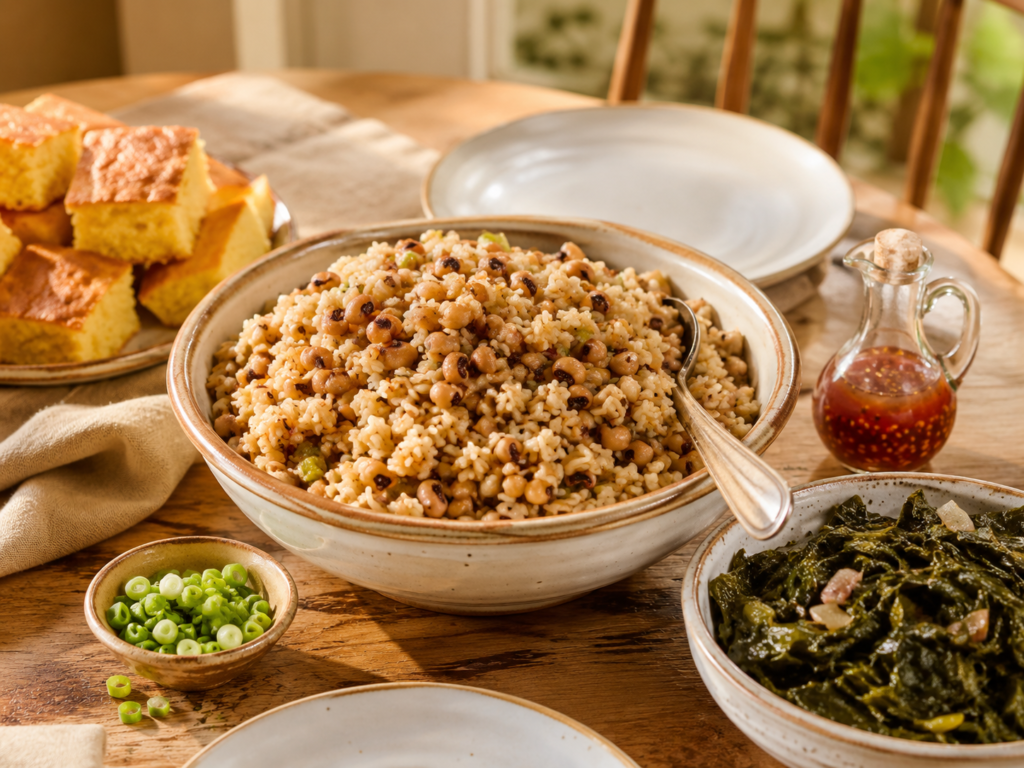
New Year’s Day Hoppin’ John served with black-eyed peas, rice, green onions, cornbread, and collard greens.
Flavor Variations
Classic Southern Style
Use a meaty ham hock, smoked pork neck bones, or bacon for a traditional smoky flavor. Taste before adding extra salt because smoked pork can be salty.
Smoked Turkey Style
Use smoked turkey legs or wings for a rich, savory flavor without using pork. This version is hearty, comforting, and still deeply flavorful.
Vegetarian Hoppin’ John
Skip the meat and use vegetable broth. Add extra smoked paprika, a pinch of smoked salt, or a small splash of liquid smoke for depth. You can also add mushrooms for extra savory flavor.
Spicy Cajun-Inspired Style
Add andouille sausage, Cajun seasoning, extra cayenne, and a little diced tomato for a bolder, spicier version.
Greens in the Pot
Stir chopped collard greens, mustard greens, or kale into the peas during the last 15 minutes of cooking. This turns the dish into a full New Year’s bowl with peas and greens in every bite.
Helpful Tips for Better Hoppin’ John
Use dried peas when possible. They give the dish a better texture and a deeper, homemade flavor.
Do not rush the simmer. Gentle cooking helps the peas become tender without turning mushy.
Cook the rice separately. This keeps the rice fluffy and prevents it from soaking up all the broth too quickly.
Taste before salting at the end. Smoked meat and broth can both add salt.
Add vinegar near the end. A little acidity makes the whole pot taste brighter.
Keep the leftovers slightly brothy. The peas will thicken as they cool, so a little extra liquid helps them reheat better.
What to Serve with Hoppin’ John
Hoppin’ John can stand on its own, but a few thoughtful sides make the table feel even more complete.
- Collard greens
- Mustard greens
- Turnip greens
- Buttermilk cornbread
- Hot water cornbread
- Fried cabbage
- Roasted sweet potatoes
- Baked chicken
- Smoked turkey
- Chow chow
- Pepper vinegar
- Sweet tea
- Sparkling apple cider
For a family-friendly and ad-friendly article experience, keep non-alcoholic drink pairings visible and welcoming.
Storage
Store the black-eyed peas and rice in separate airtight containers if possible. This keeps the rice from absorbing too much broth and becoming overly soft.
- Refrigerator: 3 to 4 days
- Freezer: Peas can be frozen for 2 to 3 months for the best quality
- Reheating: Warm peas gently on the stovetop with a splash of broth or water
- Rice Reheating Tip: Add a spoonful of water before reheating rice to help restore moisture
Mayo Clinic advises using refrigerated leftovers within 3 to 4 days or freezing them if they will not be eaten in time.
Frequently Asked Questions
Is Hoppin’ John the same as black-eyed peas and rice?
Hoppin’ John is a black-eyed peas and rice dish, but it usually includes a deeper seasoning base, smoky meat or smoky flavor, and a New Year’s Day tradition attached to it. Some versions are cooked together like a pilau, while others serve the peas over rice.
Why do people eat Hoppin’ John on New Year’s Day?
Many Southern families eat Hoppin’ John on New Year’s Day as a symbol of luck and prosperity. Black-eyed peas are often associated with coins, greens with money, and cornbread with gold. The meaning varies by family, but the heart of the tradition is hope for a better year.
Can I use canned black-eyed peas?
Yes. Use 3 to 4 cans of drained and rinsed black-eyed peas. Simmer them with the vegetables, broth, smoked meat, and seasonings for 25 to 30 minutes so they can absorb flavor. The texture will be softer than dried peas, but it still works well for a quicker meal.
Do I have to soak black-eyed peas?
Soaking is helpful but not always required. Black-eyed peas cook faster than many dried beans, so you can skip the soak if needed. Just plan for extra cooking time and check the peas often.
Should Hoppin’ John be thick or brothy?
It depends on the household. Some versions are drier and more rice-forward, while others are brothy and stew-like. This recipe is intentionally a little brothy so the peas can flavor the rice without becoming dry.
Can I make Hoppin’ John ahead of time?
Yes. The peas often taste even better the next day because the smoky broth and seasonings have more time to settle. Store the rice separately and combine when serving.
What is the best meat for Hoppin’ John?
Smoked turkey, ham hock, bacon, smoked sausage, and andouille sausage all work well. Smoked turkey is a great choice if you want a rich flavor without pork.
Can I freeze Hoppin’ John?
The peas freeze well. Let them cool completely, then store in freezer-safe containers. For the best texture, freeze the peas without the rice and make fresh rice when serving.
Final Thoughts
Hoppin’ John is more than a New Year’s recipe. It is a dish shaped by memory, resourcefulness, culture, and the beautiful way people turn ordinary ingredients into something meaningful.
A bowl of black-eyed peas and rice may look humble, but that is part of its power. It reminds us that fresh starts do not always arrive loudly. Sometimes they arrive in a simmering pot, a warm kitchen, a spoonful of broth, and a table where people pause long enough to feel grateful.
Make it on New Year’s Day. Make it for Sunday dinner. Make it when you want something smoky, soulful, and grounding. Then let the meal do what good food has always done: bring people closer, soften the room, and make the next chapter feel possible.
References
- Endolyn, O. (2016). Good fortune. Southern Foodways Alliance. https://www.southernfoodways.org/good-fortune-by-osayi-endolyn/
- FoodSafety.gov. (n.d.). Leftovers: The gift that keeps on giving. U.S. Department of Health & Human Services. https://www.foodsafety.gov/blog/leftovers-gift-keeps-giving
- Mayo Clinic. (n.d.). Food poisoning: How long can you safely keep leftovers? https://www.mayoclinic.org/healthy-lifestyle/nutrition-and-healthy-eating/expert-answers/food-safety/faq-20058500
- Moss, R. (2020, December 22). The historic problem with Hoppin’ John. Serious Eats. https://www.seriouseats.com/southern-hoppin-john-new-years-tradition
- Southern Foodways Alliance. (2016). Good fortune by Osayi Endolyn. https://www.southernfoodways.org/good-fortune-by-osayi-endolyn/
- U.S. Department of Agriculture Food Safety and Inspection Service. (2020, July 31). Leftovers and food safety. https://www.fsis.usda.gov/food-safety/safe-food-handling-and-preparation/food-safety-basics/leftovers-and-food-safety