
Christmas Soft Gingerbread Cookies: A Cozy Holiday Bake with Warm Spice, Molasses, and Soft Centers
Warm-spiced, chewy gingerbread cookies with deep molasses flavor
A Christmas Cookie That Feels Like Home Before the First Bite.
There is something about gingerbread that makes a kitchen feel different. Before the cookies even come out of the oven, the room starts to change. Ginger warms the air. Cinnamon settles into the corners. Molasses brings that deep, almost caramel-like richness that reminds people of holiday tins, flour-dusted counters, and someone saying, “Wait, let them cool first,” while everyone quietly ignores them.
Christmas soft gingerbread cookies are more than a seasonal dessert. They are part recipe, part memory-maker. They give families something to gather around, whether that means decorating with children, packing cookie boxes for neighbors, setting out a plate for Christmas Eve, or making a quiet batch just because December feels better with something baking.
Gingerbread itself has a long global story. PBS Food notes that early forms of gingerbread reach far back in food history, while later European traditions helped shape gingerbread into the spiced cakes, cookies, and decorated holiday treats many people recognize today. By the late Middle Ages, gingerbread had become closely tied to festivals, markets, and celebration baking.
This Fly By Eats version keeps the comfort of a classic Christmas gingerbread cookie but gives it a softer, more welcoming bite. The dough is chilled for easier rolling, the molasses brings moisture and depth, and the cookies are baked just until set, so the centers stay tender instead of turning hard.

Soft Christmas gingerbread cookies with warm spices, molasses, and festive holiday decor.
Why This Recipe Works
Soft gingerbread depends on balance. Too much flour can make the cookies dry. Too much baking time can turn them crisp. Too little chilling can make the dough sticky and difficult to shape.
This recipe works because the brown sugar and molasses help create a moist, chewy texture, while butter gives the cookies tenderness. King Arthur Baking recommends rolling chilled gingerbread dough about 1/8 to 1/4 inch thick, noting that thinner dough bakes crisper while thicker dough stays softer. For this recipe, 1/4 inch is the sweet spot for soft centers and clean cookie-cutter shapes.
The dough also rests before baking. That chill time is not just about convenience. It makes the dough easier to handle, helps the cookies spread less, and gives the spices time to settle into the butter, sugar, and molasses.
Recipe Details
Prep Time: 25 minutes
Chill Time: 1 to 2 hours
Bake Time: 8 to 10 minutes per batch
Total Time: About 1 hour 45 minutes
Servings: About 24 cookies
Skill Level: Beginner-friendly
Best For: Christmas baking, cookie boxes, holiday parties, family decorating, edible gifts
Ingredients
For the Gingerbread Cookies
- 3 cups all-purpose flour, plus more for rolling
- 1 teaspoon baking soda
- 1/2 teaspoon fine salt
- 1 tablespoon ground ginger
- 2 teaspoons ground cinnamon
- 1/2 teaspoon ground cloves
- 1/4 teaspoon ground nutmeg
- 3/4 cup unsalted butter, softened
- 3/4 cup packed dark brown sugar
- 1/2 cup unsulphured molasses
- 1 large egg, room temperature
- 1 teaspoon vanilla extract
Optional Decorating Ingredients
- Royal icing or simple vanilla glaze
- Sanding sugar
- Sprinkles
- Mini chocolate chips
- Cinnamon sugar
- Orange zest for a brighter holiday flavor
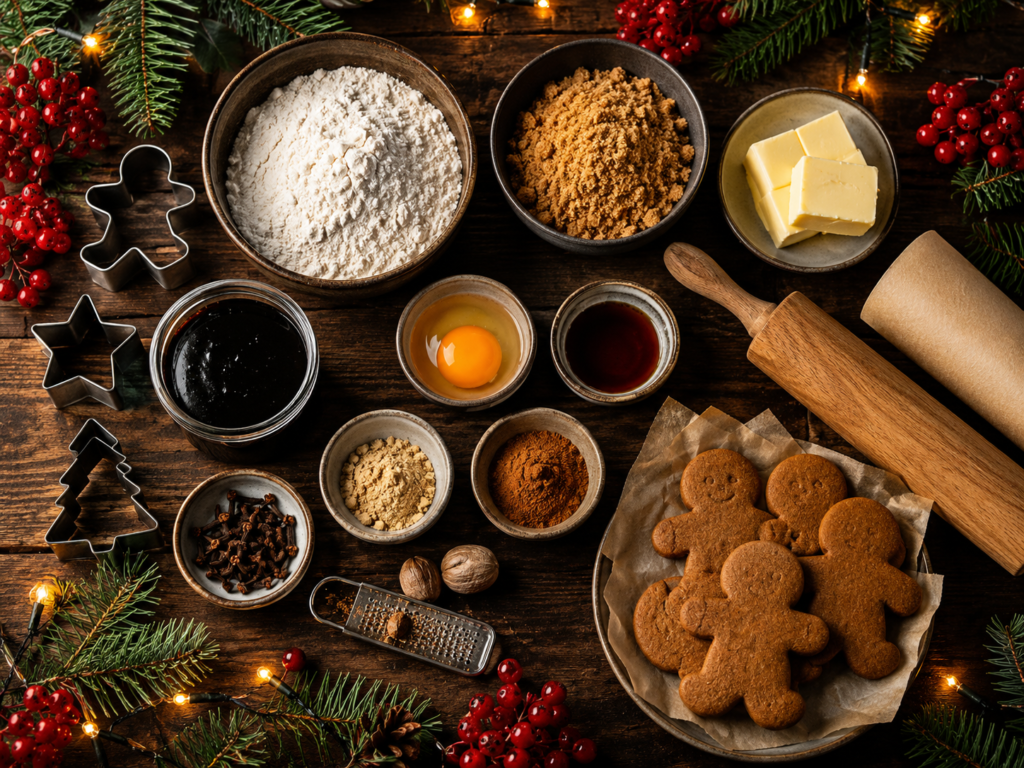
Ingredients for soft Christmas gingerbread cookies with molasses, brown sugar, butter, and warm spices.
Food Safety Note: Before You Start
Do not taste raw gingerbread dough. Raw flour and raw eggs can carry germs that may cause foodborne illness. The CDC advises against eating raw dough or batter and recommends washing hands, bowls, utensils, and surfaces after handling raw flour, eggs, or unbaked dough.
This is especially important during holiday baking when children may want to sample the dough or help cut out shapes. Give them a baked cookie to taste instead, then let them decorate once the cookies are fully cooled.
Directions
1. Whisk the Dry Ingredients
In a medium bowl, whisk together the flour, baking soda, salt, ginger, cinnamon, cloves, and nutmeg. This helps the spices spread evenly through the dough so every cookie has that warm, classic gingerbread flavor.
2. Cream the Butter and Brown Sugar
In a large mixing bowl, beat the softened butter and brown sugar for 2 to 3 minutes, until the mixture looks lighter, smoother, and slightly fluffy.
This step matters because it helps build tenderness into the cookie. Soft gingerbread should not feel heavy or dry.
3. Add the Molasses, Egg, and Vanilla
Beat in the molasses, egg, and vanilla until fully combined. The mixture may look slightly glossy or separated at first, but that is normal.
Use unsulphured molasses for the best flavor. Blackstrap molasses can taste bitter and overpowering in cookies.
4. Add the Dry Ingredients
Gradually add the flour mixture to the wet ingredients. Mix on low speed or stir by hand until a soft dough forms.
Stop mixing once the flour disappears. Overmixing can make the cookies tougher.
5. Chill the Dough
Divide the dough in half and shape each half into a flat disc. Wrap tightly or place in airtight containers. Chill for at least 1 hour, or up to overnight.
Chilled dough is easier to roll, easier to cut, and less likely to spread in the oven.
6. Roll and Cut
Preheat the oven to 350°F. Line baking sheets with parchment paper.
Lightly flour the counter and rolling pin. Roll one disc of dough to about 1/4 inch thick. Cut into gingerbread people, stars, trees, snowflakes, hearts, or simple circles.
Transfer the cookies to the prepared baking sheets, leaving about 1 inch between each cookie.
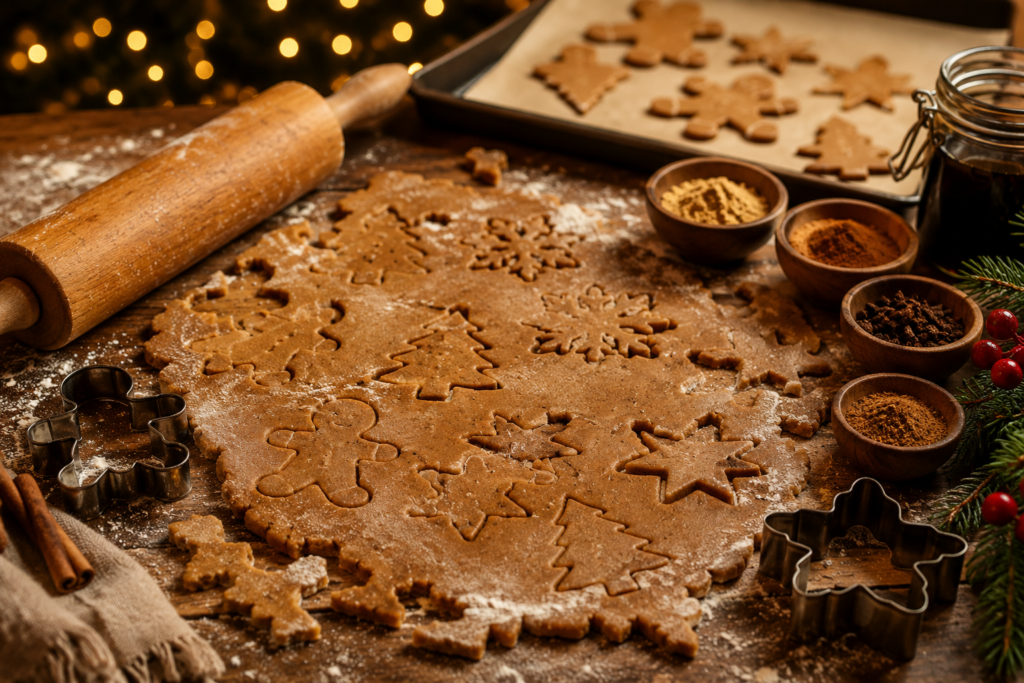
Gingerbread cookie dough rolled and cut into Christmas shapes before baking.
7. Bake Just Until Set
Bake for 8 to 10 minutes, depending on size. The cookies should look puffed and set around the edges, but still slightly soft in the center.
Do not wait for the cookies to look firm all the way through. They will continue to set as they cool.
8. Cool Carefully
Let the cookies rest on the baking sheet for 5 minutes, then transfer them to a wire rack.
Cool completely before decorating. Warm cookies can melt icing and break more easily.
9. Decorate and Serve
Decorate with royal icing, vanilla glaze, sanding sugar, or a simple dusting of powdered sugar. For a softer, more elegant look, drizzle with glaze instead of covering the entire cookie.
Let icing dry before stacking or packaging.

Decorated Christmas soft gingerbread cookies served with cocoa and festive holiday decor.
Simple Vanilla Glaze Option
For an easier decorating option, whisk together:
- 1 cup powdered sugar
- 1 to 2 tablespoons milk
- 1/2 teaspoon vanilla extract
- Pinch of salt
Add more milk for a thinner drizzle or more powdered sugar for a thicker glaze.
Helpful Tips for Soft Gingerbread Cookies
Use softened butter, not melted butter. Melted butter can make the dough greasy and harder to roll.
Measure flour carefully. Spoon flour into the measuring cup and level it off. Scooping directly from the bag can pack in too much flour.
Chill the dough. This is one of the biggest differences between clean shapes and sticky frustration.
Roll to 1/4 inch thick. Thinner cookies bake crisper. Thicker cookies stay softer.
Pull them from the oven early. Gingerbread cookies should look set, not dry.
Cool before icing. This keeps decorations neat and helps prevent breakage.
Flavor Variations
Orange Gingerbread Cookies
Add 1 tablespoon fresh orange zest to the dough. Orange brightens the molasses and makes the cookies feel extra festive.
Chocolate-Dipped Gingerbread
Dip half of each cooled cookie in melted white, milk, or dark chocolate. Add sprinkles before the chocolate sets.
Spiced Sugar Gingerbread Rounds
Skip the cookie cutters. Roll dough into balls, coat in coarse sugar, flatten slightly, and bake for a soft ginger molasses-style cookie.
Extra Cozy Spice Blend
Add a small pinch of black pepper or cardamom for a deeper bakery-style flavor.
Lemon Glaze Finish
Use lemon juice instead of milk in the glaze for a sweet-tart contrast.
What to Serve with Christmas Gingerbread Cookies
These cookies fit beautifully into a holiday dessert table, but they also pair well with simple, cozy drinks and snacks.
- Hot cocoa with whipped cream
- Coffee or espresso
- Chai tea
- Warm apple cider
- Vanilla milk
- Peppermint tea
- Eggnog
- Fresh orange slices
- Vanilla ice cream
- Christmas cookie boards
For a family-friendly and ad-friendly article experience, keep non-alcoholic pairing options visible and welcoming.
Storage and Make-Ahead Tips
Store fully cooled cookies in an airtight container at room temperature for up to 5 days. Place parchment paper between layers if decorated.
Undecorated cookies freeze well for up to 2 months. Thaw at room temperature before decorating or serving.
The dough can also be made ahead and refrigerated for up to 2 days. Let it sit at room temperature for 10 to 15 minutes if it becomes too firm to roll.
For general holiday food safety, perishable foods should not sit out for more than 2 hours. USDA FSIS recommends discarding food left at room temperature for too long and storing leftovers properly to reduce foodborne illness risk.
Frequently Asked Questions
Why are my gingerbread cookies hard?
They may have baked too long, been rolled too thin, or had too much flour added. For soft gingerbread cookies, roll the dough about 1/4 inch thick and bake only until the edges are set.
Can I make the dough ahead of time?
Yes. Gingerbread dough can be made ahead and refrigerated. Chilling also helps the dough become easier to roll and cut.
Should gingerbread cookies be soft or crisp?
Both styles exist. Soft gingerbread cookies are usually rolled slightly thicker and baked for less time. Crisp gingerbread cookies are often rolled thinner and baked longer.
What kind of molasses should I use?
Use unsulphured molasses for the best classic gingerbread flavor. Avoid blackstrap molasses unless you want a much stronger, more bitter taste.
Can I freeze gingerbread cookies?
Yes. Freeze undecorated baked cookies in an airtight container for up to 2 months. Thaw completely before icing.
Can children help with this recipe?
Yes, this is a great family baking recipe. Children can help cut shapes and decorate cooled cookies. Just make sure no one tastes the raw dough because raw flour and eggs can carry food safety risks.
Final Thoughts
Christmas soft gingerbread cookies are the kind of recipe that makes people slow down. They ask for a little patience, a little flour on the counter, and a little room for imperfection. Some cookies may have uneven icing. Some gingerbread people may come out with one arm slightly thinner than the other. That is part of the beauty.
The best holiday cookies are not always the most perfect ones. They are the ones that bring people closer to the kitchen, closer to the table, and closer to the memories they will talk about later.
Bake them for Christmas Eve. Pack them into tins. Add them to a cookie exchange. Leave a few plain for the person who does not like icing. Then enjoy the small, warm miracle of a cookie that tastes like spice, sweetness, and home.
References
- Centers for Disease Control and Prevention. (2025, November 24). Raw flour and dough. U.S. Department of Health and Human Services. https://www.cdc.gov/food-safety/foods/no-raw-dough.html
- Food and Drug Administration. (2023, December 5). Flour is a raw food and other safety facts. U.S. Food and Drug Administration. https://www.fda.gov/consumers/consumer-updates/flour-raw-food-and-other-safety-facts
- King Arthur Baking Company. (n.d.). Gingerbread cookies recipe. https://www.kingarthurbaking.com/recipes/gingerbread-cookies-recipe
- PBS Food. (2013, December 20). The history of gingerbread. Public Broadcasting Service. https://www.pbs.org/food/stories/history-gingerbread
- U.S. Department of Agriculture, Food Safety and Inspection Service. (2020, July 31). Leftovers and food safety. https://www.fsis.usda.gov/food-safety/safe-food-handling-and-preparation/food-safety-basics/leftovers-and-food-safety
- U.S. Department of Agriculture, Food Safety and Inspection Service. (2017, June 28). Danger zone: 40°F–140°F. https://www.fsis.usda.gov/food-safety/safe-food-handling-and-preparation/food-safety-basics/danger-zone-40f-140f