Mexico, Full of Corazón: Flavor, Fire, and Food Made with Love
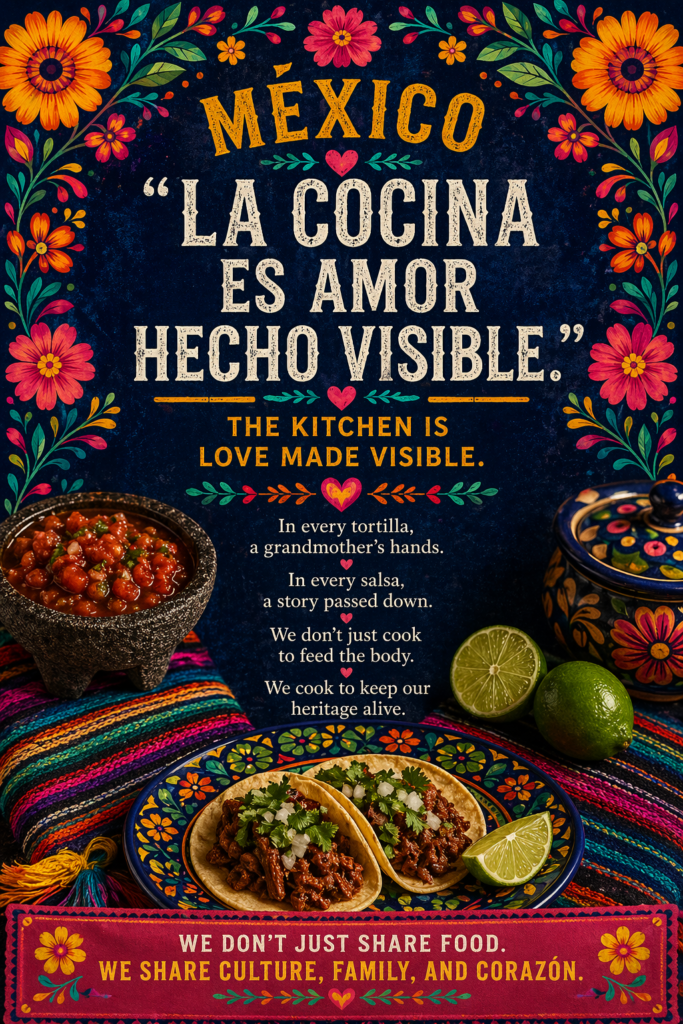
There is a certain kind of warmth that rises from a Mexican table before anyone takes the first bite. It may come from tortillas wrapped in cloth, still soft from the comal. It may come from salsa, bright with tomatillo or deep with roasted chile. It may come from beans simmered low, rice fluffed gently, limes cut into wedges, or a pot of something slow and soulful waiting in the center of the table.
But more than anything, it comes from corazón.
In Mexican food culture, flavor is not only about heat, spice, or color. It is about care. It is about the hands that pat masa into shape, the patience behind a sauce, the memory carried in a family recipe, and the generous instinct to say, “Come eat,” even when the day has been long.
Mexico’s cuisine is not one single story. It is regional, layered, Indigenous, colonial, rural, urban, festive, everyday, ancient, and always moving. It can be smoky and soft, bright and earthy, humble and celebratory. From maize and beans to chile, cacao, squash, tomato, avocado, and vanilla, Mexican food carries ingredients that have shaped tables far beyond Mexico’s borders. The heart of it, though, remains deeply local: land, family, technique, memory, and community.
Why Mexican Food Culture Feels So Meaningful
Mexican food feels meaningful because it is not separated from life. It belongs to markets, kitchens, fields, courtyards, street corners, family gatherings, holidays, and ordinary weeknights. It is food that remembers where it came from.
UNESCO recognized traditional Mexican cuisine in 2010 as an Intangible Cultural Heritage of Humanity, describing it as a living cultural model that includes farming practices, ritual customs, ancestral knowledge, cooking techniques, and community participation. That recognition matters because it honors Mexican cuisine not only as delicious food, but as a complete way of preserving identity and connection.
At the center of this story is maize. In Mexico, maize is more than an ingredient. It is daily bread, cultural memory, agricultural knowledge, and family labor. It becomes tortillas, tamales, atole, sopes, tlacoyos, tostadas, gorditas, and masa for countless regional preparations. It is carried in cloth-lined baskets, stacked beside stews, dipped into salsa, folded around fillings, and shared without ceremony because it already belongs.
Then there is chile not only for heat, but for depth. A chile can be fresh, dried, toasted, soaked, blended, fried, or crushed. It can taste fruity, smoky, grassy, bitter, sweet, sharp, or warm. Mexican cooking understands that fire is not always about burning the tongue. Sometimes fire means transformation: a tomato blackened on a comal, garlic softened in its skin, a dried chile waking up in hot oil, or a salsa turning deeper after one more minute over flame.
The Beauty of the Table
A Mexican table has a way of feeling alive. It may be set with clay bowls, bright plates, woven textiles, small dishes of salsa, a stack of tortillas, and a pitcher of agua fresca sweating lightly in the afternoon heat. There may be the sound of a spoon tapping a pot, laughter from another room, oil gently snapping in a pan, or the soft clap of masa between palms.
The colors arrive naturally: red salsa, green cilantro, white onion, golden rice, black beans, pink radishes, orange squash blossoms, blue corn tortillas, brown mole, yellow crema, and the shining green of avocado. Nothing needs to look perfect to feel beautiful. The beauty is in abundance, contrast, and invitation.
Hospitality often lives in the small gestures. The warm tortilla passed before it cools. The extra spoonful is offered before you ask. The salsa was placed close enough for everyone to reach. The gentle insistence that there is always room for one more plate.
This is where Mexican food culture feels especially human. It understands that a meal can be both practical and emotional. Food fills the stomach, yes, but it also says: you are seen, you are welcome, you belong here for a moment.
A Taste of History and Culture
To understand Mexican food, it helps to begin with the milpa. The milpa is a traditional agricultural system built around polyculture, with maize as the central crop and beans, squash, chiles, tomatoes, quelites, and other regional plants growing alongside it. Mexico’s National Commission for the Knowledge and Use of Biodiversity describes the milpa as a dynamic ecosystem where plants interact, resources are used complementarily, and farming knowledge is carried by communities over generations.
This matters because Mexican cuisine is not only built in the kitchen. It begins in soil, seed, rain, season, and selection. Farmers and cooks are connected. The tortilla on the table is tied to the field. The salsa is tied to the chile plant. The bean pot is tied to agricultural wisdom that values diversity rather than sameness.
Another essential technique is nixtamalization. The Food and Agriculture Organization explains that nixtamalization is an ancient Mesoamerican process in which maize is transformed through alkaline cooking and soaking, producing nutritional, functional, and sensory changes that make masa possible for tortillas and other foods.
That is why a real tortilla is not “just corn.” It is a technique. It is chemistry. It is tradition. It is the difference between grain and masa, between ingredient and foundation.
Traditional Mexican cuisine also reflects the meeting of many histories. Indigenous foodways remain central, while Spanish colonization and later global exchanges introduced new ingredients, animals, cooking fats, spices, and techniques. Over time, communities adapted and transformed these influences into regional identities of their own. A table in Oaxaca will not taste exactly like a table in Yucatán, Puebla, Sonora, Veracruz, Jalisco, Michoacán, or Mexico City. Each region has its own climate, ingredients, celebrations, and inherited ways of cooking.
That variety is part of the beauty. Mexico does not ask to be reduced to one dish, one sauce, or one flavor. It asks to be tasted with curiosity.
What This Food Tradition Teaches Us
Mexican food culture teaches that love is often practical. It is soaking beans before the sun is high. It is roasting vegetables until their skins blister. It is making enough for guests who may or may not arrive. It is saving the good salsa for the person who loves heat. It is feeding people with what is available, seasonal, and meaningful.
It also teaches patience. Some foods cannot be rushed without losing their soul. A mole needs time for its ingredients to deepen together. A pot of pozole needs space to simmer. Tamales often become a communal act because the work is easier, warmer, and more joyful when shared.
There is gratitude here too: gratitude for corn, rain, hands, elders, markets, fire, and the chance to gather again. INAH notes that traditional Mexican foods such as tortillas and tamales are eaten daily and also appear in symbolic contexts such as Día de Muertos offerings, showing how everyday foods can carry memory, family, and reverence.
This is one of the most powerful lessons of the Mexican table: the everyday can be sacred without needing to be dramatic. A tortilla can be ordinary and meaningful at the same time. A bowl of beans can be simple and generous. A salsa can hold both heat and care.
How to Bring This Spirit Into Your Own Kitchen
You do not need to recreate a whole regional feast to bring the spirit of Mexican food culture into your kitchen. Start with respect, curiosity, and good ingredients.
Begin with maize. Try fresh corn tortillas from a local tortillería if one is available. Warm them properly on a skillet or comal instead of serving them cold from the package. Wrap them in a clean towel so they stay soft and steamy.
Build flavor slowly. Roast tomatoes, tomatillos, garlic, onions, or chiles before blending salsa. Toast dried chiles gently until fragrant, being careful not to burn them. Simmer beans with onion, garlic, bay leaf, or herbs. Let rice rest after cooking. Give sauces time to settle.
Think in balance: soft tortillas with crisp radish, creamy beans with sharp lime, smoky salsa with fresh cilantro, rich meat or mushrooms with pickled onions, warm food with cool crema or avocado.
Most importantly, cook with attention. Mexican food made with corazón is not about perfection. It is about presence. It is about tasting as you go, feeding people generously, and letting the table feel welcoming instead of staged.
Simple Serving Ideas
For an easy Mexican-inspired gathering, create a family-style table rather than plating everything individually. Set out warm tortillas, beans, rice, roasted vegetables, grilled chicken or mushrooms, salsa verde, salsa roja, lime wedges, chopped onion, cilantro, radishes, avocado, and queso fresco.
Serve drinks that feel refreshing and simple, such as agua fresca with watermelon, hibiscus, cucumber-lime, or pineapple. For dessert, consider cinnamon-scented Mexican chocolate brownies, arroz con leche, flan, or fresh fruit with lime.
For table styling, lean into warmth: woven placemats, clay or ceramic bowls, small salsa dishes, linen napkins, candles, fresh flowers, or a bright table runner. The goal is not to imitate a culture like a costume. The goal is to create a table that feels generous, colorful, and alive.
A beautiful touch is to place tortillas at the center, not on the side. Let them be treated like the heart of the meal, because in many Mexican meals, they are.
A Thoughtful Note on Cultural Appreciation
Loving Mexican food means honoring the people, regions, and histories behind it. It means remembering that Mexican cuisine is not a trend, a shortcut, or a single flavor profile. It is a living heritage shaped by Indigenous knowledge, farmers, home cooks, market vendors, street food artisans, chefs, families, migrants, and tradition keepers.
A respectful approach starts with learning names correctly. Learn the difference between salsa verde and mole verde, between masa harina and fresh masa, between a flour tortilla tradition in northern Mexico and corn tortilla traditions elsewhere. Notice regional identity. Ask where a dish comes from. Support Mexican-owned restaurants, tortillerías, markets, cookbook authors, and cultural educators when possible.
It also means avoiding the idea that “real” Mexican food only looks one way. Food changes when families move, ingredients shift, and new generations cook from memory in new places. The Smithsonian’s National Museum of American History notes that Mexican and Mexican American foodways have influenced everyday eating in the United States for generations, while also becoming a source of cultural pride and economic opportunity for immigrant communities.
Appreciation is not about freezing a culture in the past. It is about honoring where food comes from while respecting the people who continue to carry it forward.
Final Thoughts: A Table with Fire, Memory, and Heart
Mexico’s food culture is full of fire, but not only the fire of chile. It is the fire under the comal. The fire that softens, roasts, chars, and transforms. The fire of celebration, resilience, music, market mornings, family kitchens, and hands that know what to do before a recipe is ever written down.
It is also full of tenderness. A tortilla kept warm. A bowl is filled again. A sauce made the long way because someone is worth the effort. A table where flavor becomes a language of care.
To eat with corazón is to understand that food can be practical and poetic at the same time. It can come from the earth, pass through fire, gather a family, remember the ancestors, welcome the traveler, and still be simple enough to hold in one warm tortilla.
That is the beauty of Mexico’s table. It does not merely feed. It remembers. It welcomes. It loves out loud.
References
- Comisión Nacional para el Conocimiento y Uso de la Biodiversidad. (2023, April 4). La milpa. Biodiversidad Mexicana. https://www.biodiversidad.gob.mx/diversidad/sistemas-productivos/milpa
- Food and Agriculture Organization of the United Nations. (2022). Nixtamalization. Family Farming Knowledge Platform. https://www.fao.org/family-farming/detail/en/c/1626575/
- Instituto Nacional de Antropología e Historia. (n.d.). La cocina tradicional mexicana, cultura comunitaria, ancestral y viva. El paradigma de Michoacán. Dirección de Patrimonio Mundial. https://patrimoniomundialmexico.inah.gob.mx/publico/listado_elementos_detalle.php?idLista=Ng%3D%3D
- Smithsonian National Museum of American History. (n.d.). The Mexican food revolution. https://americanhistory.si.edu/explore/exhibitions/food/online/resetting-table/mexican-food-revolution
- UNESCO. (n.d.). Traditional Mexican cuisine—ancestral, ongoing community culture, the Michoacán paradigm. UNESCO Intangible Cultural Heritage. https://ich.unesco.org/en/RL/traditional-mexican-cuisine-ancestral-ongoing-community-culture-the-michoacan-paradigm-00400
- UNESCO. (2025, June 18). Traditional Mexican cuisine: A living heritage for the societies and the planet’s wellbeing. UNESCO. https://www.unesco.org/en/articles/traditional-mexican-cuisine-living-heritage-societies-and-planets-wellbeing