
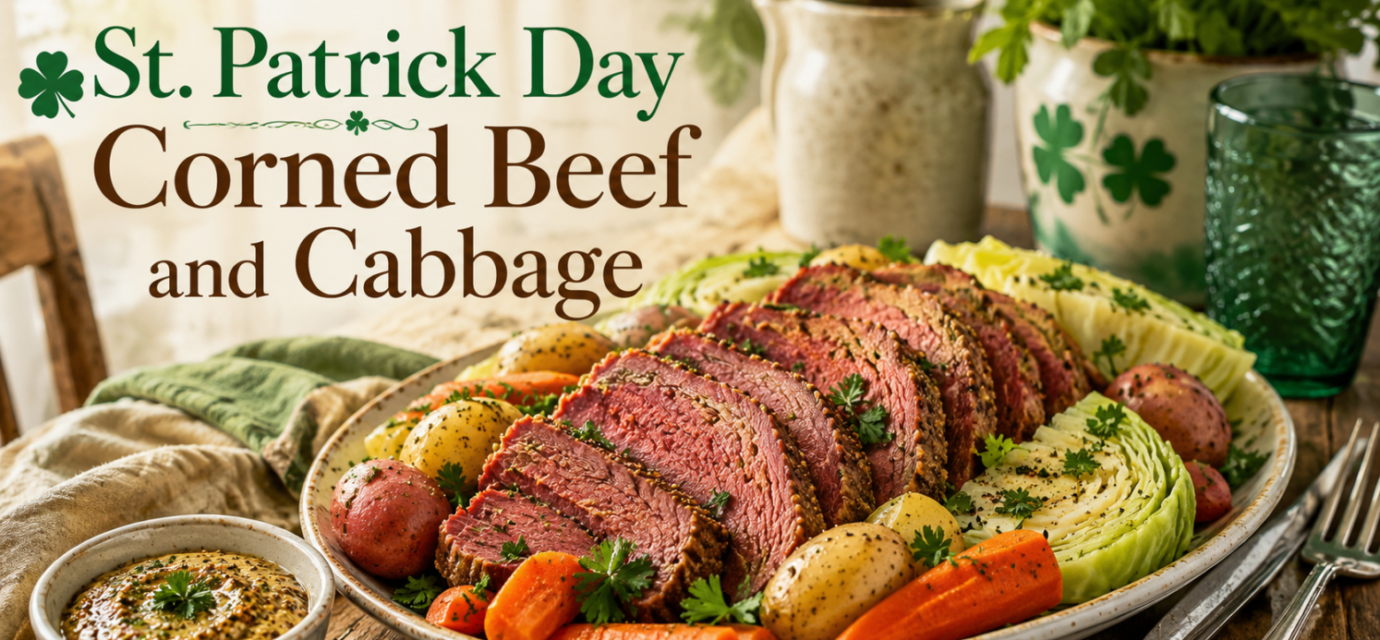
St. Patrick’s Day Corned Beef and Cabbage: A Tender Irish-American Classic for a Table That Feels Like Home
Fork-tender brisket with cabbage, carrots, and potatoes simmered until savory and comforting
A Comforting St. Patrick’s Day Dinner with a Story Behind It
Corned beef and cabbage has become one of the most recognized St. Patrick’s Day meals in the United States, but its story is more layered than many people realize. In Ireland, beef was historically expensive for many families, and the dish most Americans recognize today became popular through Irish immigrant communities in the United States. The USDA describes corned beef and cabbage as a uniquely American tradition shaped by history, affordability, and opportunity, while Smithsonian Magazine explains that Irish immigrants in New York often purchased salted brisket from nearby Jewish butchers and paired it with potatoes and inexpensive cabbage.
That is what makes this dish meaningful. It is not only a plate of meat and vegetables. It is a reminder of migration, adaptation, survival, and the way families turn humble ingredients into something worth gathering around.
This Fly By Eats version keeps the meal familiar while giving it more warmth, better technique, and a richer serving experience. The brisket is simmered gently until tender, the vegetables are added in stages so they do not collapse into mush, and a simple mustard herb butter brings brightness to the salty, savory beef.
History Lesson #carolinachef #recipes #history #irish #cornedbeefandcabbage
Why This Recipe Works
Corned beef brisket is a tougher cut that needs time, moisture, and gentle heat. A hard boil can make it tighten up, but a quiet simmer gives the connective tissue time to soften. Serious Eats notes that controlled cooking helps break down connective tissue while preserving a better texture, and that slicing against the grain makes a major difference in how tender the meat feels.
This recipe also cooks the vegetables with intention. Potatoes and carrots go in before the cabbage because they take longer to soften. Cabbage is added near the end so it stays tender, sweet, and still recognizable on the plate.
Recipe Details
Prep Time: 20 minutes
Cook Time: 3 hours 15 minutes to 3 hours 45 minutes
Rest Time: 15 minutes
Total Time: About 4 hours
Servings: 8 to 10
Ingredients
For the Corned Beef and Vegetables
- 1 corned beef brisket, 4 to 5 pounds, flat cut or point cut
- Spice packet from the corned beef package, if included
- 10 to 12 cups water, low-sodium beef broth, or a mix of both
- 1 large yellow onion, quartered
- 4 garlic cloves, smashed
- 2 bay leaves
- 1 teaspoon black peppercorns
- 1 1/2 pounds baby potatoes or Yukon Gold potatoes, halved if large
- 5 large carrots, peeled and cut into 2-inch pieces
- 1 medium green cabbage, cut into 8 wedges with the core partly intact
- 2 tablespoons chopped fresh parsley, for serving
For the Mustard Herb Butter
- 4 tablespoons unsalted butter, softened
- 1 tablespoon Dijon mustard
- 1 tablespoon whole grain mustard
- 1 teaspoon honey, optional
- 1 tablespoon fresh parsley, finely chopped
- 1 small garlic clove, grated or finely minced
- Pinch of black pepper
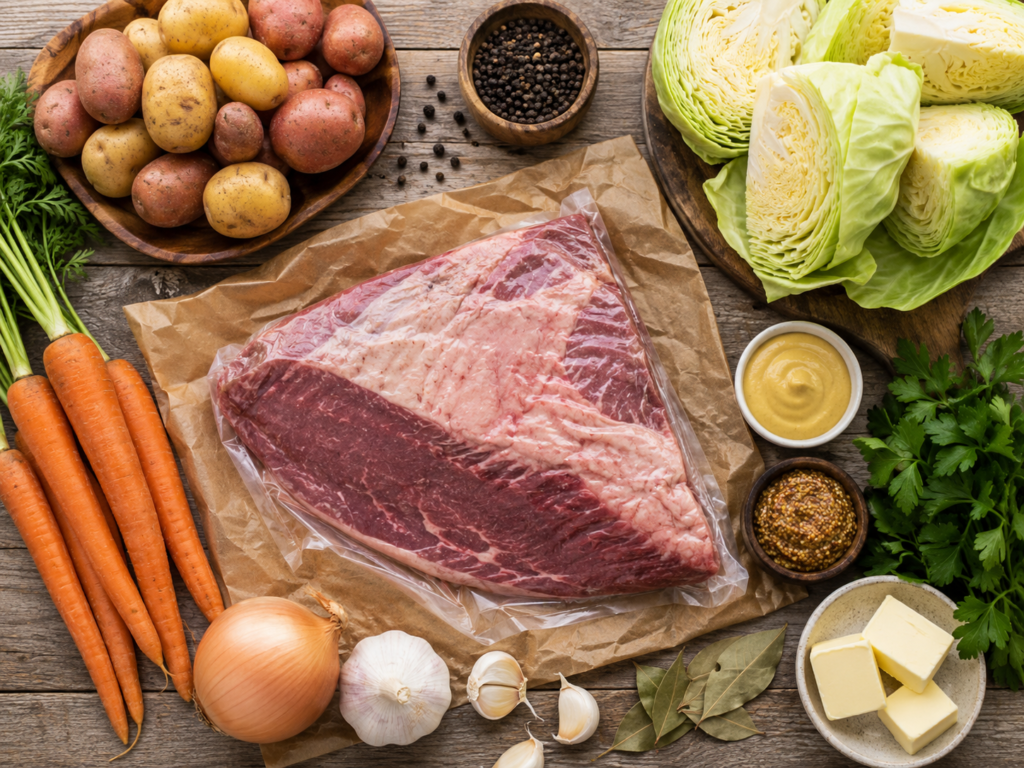
Ingredients for St. Patrick’s Day corned beef and cabbage with brisket, cabbage, carrots, potatoes, onion, garlic, mustard, and fresh parsley.
Food Safety Note Before You Start
Packaged corned beef is cured in brine, which is why it tastes salty and deeply seasoned. For the lowest cross-contamination risk, drain the brine carefully and avoid splashing. If you choose to lightly rinse the brisket to reduce surface salt, clean and sanitize the sink, counter, and nearby surfaces afterward. USDA food safety guidance warns that washing raw meat can spread bacteria around the kitchen through splashing.
Cook raw corned beef to at least 145°F with a 3-minute rest for safety, according to USDA FSIS. For the best texture, continue cooking until the brisket is fork-tender, since brisket usually needs more time than the minimum safe temperature to become soft and sliceable.
Directions
1. Prepare the Pot
Place the corned beef brisket in a large Dutch oven or heavy stockpot, fat side up. Add the spice packet, onion, garlic, bay leaves, and black peppercorns. Pour in enough water or low-sodium broth to cover the meat by about 1 inch.
2. Simmer Gently
Bring the liquid just to a boil over medium-high heat. As soon as it begins to boil, reduce the heat to low. Cover the pot and let the brisket simmer gently for 2 1/2 to 3 hours.
The liquid should move softly, not aggressively. A rolling boil may make the beef tougher.
3. Bring to a gentle simmer.
Set the pot over medium-high heat and bring the liquid just to a boil. As soon as it begins to boil, reduce the heat to low. Cover the pot and let the brisket simmer gently for 2 1/2 to 3 hours.
The liquid should bubble softly, not roll aggressively. Low and slow is what helps the brisket become tender instead of tough.
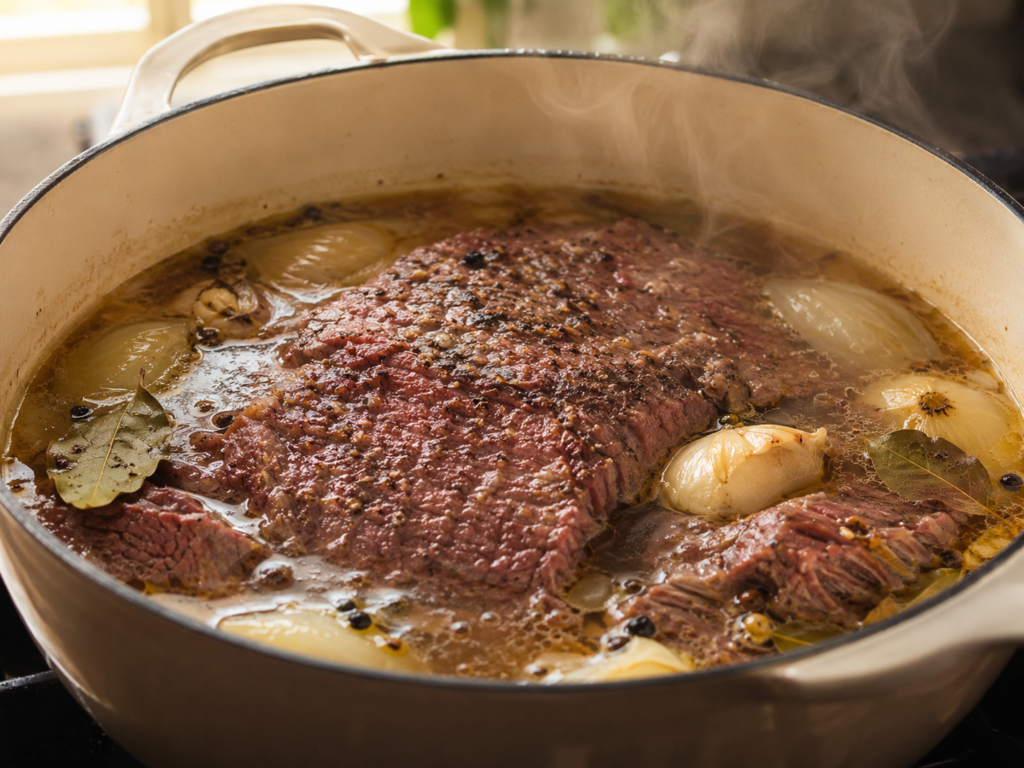
Corned beef brisket simmering gently in a Dutch oven with onions, garlic, bay leaves, and spices.
4. Check for tenderness.
After about 2 1/2 hours, insert a fork into the thickest part of the brisket. If it slides in with little resistance, the beef is ready for the vegetables. If it still feels firm, keep simmering and check every 15 to 20 minutes.
5. Add potatoes and carrots.
Add the potatoes and carrots to the pot. Cover and simmer for 15 to 20 minutes, or until they begin to soften.
6. Add the cabbage last.
Nestle the cabbage wedges into the pot. Cover again and simmer for another 15 to 20 minutes, until the cabbage is tender but still holds its shape and the potatoes are easy to pierce with a knife.
7. Rest the beef.
Carefully transfer the corned beef to a cutting board. Tent it loosely with foil and let it rest for 10 to 15 minutes. Resting helps the juices settle before slicing.
8. Make the mustard herb butter.
While the beef rests, stir together the softened butter, Dijon mustard, whole grain mustard, honey, parsley, garlic, and black pepper. Taste and adjust as needed.
9. Slice against the grain.
Look at the direction of the meat fibers, then slice across them into thin pieces. This step makes a big difference. Cutting with the grain can make the brisket feel stringy, even when it has been cooked well.
10. Serve warm.
Arrange the sliced corned beef on a platter with the cabbage, potatoes, and carrots. Spoon a little hot broth over the top. Add small dollops of mustard herb butter over the warm vegetables and finish with fresh parsley.
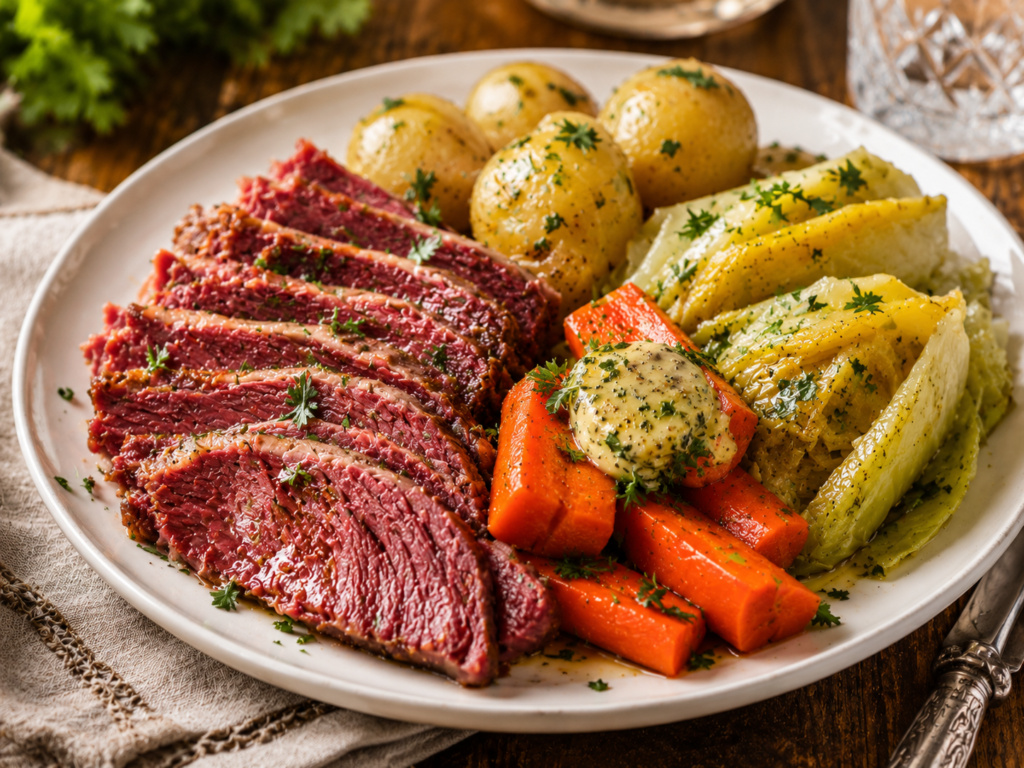
A plated serving of sliced corned beef, cabbage, carrots, potatoes, mustard herb butter, and fresh parsley.
Food Safety Note
Cook raw corned beef to a safe minimum internal temperature of 145°F and allow it to rest for at least 3 minutes, according to FoodSafety.gov. For the best texture, corned beef brisket is usually cooked longer until fork-tender, but safety should still be checked with a food thermometer.
Refrigerate leftovers within 2 hours. Store cooked corned beef and vegetables in airtight containers in the refrigerator for 3 to 4 days. Reheat leftovers to 165°F before serving. FoodSafety.gov lists 165°F as the safe reheating temperature for leftovers.
Flavor Variations
Classic Mustard Finish
Serve the sliced corned beef with whole grain mustard, Dijon mustard, or the mustard herb butter from this recipe.
Horseradish Cream Style
Mix sour cream, prepared horseradish, lemon juice, black pepper, and a pinch of salt for a creamy, sharp sauce that cuts through the richness of the brisket.
Brown Sugar Mustard Glaze
After simmering, place the cooked brisket on a baking sheet. Brush with a mix of brown sugar and mustard, then broil briefly until glossy. Watch closely so it does not burn.
Extra Root Vegetable Pot
Add parsnips, turnips, or rutabaga with the carrots and potatoes for a more rustic boiled dinner feel.
Cozy Leftover Hash
Chop leftover corned beef, potatoes, and cabbage, then crisp them in a skillet with onion. Top with an egg for a hearty breakfast or brunch.
Helpful Tips for Better Corned Beef and Cabbage
Use a large pot. The brisket and vegetables need enough room to cook evenly.
Simmer gently. A rolling boil can make the meat tough.
Add cabbage near the end. Cabbage cooks quickly and can become too soft if added too early.
Taste before salting. Corned beef is already cured, so the broth may not need extra salt.
Slice against the grain. This is one of the most important steps for tender slices.
Let the meat rest. Cutting too soon can cause the juices to run out.
What to Serve with Corned Beef and Cabbage
Corned beef and cabbage is hearty enough to stand on its own, but a few thoughtful sides can make the table feel even more complete.
- Irish soda bread with softened butter
- Whole grain mustard
- Horseradish cream
- Roasted Brussels sprouts
- Pickled red onions
- Simple green salad with lemon vinaigrette
- Sparkling apple cider
- Hot black tea
- Roasted apples or apple crisp for dessert
For a family-friendly and ad-friendly article experience, keep non-alcoholic pairing options visible and welcoming.
Storage
Store corned beef and vegetables in separate airtight containers if possible. Add a little cooking broth to the meat container to keep the brisket from drying out.
- Refrigerator: 3 to 4 days
- Freezer: Corned beef can be frozen for about 2 to 3 months for the best quality
- Reheating: Warm gently with broth on the stovetop or covered in a 325°F oven until hot
Frequently Asked Questions
Is corned beef and cabbage actually Irish?
Corned beef and cabbage is best described as Irish-American. The USDA explains that the dish became connected to St. Patrick’s Day in the United States through Irish immigrant communities, affordable salted beef brisket, and readily available cabbage.
What cut of corned beef is best?
Flat cut brisket is leaner and easier to slice neatly. Point cut brisket has more fat and can taste juicier. Both work well when cooked gently until fork-tender.
Should I rinse corned beef before cooking?
You can, but it is not required. Draining the brine is usually enough. If you rinse it to reduce saltiness, clean and sanitize the sink and nearby surfaces afterward to reduce cross-contamination risk.
Why is my corned beef tough?
It may have cooked too quickly, boiled too hard, or not cooked long enough. Brisket needs gentle heat and time. Keep simmering until a fork slides into the meat easily.
When should I add cabbage?
Add cabbage near the end of cooking, usually during the last 15 to 20 minutes. This keeps it tender without turning mushy.
Can I make corned beef and cabbage ahead of time?
Yes. Cook the corned beef a day ahead, cool it in some of its broth, and refrigerate it. Reheat gently before serving. Slice after chilling if you want cleaner slices.
What can I do with leftovers?
Use leftovers for corned beef hash, Reuben-style sandwiches, breakfast skillets, cabbage soup, grain bowls, or savory hand pies.
Final Thoughts
Corned beef and cabbage is more than a holiday plate. It is a dish shaped by history, adaptation, and the kind of comfort that travels across generations. It reminds us that food does not have to be fancy to be meaningful. Sometimes the most memorable meals begin with humble ingredients, a slow pot, and people gathering around the table because something smells like home.
Make it for St. Patrick’s Day. Make it for Sunday dinner. Make it when you want something warm, hearty, and familiar. Then let the meal do what good food always does: slow everyone down long enough to feel connected.
References
- Esposito, S. (2013, March 15). Is corned beef really Irish? Smithsonian Magazine. https://www.smithsonianmag.com/arts-culture/is-corned-beef-really-irish-2839144/
- FoodSafety.gov. (2024, November 21). Cook to a safe minimum internal temperature. https://www.foodsafety.gov/food-safety-charts/safe-minimum-internal-temperatures
- Morris, C. (2013, March 15). How corned beef and cabbage became a holiday staple. U.S. Department of Agriculture. https://www.usda.gov/about-usda/news/blog/how-corned-beef-and-cabbage-became-holiday-staple
- Serious Eats. (2026, March 11). Slow-cooker corned beef and cabbage (Irish boiled dinner) recipe. https://www.seriouseats.com/slow-cooker-corned-beef-and-cabbage-recipe-11923867
- U.S. Department of Agriculture, Food Safety and Inspection Service. (2020, July 31). Leftovers and food safety. https://www.fsis.usda.gov/food-safety/safe-food-handling-and-preparation/food-safety-basics/leftovers-and-food-safety
- U.S. Department of Agriculture, Food Safety and Inspection Service. (2024, October 11). Corned beef and food safety. https://www.fsis.usda.gov/food-safety/safe-food-handling-and-preparation/meat-catfish/corned-beef
- U.S. Department of Agriculture, Food Safety and Inspection Service. (n.d.). Washing food: Does it promote food safety? https://www.fsis.usda.gov/food-safety/safe-food-handling-and-preparation/food-safety-basics/washing-food-does-it-promote-food