Peruvian Food, Ceviche, Lomo Saltado & Pachamanca: A Cultural Table of Coast, Andes & Amazon
Peru does not offer one single food story.
It offers coast, Andes, and Amazon. It offers Indigenous memory, migration, adaptation, family kitchens, open markets, fishing traditions, mountain harvests, and dishes that somehow feel ancient and alive at the same time.
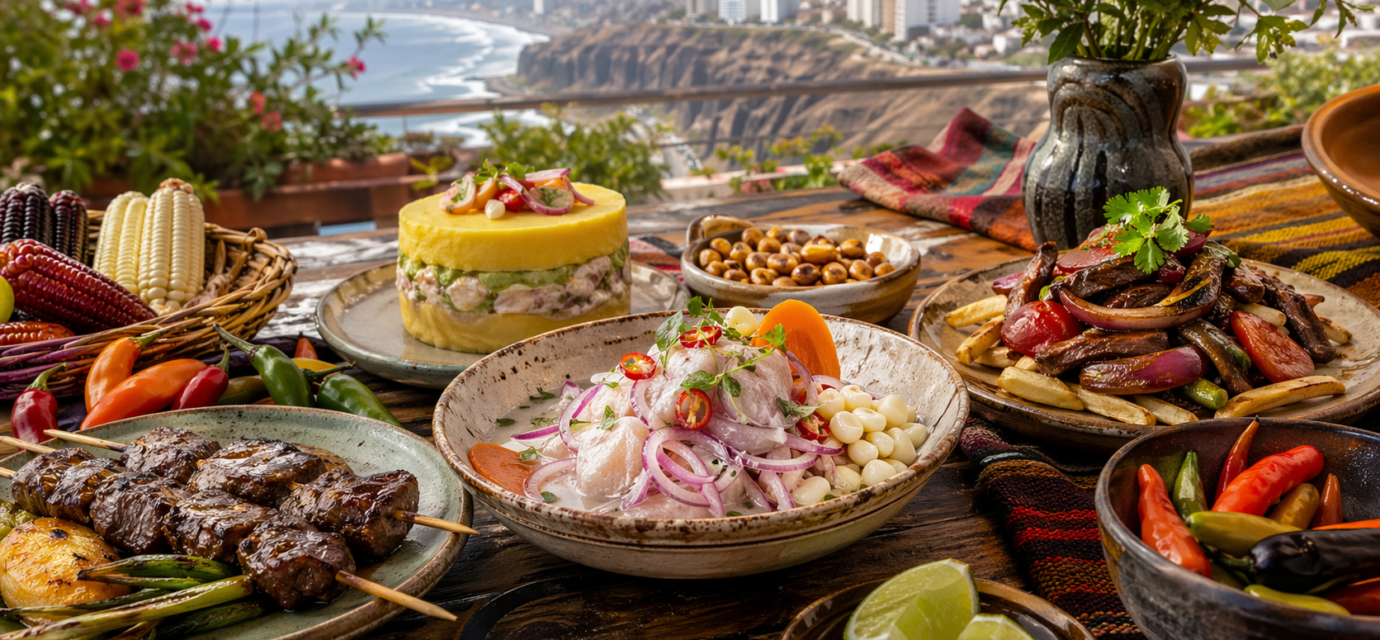
Peruvian food has a way of surprising people because it refuses to stay inside one box. A single table might hold the bright snap of ceviche, the smoky comfort of lomo saltado, the earth-cooked warmth of pachamanca, the softness of yellow potatoes, the fire of ají peppers, and the quiet wisdom of ingredients that have fed communities for generations.
That is what makes Peruvian cuisine so powerful. It is not only famous because it photographs well or because restaurants around the world have celebrated it. It is powerful because it carries real cultural depth.
PROMPERÚ, Peru’s official export and tourism promotion agency, describes Peru’s food identity through remarkable agricultural variety, including thousands of potato varieties, sweet potatoes, fruits, corn types, and native tomatoes. It also highlights the country’s regional diversity across Andean, coastal, Amazonian, Lima, Arequipa, and Novo-Andean cuisine.
In other words, Peru’s table is not built from one flavor. It is built from many worlds meeting.
A broad introduction to Peru’s culinary identity, regional ingredients, and food culture.
What Defines Peru’s Cultural Table?
Peruvian cuisine is shaped by three major worlds of flavor: the Pacific coast, the Andes, and the Amazon. Each region brings its own ingredients, techniques, rhythms, and food memories.
The coast brings seafood, citrus, peppers, rice dishes, cevicherías, markets, and a kind of cooking that often feels bright, quick, and precise.
The Andes bring altitude, potatoes, corn, quinoa, herbs, stews, soups, roasted meats, and earth-based traditions that speak to endurance, seasonality, and community.
The Amazon brings river foodways, tropical fruits, cassava, plantains, native herbs, wrapped preparations, and culinary knowledge shaped by rainforest life.
Peru’s official travel platform describes the country’s cuisine as a journey through coast, highlands, and Amazon, noting the range from Pacific seafood to Andean dishes and Amazonian fruits.
That is why Peruvian food feels so expansive. Peru is not working with a narrow pantry. It is working with one of the world’s most diverse ingredient landscapes.
Peru’s Cuisine Starts With Place
You cannot understand Peruvian food without understanding geography.
The Pacific coast gives Peru some of its most recognized seafood traditions. Lima, in particular, is known for dishes like ceviche and tiradito, and Peru Travel describes Lima’s cuisine as shaped by African, Indigenous, and Chinese influences.
The Andes tell another story. Here, food carries the memory of altitude, tubers, grains, slow cooking, and agricultural intelligence. Potatoes are not just a side dish in Peru. They are part of the country’s deep food identity.
The Amazon adds another layer entirely. Dishes such as juane de yuca, cecina con tacacho, inchicapi, and patarashca reflect rainforest ingredients, wrapping techniques, smoked meats, cassava, plantains, river fish, and local herbs. Peru’s official country brand site highlights these regional dishes as part of the country’s wider culinary route.
This is one of the reasons Peru’s food culture feels so alive. It does not move in a straight line. It unfolds by region, by migration, by memory, and by ingredient.
Ceviche: Peru’s Bright and Powerful Icon
If one dish has introduced more people to Peru than almost any other, it is ceviche.
But ceviche deserves more than a quick description as “raw fish in lime.” Done well, ceviche is an exercise in timing, freshness, balance, and confidence. The fish has to be clean and fresh. The citrus has to wake it up without flattening it. The onion, chili, salt, herbs, sweet potato, corn, and other supporting elements have to sharpen the dish without taking over.
UNESCO describes ceviche as a traditional Peruvian dish made with raw fish marinated in lime, with regional variations that reinforce both regional and national identity. It is eaten daily and during social gatherings and celebrations, and it can be prepared at home or served in traditional spaces such as cevicherías.
That recognition matters.
In 2023, UNESCO inscribed the practices and meanings associated with the preparation and consumption of ceviche in Peru on the Representative List of the Intangible Cultural Heritage of Humanity. UNESCO also notes that ceviche involves knowledge passed through families and communities, from fishing to ingredient cultivation to preparation methods.
So when we talk about ceviche, we are not only talking about a dish. We are talking about coastal knowledge, artisanal fishing, citrus, local produce, family memory, regional pride, and a food tradition that continues to evolve across Peru.
Ceviche tastes bright, but its roots run deep.
Lomo Saltado: Migration, Smoke, and Comfort on One Plate
If ceviche represents Peru’s coastal brightness, lomo saltado represents something equally important: adaptation.
Lomo saltado is one of the clearest examples of Chinese influence in Peruvian cooking. It usually brings together beef, onion, tomato, hot peppers, soy sauce, potatoes, and rice. Peru Travel’s Lima cuisine guide specifically identifies lomo saltado as a dish influenced by Chinese cuisine, describing it as sautéed potato, meat, onion, tomato, and hot peppers seasoned with soy sauce.
What makes lomo saltado so loved is not only the ingredient list. It is the way the dish moves.
The heat matters. The pan matters. The quick sauté matters. The smoky edge matters. The sauce clings to the beef and vegetables, while the rice and fries soak up everything that lands on the plate.
This is not a trendy fusion dish created for novelty. It is lived cuisine. It comes from migration, adaptation, work, hunger, creativity, and the everyday ways communities make something new while keeping pieces of themselves intact.
Peru’s country brand site also notes that lomo saltado fuses a sautéing technique associated with Chinese cuisine with Peruvian ingredients such as potato, tomato, and onion.
That is one of the great lessons of Peruvian food: cultural exchange does not always erase identity. Sometimes it gives a cuisine another language.
Pachamanca: Where a Meal Becomes a Ceremony
Then there is pachamanca.
Pachamanca is one of Peru’s most powerful Andean food traditions because it connects cooking directly to the earth. The name comes from Quechua: “pacha,” meaning earth, and “manca,” meaning pot. Peru’s official country brand site explains that pachamanca is cooked underground with hot stones and may include ingredients such as beef, pork, chicken, potatoes, beans, and humitas. It also notes that pachamanca was declared Cultural Heritage of the Nation in 2003.
This is not fast food. It is not food that can be fully understood by ingredients alone.
Pachamanca is method, gathering, patience, and continuity. It is food that asks people to participate. Stones are heated. Ingredients are prepared. The earth becomes part of the cooking process. People wait. People gather. People share.
The beauty of pachamanca is that it reminds us cooking can hold relationship: relationship to land, labor, season, family, community, and memory.
You can make a home-inspired version of pachamanca, but the cultural meaning of the dish is tied to the method. The earth oven is not a small detail. It is part of the story.
A closer look at pachamanca, one of Peru’s most meaningful Andean cooking traditions.
The Dishes That Round Out Peru’s Identity
Peruvian cuisine does not stop with ceviche, lomo saltado, and pachamanca.
Lima’s food story includes tiradito, a seafood dish often compared to ceviche but served without onion and with its own style. Peru Travel identifies tiradito as a version of ceviche without onion and lists it among Lima’s typical seafood dishes.
There is also causa limeña, a layered potato dish often filled with poultry, seafood, avocado, or tomato. Peru Travel describes causa limeña as a potato puree stuffed with those fillings.
Ají de gallina brings creamy comfort with shredded chicken, peppers, milk, bread, and spices. Anticuchos, often associated with African influence in Lima’s cuisine, are skewered cow hearts grilled over charcoal. Peru Travel’s Lima cuisine guide specifically connects African influence to anticuchos, cau cau, and tacu tacu.
Across Peru, the table keeps expanding. There are soups, seafood stews, roasted meats, corn-based dishes, potato-centered plates, Amazonian wrapped foods, spicy Arequipa dishes, and regional preparations that each carry their own history.
What is exciting about Peru is that its famous dishes do not cancel each other out. They build on one another.
- Ceviche tells you about the coast.
- Pachamanca tells you about the Andes.
- Lomo saltado tells you about migration.
- Anticuchos tell you about resilience and historical contribution.
- Causa tells you about the power of native ingredients like potato.
Together, they make Peruvian cuisine feel like a national archive written in flavor.
Why Peruvian Food Feels Both Ancient and Modern
Part of Peru’s appeal is that the cuisine never feels stuck.
It respects old techniques, regional ingredients, ancestral knowledge, and inherited practices, but it is also dynamic, creative, and open. That is why Peruvian food can feel deeply ancient and very current at the same time.
A UN Tourism investment guide describes Peruvian cuisine as one of Peru’s most important cultural expressions, shaped by biodiversity and influences from Andean, Amazonian, European, Asian, and African cultures. It also notes that Peru’s cuisine reflects different regions and stages of Peruvian history, from pre-Columbian societies to the present.
That is the key. Peru’s cuisine is not modern because it abandoned its roots. It is modern because it knows how to carry them forward.
Fine dining has helped bring global attention to Peru, but the deeper strength comes from everyday places: markets, street stalls, home kitchens, regional festivals, family recipes, small restaurants, farmers, fishers, cooks, and communities who kept food knowledge alive long before the world started paying attention.
Popular Peruvian Dishes to Know
Ceviche
Fresh fish marinated in lime and commonly paired with onion, chili, salt, sweet potato, corn, and other local ingredients. UNESCO recognizes the practices and meanings connected to ceviche as part of Peru’s intangible cultural heritage.
Lomo Saltado
A beloved Chinese-Peruvian dish that combines sautéed beef, potatoes, onion, tomato, hot peppers, soy sauce, rice, and a smoky wok-style cooking influence.
Pachamanca
An Andean earth-oven tradition cooked underground with hot stones, often using meats, potatoes, beans, corn, and humitas. It was declared Cultural Heritage of the Nation in Peru in 2003.
Causa Limeña
A layered potato dish often filled with poultry, seafood, avocado, or tomato. It shows how deeply potatoes belong to Peru’s culinary identity.
Ají de Gallina
A creamy shredded chicken dish made with hot peppers, milk, bread, and spices. It is comforting, rich, and full of gentle heat.
Anticuchos
Skewered cow hearts grilled over charcoal, strongly connected to Lima’s African culinary influence and street food culture.
Juane de Yuca
An Amazonian dish made with cassava, rice, spices, and fillings such as hen or beef, wrapped in leaves and steamed.
Patarashca
An Amazonian technique where fish is wrapped in bijao leaves with spices and cooked over heat, creating an aromatic and flavorful dish.
How to Explore Peruvian Food Respectfully
Peruvian cuisine deserves to be explored with curiosity and care.
Do not treat it as one single flavor profile. Coastal, Andean, and Amazonian traditions all matter.
Recognize Indigenous food knowledge as foundational, not secondary.
When discussing migration influences, frame them as part of Peru’s lived food history, not as trendy mashups.
Avoid writing only about upscale Lima dining. Peru’s culinary depth is much broader than restaurant prestige.
Use specific dish names and explain their context instead of reducing them into broad categories.
Remember that food is not only taste. It can hold land, labor, migration, memory, family, celebration, and survival.
Before You Leave This Table
Peru starts with ceviche for a lot of people, but it never ends there.
It keeps unfolding through hot stones in the Andes, sizzling pans in city kitchens, skewers on the street, wrapped fish in the Amazon, and potatoes that carry centuries of knowledge in their skin.
So here is the question worth sitting with:
If one country can hold coast, mountain, rainforest, migration, memory, and heat on the same table, what might be waiting in the next Peruvian dish you have not met yet?
Frequently Asked Questions About Peruvian Food
What is Peruvian food known for?
Peruvian food is known for ceviche, lomo saltado, pachamanca, causa limeña, ají de gallina, anticuchos, Amazonian dishes, potatoes, corn, ají peppers, seafood, and strong regional diversity across the coast, Andes, and Amazon.
Why is ceviche important in Peru?
Ceviche is important because it is more than a popular seafood dish. UNESCO recognizes the practices and meanings associated with preparing and consuming ceviche as part of Peru’s intangible cultural heritage. It reflects regional identity, family knowledge, fishing traditions, and social gatherings.
What is lomo saltado?
Lomo saltado is a Chinese-Peruvian dish made with sautéed beef, potatoes, onion, tomato, hot peppers, soy sauce, and rice. It reflects the influence of Chinese cooking techniques and Peruvian ingredients.
What is pachamanca?
Pachamanca is a traditional Andean dish cooked underground with hot stones. It often includes meats, potatoes, beans, corn, and humitas. Its name comes from Quechua words connected to earth and pot.
What makes Peruvian cuisine unique?
Peruvian cuisine is unique because it brings together Indigenous food knowledge, regional biodiversity, coastal seafood, Andean agriculture, Amazonian traditions, and influences from Spanish, African, Chinese, Japanese, and other communities over time.
References and Further Reading
- UNESCO. “Practices and Meanings Associated With the Preparation and Consumption of Ceviche, an Expression of Peruvian Traditional Cuisine.”
- Peru Travel. “A Culinary Journey Through Peru: Coast, Highlands, and Amazon.”
- Peru Travel. “Cuisine of Lima.”
- Peru Country Brand / PROMPERÚ. “Peruvian Cuisine and Gastronomy Day: A Journey Through Peru’s Most Iconic Dishes.”
- PROMPERÚ Europe. “Gastronomy.”
- UN Tourism / Investing in Peru. “The Gastronomy Boom in Peru.”