Loaded Hot Dogs with Global Toppings Bar
There is something wonderfully unpretentious about a hot dog night. It does not ask you to be fancy. It simply asks you to gather, toast the buns, warm the franks, set out the toppings, and let everyone build the bite that feels most like them. That is the beauty of loaded hot dogs: they can be familiar, playful, nostalgic, and wildly creative all at once.
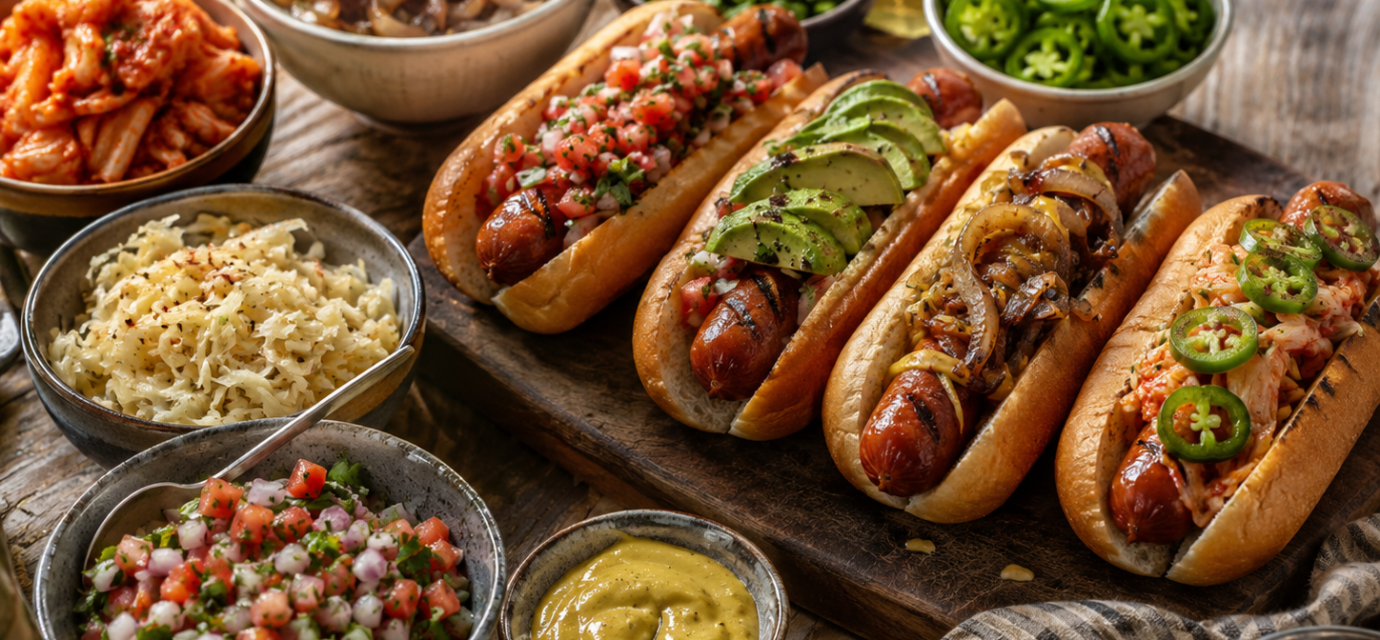
This recipe turns a simple cookout classic into a global toppings bar inspired by street food traditions, regional American hot dog styles, and bold pantry-friendly flavors. One person might reach for sauerkraut and caramelized onions. Another might pile on kimchi and gochujang mayo. Someone else may want pico de gallo, avocado, queso fresco, and a squeeze of lime. Around one table, the same base becomes six different stories.
Hot dogs have debated, but likely German roots, and German immigrants helped popularize sausage-in-a-bun street food in New York during the 19th century. From there, the hot dog became tied to Coney Island, baseball parks, cookouts, and regional styles across the United States. Britannica notes that modern American hot dog variations include Chicago, New York, and Sonoran styles, each shaped by local taste and migration patterns.
For Fly By Eats, this loaded hot dog bar is less about claiming one “authentic” version and more about celebrating how food travels, adapts, and becomes personal. It is a casual recipe with a little cultural curiosity tucked into every topping bowl.
Quick Recipe Snapshot
- Prep Time: 25 minutes
- Cook Time: 12-15 minutes
- Total Time: 40 minutes
- Servings: 6 loaded hot dogs
- Difficulty Level: Easy
- Best For: Cookouts, game day, family dinners, summer parties, casual entertaining
- Expected Result: Juicy grilled or skillet-seared hot dogs in toasted buns with colorful global toppings, balanced sauces, fresh crunch, creamy contrast, and plenty of build-your-own fun.
Why You’ll Love This Recipe
- It turns basic hot dogs into a full party-friendly meal.
- The toppings bar lets every guest customize their own plate.
- It works for backyard grilling, stovetop cooking, or indoor game-day hosting.
- The flavors are flexible: spicy, tangy, creamy, fresh, smoky, or classic.
- Most toppings can be prepared ahead of time.
- It is beginner-friendly but still feels creative and memorable.
- It is easy to scale up for a larger crowd.
Cultural and Seasonal Background
The hot dog is often treated as a classic American cookout food, but its story is layered. Britannica describes the hot dog as a sausage of disputed but probable German origin, noting that German immigrants brought the food to New York in the 1860s. Coney Island helped anchor the hot dog in American leisure culture, and by the late 19th and early 20th centuries, it had become connected to fairs, ballparks, street vendors, and outdoor gatherings.
Smithsonian Magazine also traces the rise of the hot dog through German immigration, New York pushcarts, Coney Island boardwalk culture, baseball, and backyard rituals. The article notes that the hot dog became successful partly because it was portable, inexpensive, and adaptable, which helps explain why so many regions have developed their own versions.
This recipe borrows inspiration from several traditions without pretending to be a strict recreation of any single one. The sauerkraut and onion option nods toward German and New York-style hot dog traditions. The kimchi and gochujang mayo option takes inspiration from Korean flavors; UNESCO describes kimjang, the making and sharing of kimchi, as a Korean cultural practice tied to preservation, community, and seasonal preparation. The pico de gallo, beans, avocado, and creamy sauce option loosely nods toward Sonoran-style hot dogs, a beloved regional specialty associated with Tucson and northern Mexican influence; Visit Tucson describes the Sonoran dog as a bacon-wrapped hot dog with pinto beans, onions, tomatoes, mayonnaise, mustard, jalapeño sauce, and a fluffy bolillo bun.
For seasonal use, this recipe shines in warm-weather gatherings, Fourth of July cookouts, birthdays, graduation parties, neighborhood potlucks, and game-day spreads. It is casual food, yes, but casual food has always carried culture. Sometimes the most meaningful meals are the ones people build with their own hands.
Why This Recipe Works
The base is simple, which gives the toppings room to shine. Hot dogs are already seasoned, so the goal is not to overwhelm them. The best loaded hot dogs have balance: a warm, savory base, a toasted bun, something creamy, something acidic, something crunchy, and a fresh finish.
Toasting the buns matters because toppings like kimchi, sauerkraut, pico de gallo, and sauces can add moisture. A lightly crisp bun holds up better and gives each bite contrast. Draining wet toppings also helps prevent sogginess.
Cooking the hot dogs over medium to medium-high heat gives them light browning without splitting them too aggressively. Turning them often helps the outside heat evenly. For guests who are pregnant, age 65 or older, or have weakened immune systems, CDC guidance for ready-to-eat deli meats recommends reheating to 165°F or until steaming hot to reduce Listeria risk; USDA hot dog safety guidance also notes that higher-risk groups should reheat hot dogs until steaming hot.
The toppings bar works because it separates strong flavors into small bowls. Guests can create their own combinations instead of being handed an overloaded hot dog that may not match their taste.
Ingredients
Hot Dog Base
6 hot dogs, beef, turkey, chicken, pork, or plant-based
This is the foundation. Choose a style that fits your guests and follow the package cooking instructions, especially for poultry or plant-based varieties.
6 hot dog buns, classic, brioche, potato, or pretzel buns
The bun holds everything together. Softer buns feel classic, while brioche and pretzel buns add richness.
1 tablespoon butter or neutral oil, optional
Used for toasting the buns. Butter adds flavor; oil gives crisp edges without as much richness.
Martha’s Favorite Hot Dog Toppings⎢Martha Stewart
Classic Toppings
Yellow mustard
Adds tang and sharpness that cuts through the richness of the hot dog.
Ketchup, optional
Adds sweetness and familiarity. Offer it for guests who love a classic cookout style.
Sweet pickle relish
Brings sweet acidity and a soft crunch.
Finely chopped white onion
Adds clean bite and freshness.
German and New York-Inspired Toppings
¾ cup sauerkraut, well drained
Tangy, briny, and bright. Drain it well so the bun does not get soggy.
½ cup caramelized onions
Sweet, soft onions balance salty hot dogs and sharp mustard.
Spicy brown mustard
Adds deeper flavor than yellow mustard and pairs well with sauerkraut.
Korean-Inspired Toppings
¾ cup napa cabbage kimchi, drained and roughly chopped
Adds fermented tang, spice, and crunch. Chop it so it sits neatly on the hot dog.
¼ cup mayonnaise
Creates the creamy base for gochujang mayo.
1–2 teaspoons gochujang
Korean fermented chile paste that brings heat, savoriness, and gentle sweetness.
1 teaspoon rice vinegar or lime juice
Brightens the mayo and keeps it from feeling heavy.
1 tablespoon sliced scallions
Adds a fresh oniony finish.
1 teaspoon toasted sesame seeds, optional
Adds a nutty aroma and a pretty finish.
Sonoran-Inspired Toppings
¾ cup warm pinto beans, drained
Adds heartiness and a soft, earthy layer.
½ cup pico de gallo
Fresh tomato, onion, cilantro, and lime bring brightness.
1 avocado, sliced or diced
Adds creaminess and a cool contrast.
¼ cup crumbled queso fresco or cotija
Adds salty, milky flavor. Cotija is stronger; queso fresco is softer.
Pickled jalapeños or roasted green chiles
Adds heat and acidity.
Lime wedges
A squeeze of lime wakes up the whole hot dog.
Fresh Finish Toppings
Chopped cilantro
Bright, herbal, and especially good with pico de gallo and avocado.
Shredded lettuce or cabbage
Adds crunch and helps catch sauces.
Thinly sliced radishes
Adds peppery crispness.
Crushed tortilla chips or crispy onions, optional
Adds crunch for guests who love texture.
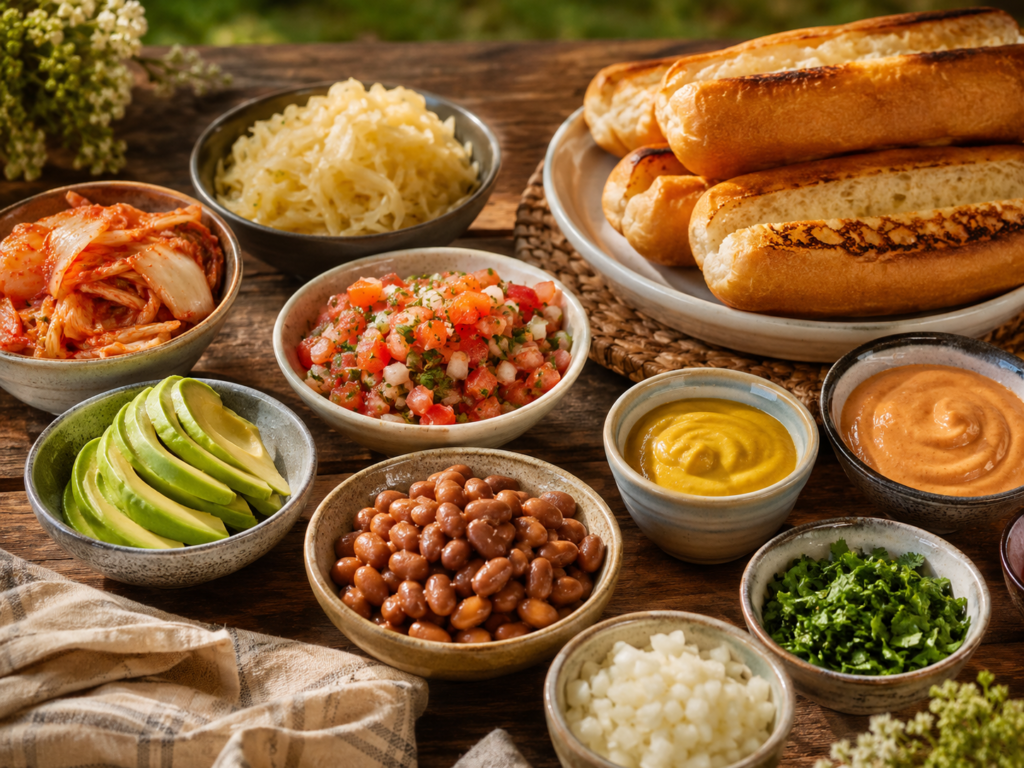
Ingredients for loaded hot dogs with global toppings, including kimchi, sauerkraut, avocado, beans, and sauces.
Ingredient Notes and Smart Substitutions
For a beef-free option, use turkey, chicken, pork, or plant-based hot dogs. Follow the package directions closely because different products brown and heat differently.
For dairy-free guests, skip queso fresco and use dairy-free mayo for the gochujang sauce. For egg-free guests, choose an egg-free mayonnaise alternative.
For gluten-free guests, use certified gluten-free hot dogs and buns, and check labels on sauces, kimchi, and gochujang.
For less spice, use mild kimchi, reduce the gochujang to ½ teaspoon, and offer jalapeños on the side.
For more heat, add chili crisp, hot sauce, sliced serrano peppers, or spicy mustard.
For a less messy toppings bar, chop toppings small and use slotted spoons for wet ingredients.
Equipment You’ll Need
- Grill, grill pan, cast iron skillet, or nonstick skillet
- Tongs
- Small bowls for toppings
- Cutting board
- Sharp knife
- Small skillet for caramelized onions
- Spoon or whisk for sauces
- Food thermometer, especially for reheating leftovers or serving higher-risk guests
- Serving tray or large board for the toppings bar
Step-by-Step Directions
- Prepare the toppings first.
Drain sauerkraut and kimchi well. Chop the kimchi into smaller pieces. Slice scallions, avocado, radishes, and herbs. Warm the pinto beans gently in a small saucepan or microwave-safe bowl. Preparing everything first keeps the assembly smooth once the hot dogs are hot. - Make the gochujang mayo.
In a small bowl, stir together ¼ cup mayonnaise, 1-2 teaspoons gochujang, and 1 teaspoon rice vinegar or lime juice. Taste and adjust. It should be creamy, lightly spicy, and bright enough to balance the richness of the hot dog. - Caramelize the onions.
Add thinly sliced onions to a skillet with a small amount of oil or butter. Cook over medium-low heat for 12-15 minutes, stirring often, until soft and golden. If they begin to stick, add a splash of water. Slow cooking brings out sweetness without burning. - Preheat your cooking surface.
Heat a grill or skillet to medium or medium-high heat. For a grill, aim for steady heat rather than aggressive flames. For a skillet, let the pan warm before adding the hot dogs so they brown instead of steaming. - Cook the hot dogs.
Add hot dogs to the grill or skillet. Cook for 7-10 minutes, turning every 1-2 minutes, until evenly hot and lightly browned. For guests at higher risk of foodborne illness, heat hot dogs until steaming hot or to 165°F. - Toast the buns.
Brush the cut sides of the buns lightly with butter or oil if desired. Place cut-side down on the grill or skillet for 1-2 minutes, just until golden. Watch closely because buns can burn quickly. - Set up the toppings bar.
Arrange toppings in small bowls by flavor family: classic, German/New York-inspired, Korean-inspired, and Sonoran-inspired. Keep wet toppings with slotted spoons. Keep perishable toppings chilled until close to serving time. - Build each loaded hot dog.
Place a hot dog in a toasted bun. Start with sauce, add a warm or tangy topping, then finish with fresh herbs, crunch, or cheese. A good rule is one sauce, two toppings, and one fresh finish. - Serve right away.
Loaded hot dogs are best when the bun is warm, the hot dog is juicy, and the toppings still have texture. Encourage guests to build one at a time instead of assembling everything too early.
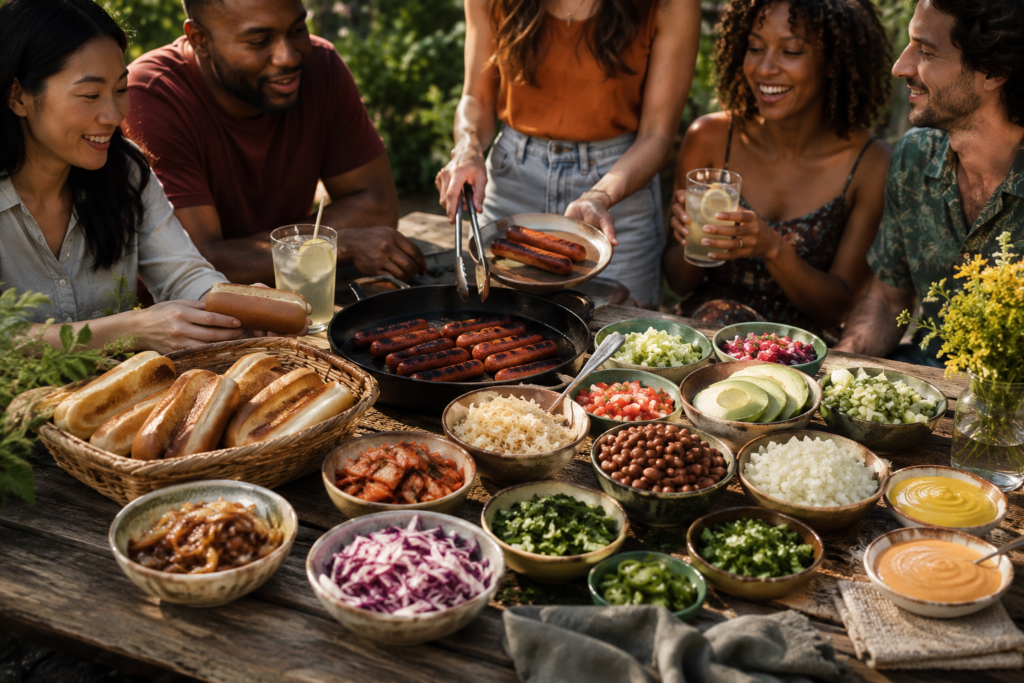
Backyard hot dog toppings bar for a casual summer cookout.
Pro Tips for Best Results
- Drain kimchi, sauerkraut, and pico de gallo before serving.
- Toast buns right before serving so they stay crisp.
- Keep toppings chopped small, so the hot dogs are easier to eat.
- Use squeeze bottles for sauces if serving a crowd.
- Offer both mild and spicy toppings so everyone feels included.
- Keep hot toppings warm and cold toppings chilled until serving.
- Do not overload each bun; too many toppings can hide the flavor.
- Label spicy toppings for guests who prefer mild food.
- Use a toppings board or tray to make the setup feel intentional.
- Refill toppings in small batches instead of leaving everything out too long.
Common Mistakes to Avoid
Skipping the bun toast:
Untoasted buns soften quickly under wet toppings. Toasting gives structure.
Using toppings straight from the jar without draining:
Kimchi, sauerkraut, and pickles can flood the bun. Drain first.
Cooking over heat that is too high:
Hot dogs can split or char before heating through. Use steady medium to medium-high heat.
Building too far ahead:
Assembled hot dogs get soggy. Set up the bar and let guests build fresh.
Offering only spicy toppings:
Balance heat with familiar options like mustard, relish, onions, and avocado.
Leaving perishable toppings out too long:
FoodSafety.gov advises refrigerating perishable foods within 2 hours, or within 1 hour if the food is exposed to temperatures above 90°F.
Forgetting serving utensils:
Use separate spoons for each topping to keep flavors cleaner and reduce cross-contact.
Flavor Variations
Chicago-Inspired Loaded Dog:
Yellow mustard, relish, chopped onion, tomato, pickle spear, sport peppers, and celery salt.
New York-Inspired Dog:
Sauerkraut, caramelized onions, and spicy brown mustard.
Korean-Inspired Kimchi Dog:
Kimchi, gochujang mayo, scallions, sesame seeds, and a little shredded cabbage.
Sonoran-Inspired Dog:
Warm pinto beans, pico de gallo, avocado, queso fresco, jalapeño sauce, and lime.
Buffalo Ranch Dog:
Buffalo sauce, ranch or blue cheese dressing, celery leaves, shredded lettuce, and crispy onions.
BBQ Picnic Dog:
BBQ sauce, creamy coleslaw, pickled red onions, and crushed potato chips.
Mediterranean-Inspired Dog:
Cucumber, tomato, red onion, feta, herbs, and a drizzle of yogurt sauce.
Serving Suggestions
Serve these loaded hot dogs with crispy fries, sweet potato wedges, potato salad, coleslaw, grilled corn, elote-style corn cups, baked beans, or a big crunchy green salad.
For drinks, keep it simple with lemonade, iced tea, sparkling water with citrus, agua fresca, or ginger beer. For a family table, serve sauces in small bowls and toppings in colorful rows so the spread feels abundant without being complicated.
For a summer party, place buns in a towel-lined basket, keep hot dogs warm in a covered pan, and arrange toppings on a tray over ice if you are outdoors. For game day, create a “build your own dog” station with flavor cards: Classic, Tangy, Spicy, Fresh, and Crunchy.
Storage, Freezing, and Reheating
Store cooked hot dogs separately from buns and toppings. Place leftovers in shallow airtight containers and refrigerate within 2 hours, or within 1 hour if serving outdoors above 90°F. The FDA also recommends keeping refrigerators at or below 40°F and freezers at 0°F.
Cooked hot dogs are best eaten within 3-4 days when properly refrigerated. FoodSafety.gov advises reheating leftovers to 165°F and notes that frozen leftovers remain safe, though quality decreases over time.
Refrigerator: Store cooked hot dogs for 3-4 days. Store toppings separately.
Freezer: Freeze cooked hot dogs for the best quality within 1-2 months. Buns can also be frozen separately.
Reheating: Reheat hot dogs in a skillet, microwave, oven, or grill until steaming hot. Use 165°F as the safest leftover reheating target.
Do not freeze assembled hot dogs: The buns will become soggy, and toppings may lose texture.
Make-Ahead Tips
Chop onions, herbs, radishes, and cabbage up to 1 day ahead. Store each topping separately in airtight containers.
Make gochujang mayo up to 3 days ahead and refrigerate it.
Caramelize onions up to 3 days ahead. Reheat gently before serving.
Drain sauerkraut and kimchi shortly before serving for the best texture.
Toast buns and cook hot dogs just before guests eat. That final fresh step makes the whole bar taste better.
Frequently Asked Questions
Can I make loaded hot dogs without a grill?
Yes. A cast-iron skillet, grill pan, or nonstick skillet works well. Cook the hot dogs over medium to medium-high heat and turn often until hot and lightly browned.
What are the best toppings for a hot dog bar?
A strong hot dog bar includes sauces, something tangy, something crunchy, something creamy, and something fresh. Mustard, relish, onions, sauerkraut, kimchi, pico de gallo, avocado, cheese, and herbs are all great options.
How do I keep buns from getting soggy?
Toast the buns, drain wet toppings, and assemble hot dogs right before eating.
Can I use plant-based hot dogs?
Yes. Use your favorite plant-based hot dogs and follow the package directions. Offer dairy-free sauces and cheese alternatives if needed.
How many hot dogs should I plan per person?
Plan 1–2 hot dogs per adult, depending on sides and appetite. For a party with several side dishes, 1 per person may be enough; for a main-meal cookout, plan closer to 2.
Can I prep the toppings the night before?
Yes. Most toppings can be chopped or mixed ahead. Store everything separately in the refrigerator and wait to toast buns and cook hot dogs until serving time.
What temperature should leftovers be reheated to?
Leftovers should be reheated to 165°F. CDC and FoodSafety.gov both recommend using a food thermometer because appearance alone is not a reliable safety check.
Are these hot dogs authentic to one cuisine?
No. This is a globally inspired toppings bar, not a traditional dish from one culture. It respectfully borrows flavor ideas from regional and cultural foodways while keeping the format casual and customizable.
Final Thoughts
Loaded hot dogs are proof that a meal does not have to be complicated to feel generous. A hot dog in a bun may look simple at first, but the moment you surround it with bowls of tangy sauerkraut, spicy kimchi, creamy avocado, bright pico de gallo, warm beans, caramelized onions, mustard, herbs, and crunchy toppings, it becomes something more inviting. It becomes a table people want to lean into.
That is what makes this recipe such a good fit for real life. It welcomes picky eaters and adventurous eaters at the same time. It gives the host room to prepare ahead without losing the joy of serving something fresh. It lets children, friends, neighbors, and family members build a plate that feels personal. And in a small but meaningful way, it shows how food keeps traveling from immigrant pushcarts to ballparks, from regional street food to backyard cookouts, from one family’s favorite topping to another person’s new discovery.
The heart of this recipe is not perfection. It is participation. Toast the buns. Heat the hot dogs until they are juicy and steaming. Set out the toppings with care. Keep the cold foods cold, the hot foods hot, and the flavors easy to reach. Then let the table do what good tables do: invite conversation, laughter, curiosity, and second helpings.
Whether you serve these for a summer cookout, a game-day spread, a birthday party, or a casual Friday dinner, this global toppings bar turns a familiar comfort food into a small celebration. It is warm, playful, practical, and full of possibility, exactly the kind of food that reminds us that flavor does not have to be formal to be memorable.
Quick Recipe Section
Recipe Name: Loaded Hot Dogs with Global Toppings Bar
Description:
Juicy hot dogs served in toasted buns with a colorful build-your-own toppings bar inspired by classic American, German/New York, Korean, and Sonoran-style flavors.
Prep Time: 25 minutes
Cook Time: 12–15 minutes
Total Time: 40 minutes
Servings: 6 loaded hot dogs
Ingredients:
- 6 hot dogs, beef, turkey, chicken, pork, or plant-based
- 6 hot dog buns
- 1 tablespoon butter or neutral oil, optional
- Yellow mustard
- Ketchup, optional
- Sweet pickle relish
- ½ cup finely chopped white onion
- ¾ cup sauerkraut, drained
- ½ cup caramelized onions
- Spicy brown mustard
- ¾ cup kimchi, drained and chopped
- ¼ cup mayonnaise
- 1–2 teaspoons gochujang
- 1 teaspoon rice vinegar or lime juice
- 1 tablespoon sliced scallions
- 1 teaspoon toasted sesame seeds, optional
- ¾ cup warm pinto beans, drained
- ½ cup pico de gallo
- 1 avocado, sliced or diced
- ¼ cup queso fresco or cotija
- Pickled jalapeños or roasted green chiles
- Lime wedges
- Chopped cilantro
- Shredded lettuce or cabbage
- Thinly sliced radishes
- Crispy onions, crushed tortilla chips, or other crunchy toppings, optional
Instructions:
- Prepare toppings by draining sauerkraut, kimchi, and pico de gallo. Chop herbs, onions, radishes, avocado, and scallions.
- Stir mayonnaise, gochujang, and rice vinegar or lime juice together to make gochujang mayo.
- Caramelize onions in a skillet over medium-low heat for 12–15 minutes until golden and soft.
- Preheat a grill, grill pan, or skillet to medium or medium-high heat.
- Cook hot dogs for 7–10 minutes, turning often, until hot, lightly browned, and steaming. For higher-risk guests, heat to 165°F or until steaming hot.
- Toast buns cut-side down for 1–2 minutes until lightly golden.
- Arrange toppings in bowls by flavor style.
- Place hot dogs in toasted buns and let guests build their own loaded hot dogs.
- Serve immediately.
Notes:
Drain wet toppings well. Toast buns right before serving. Keep spicy toppings separate and labeled. Use separate utensils for each topping.
Storage:
Store cooked hot dogs, buns, and toppings separately. Refrigerate perishable leftovers within 2 hours, or within 1 hour above 90°F. Reheat cooked hot dogs to 165°F before serving again.
Nutrition Disclaimer:
Nutrition information, if provided, is an estimate and may vary based on ingredients and preparation methods.
References
- Centers for Disease Control and Prevention. (2024, August 11). How Listeria spread: Deli foods and prepared meats. https://www.cdc.gov/listeria/causes/deli-ready-to-eat-foods.html
- Encyclopaedia Britannica. (2026, May 2). Hot dog. Encyclopaedia Britannica. https://www.britannica.com/topic/hot-dog
- FoodSafety.gov. (2023, September 18). 4 steps to food safety. https://www.foodsafety.gov/keep-food-safe/4-steps-to-food-safety
- FoodSafety.gov. (n.d.). Leftovers: The gift that keeps on giving. https://www.foodsafety.gov/blog/leftovers-gift-keeps-giving
- Toy, R. (2026, March). Get your red-hot history lesson! How the hot dog rose from Coney Island carts to platters at presidential picnics. Smithsonian Magazine. https://www.smithsonianmag.com/arts-culture/red-hot-history-lesson-how-hot-dog-rose-coney-island-carts-platters-presidential-picnics-180988086/
- U.S. Department of Agriculture, Food Safety and Inspection Service. (n.d.). Hot dogs and food safety. https://www.fsis.usda.gov/food-safety/safe-food-handling-and-preparation/meat-catfish/hot-dogs-food-safety
- U.S. Food and Drug Administration. (2023, January 18). Are you storing food safely?https://www.fda.gov/consumers/consumer-updates/are-you-storing-food-safely
- UNESCO. (n.d.). Kimjang, making and sharing kimchi in the Republic of Korea. Intangible Cultural Heritage. https://ich.unesco.org/en/RL/kimjang-making-and-sharing-kimchi-in-the-republic-of-korea-00881
- Visit Tucson. (2026). Visit Tucson launches Sonoran Dog Trail, celebrating the city’s iconic culinary culture. https://www.visittucson.org/articles/post/visit-tucson-launches-sonoran-dog-trail-celebrating-the-citys-iconic-culinary-culture/