Seaside Paella on a Sunlit Terrace: Saffron Rice, Sea Air, and the Beauty of Slowing Down
There are meals that feel like more than food.
A seaside paella on a sunlit terrace is one of them.
It is the kind of meal that arrives with color first. Golden rice. Bright lemon wedges. Pink shrimp. Deep black mussel shells. A wide pan resting at the center of the table like an invitation. Behind it, the water catches the sunlight, the air smells faintly of salt, and the meal seems to say what busy life often forgets: sit down, breathe, taste this slowly.
Paella is often imagined as Spain in a pan, but its roots are especially tied to Valencia, where rice, fire, farming landscapes, coastal ingredients, and family-style eating have shaped one of the world’s most recognizable rice dishes. In Valencia, paella is not treated like just another dinner option. It is part of identity, timing, memory, and local pride. Reuters notes that paella is central to Valencian food culture, with traditional paella valenciana often made with rabbit, chicken, snails, vegetables, rice, and saffron, while seafood versions such as paella del senyoret remain beloved coastal variations.
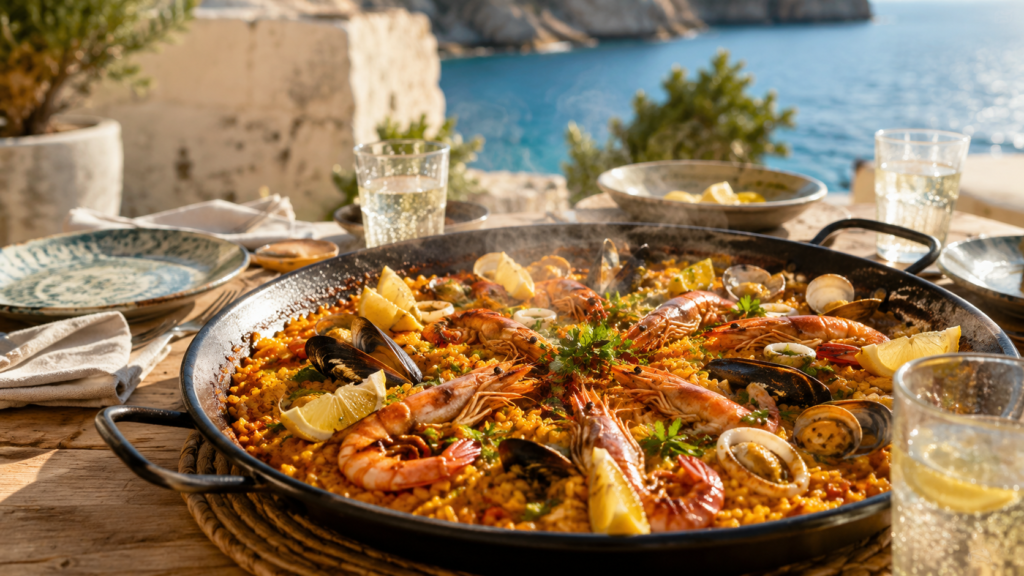
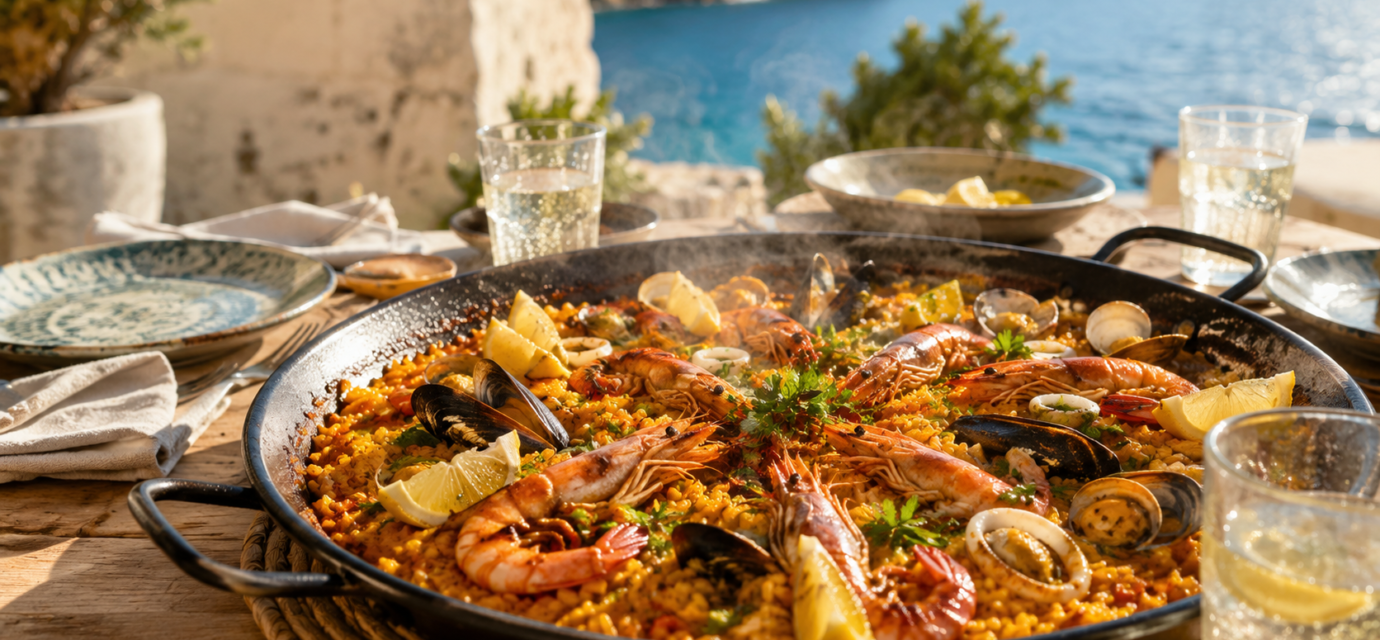
Seafood paella on a sunlit seaside terrace with golden saffron rice, shrimp, mussels, lemon, and Mediterranean water in the background.
When the Sea Becomes Part of the Meal
A good seafood paella is not only about the seafood. It is about the relationship between the rice and everything around it.
The rice should carry the broth. The saffron should be present without shouting. The seafood should taste fresh and clean. The pan should hold the dish wide and shallow, giving the rice room to absorb flavor instead of turning heavy or soupy.
That is part of what makes paella so memorable. It does not rush toward luxury. It builds it slowly.
There is the quiet patience of the sofrito. The careful pour of broth. The way the rice settles into the pan and is left alone. The moment when the bottom layer begins to toast into socarrat, that treasured crisp layer that gives paella its deeper texture and character.
Paella reminds us that some foods are meant to be watched, not hurried.
A Dish Rooted in Place
The beauty of paella is that it carries a landscape.
Valencia’s rice culture matters because the rice itself matters. Arroz de Valencia is recognized as a Protected Designation of Origin product, and Valencia’s rice-growing areas include important wetland landscapes such as Albufera Natural Park. EU Rice notes that Arroz de Valencia PDO includes medium-grain Japonica varieties such as Senia, Bomba, and Albufera, which are valued for their ability to absorb flavor while holding texture in dishes like paella.
Foods and Wines from Spain also describes Arroz de Valencia PDO as rice from Senia, Bahía, and Bomba varieties, with Senia and Bahía known for creamy texture and flavor absorption, while Bomba is valued for consistency and grains that do not stick together after cooking.
That small detail changes how a reader experiences the dish.
Paella is not just “rice with seafood.” It is rice that has been asked to remember the field, the fire, the broth, the coast, and the people gathered around the pan.
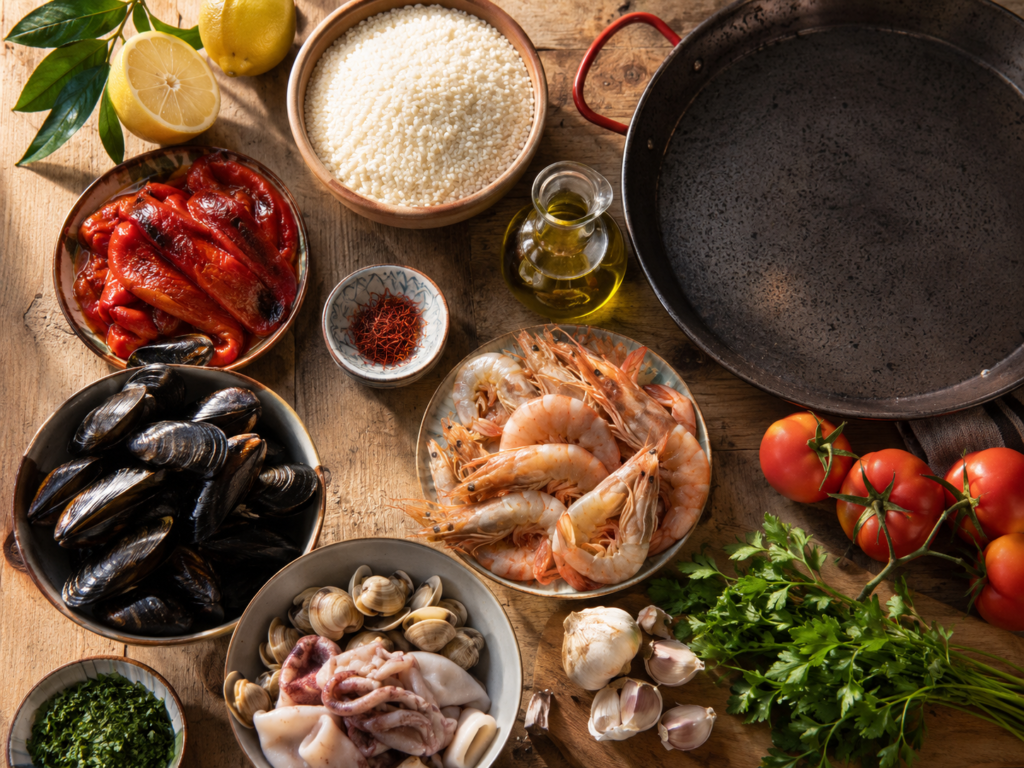
Fresh seafood paella ingredients include rice, saffron, shrimp, mussels, clams, lemons, and olive oil.
Why Paella Feels So Human
Part of the magic of paella is that it is rarely a lonely dish.
It asks for a table.
It asks for conversation.
It asks for someone to lean in and say, “Try this part near the edge.”
That spirit connects beautifully with the broader Mediterranean idea of food as a social practice. UNESCO describes the Mediterranean diet as more than a list of ingredients. It includes knowledge, rituals, traditions, farming, fishing, preparation, and shared consumption. UNESCO also notes that communal meals are a cornerstone of social customs and festive events.
That is why a seaside paella scene feels so emotionally rich. The terrace matters. The sunlight matters. The slow conversation matters. The people around the pan matter.
A plate can feed you.
A meal like this can soften you.
Paella in Valencia and at Home | Made in Spain with Chef José Andrés | Full Episode
Seafood Paella vs. Traditional Paella Valenciana
One of the most helpful things Fly By Eats can offer readers is clarity.
Seafood paella is loved around the world, but it is not the same as the most traditional paella valenciana. Traditional paella valenciana is usually connected to inland Valencia and commonly includes ingredients such as rabbit, chicken, snails, beans, vegetables, rice, saffron, and olive oil. Coastal seafood paella, on the other hand, celebrates the sea with shrimp, mussels, clams, squid, fish, or shellfish.
Both can be beautiful.
The key is not to pretend every version is the original. The better approach is to honor the roots while enjoying the variations.
That is where seafood paella on a terrace finds its place. It is not trying to erase tradition. It is showing another side of the Mediterranean table: bright, coastal, relaxed, and deeply shareable.
What Makes a Good Seaside Paella
A memorable seafood paella should feel balanced.
The rice should be flavorful but not mushy. The seafood should be cooked gently, not tough or rubbery. The lemon should brighten the dish without taking over. The saffron should bring warmth and earthiness. The pan should encourage sharing instead of separating everyone into individual plates too quickly.
If you are making it at home, think less about perfection and more about rhythm.
Start with good rice. Build a flavorful base. Use fresh seafood when possible. Do not stir the rice once the broth is added. Let the pan do its work. Give the paella time to rest before serving.
Most importantly, serve it with intention.
A paella should not feel like a rushed weeknight obligation. Even when made simply, it deserves a little ceremony.
A Terrace State of Mind
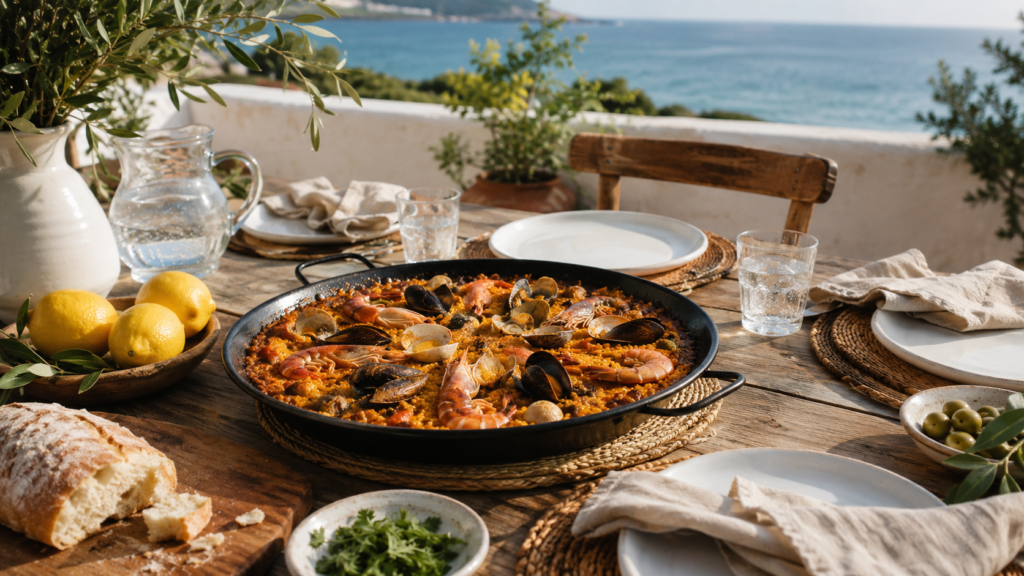
Seafood paella on a sunny seaside terrace with Mediterranean coastal scenery.
The reason this scene stays with us is not only because paella is photogenic.
It is because the whole setting feels like a reminder.
A sunlit terrace says: notice the light.
The sea says: let the day open.
The pan says: gather closer.
The rice says: flavor takes time.
Maybe that is why paella continues to travel so well in the imagination. It gives readers something to taste, but also something to long for. It suggests a life with more shared meals, warmer afternoons, fewer rushed bites, and more moments that feel worth remembering.
How to Bring This Feeling Home
You do not need to live beside the Mediterranean to borrow the feeling of this meal.
Set the table outside if the weather allows. Use a wide serving dish if you do not have a traditional paella pan. Add a simple green salad, crusty bread, citrus water, sparkling water, or a light white wine if appropriate for your audience. Play soft Spanish guitar, Mediterranean café music, or ocean sounds in the background.
Let the meal feel intentional.
Let people serve themselves.
Let the pan stay in the center.
That is the Fly By Eats way to experience food: not only as a recipe, but as a doorway into culture, atmosphere, memory, and connection.
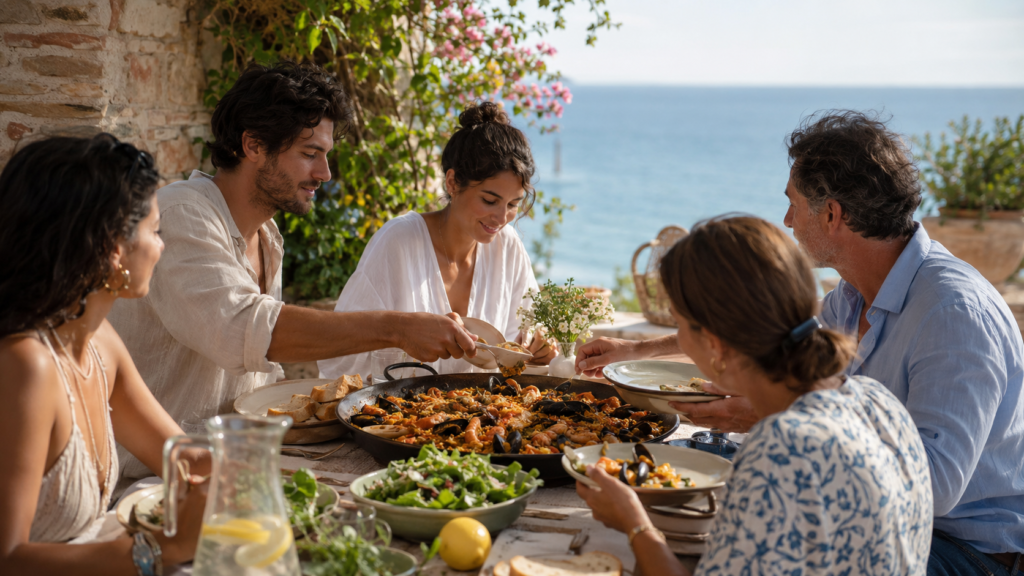
Friends sharing seafood paella outdoors on a sunny Mediterranean terrace near the water.
Final Bite
Seaside paella on a sunlit terrace is more than a beautiful food image.
It is a story about rice that carries flavor, seafood that carries place, and a table that invites people to pause long enough to feel present.
It reminds us that some meals are not meant to be rushed through.
They are meant to be entered slowly.
They are meant to be shared.
They are meant to leave a little sunlight behind
Mediterranean Diet – Intangible Cultural Heritage UNESCO
References
- Bon Appétit. (2026, May 20). How José Andrés makes a massive open-fire paella [Video]. Bon Appétit. https://www.bonappetit.com/video/watch/made-to-order-how-a-master-spanish-chef-makes-paella
- EU Rice. (n.d.). PDO Arroz de Valencia rice. https://sustainablerice.eu/en/pdo-arroz-de-valencia-rice/
- Foods and Wines from Spain. (n.d.). Arroz de Valencia PDO. https://www.foodswinesfromspain.com/en/food/products/legumes—rice/arroz-de-valencia-pdo
- Martinez, M. (2026, February 28). Valencia like a local. Reuters. https://www.reuters.com/city-memo/valencia-like-local-2026-02-28/
- PBS Food. (n.d.). Paella in Valencia and at home | Made in Spain with Chef José Andrés | Full episode [Video]. YouTube. https://www.youtube.com/watch?v=yWTEgCNqgbM
- Slattery, C. (2022, January 18). The 3 secrets to perfect paella, according to a Valencian chef. Food & Wine. https://www.foodandwine.com/cooking-techniques/paella-tips-danny-lledo
- UNESCO. (n.d.). Mediterranean diet. UNESCO Intangible Cultural Heritage. https://ich.unesco.org/en/RL/mediterranean-diet-00884
- Wikipaella. (n.d.). Ingredients. https://wikipaella.org/en/ingredients/