The Flavor of Resilience: Filipino Food, Comfort, and Heart in Every Bowl
A pot of Filipino soup has a way of making the room feel softer before anyone even sits down. Steam rises from the bowl, carrying the brightness of tamarind, the warmth of ginger, the earthiness of vegetables, or the deep comfort of meat simmered until it gives in. Somewhere nearby, rice waits quietly, not as a side note, but as the steady center of the meal. A spoon taps against a bowl. Someone says, “Eat more.” Someone else reaches for sawsawan, that small dish of dipping sauce that lets each person season the meal to their own memory.
Filipino food has a kind of emotional honesty to it. It does not always try to be delicate. It knows sourness can comfort. It knows vinegar can preserve. It knows a humble bowl of rice can carry a family through ordinary days, rainy afternoons, celebrations, grief, laughter, and long conversations that stretch past the meal.
To understand Filipino food is to understand that flavor is rarely just flavor. It is care. It is adaptation. It is welcome. It is a reminder that a table does not need to be perfect to be full of heart.
Why Filipino Food Feels So Meaningful
Filipino food culture is meaningful because it reflects a country shaped by islands, movement, memory, and resourcefulness. The Philippines is an archipelago of more than 7,000 islands, with regional food traditions influenced by geography, local ingredients, trade, colonization, migration, and family practice. That means Filipino cuisine cannot be reduced to one dish, one flavor, or one version of “traditional.”
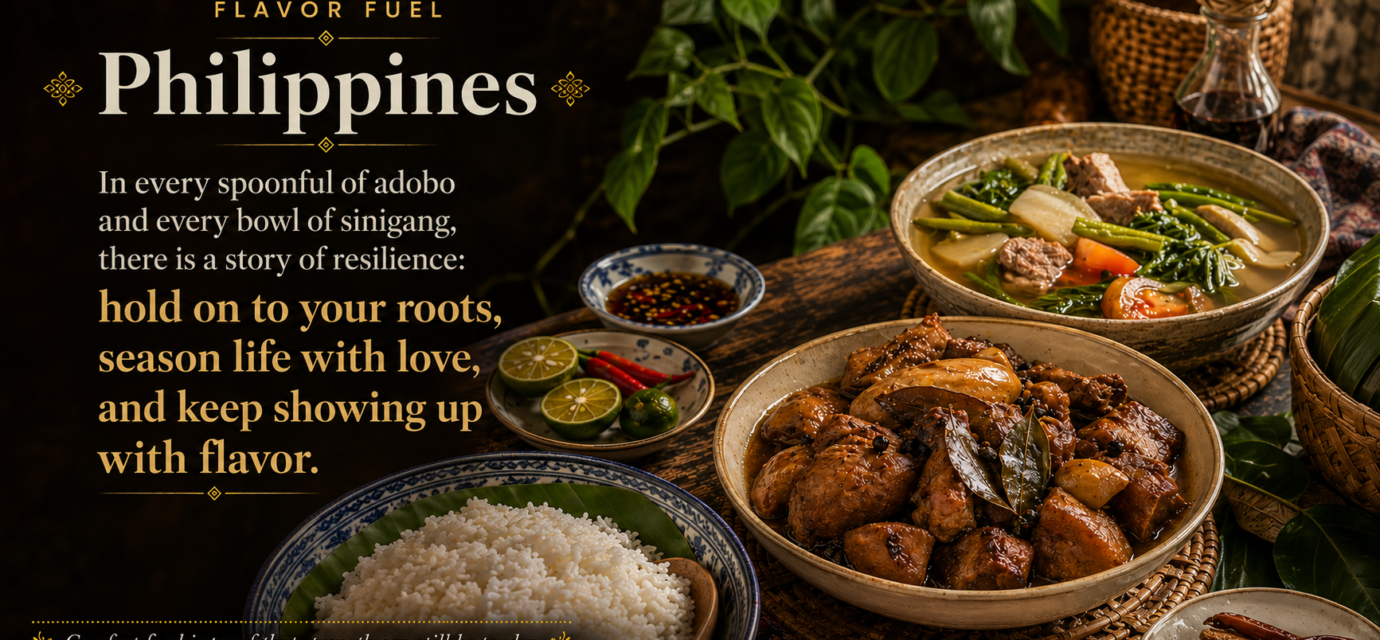
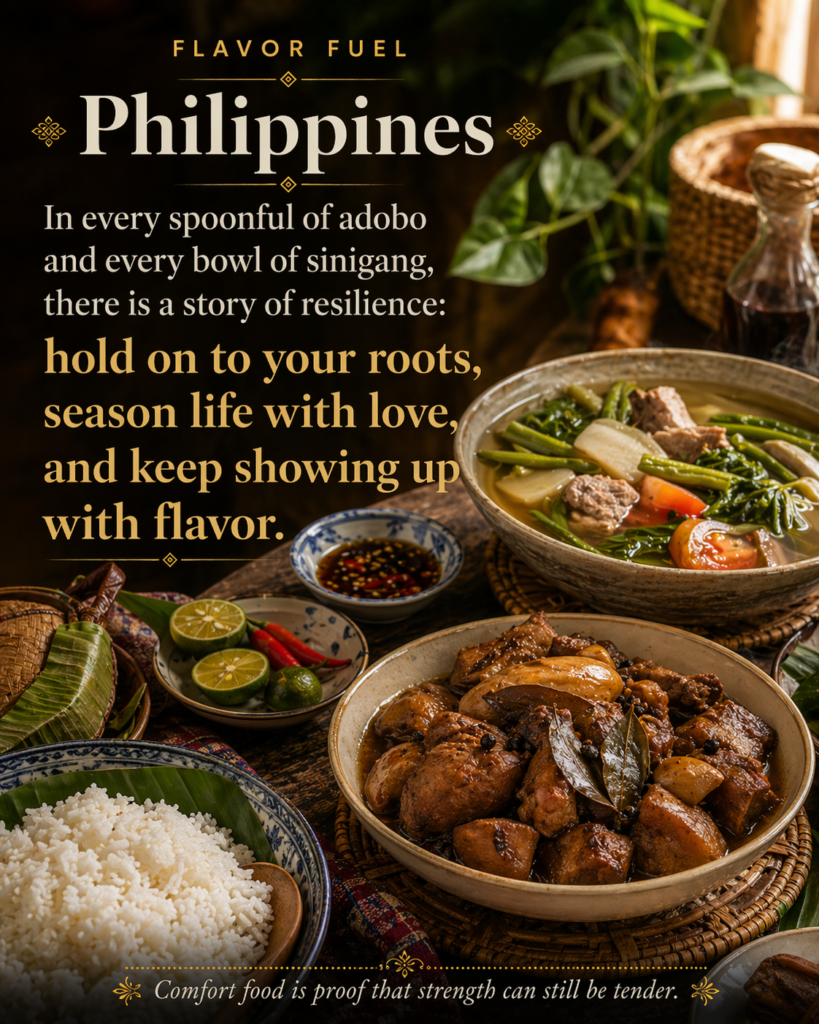
There is adobo, often described as one of the country’s most recognized dishes, but there are countless ways to make it. Some versions are dark with soy sauce; others lean more heavily on vinegar, coconut milk, turmeric, annatto, or regional seasonings. There is sinigang, beloved for its sour broth and the way it wakes up the mouth while still feeling deeply comforting. There is pancit, often served at birthdays and gatherings, carrying the symbolism of long life. There are rice cakes, grilled seafood, stews, noodle dishes, breakfast plates, market snacks, and festive foods that change from province to province and household to household.
What makes Filipino food so powerful is not only its variety. It is the way it holds people together. Meals often stretch beyond hunger. They become a form of checking in, welcoming guests, honoring elders, remembering home, and making sure no one leaves empty-handed.
In many Filipino homes, food is not offered once. It is offered again and again. That repeated invitation carries a simple message: you are cared for here.
The Beauty of the Table
A Filipino table can feel abundant even when the dishes are humble. There may be a bowl of sinigang with leafy greens, radish, eggplant, okra, tomato, and tender pieces of fish, shrimp, pork, or another protein. The broth is hot and sour, the kind of flavor that makes you pause for a second before going back for another spoonful.
There may be adobo, glossy and fragrant, its sauce deep with vinegar, garlic, peppercorns, bay leaf, and sometimes soy sauce. It smells like patience. It tastes even better when the sauce sinks into warm rice.
There may be pancit, tangled noodles brightened with vegetables, citrus, or calamansi. Lumpia may arrive crisp and golden, crackling at the first bite. A small bowl of sawsawan might sit nearby: vinegar with garlic and chili, soy sauce with calamansi, fish sauce, chopped onions, or whatever the cook prefers. That small bowl says something beautiful about Filipino dining. The cook prepares the meal, but the eater completes the flavor.
Then there is rice. Always rice. Steamed white rice is more than a filler on the plate. It balances sourness, salt, sweetness, richness, and heat. It turns sauce into comfort. It gives the meal its rhythm.
The table itself may be formal, casual, loud, quiet, or family-style. In kamayan dining, food is often arranged on banana leaves and eaten by hand. The word kamayan comes from kamay, meaning “hand” in Tagalog. In this style of eating, the meal becomes tactile and communal. Rice, grilled meats, seafood, vegetables, fruits, and dipping sauces are laid out for sharing. It is not just about eating without utensils. It is about closeness, conversation, and the warmth of gathering around food without too much distance between people.
A Taste of History and Culture
Filipino cuisine carries many layers. Before outside influences shaped the islands, local communities already relied on rice, root crops, seafood, coconut, fruits, vegetables, fermentation, vinegar, salt, and cooking methods suited to the tropical climate and surrounding seas. Over time, Chinese trade, Spanish colonization, American presence, regional migration, and neighboring Southeast Asian connections all left marks on Filipino food.
But Filipino cuisine is not simply borrowed food. It is food transformed through local taste, ingredients, and need. Pancit has Chinese roots, but Filipino pancit became its own family of dishes. The word adobo comes through Spanish language, but the Filipino method of cooking with vinegar and salt has deeper local significance. Local cooks took outside influences and made them speak in Filipino flavor.
This is where the word resilience fits carefully. Not as a romantic label for hardship, but as a recognition of adaptation. Filipino food shows how people preserve identity while adjusting to change. It shows how a dish can travel, shift, and still carry home inside it.
Rice culture also speaks deeply to Filipino life. The UNESCO-listed Rice Terraces of the Philippine Cordilleras, shaped by Ifugao communities over centuries, remind us that food is tied to land, labor, cooperation, and inherited knowledge. While not every Filipino food tradition comes from the terraces, they remain a powerful symbol of how agriculture, environment, and community can shape cultural identity.
In 2018, the Philippines declared April as Buwan ng Kalutong Pilipino, or Filipino Food Month, recognizing culinary tradition as part of cultural heritage. That matters. It says food is not just a recipe card or a restaurant trend. It is memory, agriculture, family skill, regional pride, and national belonging.
What This Food Tradition Teaches Us
Filipino food teaches that comfort does not have to be plain. Comfort can be sour, salty, garlicky, smoky, sweet, crunchy, warm, and bright all at once. It teaches that food can hold contrast without needing everything to be polished smooth.
It also teaches gratitude. A Filipino meal often makes room for what is available: vegetables in season, seafood from nearby waters, pantry staples, leftover rice turned into breakfast, or a stew that tastes better the next day. There is beauty in that kind of practicality. It respects ingredients by making them useful, generous, and shareable.
It teaches community. A dish like pancit is rarely only about noodles. It is about birthdays, gatherings, office parties, family celebrations, and the hope that life continues long and well. A pot of arroz caldo or lugaw is not only porridge. It is warmth when someone is tired, sick, homesick, or in need of something gentle. Sinigang is not only sour soup. It is the taste of rain, family kitchens, and the comfort of a broth that can be adjusted by region, season, and household preference.
Filipino food also teaches humility. The most meaningful dishes are not always the most expensive. Sometimes the most unforgettable meal is rice with a little sauce, a spoonful of stew, and someone insisting you take the last piece.
How to Bring This Spirit Into Your Own Kitchen
You do not need to be Filipino to appreciate Filipino food, but appreciation should come with respect. Start by learning the story behind the dishes, not just the ingredients. Notice the role of balance: sour with salty, sweet with savory, rich with bright, soft with crisp.
Begin with approachable dishes that teach core flavors. Try chicken adobo to understand the comfort of vinegar, garlic, pepper, and rice. Try sinigang to experience how sourness can feel nourishing and warm. Try pancit for a gathering, not only because it is delicious, but because it invites sharing.
Build a small Filipino-inspired pantry with care. Look for cane vinegar, coconut vinegar, soy sauce, fish sauce, calamansi juice or a citrus substitute, bay leaves, garlic, ginger, jasmine rice, glutinous rice, coconut milk, and annatto if you want to explore color and regional styles. Visit Filipino markets when possible, and support Filipino-owned restaurants, bakeries, chefs, and food creators.
Most importantly, do not treat Filipino food as one flavor profile. Ask: What region is this dish connected to? What family version am I learning from? What ingredient has a local meaning? What have Filipino cooks and writers said about this food?
That curiosity is where respect begins.
Simple Serving Ideas
For a cozy Filipino-inspired comfort meal, serve chicken or mushroom adobo with steamed rice, sliced cucumbers, and a small vinegar-based dipping sauce. Keep the table simple and warm, with bowls that invite people to spoon sauce over rice.
For a soup-centered meal, serve sinigang with rice and a side of grilled or sautéed vegetables. Let the broth be the focus. The sourness should feel bright, not harsh, and the rice should soften each spoonful.
For a gathering, prepare pancit, lumpia, fresh fruit, and a few dipping sauces. Add calamansi or lemon wedges to the table so guests can brighten their plates. Use woven placemats, banana leaves as serving accents if available, and small bowls for sauces.
For a gentle breakfast or rainy-day meal, try lugaw or arroz caldo with ginger, garlic, scallions, and a squeeze of citrus. It is the kind of bowl that feels like someone pulled up a chair beside you.
If serving seafood dishes inspired by kinilaw or other raw preparations, follow trusted seafood safety guidance, buy from reputable sources, and understand that traditional methods and modern food safety both deserve respect.
A Thoughtful Note on Cultural Appreciation
Cultural appreciation begins with listening. Filipino food has often been misunderstood or flattened into a short list of popular dishes, when in truth it carries regional complexity, Indigenous knowledge, colonial history, migration stories, and family memory.
Respect means avoiding the idea that there is only one “correct” version of a dish. Many Filipino families make adobo differently. Sinigang can change depending on the souring agent, protein, vegetables, region, and household taste. Even the same cook may adjust a recipe depending on the day.
Respect also means giving credit. If you learn from a Filipino cook, writer, restaurant, elder, cookbook, or creator, name that source. If you host a Filipino-inspired meal, present it as inspired by Filipino food culture rather than claiming it as your own invention. Support Filipino-owned businesses when you can.
And perhaps most importantly, approach the food with humility. Do not rush to define it after one meal. Let it teach you slowly. Let the sourness surprise you. Let the rice steady you. Let the table remind you that food is one of the most generous ways people tell the truth about who they are.
Final Thoughts: Every Bowl Carries a Little Home
Filipino food stays with you because it feels lived-in. It does not ask the table to be silent or perfect. It welcomes noise, laughter, extra rice, a little mess, and a second helping. It makes room for the person who arrives hungry, the guest who is shy, the child reaching for lumpia, the elder watching the pot, and the friend who did not know they needed comfort until the first spoonful.
There is heart in the sour broth. There is memory in the adobo sauce. There is celebration in the noodles. There is patience in the rice. There is care in the way food is offered before anyone asks.
That is the quiet beauty of Filipino food culture. It reminds us that resilience is not always loud. Sometimes it simmers. Sometimes it is packed into a container and sent home with a guest. Sometimes it is a bowl placed in front of you with no speech needed.
Just warmth. Just flavor. Just heart.
References
- Encyclopaedia Britannica. (n.d.). Philippines. Encyclopaedia Britannica. https://www.britannica.com/place/Philippines
- Fernandez, D. G. (2019). Tikim: Essays on Philippine food and culture. Brill. Original work published 1994. https://books.google.com/books/about/Tikim_Essays_on_Philippine_Food_and_Cult.html?id=fL8WyQEACAAJ
- Food and Drug Administration. (2024, March 5). Selecting and serving fresh and frozen seafood safely. U.S. Food and Drug Administration. https://www.fda.gov/food/buy-store-serve-safe-food/selecting-and-serving-fresh-and-frozen-seafood-safely
- Philippine News Agency. (2025, May 28). PH launches new roadmap on food, gastronomy tourism. Philippine News Agency. https://www.pna.gov.ph/articles/1250995
- PBS SoCal. (2017, August 9). Eat with your hands: Filipino kamayan dining from the San Fernando Valley to the Mission. PBS SoCal. https://www.pbssocal.org/shows/the-migrant-kitchen/eat-with-your-hands-filipino-kamayan-dining-from-the-san-fernando-valley-to-the-mission
- Supreme Court E-Library. (2018, April 13). Proclamation No. 469: Declaring the month of April of every year as “Buwan ng Kalutong Pilipino” or “Filipino Food Month.” Supreme Court E-Library. https://elibrary.judiciary.gov.ph/thebookshelf/showdocs/7/82693
- The Splendid Table. (2017, September 22). Filipino food: A cuisine of many influences. The Splendid Table. https://www.splendidtable.org/story/2017/09/22/filipino-food-a-cuisine-of-many-influences
- UNESCO World Heritage Centre. (n.d.). Rice Terraces of the Philippine Cordilleras. UNESCO World Heritage Centre. https://whc.unesco.org/en/list/722/