
Crete on a Plate: Why Peskesi Makes the Mediterranean Diet Feel Personal
Some meals introduce themselves loudly. Others arrive quietly, sit down beside you, and change the way you understand food.
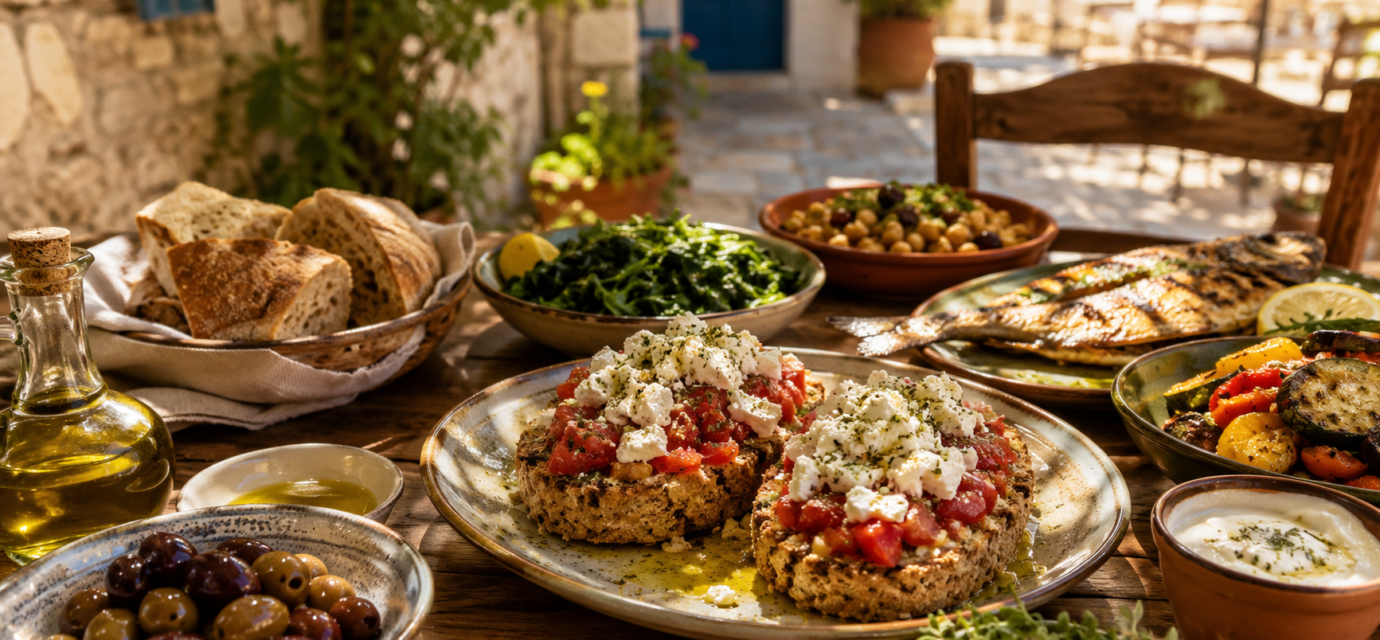
That is the feeling of a Cretan table when it is handled with care. A little olive oil shines on the plate like sunlight. Tomatoes smell warm and grassy, not refrigerated and tired. Barley rusks crack under the spoon before softening into tomato juice. Wild greens arrive glossy and deep green, touched with lemon. Cheese brings a salty tenderness. Bread waits nearby, ready for whatever the plate leaves behind.
At Peskesi in Heraklion, Crete, the Mediterranean diet does not feel like a chart, a plan, or a trend people argue about online. It feels like land, labor, memory, and welcome. It feels like someone saying, “Eat slowly. Taste where you are.”
That is what makes this restaurant and this food culture so meaningful. Peskesi is not just serving Cretan dishes. It is telling the story of an island through ingredients that still feel connected to soil, seasons, hands, and home.
Why Peskesi Cretan Cuisine Feels So Meaningful
Peskesi sits in Heraklion, the capital of Crete, but its spirit reaches beyond the city. The restaurant’s philosophy is rooted in the Cretan diet, traditional farming, sustainability, and the idea that gastronomy is a cultural expression of land and people. Their own farm began in 1998 in Harasso of Hersonissos, and today it grows vegetables, fruits, olives, herbs, and more while supporting seed preservation and seasonal agriculture.
That matters because Cretan cuisine is not built around showing off. It is built around paying attention.
The Cretan table gives respect to simple things: olive oil, legumes, greens, herbs, vegetables, bread, cheese, honey, wine, and small amounts of meat or fish, depending on the season, household, and occasion. It is food that often feels humble at first glance, but once you sit with it, you realize the beauty is in the restraint.
A dish like dakos proves the point. A barley rusk, ripe tomato, olive oil, oregano, and a soft local cheese can look modest, almost too simple. But when the tomato is ripe, the oil is fragrant, and the rusk softens just enough without losing itself, the whole plate becomes a lesson. Good ingredients do not need to be crowded. They need to be honored.
That is the personal side of the Mediterranean diet. It is not only what is eaten. It is how food is grown, shared, remembered, and placed in daily life.
The Beauty of the Table
A Cretan table has a way of feeling generous without being overly polished.
Imagine a wooden table set close enough for elbows and conversation. Small plates arrive one by one, not rushed, not precious. There may be olives, warm bread, a dish of beans, greens dressed with olive oil, a spoonful of yogurt or cheese, tomatoes that taste like summer, herbs that smell like hillsides, and something slow-cooked enough to make the room quiet for a second.
The sound is part of the meal too. Forks tapping plates. Bread tearing. Glasses are lightly touching. Someone is laughing from the next table. A server placing down a dish with the confidence of someone who knows it does not need a speech to be good.
Cretan food often carries the color of the landscape: deep green olive oil, bright red tomato, white cheese, golden bread, dark herbs, honeyed pastry, roasted meat, and the soft brown of rusks and grains. It is not a table designed only for photographs, though it photographs beautifully. It is a table designed for staying.
At Peskesi, the farm-to-table idea feels especially grounded because the restaurant connects its menu to its own farmland and to small local producers. That connection gives the meal a sense of place. You are not just eating “Mediterranean food.” You are tasting a Cretan way of arranging life around what the land can offer.
A Taste of History and Culture
Crete is Greece’s largest island, and its food culture has been shaped by geography, climate, agriculture, trade, family life, and long memory. The island sits in the southern Aegean, with mountains, valleys, coastlines, villages, olive groves, vineyards, and herb-covered hills. That variety helps explain why Cretan food can feel both rustic and layered.
The wider Mediterranean diet is recognized by UNESCO as an intangible cultural heritage, not simply as a list of foods but as a set of practices, skills, rituals, and traditions connected to cultivation, fishing, preservation, cooking, and eating together. This is important because it reminds us that food culture is not only about nutrition. It is a relationship.
Crete also holds an important place in the modern story of the Mediterranean diet. The Seven Countries Study, a major long-term research project on diet, lifestyle, and cardiovascular disease risk across different countries, included Greek cohorts from Crete and Corfu. The Crete cohort was known for a traditional food pattern with high olive oil use and rural village life. This does not mean one restaurant meal is a health prescription, and it should not be treated that way. But it does help explain why Cretan eating patterns became part of the global conversation about Mediterranean food.
Still, the deeper truth of the Cretan diet is not found only in research. It is found in daily habits: cooking with what is in season, using olive oil as a central ingredient, eating greens and legumes, stretching ingredients with skill, sharing food at the table, and letting hospitality carry the meal.
Peskesi’s work reflects that living culture. The restaurant’s sustainability materials describe the “story of a dish” as something that includes ingredients, energy, people, water, animals, customs, traditions, waste, and renewal. That is a powerful way to think about food. A dish is never just a dish. It is a whole chain of care.
What This Food Tradition Teaches Us
Cretan food teaches that simplicity is not the same as plainness.
A tomato can be enough when it is respected. Bread can be a centerpiece when it is made well and shared freely. Olive oil can be more than fat; it can be the thread that ties vegetables, grains, fish, cheese, and memory together. Herbs can bring a hillside into the room. A slow meal can soften a hard day.
There is also gratitude in this way of eating. Not the forced kind, but the kind that happens when food reminds you that someone grew it, harvested it, cooked it, served it, and sat beside you while you ate it.
The Cretan table also teaches patience. Some foods need time to grow. Some need time to soften. Some need time in a pot, a jar, an oven, or a family’s memory before they become what they are meant to be.
And then there is hospitality. In many Greek and Cretan dining experiences, food is not treated as a private performance. It is a way of making room for people. The plate becomes an invitation: sit, talk, taste, stay a little longer.
That may be why the Mediterranean diet feels so different when experienced through a place like Peskesi. It stops being a set of rules and becomes a rhythm. It becomes a way of remembering that meals are not only about fuel. They are about belonging.
How to Bring This Spirit Into Your Own Kitchen
You do not have to live in Crete to borrow wisdom from the Cretan table. The key is to avoid turning the culture into a costume or reducing it to a few trendy ingredients. Instead, focus on the values: seasonality, simplicity, respect, sharing, and care.
Start with one good ingredient and build around it. A ripe tomato, a loaf of good bread, a bottle of quality olive oil, a bunch of greens, or a simple cheese can guide the whole meal. Let the food be relaxed. Not everything needs a heavy sauce or complicated technique.
Keep a few Mediterranean-inspired basics on hand: extra-virgin olive oil, dried oregano, lemons, beans, lentils, chickpeas, whole grains, nuts, honey, plain yogurt, seasonal vegetables, and good bread. These ingredients can help you create meals that feel generous without feeling overwhelming.
Cook more vegetables than you think you need. Serve them warm, room temperature, or simply dressed with olive oil and lemon. Add beans or lentils for comfort. Put bread on the table. Let people help themselves. Allow the meal to feel lived-in.
Most of all, slow the table down. Turn off the rush where you can. Put the food in the center instead of plating everything perfectly. Let the meal create conversation instead of pressure.
Simple Serving Ideas
For a Cretan-inspired table, begin with a few small plates instead of one large main dish. Try tomatoes with olive oil and oregano, cucumber with yogurt, olives, warm bread, chickpeas with lemon, roasted vegetables, or a simple bean salad.
Dakos is a beautiful starting point if you can find barley rusks. Top them with grated or chopped ripe tomato, olive oil, oregano, and a soft Greek cheese such as mizithra, xynomizithra, or feta if that is what is available. Let the rusk soften slightly, but do not drown it. The texture should still have character.
Add greens if you can. Boiled or sautéed leafy greens with olive oil and lemon are deeply connected to Greek and Cretan home cooking. They are simple, but they bring freshness and balance to the table.
For a fuller meal, serve grilled fish, roasted chicken, lamb, or slow-cooked vegetables alongside beans, bread, salad, and cheese. Keep the seasoning clear and honest: olive oil, lemon, herbs, salt, and time.
For the table itself, think natural and unfussy. Use linen napkins, small bowls, clay or ceramic plates, a wooden board, a bowl of lemons, a small jar of herbs, or a simple pitcher of water. The goal is warmth, not perfection.
A Thoughtful Note on Cultural Appreciation
Loving Cretan food begins with respect.
That means learning the names of dishes and ingredients when possible. It means understanding that the Mediterranean diet is not just a wellness trend. It belongs to real communities with histories, farms, families, economic pressures, celebrations, and changing modern lives.
It also means being honest about access. Not everyone can buy imported olive oil, Cretan cheese, or specialty rusks. That is okay. Cultural appreciation does not require pretending your kitchen is somewhere else. It asks you to learn, give credit, stay curious, and avoid claiming ownership over traditions that are not yours.
When cooking in the spirit of Crete, say what inspired you. Share where you learned it. Support Greek or Cretan producers, restaurants, writers, farms, and cultural resources when you can. If you travel, eat with humility. Ask questions kindly. Notice the people behind the plate.
Respectful appreciation is not about copying every detail perfectly. It is about honoring the meaning while being honest about your own table.
Final Thoughts: The Meal That Makes You Slow Down
The beauty of Peskesi is that it makes the Mediterranean diet feel human again.
Not shiny. Not strict. Not reduced to a grocery list. Human.
It reminds us that food can be healthy without being cold, traditional without being frozen in time, and simple without being empty. It shows how a plate can carry a farm, a family, an island, a season, and a way of welcoming people into the room.
Maybe that is why Crete stays with people. The island does not only feeds you. It teaches you how to notice. The scent of olive oil. The patience of bread. The brightness of the tomato. The kindness of a shared table. The quiet wisdom of food that does not need to prove itself.
At its best, a Cretan meal does not ask you to escape your life. It asks you to return to it more gently.
References
- Oldways. (n.d.). Mediterranean diet pyramid. Oldways. https://oldwayspt.org/oldways-resources/oldways-mediterranean-diet-pyramid/
- Peskesi. (n.d.). Peskesi: Authentic Cretan cuisine. Peskesi. https://peskesicrete.gr/en
- Peskesi. (n.d.). Sustainability. Peskesi. https://peskesicrete.gr/en/sustainability
- Peskesi. (n.d.). The farm. Peskesi. https://peskesicrete.gr/en/farmland-heraklion-crete
- Seven Countries Study. (n.d.). Countries: Greece. Seven Countries Study. https://www.sevencountriesstudy.com/about-the-study/countries/countries-greece/
- Seven Countries Study. (n.d.). What is the Seven Countries Study? Seven Countries Study. https://www.sevencountriesstudy.com/
- Taste Crete. (n.d.). Taste Crete: European Region of Gastronomy. Taste Crete. https://tastecrete.eu/
- UNESCO. (n.d.). Mediterranean diet. UNESCO Intangible Cultural Heritage. https://ich.unesco.org/en/RL/mediterranean-diet-00884
- Visit Greece. (n.d.). Local flavours of the Greek cuisine. Visit Greece. https://www.visitgreece.gr/experiences/gastronomy/traditional-cuisine/local-flavours-of-the-greek-cuisine/
- Wines of Crete. (n.d.). Cretan diet. Wines of Crete. https://www.winesofcrete.gr/en/cretan-diet/