
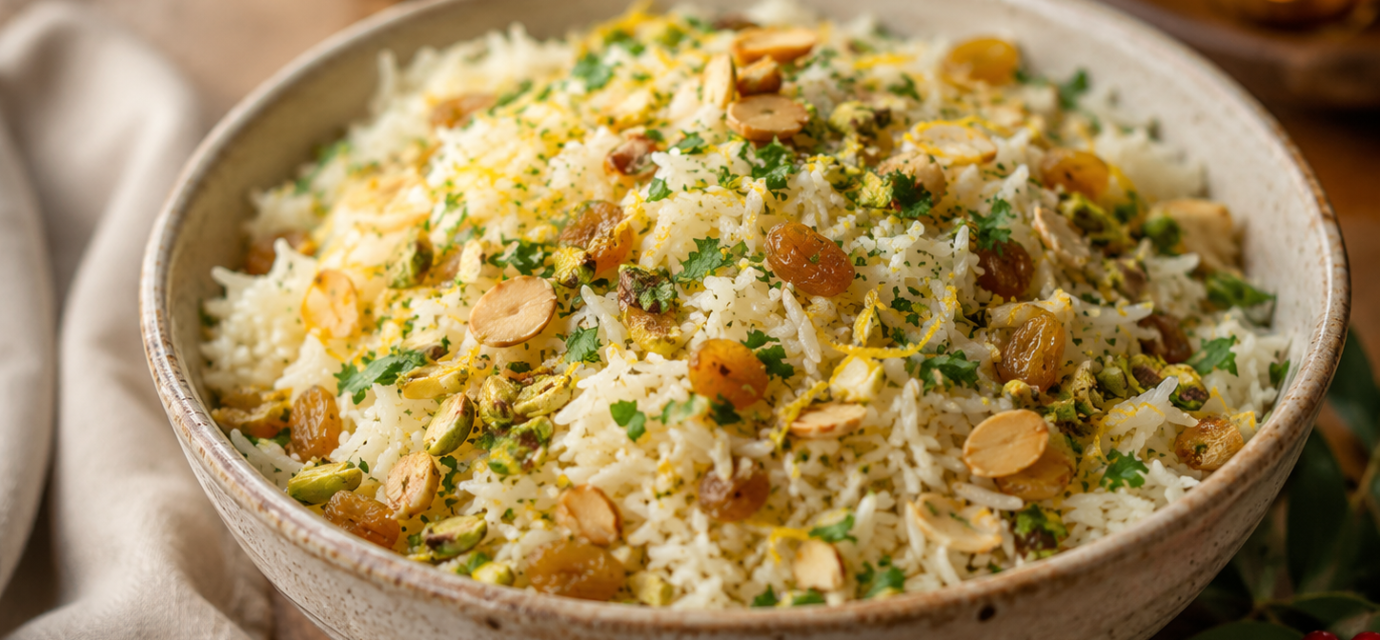
Celebration Rice Pilaf with Toasted Nuts
A warm pot of celebration rice pilaf has a quiet way of making dinner feel special. The rice steams gently under the lid, the onions soften into sweetness, the spices bloom in butter, and the toasted nuts bring that golden crunch that makes every forkful feel thoughtful. It is simple food, but not plain food. It is the kind of dish that understands the assignment: comfort first, beauty second, and flavor all the way through.
This celebration rice pilaf with toasted nuts is made for the table that needs one dish to bring everything together. It can sit next to roasted chicken, lamb, salmon, grilled vegetables, holiday turkey, or a plant-based centerpiece and still feel right at home. The grains stay fluffy and separate, the nuts stay crisp, and the herbs brighten the whole bowl so it does not feel heavy.
Pilaf-style rice dishes appear across many food cultures, especially throughout West Asia, Central Asia, South Asia, the Caucasus, the Balkans, and beyond. This version is not meant to copy one regional recipe exactly. Instead, it respectfully draws from shared pilaf traditions: rice cooked with aromatics, fat, broth, spices, and finishing touches that make the dish feel generous. Think of it as an approachable celebration pilaf for home cooks who want something culturally rooted, practical, and beautiful enough to bring to a holiday table.
What makes this recipe lovely is how flexible it is. You can keep it savory with herbs and toasted almonds, make it more festive with pistachios and golden raisins, add saffron if you have it, or finish with lemon zest for brightness. It is cozy, fragrant, and down-to-earth, with just enough elegance to feel like the meal has a little ceremony around it.
Quick Recipe Snapshot
- Prep Time: 15 minutes
- Cook Time: 25 minutes
- Total Time: 40 minutes
- Servings: 6
- Difficulty Level: Beginner to intermediate
- Best For: Holiday dinners, family gatherings, roasted meats, seafood, vegetarian mains, meal prep side dishes
- Expected Result: Fluffy, separate grains of aromatic rice finished with buttery toasted nuts, fresh herbs, and optional dried fruit for a savory-sweet celebration side dish.
Why You’ll Love This Recipe
- It turns simple pantry rice into a beautiful holiday-worthy side dish.
- Toasted nuts add crunch, warmth, and a rich nutty aroma.
- The rice cooks in broth, so every grain tastes seasoned instead of bland.
- Warm spices add depth without overpowering the dish.
- It pairs well with chicken, lamb, fish, roasted vegetables, and plant-based mains.
- It is easy to customize with herbs, saffron, dried fruit, or different nuts.
- The method teaches a useful rice technique: rinse, toast, simmer gently, rest, then fluff.
Cultural or Seasonal Background
Pilaf is best understood as both a dish and a cooking method. Across many regions, the idea is similar: grains are cooked with fat, aromatics, liquid, and seasoning in a way that encourages separate, tender grains rather than a soft porridge-like texture. The exact ingredients change by place, household, season, and occasion.
Rice itself carries deep cultural importance. The Food and Agriculture Organization of the United Nations notes that rice is a staple food for more than half of the world’s population, with especially significant importance across Asia. Because rice travels so widely through trade, migration, agriculture, and home cooking, it has become part of countless celebration dishes.
Pilaf has many names and relatives: pilav, pilau, pulao, palov, plov, polo, polow, and more. In Indian cuisine, Britannica notes that pilaf became associated with Mughlai cooking, shaped by Persian and Central Asian influences. In Central Asia, UNESCO recognizes Uzbek palov culture and tradition as part of intangible cultural heritage, highlighting not only the food itself but also the social meaning of preparing and sharing it.
This recipe does not claim to be traditional Uzbek plov, Persian jeweled rice, Indian pulao, or Armenian rice pilaf. Those dishes have their own techniques, ingredients, histories, and cultural meanings. Instead, this Fly By Eats version honors the broader pilaf family by using common celebration elements: long-grain rice, aromatics, warm spices, broth, toasted nuts, herbs, and optional dried fruit. It is a respectful, home-kitchen celebration rice pilaf inspired by the way rice dishes often become symbols of welcome, abundance, and gathering.
Seasonally, this dish shines during Thanksgiving, Christmas, Easter, Ramadan, and Eid gatherings, Sunday dinners, birthdays, potlucks, and cozy winter meals. It brings color and texture to the table without needing complicated steps.
Why This Recipe Works
This recipe works because each step has a purpose.
Rinsing the rice removes loose surface starch, which helps the grains cook lighter and less sticky. Draining it well matters because extra water can throw off the rice-to-liquid ratio. Long-grain rice, especially basmati, is a good choice because it naturally cooks into longer, more separate grains.
Toasting the rice in butter or oil adds flavor and helps coat the grains before the liquid goes in. This step gives the pilaf a subtle nutty aroma and helps the finished dish feel more layered than plain boiled rice.
Aromatics like onion and garlic create the savory base. Spices such as cumin, cinnamon, cardamom, and bay leaf bring warmth without making the dish taste too sweet or too strong. Broth adds depth, while a short covered rest after cooking lets steam redistribute so the rice finishes gently instead of turning wet or broken.
The nuts are toasted separately because they need direct heat to become golden and fragrant. Adding them at the end keeps them crisp. Fresh herbs and lemon zest lift the final dish, balancing the richness of butter and nuts with freshness.
Ingredients
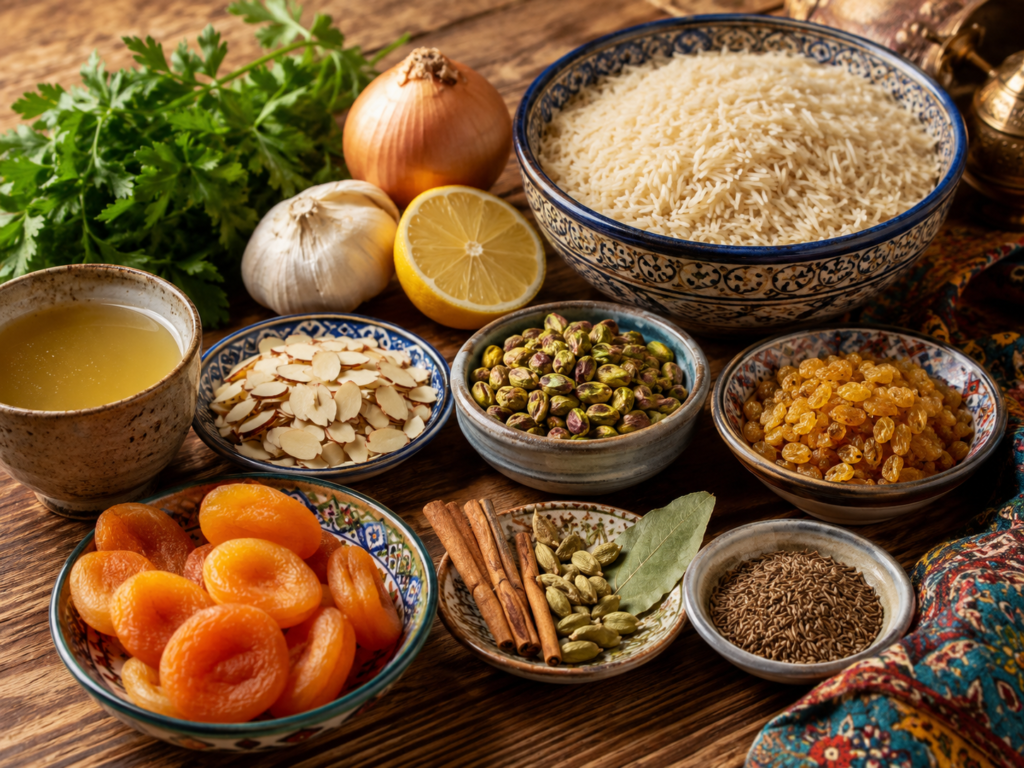
Ingredients for celebration rice pilaf including basmati rice, toasted nuts, dried fruit, herbs, and spices
For the Rice Pilaf
1 1/2 cups basmati rice or other long-grain white rice, rinsed and well drained
Long-grain rice helps create the fluffy, separate texture that makes pilaf so appealing. Basmati is especially fragrant and elegant for a celebration dish.
2 tablespoons unsalted butter
Butter adds richness and helps toast the rice and aromatics. For a dairy-free version, use olive oil.
1 tablespoon olive oil
Olive oil helps raise the cooking tolerance of the butter and keeps the grains from tasting too heavy.
1 small yellow onion, finely diced
Onion builds a sweet, savory foundation and gives the pilaf depth.
2 garlic cloves, finely minced
Garlic adds warmth. Cooking it briefly prevents bitterness.
1/2 teaspoon ground cumin
Cumin gives the rice an earthy backbone that works beautifully with nuts and herbs.
1/4 teaspoon ground cinnamon
A small amount adds warmth and celebration-style aroma without turning the dish into dessert.
1/4 teaspoon ground cardamom, optional
Cardamom adds a floral, fragrant note. Use lightly because it can become strong.
1 bay leaf
Bay leaf adds gentle herbal depth while the rice steams.
2 1/4 cups low-sodium vegetable broth or chicken broth, warmed
Broth seasons the rice from the inside out. Low-sodium broth gives you more control over salt.
3/4 teaspoon kosher salt, plus more to taste
Salt makes the rice taste complete. Adjust depending on how salty your broth is.
1/4 teaspoon black pepper
Pepper adds mild warmth.
Pinch of saffron steeped in 2 tablespoons warm broth, optional
Saffron adds golden color and delicate aroma. It is optional but lovely for a special occasion.
For the Toasted Nuts and Finish
1/3 cup sliced almonds
Almonds toast quickly and add a delicate crunch.
1/3 cup shelled pistachios or chopped cashews
Pistachios add color and a lightly sweet nuttiness. Cashews create a richer, buttery texture.
1 tablespoon butter or olive oil, for toasting nuts
A small amount of fat helps the nuts brown evenly and taste more aromatic.
1/3 cup golden raisins, chopped dried apricots, or dried cranberries, optional
Dried fruit adds a sweet-tart contrast often found in festive rice dishes.
1/4 cup chopped fresh parsley or cilantro
Fresh herbs brighten the pilaf and keep it from tasting too rich.
1 teaspoon lemon zest, optional
Lemon zest adds fragrance and freshness without making the rice wet.
Ingredient Notes and Smart Substitutions
Rice: Basmati is the best choice for a fragrant, elegant pilaf. Jasmine rice can work, though it may be slightly softer and more aromatic in a different way. Standard long-grain white rice also works; check the package timing and adjust as needed.
Brown rice: Brown rice needs more liquid and a longer cook time. For this recipe, use about 2 3/4 to 3 cups broth and cook 35-45 minutes, depending on the rice. The texture will be nuttier and chewier.
Butter: Use olive oil for a dairy-free or vegan version. If using salted butter, reduce the added salt.
Broth: Vegetable broth keeps the dish vegetarian. Chicken broth gives a savory, classic side-dish flavor. Choose low-sodium broth when possible.
Nuts: Almonds, pistachios, cashews, pine nuts, pecans, or walnuts can all work. Since tree nuts are a major food allergen, label this dish clearly when serving guests. For a nut-free version, use toasted pumpkin seeds or sunflower seeds, but check labels for cross-contact if allergies are a concern.
Dried fruit: Golden raisins and apricots bring a Middle Eastern and Central Asian-inspired feel. Dried cranberries make it festive for American holiday tables. Skip the fruit if you want a purely savory pilaf.
Saffron: Saffron is beautiful but not required. A small pinch of turmeric can add color, but it will taste earthier and is not a direct flavor substitute.
Herbs: Parsley is classic and gentle. Cilantro adds brightness. Dill, mint, or scallions can also work depending on the meal.
Equipment You’ll Need
- Fine-mesh strainer
- Medium bowl
- Heavy-bottomed saucepan or Dutch oven with tight-fitting lid
- Small skillet for toasting nuts
- Wooden spoon or silicone spatula
- Fork for fluffing rice
- Measuring cups and spoons
- Food thermometer for reheating leftovers safely
Step-by-Step Directions
1. Rinse the rice.
Place the rice in a fine-mesh strainer and rinse under cool running water until the water looks much less cloudy. This removes loose surface starch and helps the finished pilaf stay fluffy instead of gummy.
2. Drain the rice well.
Let the rinsed rice sit in the strainer for 5-10 minutes. Shake off excess water. This matters because too much leftover rinse water can make the pilaf softer than intended.
3. Prepare the saffron, if using.
Crush a small pinch of saffron between your fingers and steep it in 2 tablespoons of warm broth. Let it sit while you start the rice. This helps release the color and aroma.
4. Toast the nuts.
Place a small skillet over medium heat. Add 1 tablespoon butter or olive oil, then add the almonds, pistachios, or cashews. Stir often for 3-5 minutes, until the nuts are fragrant and lightly golden. Transfer them to a plate right away so they do not continue browning in the hot pan.
5. Soften the onion.
In a heavy-bottomed saucepan, warm 2 tablespoons butter and 1 tablespoon olive oil over medium heat. Add the diced onion and cook for 4-5 minutes, stirring often, until softened and lightly translucent. Avoid deep browning; you want sweetness, not bitterness.
6. Add garlic and spices.
Stir in the garlic, cumin, cinnamon, cardamom if using, bay leaf, salt, and black pepper. Cook for 30–45 seconds, just until fragrant. Spices bloom quickly in warm fat, but garlic can burn fast, so keep it moving.
7. Toast the rice.
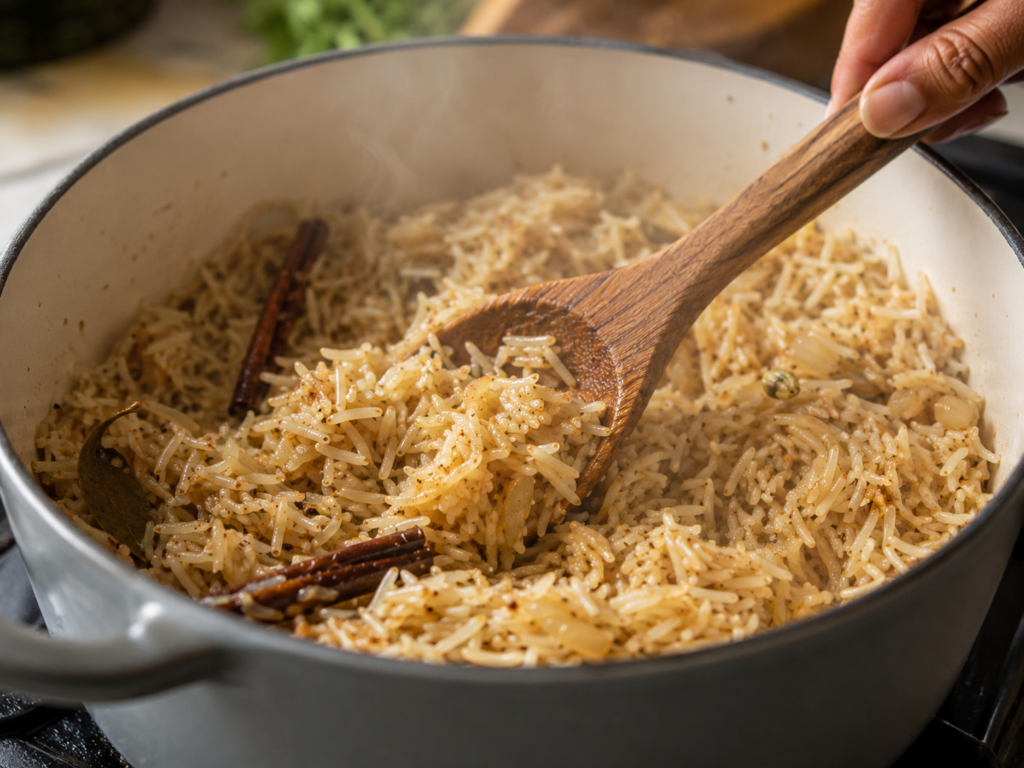
Add the rinsed and drained rice to the pan. Stir gently for 2-3 minutes, coating the grains in the butter, oil, aromatics, and spices. The rice may look slightly glossy, and you should smell a light nutty aroma.
Toasting rice with onions and spices for fluffy homemade rice pilaf
8. Add broth and optional saffron.
Pour in the warm broth and the steeped saffron mixture, if using. Stir once, gently scraping the bottom of the pan to make sure nothing is stuck. Add dried fruit now if you want it soft and plump.
9. Bring to a gentle boil.
Increase the heat to medium-high just until the liquid reaches a gentle boil. Once it boils, immediately reduce the heat to low.
10. Cover and simmer.
Cover with a tight-fitting lid and cook on low for 15 minutes. Do not stir while it cooks. Stirring can break the grains and release starch, making the pilaf sticky.
11. Check for doneness.
After 15 minutes, remove the lid quickly and check that the liquid is absorbed. The rice should be tender but not mushy. If the rice still tastes firm, cover and cook 2-4 minutes more on low.
12. Rest the rice.
Remove the pot from the heat and let it stand, covered, for 10 minutes. This resting time is one of the secrets to fluffy pilaf because the steam finishes the rice gently.
13. Fluff and finish.
Remove the bay leaf. Fluff the rice gently with a fork. Fold in the toasted nuts, fresh herbs, lemon zest, and any extra dried fruit if you prefer it chewier rather than steamed-soft.
14. Taste and serve.
Taste for salt and adjust lightly. Serve warm in a shallow bowl or platter, with a few extra herbs and nuts scattered over the top for a beautiful finish.
15. Cool leftovers safely.
Do not leave cooked rice sitting out for long periods. Cool leftovers quickly in shallow containers and refrigerate within 2 hours, or within 1 hour if the room is above 90°F.
Celebration table with rice pilaf, roasted vegetables, herbs, and warm family-style place settings
Pro Tips for Best Results
- Rinse the rice until the water is mostly clear for the fluffiest texture.
- Drain the rice well before toasting so it does not steam too early in the pan.
- Use a heavy-bottomed pot to reduce the risk of scorching.
- Warm the broth before adding it to help the cooking temperature stay steady.
- Keep the lid closed during simmering so the steam can do its job.
- Let the rice rest off the heat before fluffing.
- Toast nuts separately so they stay crisp and do not burn.
- Add fresh herbs at the end, not during cooking, so they stay bright.
- Use low-sodium broth and adjust salt at the end.
- For a holiday look, reserve a spoonful of toasted nuts and herbs for garnish.
Common Mistakes to Avoid
Skipping the rinse:
Unrinsed rice can turn sticky because of excess surface starch. Rinse well for separate grains.
Adding too much liquid:
Pilaf should be tender, not wet. Measure the broth carefully, especially after rinsing the rice.
Cooking over high heat:
High heat can burn the bottom before the top finishes steaming. Once the broth boils, lower the heat.
Stirring during simmering:
Stirring breaks the grains and releases starch. Stir once when adding liquid, then leave it alone.
Lifting the lid too often:
Every peek releases steam. Keep the lid closed until the rice is close to done.
Adding nuts too early:
Nuts soften if steamed with the rice. Add them at the end for crunch.
Forgetting the resting time:
Resting lets moisture settle evenly. Without it, the rice may taste uneven or slightly wet.
Leaving cooked rice out too long:
Cooked rice needs safe cooling and refrigeration. Store it promptly in shallow containers.
Flavor Variations
Persian-Inspired Jeweled Pilaf:
Add saffron, orange zest, pistachios, almonds, golden raisins, and chopped dried apricots. Garnish with parsley or mint.
Central Asian-Inspired Carrot Pilaf:
Sauté 1 finely shredded carrot with the onion and add cumin. Keep the nuts simple with almonds or cashews.
Mediterranean Herb Pilaf:
Use olive oil, parsley, dill, lemon zest, and toasted pine nuts. Serve with roasted fish, chicken, or grilled vegetables.
Holiday Cranberry Pecan Pilaf:
Use dried cranberries, toasted pecans, parsley, and a little orange zest. This version works beautifully for Thanksgiving or Christmas.
Savory Garlic Almond Pilaf:
Skip the dried fruit and cardamom. Add extra garlic, toasted almonds, parsley, and black pepper.
Vegan Celebration Pilaf:
Use olive oil and vegetable broth. Finish with pistachios, herbs, and lemon zest.
Spiced Golden Rice Pilaf:
Add 1/4 teaspoon turmeric with the spices for color, plus toasted cashews and raisins for a warm, festive version.
Serving Suggestions
Serve celebration rice pilaf with roasted chicken, herb-roasted turkey, grilled lamb, baked salmon, shrimp skewers, roasted cauliflower steaks, stuffed peppers, or lentil patties. It is also lovely beside saucy dishes because the rice catches flavor without becoming heavy.
For a holiday table, spoon the pilaf onto a wide serving platter and finish it with extra toasted nuts, herbs, and a small sprinkle of dried fruit. Add lemon wedges on the side for guests who like brightness.
For a cozy family dinner, serve it with a cucumber-tomato salad, yogurt sauce, roasted carrots, green beans, or a simple leafy salad. For drinks, pair it with mint tea, sparkling water with citrus, pomegranate spritzers, iced black tea, or a light white wine if appropriate for your gathering.
Storage, Freezing, and Reheating
Cooked rice needs careful storage because rice can support the growth of Bacillus cereus if it is left at room temperature for too long. The CDC notes that uncooked rice may contain heat-resistant spores that can survive cooking, so the safest approach is quick cooling, prompt refrigeration, and thorough reheating.
Refrigerator:
Spread leftover pilaf into shallow airtight containers so it cools faster. Refrigerate within 2 hours of cooking, or within 1 hour if the room is above 90°F. Store for 3-4 days.
Freezer:
Freeze cooled pilaf in airtight freezer-safe bags or containers for up to 2 months for best quality. Flatten bags slightly so the rice freezes and thaws evenly.
Reheating:
Reheat leftovers to 165°F as measured with a food thermometer. Add a splash of water or broth before reheating to bring back moisture.
Stovetop reheating:
Place rice in a skillet or saucepan with 1-2 tablespoons water or broth per cup. Cover and heat over medium-low, stirring occasionally, until steaming hot and 165°F.
Microwave reheating:
Place rice in a microwave-safe bowl with a splash of water or broth. Cover loosely and heat in short intervals, stirring between rounds, until evenly hot and 165°F.
Texture tip:
If possible, store extra toasted nuts separately and add them after reheating so they stay crisp.
Make-Ahead Tips
You can rinse and drain the rice up to a few hours ahead. Keep it covered in the refrigerator if preparing well in advance.
The nuts can be toasted 1-2 days ahead and stored in an airtight container at room temperature. Let them cool completely before storing so they do not steam and soften.
You can dice the onion, mince the garlic, chop herbs, and measure spices earlier in the day. Store aromatics covered in the refrigerator.
For the best texture, cook the rice the day you plan to serve it. If making it ahead, cool it quickly, refrigerate properly, and reheat to 165°F with a splash of broth. Add fresh herbs and toasted nuts after reheating.
Frequently Asked Questions
What is celebration rice pilaf?
Celebration rice pilaf is a festive rice side dish made with fluffy long-grain rice, aromatics, broth, warm spices, toasted nuts, herbs, and sometimes dried fruit. It is designed to feel special enough for holidays and gatherings.
What kind of rice is best for rice pilaf with toasted nuts?
Basmati rice is an excellent choice because it is aromatic and cooks into long, separate grains. Long-grain white rice also works well. Jasmine rice can be used, but it may cook a little softer.
Do I have to rinse rice before making pilaf?
For this style of pilaf, yes, rinsing is recommended. It removes excess surface starch and helps the grains stay fluffy instead of sticky.
Can I make this rice pilaf vegetarian or vegan?
Yes. Use vegetable broth and olive oil instead of chicken broth and butter. The pilaf will still be flavorful, especially with toasted nuts, herbs, and spices.
Can I make rice pilaf without nuts?
Yes. For a nut-free version, skip the nuts or use toasted pumpkin seeds or sunflower seeds if safe for your guests. Always check labels and consider cross-contact for people with food allergies.
Why did my rice pilaf turn mushy?
Mushy pilaf usually comes from too much liquid, rice that was not drained well after rinsing, stirring during cooking, or cooking too long. Measure carefully and let the rice steam undisturbed.
Can I add meat to this celebration rice pilaf?
Yes, but cook meat separately to its safe internal temperature before folding it in or serving it alongside the rice. This recipe is written as a side dish, so roasted chicken, lamb, turkey, or shrimp are easy pairings.
How do I keep the toasted nuts crunchy?
Toast the nuts separately and fold them in right before serving. For leftovers, store extra nuts separately and sprinkle them on after reheating.
Final Thoughts
Celebration rice pilaf with toasted nuts is the kind of recipe that proves a side dish can still have presence. It does not need to be shouted across the table. It simply arrives warm, fragrant, and beautifully textured, ready to make everything around it feel a little more complete. The rice is soft but not mushy. The nuts are golden and crisp. The herbs bring color. The optional dried fruit gives small moments of sweetness that feel especially welcome during holidays and family meals.
What I love most about a dish like this is how it makes room for both tradition and personal touch. Pilaf-style rice has traveled through many kitchens, languages, and celebrations, and every version carries the hand of the cook who makes it. Some families reach for saffron. Some use cumin and carrots. Some add raisins, barberries, apricots, almonds, pistachios, pine nuts, or herbs from the garden. Some keep it simple because the meal around it is already rich. That flexibility is not a weakness; it is part of what makes rice dishes so enduring.
For the Fly By Eats table, this recipe is a gentle invitation to cook with curiosity and care. You do not have to master every regional variation to appreciate the beauty of the method. Start with good rice. Rinse it well. Build flavor slowly. Let the steam do its work. Toast the nuts until the kitchen smells warm and nutty. Finish with herbs, taste with intention, and serve it in a bowl that makes people want to gather close.
Whether you make it for a holiday spread, a Sunday dinner, or a quiet meal that deserves something extra, this celebration rice pilaf brings comfort, color, and a little sense of occasion. It is practical enough for everyday cooking, but beautiful enough to remind us that even simple ingredients can feel generous when they are handled with care.
Quick Recipe Card
Recipe Name: Celebration Rice Pilaf with Toasted Nuts
Description:
A fluffy, fragrant celebration rice pilaf made with long-grain rice, onion, garlic, warm spices, broth, toasted nuts, fresh herbs, and optional dried fruit. Perfect for holidays, family dinners, and festive side dishes.
Prep Time: 15 minutes
Cook Time: 25 minutes
Total Time: 40 minutes
Servings: 6
Ingredients:
- 1 1/2 cups basmati rice or long-grain white rice, rinsed and well drained
- 2 tablespoons unsalted butter
- 1 tablespoon olive oil
- 1 small yellow onion, finely diced
- 2 garlic cloves, finely minced
- 1/2 teaspoon ground cumin
- 1/4 teaspoon ground cinnamon
- 1/4 teaspoon ground cardamom, optional
- 1 bay leaf
- 2 1/4 cups low-sodium vegetable broth or chicken broth, warmed
- 3/4 teaspoon kosher salt, plus more to taste
- 1/4 teaspoon black pepper
- Pinch of saffron steeped in 2 tablespoons warm broth, optional
- 1/3 cup sliced almonds
- 1/3 cup shelled pistachios or chopped cashews
- 1 tablespoon butter or olive oil, for toasting nuts
- 1/3 cup golden raisins, chopped dried apricots, or dried cranberries, optional
- 1/4 cup chopped fresh parsley or cilantro
- 1 teaspoon lemon zest, optional
Instructions:
- Rinse rice under cool water until the water is mostly clear. Drain well for 5-10 minutes.
- If using saffron, steep it in 2 tablespoons of warm broth.
- Toast almonds and pistachios, or cashews, in 1 tablespoon butter or olive oil over medium heat for 3-5 minutes. Transfer to a plate.
- In a saucepan, warm 2 tablespoons of butter and 1 tablespoon of olive oil over medium heat. Add onion and cook 4-5 minutes, until softened.
- Add garlic, cumin, cinnamon, cardamom if using, bay leaf, salt, and pepper. Cook 30-45 seconds.
- Stir in drained rice and toast for 2-3 minutes, until glossy and lightly fragrant.
- Add warm broth and saffron mixture if using. Stir once. Add dried fruit if you want it soft and plump.
- Bring to a gentle boil, reduce the heat to low, cover, and simmer for 15 minutes.
- Remove from heat and rest, covered, for 10 minutes.
- Remove bay leaf. Fluff rice with a fork. Fold in toasted nuts, herbs, lemon zest, and any extra dried fruit.
- Taste and adjust salt. Serve warm.
Notes:
- Use vegetable broth and olive oil for a vegan version.
- Add nuts at the end to keep them crisp.
- Store extra toasted nuts separately if making ahead.
- For a nut-free version, use toasted pumpkin seeds or sunflower seeds if safe for your guests.
- If using salted broth or salted butter, reduce added salt.
Storage:
Cool leftovers quickly in shallow airtight containers. Refrigerate within 2 hours, or within 1 hour if the room is above 90°F. Store refrigerated for 3-4 days. Reheat to 165°F with a splash of water or broth. Freeze for up to 2 months for the best quality.
Nutrition Disclaimer:
Nutrition information, if provided, is an estimate and may vary based on ingredients and preparation methods.
References
- Centers for Disease Control and Prevention. (1994). Bacillus cereus food poisoning associated with fried rice at two child day care centers-Virginia, 1993. Morbidity and Mortality Weekly Report. https://www.cdc.gov/mmwr/preview/mmwrhtml/00025744.htm
- Culinary Institute of America. (n.d.). Rice pilaf. CIA Foodies. Retrieved June 14, 2026, from https://www.ciafoodies.com/rice-pilaf/
- Encyclopaedia Britannica. (2026). Biryani: Definition, origin, & health benefits and concerns. https://www.britannica.com/topic/biryani
- Encyclopaedia Britannica. (2026). Indian cuisine: History, regions, dishes, & facts. https://www.britannica.com/topic/Indian-cuisine
- Food and Agriculture Organization of the United Nations. (2004). The International Year of Rice: Background. https://www.fao.org/4/Y5167E/y5167e02.htm
- Institute of Food Technologists. (2017, September 13). Rice science 101: An introduction to making great rice at home. Science Meets Food. https://sciencemeetsfood.org/rice-science-101-introduction-making-great-rice-home/
- United Nations Educational, Scientific and Cultural Organization. (n.d.). Palov culture and tradition. UNESCO Intangible Cultural Heritage. Retrieved June 14, 2026, from https://ich.unesco.org/en/RL/palov-culture-and-tradition-01166
- U.S. Food and Drug Administration. (2026, March 11). Food allergies. https://www.fda.gov/food/nutrition-food-labeling-and-critical-foods/food-allergies
- U.S. Department of Agriculture, Food Safety and Inspection Service. (2020, July 31). Leftovers and food safety. https://www.fsis.usda.gov/food-safety/safe-food-handling-and-preparation/food-safety-basics/leftovers-and-food-safety
- U.S. Department of Agriculture, Food Safety and Inspection Service. (2024, January 5). Keep food safe! Food safety basics. https://www.fsis.usda.gov/food-safety/safe-food-handling-and-preparation/food-safety-basics/steps-keep-food-safe