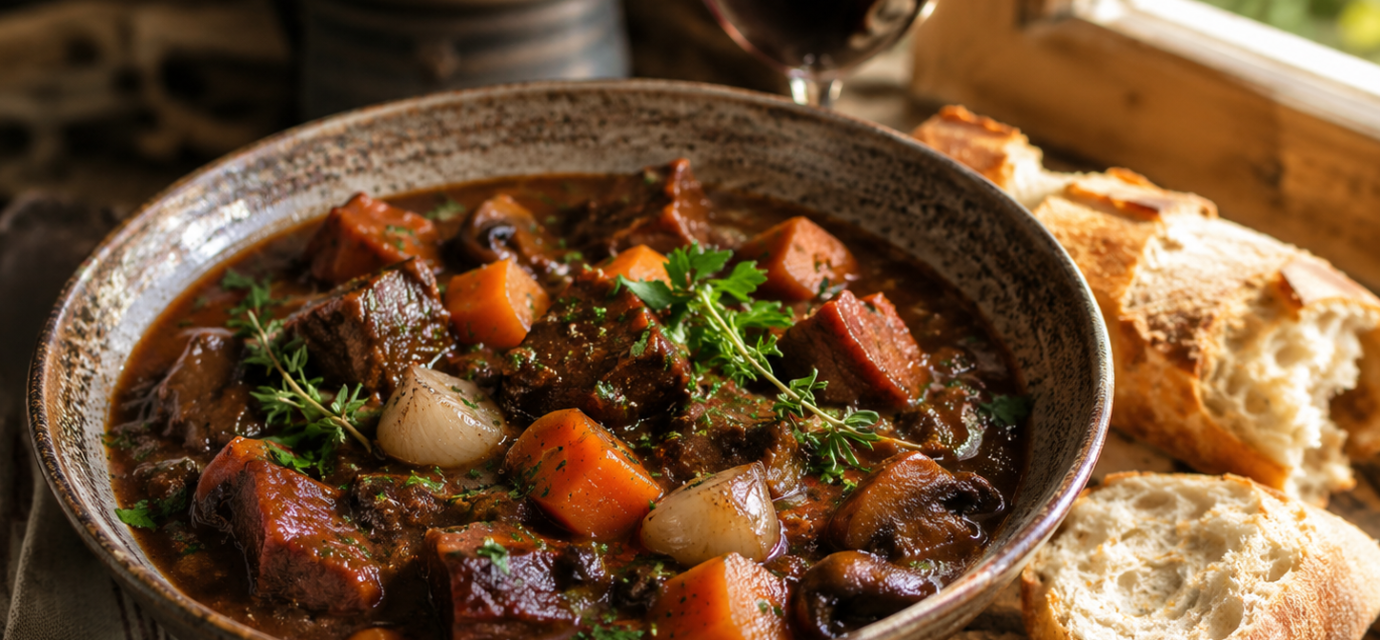
French-Inspired Beef Stew with Herbs: A Cozy Rustic Dinner
A pot of French beef stew with herbs has a way of making the kitchen feel slower, warmer, and more generous. The beef softens into the sauce, the carrots turn sweet around the edges, the mushrooms bring earthiness, and the herbs move quietly through the whole dish. It is not flashy food. It is the kind of meal that earns its comfort through time.
This recipe is inspired by the spirit of French countryside cooking, especially slow-braised dishes like boeuf bourguignon and daube. It is not presented as one rigid regional recipe, because French beef stews vary from kitchen to kitchen. Some lean heavily on red wine. Some are scented with orange peel, olives, or garlic. Some are served with potatoes on the side, while others welcome them into the pot. What they often share is patience, aroma, and the belief that a humble cut of beef can become something beautiful with the right heat, liquid, and care.
Here, beef chuck is browned first for deep savory flavor, then simmered gently with red wine, beef stock, tomato paste, carrots, mushrooms, pearl onions, garlic, and a classic herb bundle. The result is a French-inspired beef stew with herbs that feels elegant enough for Sunday dinner but practical enough for a home cook who wants a dependable, deeply satisfying meal.
Serve it with mashed potatoes, buttered noodles, crusty bread, or simple boiled potatoes. Let the sauce do what it does best: gather everything on the plate into one rich, cozy bite.
Quick Recipe Snapshot
- Prep Time: 30 minutes
- Cook Time: 2 hours 45 minutes – 3 hours 15 minutes
- Total Time: About 3 hours 15 minutes – 3 hours 45 minutes
- Servings: 6
- Difficulty Level: Beginner to intermediate
- Best For: Cozy dinners, Sunday supper, holiday weekends, fall and winter meals, make-ahead entertaining
- Expected Result: Fork-tender beef in a glossy herb-infused sauce with carrots, mushrooms, pearl onions, and deep savory flavor.
Why You’ll Love This Recipe
- It brings the comfort of classic French braising into a practical home-kitchen recipe.
- The beef becomes tender through slow simmering instead of expensive ingredients.
- Red wine, beef stock, tomato paste, and herbs create a deep sauce without complicated steps.
- Mushrooms and pearl onions add a traditional French-inspired touch.
- It tastes even better the next day, making it excellent for make-ahead meals.
- The recipe includes a no-wine option for families or cooks who prefer not to use alcohol.
- It pairs beautifully with simple sides like bread, potatoes, rice, or noodles.
Cultural and Seasonal Background
French beef stew is best understood as part of a larger tradition of braised comfort food. Across France, cooks have long used slow cooking to turn tougher cuts of meat into tender, flavorful meals. Boeuf bourguignon, one of the most recognized French beef stews, is strongly associated with Burgundy, a region known for wine and cattle. Food historians note that the exact history of boeuf bourguignon is more layered than the romantic version often told; while the dish is connected to Burgundy-style cooking, written references and restaurant appearances developed over time rather than pointing to one single ancient farmhouse recipe (Cloake, 2023).
That is why this Fly By Eats version uses respectful wording: French-inspired, Burgundy-style, and rooted in French braising technique. It borrows familiar elements from classic French stews, including red wine, beef, mushrooms, onions, carrots, garlic, and an herb bundle. A traditional bouquet garni often includes parsley, thyme, and bay leaf tied together and removed before serving. This keeps the sauce aromatic without leaving woody herb stems throughout the dish (MICHELIN Guide, 2019).
French food culture also values the social experience of the table. UNESCO recognizes the gastronomic meal of the French as a cultural practice centered on togetherness, taste, and the thoughtful pairing of food and occasion (UNESCO, n.d.). A stew like this fits that spirit beautifully. It asks for time, but not fuss. It invites bread to the table, conversation around the pot, and a meal that feels grounded rather than rushed.
Seasonally, this dish belongs to cool evenings, rainy weekends, holiday gatherings, and those slow winter days when something simmering on the stove feels like a small act of care.
Why This Recipe Works
This stew works because each stage builds flavor before the long simmer begins.
Patting the beef dry helps it brown instead of steaming. Browning creates deep, roasted flavor through the Maillard reaction, the heat-driven process that happens when sugars and proteins interact on the surface of food (Encyclopaedia Britannica, 2026). That browned crust becomes part of the sauce once the pot is deglazed with wine or stock.
Beef chuck is ideal because it contains connective tissue. When cooked gently with moisture over time, collagen softens into gelatin, giving the sauce body and helping the meat become tender rather than chewy (Geiger, 2025; Exploratorium, n.d.).
The liquid balance matters too. Too much liquid can make the stew taste thin, while too little can leave the meat exposed and dry. This recipe uses enough wine and stock to braise the beef gently while still allowing the sauce to reduce into something rich.
The vegetables are added in stages. Aromatics go in early to build the base. Carrots simmer with the beef long enough to soften. Mushrooms and pearl onions are added later, so they keep their shape and character. The final rest lets the stew settle before serving.
Ingredients
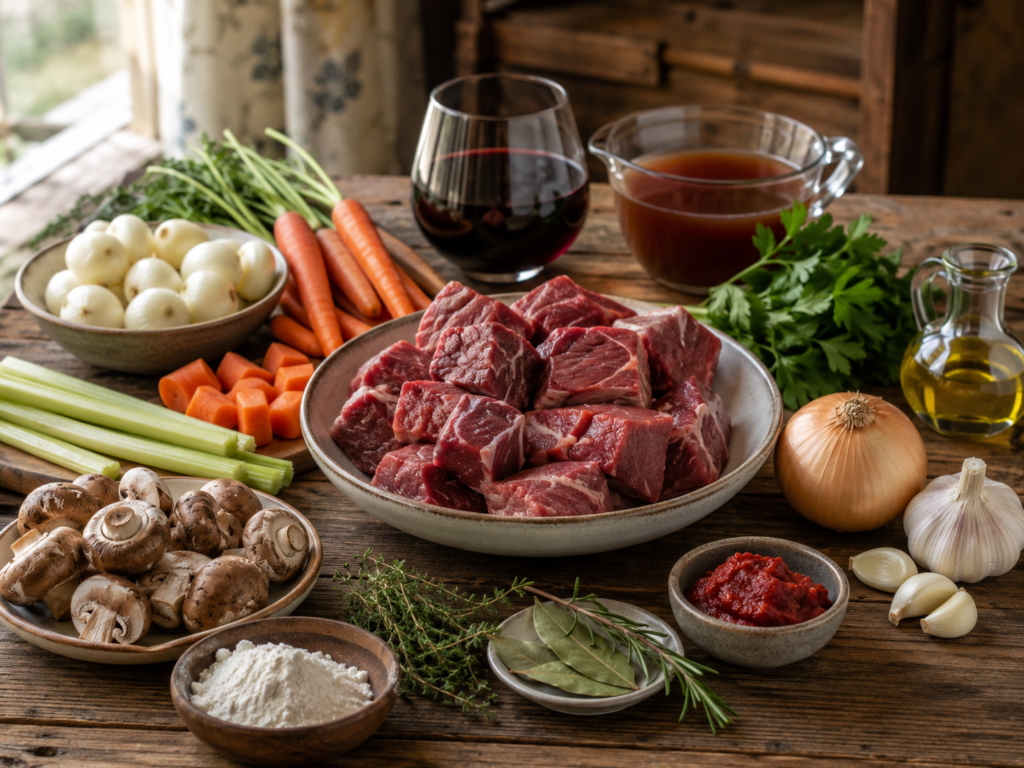
Ingredients for French-inspired beef stew with beef chuck, herbs, mushrooms, carrots, pearl onions, wine, and stock
Beef and Seasoning
- 3 pounds beef chuck roast, trimmed and cut into 1½- to 2-inch pieces
Beef chuck is flavorful and well-suited to slow cooking because its connective tissue becomes tender during a long, moist simmer. - 1½ teaspoons kosher salt, plus more to taste
Salt seasons the beef from the beginning and helps the stew taste balanced. - 1 teaspoon black pepper
Pepper adds gentle warmth without overpowering the herbs. - 3 tablespoons all-purpose flour
Flour helps the beef brown and lightly thickens the sauce. For a gluten-free version, see substitutions below.
Browning and Aromatics
- 2 tablespoons olive oil, divided
Oil helps brown the beef evenly. - 4 ounces bacon lardons or thick-cut bacon, diced, optional
Bacon adds smoky richness. It is traditional in many Burgundy-style beef stews, but the recipe still works without it. - 1 large yellow onion, diced
Onion creates a savory-sweet foundation for the sauce. - 2 medium carrots, peeled and cut into thick coins
Carrots bring sweetness, color, and soft texture. - 2 celery ribs, diced, optional
Celery gives a classic mirepoix-style background note. - 4 garlic cloves, minced
Garlic adds depth and warmth. - 2 tablespoons tomato paste
Tomato paste adds color, body, and savory concentration.
Braising Liquid and Herbs
- 2 cups dry red wine, such as Pinot Noir, Côtes du Rhône, or another dry red wine you enjoy drinking
Red wine gives acidity, fruitiness, and depth. Avoid sweet wine. - 2½ cups low-sodium beef stock, plus more if needed
Beef stock supports the sauce and gives the stew its savory backbone. - 1 tablespoon Worcestershire sauce, optional
Not strictly French, but useful for adding gentle umami when using store-bought stock. - 1 bouquet garni: 4 fresh thyme sprigs, 2 parsley stems, 1 bay leaf, and 1 small rosemary sprig tied with kitchen twine
This herb bundle perfumes the stew and can be removed easily before serving.
Finishing Vegetables
- 8 ounces cremini mushrooms, halved or quartered
Mushrooms bring earthy flavor and a satisfying texture. - 1½ cups pearl onions, peeled, fresh or frozen
Pearl onions are a classic touch in many French-style beef stews. - 1 tablespoon unsalted butter
Butter helps brown the mushrooms and gives the sauce a soft finish. - 1 teaspoon fresh thyme leaves, for finishing
Fresh thyme brightens the final flavor. - Chopped parsley, for garnish
Parsley adds color and freshness.
Ingredient Notes and Smart Substitutions
Red wine: Choose a dry red wine, not a sweet one. Pinot Noir, Côtes du Rhône, Merlot, or Cabernet Sauvignon can work. You do not need an expensive bottle, but use something you would enjoy in a glass.
No-wine version: Replace the wine with 1½ cups additional beef stock plus ½ cup unsweetened grape juice or pomegranate juice and 1 tablespoon red wine vinegar. This will not taste exactly the same, but it gives acidity and depth without alcohol.
Beef chuck substitute: Beef shoulder, bottom round, short ribs, or beef cheek can work. Cooking times may vary. The stew is done when the beef is fork-tender.
Gluten-free option: Replace flour with 1½ tablespoons cornstarch mixed with 2 tablespoons cold water near the end of cooking. Do not coat the beef in cornstarch before searing; simply brown the seasoned beef and thicken later.
Bacon-free version: Skip the bacon and add 1 extra tablespoon of olive oil. A pinch of smoked paprika can add a hint of smoky depth, though it moves the flavor away from a classic French profile.
Herb options: Thyme, parsley, and bay are the most classic. Rosemary is stronger, so use it lightly. Too much rosemary can dominate the stew.
Potato option: For a more rustic family-style stew, add 1 pound baby potatoes during the final 45 minutes of cooking. For a more traditional plated feel, serve boiled potatoes or mashed potatoes on the side instead.
Mushroom substitute: Use button mushrooms, baby bella mushrooms, or a mix of cremini and shiitake. Avoid delicate mushrooms that collapse quickly.
Equipment You’ll Need
- Large Dutch oven or heavy-bottomed pot with lid
- Cutting board
- Sharp knife
- Mixing bowl
- Tongs
- Wooden spoon
- Measuring cups and spoons
- Kitchen twine for the herb bundle
- Food thermometer
- Ladle
- Shallow storage containers for leftovers
Step-by-Step Directions
1. Prepare the beef.
Pat the beef pieces very dry with paper towels. Place them in a bowl and season with salt and pepper. Sprinkle with flour and toss lightly until each piece has a thin coating. Dry beef browns better, and browning is one of the biggest flavor-builders in this recipe.
2. Brown the bacon, if using.
Place a Dutch oven over medium heat. Add the diced bacon and cook for 5-7 minutes, stirring occasionally, until the fat renders and the bacon is lightly crisp. Transfer the bacon to a plate, leaving the fat in the pot. If skipping bacon, heat 1 tablespoon olive oil instead.
3. Sear the beef in batches.
Increase the heat to medium-high. Add a little olive oil if the pot looks dry. Brown the beef in batches, leaving space between pieces. Sear for about 2-3 minutes per side until deeply browned. Do not rush this step and do not crowd the pot, or the beef will steam. Transfer browned beef to a plate.
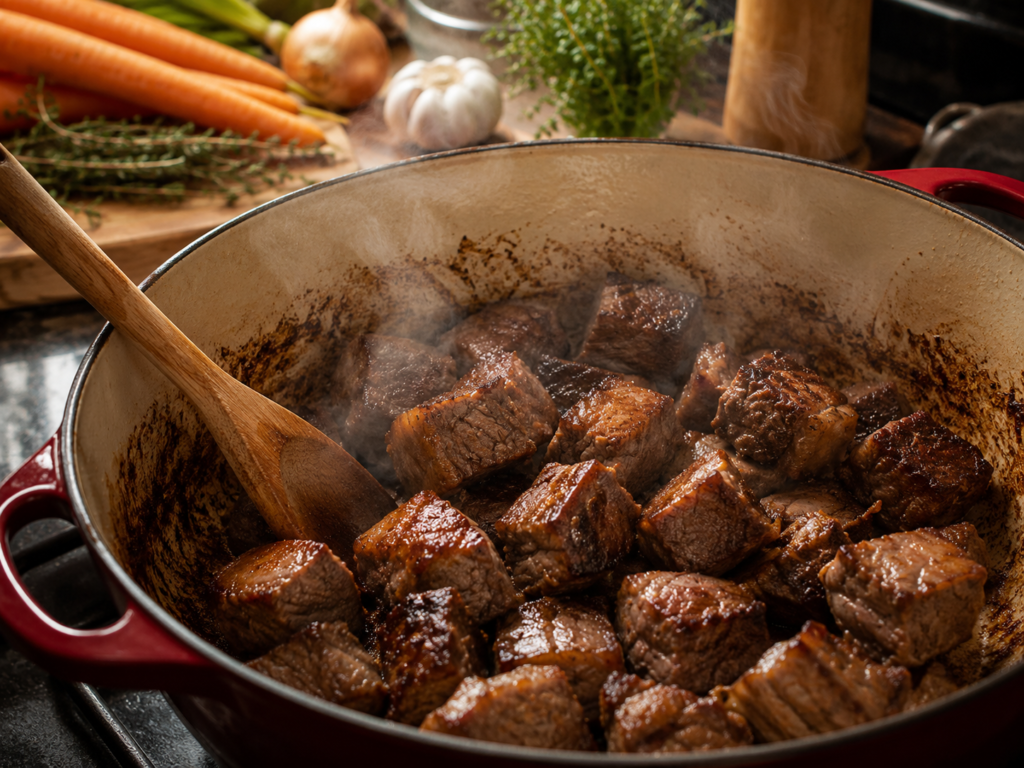
Beef chuck browning in a Dutch oven for French beef stew with herbs
4. Build the aromatic base.
Lower the heat to medium. Add the diced onion, carrots, and celery, if using. Cook for 6-8 minutes, stirring often, until the onion softens and the vegetables pick up some color from the browned bits in the pot. Add the garlic and cook for 30 seconds, just until fragrant.
5. Cook the tomato paste.
Stir in the tomato paste and cook for 1-2 minutes. It should darken slightly and cling to the vegetables. This step helps remove raw tomato flavor and gives the sauce a richer color.
6. Deglaze with wine.
Pour in the red wine and scrape the bottom of the pot with a wooden spoon to loosen the browned bits. Simmer for 5-7 minutes, allowing the wine to reduce slightly. Those browned bits are concentrated flavor, so take your time here.
7. Add stock, herbs, and beef.
Return the beef and bacon to the pot. Add the beef stock, Worcestershire sauce if using, and bouquet garni. The liquid should come about two-thirds of the way up the beef, not completely drown it. Add a splash more stock if needed.
8. Simmer gently.
Bring the stew just to a simmer, then reduce the heat to low. Cover and cook gently for 2 hours, stirring occasionally. The surface should bubble softly, not boil hard. A hard boil can make the meat tighten and turn dry.
9. Brown the mushrooms.
About 20 minutes before the first 2 hours are up, melt butter in a separate skillet over medium-high heat. Add the mushrooms and cook for 6-8 minutes until browned and their moisture has cooked off. Browning the mushrooms separately keeps them flavorful instead of watery.
10. Add mushrooms and pearl onions.
Stir the browned mushrooms and pearl onions into the stew. Cover again and cook for 35-50 minutes, or until the beef is fork-tender and the onions are soft. If using frozen pearl onions, they can go in straight from the freezer.
11. Check doneness and sauce texture.
The beef should break apart with gentle pressure from a fork. If it still feels firm, keep simmering and check every 15 minutes. If the sauce seems thin, remove the lid and simmer uncovered for 10-15 minutes. If it seems too thick, add a splash of stock.
12. Finish and season.
Remove the bouquet garni and bay leaf. Stir in fresh thyme leaves. Taste and adjust with salt and pepper. Let the stew rest off the heat for 10-15 minutes before serving so the sauce can settle, and the flavors can round out.
13. Serve warm.
Spoon the stew into shallow bowls and garnish with parsley. Serve with mashed potatoes, buttered noodles, crusty bread, or boiled potatoes.
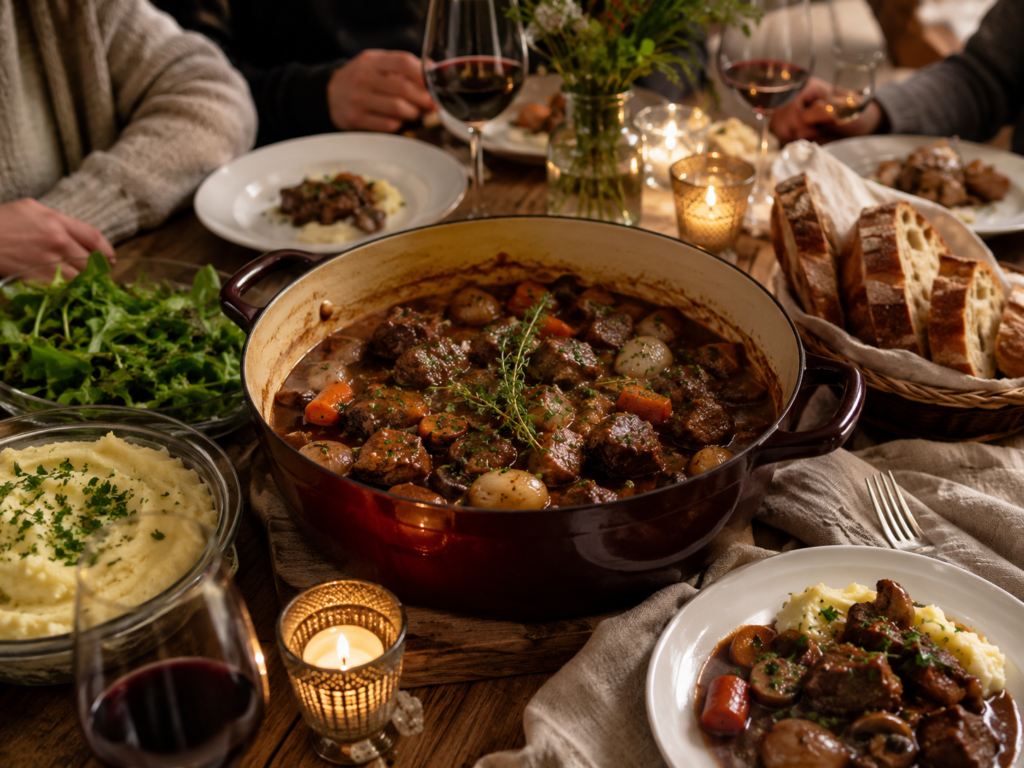
Family-style French beef stew dinner table with bread, potatoes, salad, and warm rustic styling
Food Safety Note: Use a food thermometer when needed, keep raw beef separate from ready-to-eat foods, wash hands and surfaces after handling raw meat, refrigerate leftovers promptly, and reheat leftovers to 165°F.
Pro Tips for Best Results
- Cut the beef into larger chunks, so it stays juicy during the long simmer.
- Brown in batches. A crowded pan traps steam and prevents good browning.
- Use a heavy pot because steady heat helps the stew simmer gently.
- Keep the stew at a low simmer, not a rolling boil.
- Brown mushrooms separately for better flavor and texture.
- Tie the herbs together so the stems are easy to remove.
- Make it a day ahead if possible; the flavor deepens after resting overnight.
- Taste at the end before adding more salt, especially if using bacon or regular stock.
- Skim excess fat from the surface if needed before serving.
- Serve with something starchy to catch the sauce.
Common Mistakes to Avoid
- Skipping the browning step: The stew will still cook, but the sauce will taste flatter. Take time to sear the beef well.
- Using lean steak cuts: Tender steak cuts can become dry in a stew. Choose chuck or another braising cut.
- Boiling the stew hard: A hard boil tightens meat fibers. Keep the heat gentle.
- Adding mushrooms too early: Mushrooms can turn limp and watery. Brown them separately and add them later.
- Using too much rosemary: Rosemary is strong. One small sprig is enough.
- Choosing sweet wine: Sweet wine can make the stew taste unbalanced. Use dry red wine.
- Storing leftovers in a deep hot pot: Large batches cool too slowly. Divide leftovers into shallow containers.
- Not tasting before serving: Stock, bacon, and wine vary. Final seasoning matters.
Flavor Variations
Burgundy-Inspired Classic: Keep the red wine, bacon, pearl onions, mushrooms, thyme, parsley, and bay. Serve with boiled potatoes or buttered noodles.
Provençal-Inspired Stew: Add a strip of orange zest, a pinch of fennel seed, and a few olives near the end. Use rosemary lightly.
Extra Herb Garden Stew: Add a small amount of tarragon or savory at the end. Do not simmer delicate herbs for hours.
Mushroom Lover’s Version: Use a mix of cremini, shiitake, and button mushrooms. Brown them deeply before adding.
No-Wine Family Version: Use extra beef stock, a splash of red wine vinegar, and a small amount of unsweetened grape or pomegranate juice.
Root Vegetable Version: Add parsnips or turnips during the last 45 minutes for a heartier winter stew.
Serving Suggestions
This stew loves a simple, sturdy side. Serve it over creamy mashed potatoes, buttered egg noodles, steamed rice, or soft polenta. For a French-inspired plate, try boiled baby potatoes tossed with butter and parsley.
Crusty bread is almost required if you want to enjoy every bit of sauce. A simple green salad with Dijon vinaigrette balances the richness. Roasted green beans, buttered peas, or sautéed spinach also work well.
For drinks, serve with the same style of dry red wine used in the stew, sparkling water with lemon, unsweetened iced tea, or a cranberry-orange mocktail. For a holiday table, place the Dutch oven in the center with warm bread, a crisp salad, and small bowls of parsley and flaky salt so guests can finish their plates the way they like.
Storage, Freezing, and Reheating
Refrigerator: Cool the stew and transfer it to shallow airtight containers. Refrigerate within 2 hours of cooking, or within 1 hour if the room is above 90°F. Store for 3-4 days.
Freezer: Freeze in airtight freezer-safe containers for best quality within 2-3 months. Leave a little space at the top because liquid expands as it freezes.
Cooling tip: Do not place a large hot Dutch oven directly into the refrigerator as the main storage method. Divide the stew into smaller shallow containers so it cools faster and more safely.
Reheating on the stove: Place stew in a saucepan or Dutch oven over medium-low heat. Stir occasionally until steaming hot and reheated to 165°F. Add a splash of stock or water if the sauce thickens too much.
Reheating in the microwave: Use a microwave-safe bowl, cover loosely, heat in intervals, and stir between each interval so it reheats evenly. Check that it reaches 165°F.
From frozen: Thaw overnight in the refrigerator when possible. You can also reheat from frozen over low heat with a splash of stock, stirring often, but it will take longer.
Make-Ahead Tips
This stew is an excellent make-ahead recipe. Cook it fully, cool it safely, and refrigerate overnight. The next day, skim any solidified fat from the top if desired, then reheat gently.
You can also prep ingredients ahead:
- Cut beef up to 1 day ahead and keep refrigerated.
- Chop onions, carrots, and celery up to 1 day ahead.
- Tie the bouquet garni up to 2 days ahead.
- Peel pearl onions in advance, or use frozen pearl onions for ease.
- Brown mushrooms the day of serving for the best texture.
For entertaining, make the stew the day before and reheat it slowly before guests arrive. Add a little fresh parsley and thyme at the end so it tastes lively, not tired.
Frequently Asked Questions
What is French beef stew with herbs?
French beef stew with herbs is a slow-cooked beef dish inspired by French braising traditions. It usually includes beef, aromatic vegetables, herbs, wine or stock, and a gentle simmer that turns tougher cuts tender.
Is this the same as boeuf bourguignon?
Not exactly. This recipe is inspired by boeuf bourguignon, but it is written as a flexible French-inspired beef stew. It uses familiar elements like red wine, mushrooms, pearl onions, bacon, and herbs without claiming to be one strict regional version.
What cut of beef is best for French beef stew?
Beef chuck is one of the best choices because it has enough connective tissue and flavor to become tender during slow cooking. Beef shoulder, short ribs, beef cheek, or bottom round can also work.
Can I make this French beef stew without wine?
Yes. Replace the wine with extra beef stock plus a small amount of red wine vinegar and unsweetened grape or pomegranate juice. The flavor will be different, but still rich and balanced.
Can I make this stew in a slow cooker?
Yes. Brown the beef and aromatics first, then transfer everything to a slow cooker. Cook on low for about 7-8 hours or until the beef is fork-tender. Add browned mushrooms and pearl onions during the last 1-2 hours.
Can I add potatoes directly to the stew?
Yes. Add baby potatoes or chunks of Yukon Gold potato during the last 45 minutes of cooking. For a more classic presentation, serve potatoes on the side instead.
Why is my beef stew tough?
It may need more time, or it may have boiled too aggressively. Keep the stew at a gentle simmer and continue cooking until the beef yields easily to a fork.
Does beef stew taste better the next day?
Often, yes. A night in the refrigerator gives the flavors time to settle and deepen. Cool and store it safely, then reheat gently to 165°F before serving.
Final Thoughts
French-inspired beef stew with herbs is one of those meals that reminds us why slow cooking still matters. In a world full of quick dinners and busy evenings, a stew asks for a different kind of attention. Not perfection. Not fancy equipment. Just a little patience, a warm pot, and the willingness to let simple ingredients become something deeper than they were on their own.
What makes this dish special is not only the beef, the wine, or the herbs. It is the way each step contributes to the final bowl. The browning gives the sauce its backbone. The wine lifts the richness. The stock carries the savory notes. The carrots bring sweetness, the mushrooms bring earthiness, and the pearl onions add that little moment of tenderness that feels so right in a French-style stew. The bouquet garni does quiet work in the background, giving fragrance without demanding attention.
This is the kind of recipe that feels generous on a Sunday, comforting on a cold weeknight, and thoughtful enough for guests. It does not need a complicated table to feel beautiful. A loaf of bread, a bowl of potatoes, a simple salad, and a pot of stew are enough.
At Fly By Eats, recipes like this belong because they connect food to memory, culture, and care. They invite us to learn from tradition while still cooking honestly in our own kitchens. They remind us that comfort food can be humble and elegant at the same time. So let the stew simmer low, let the kitchen fill with herbs, and let dinner become the kind of meal people remember because it made them feel welcomed.
Quick Recipe Card
Recipe Name: French-Inspired Beef Stew with Herbs
Description: A rustic French-inspired beef stew made with beef chuck, red wine, beef stock, mushrooms, pearl onions, carrots, garlic, tomato paste, and a fragrant bouquet garni. Slow simmering creates tender beef and a rich herb-infused sauce.
Prep Time: 30 minutes
Cook Time: 2 hours 45 minutes – 3 hours 15 minutes
Total Time: About 3 hours 15 minutes – 3 hours 45 minutes
Servings: 6
Ingredients:
- 3 pounds beef chuck roast, trimmed and cut into 1½- to 2-inch pieces
- 1½ teaspoons kosher salt, plus more to taste
- 1 teaspoon black pepper
- 3 tablespoons all-purpose flour
- 2 tablespoons olive oil, divided
- 4 ounces bacon lardons or thick-cut bacon, diced, optional
- 1 large yellow onion, diced
- 2 medium carrots, peeled and cut into thick coins
- 2 celery ribs, diced, optional
- 4 garlic cloves, minced
- 2 tablespoons tomato paste
- 2 cups dry red wine
- 2½ cups low-sodium beef stock, plus more if needed
- 1 tablespoon Worcestershire sauce, optional
- 1 bouquet garni: 4 thyme sprigs, 2 parsley stems, 1 bay leaf, and 1 small rosemary sprig tied with kitchen twine
- 8 ounces cremini mushrooms, halved or quartered
- 1½ cups pearl onions, peeled, fresh or frozen
- 1 tablespoon unsalted butter
- 1 teaspoon fresh thyme leaves
- Chopped parsley, for garnish
Instructions:
- Pat the beef dry. Season with salt and pepper, then toss lightly with flour.
- In a Dutch oven, cook bacon over medium heat until lightly crisp. Remove and set aside, leaving fat in the pot. If not using bacon, heat 1 tablespoon olive oil.
- Sear beef in batches over medium-high heat until browned on all sides. Transfer to a plate.
- Lower the heat to medium. Add onion, carrots, and celery. Cook 6-8 minutes until softened.
- Add garlic and cook for 30 seconds. Stir in tomato paste and cook 1-2 minutes.
- Pour in red wine, scraping the browned bits from the bottom. Simmer 5-7 minutes.
- Return beef and bacon to the pot. Add beef stock, Worcestershire sauce if using, and bouquet garni.
- Bring to a gentle simmer, cover, and cook on low for 2 hours.
- In a separate skillet, melt butter and brown mushrooms for 6-8 minutes.
- Add mushrooms and pearl onions to the stew. Cover and simmer 35-50 minutes more, until beef is fork-tender.
- Remove bouquet garni. Stir in fresh thyme. Taste and adjust seasoning.
- Rest 10-15 minutes before serving. Garnish with parsley.
Notes:
- For no-wine stew, replace wine with 1½ cups beef stock, ½ cup unsweetened grape or pomegranate juice, and 1 tablespoon red wine vinegar.
- For gluten-free stew, skip flour and thicken near the end with 1½ tablespoons cornstarch mixed with 2 tablespoons cold water.
- Add baby potatoes during the last 45 minutes if you want a heartier one-pot version.
- Keep the stew at a gentle simmer, not a boil.
Storage:
Cool safely and refrigerate in shallow airtight containers within 2 hours. Store refrigerated for 3-4 days. Freeze for best quality within 2-3 months. Reheat leftovers to 165°F before serving.
Nutrition Disclaimer: Nutrition information, if provided, is an estimate and may vary based on ingredients and preparation methods.
References
- Cloake, F. (2023, April 28). The story behind the classic French dish boeuf bourguignon. National Geographic Traveller. https://www.nationalgeographic.com/travel/article/story-behind-classic-french-dish-boeuf-bourguignon
- Encyclopaedia Britannica. (2026, April 20). Maillard reaction. Encyclopaedia Britannica. https://www.britannica.com/science/Maillard-reaction
- Exploratorium. (n.d.). Science of meat: What makes meat juicy and tender? Exploratorium. https://annex.exploratorium.edu/cooking/meat/INT-what-makes-juicy.html
- FoodSafety.gov. (2024, November 21). Cook to a safe minimum internal temperature. U.S. Department of Health & Human Services. https://www.foodsafety.gov/food-safety-charts/safe-minimum-internal-temperatures
- MICHELIN Guide. (2019, July 17). Kitchen language: What is bouquet garni? https://guide.michelin.com/us/en/article/dining-in/bouquet-garni-kitchen-cooking
- U.S. Department of Agriculture, Food Safety and Inspection Service. (2020, July 31). Leftovers and food safety. https://www.fsis.usda.gov/food-safety/safe-food-handling-and-preparation/food-safety-basics/leftovers-and-food-safety
- U.S. Food and Drug Administration. (2024, March 5). Safe food handling. https://www.fda.gov/food/buy-store-serve-safe-food/safe-food-handling
- UNESCO. (n.d.). Gastronomic meal of the French. Intangible Cultural Heritage. https://ich.unesco.org/en/RL/gastronomic-meal-of-the-french-00437