Eat Like You Remember: Why Cultural Food Traditions Still Matter in Modern Life
A meaningful meal can fill more than a plate. You sense it before the first bite in the steam rising from rice in a quiet kitchen, in greens simmering low and patient, in coffee poured for a guest before anything else is said, or in warm bread set at the center of the table like a gentle invitation.
Food offered with memory changes the room.
A table becomes more than wood, cloth, and dishes. It becomes a keeper of old stories, family lessons, migration, celebration, grief, harvest, survival, and joy. Across cultures, food traditions remind us that eating was never meant to be only about hunger. It is about belonging. It is about remembering who taught us to gather, who fed us when life was hard, who saved the best piece for someone else, and who turned simple ingredients into care.
Modern life moves fast, but cultural food traditions invite us back to something slower, wiser, and more human: eat like you remember why.
Why Cultural Food Traditions Feel So Meaningful
Cultural food traditions matter because they connect everyday life to something deeper. They turn ordinary ingredients into memory. They teach children without lectures. They welcome guests without performance. They carry language, land, family, faith, labor, and creativity in ways a history book cannot always reach.
In the Mediterranean, UNESCO describes the Mediterranean diet not only as a list of foods, but as a set of skills, rituals, knowledge, and traditions tied to growing, preparing, sharing, and eating food. The heart of that tradition is not just olive oil or fresh vegetables. It is the act of eating together.
In Korea, kimjang, the seasonal making and sharing of kimchi, is recognized as a community practice. It is tied to preparation for winter, cooperation between households, and the passing of knowledge from one generation to another. The cabbage, salt, chile, garlic, and time become more than ingredients. They become preparation, care, and continuity.
In many Arab societies, Arabic coffee is a symbol of hospitality and generosity. The meaning is not only in the coffee itself, but in the way it is offered. A small cup can say, “You are welcome here.” It can begin conversation, soften distance, and honor the guest before the meal even arrives.
That is the power of food tradition. It gives meaning to small gestures.
The Beauty of the Table
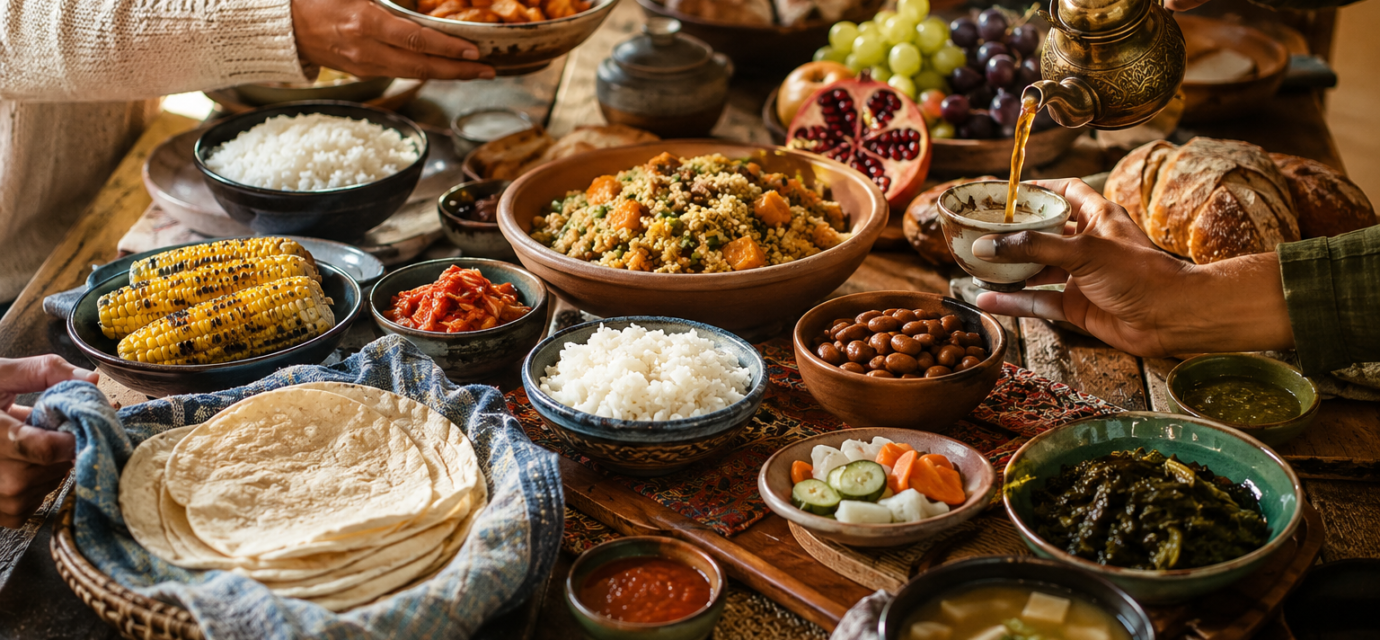
The beauty of a cultural table is not always loud or fancy. Sometimes it is quiet. A low bowl of soup. A stack of tortillas kept warm in cloth. A clay cup. A plate of sliced fruit. Steam lifting from couscous. The sour-bright crunch of kimchi beside warm rice. The earthy scent of corn, beans, and squash. The deep green shine of collards. The clean arrangement of a Japanese meal where each dish feels placed with care.
The table has its own language.
Color speaks first. Red chiles, golden grains, dark leafy greens, white rice, orange squash, purple onions, bright herbs. Then comes aroma: roasted coffee, toasted spices, fermented cabbage, simmering broth, warm bread, grilled fish, citrus, smoke, garlic, ginger.
Texture carries the story further. The softness of rice. The chew of handmade bread. The snap of pickled vegetables. The creamy weight of beans. The tender patience of slow-cooked greens. The delicate grain of couscous fluffed by hand.
And then there is sound: spoons tapping bowls, someone laughing from the kitchen, tea being poured, a chair sliding back to make room for one more person.
A meaningful table does not need to impress everyone. It only needs to make people feel cared for.
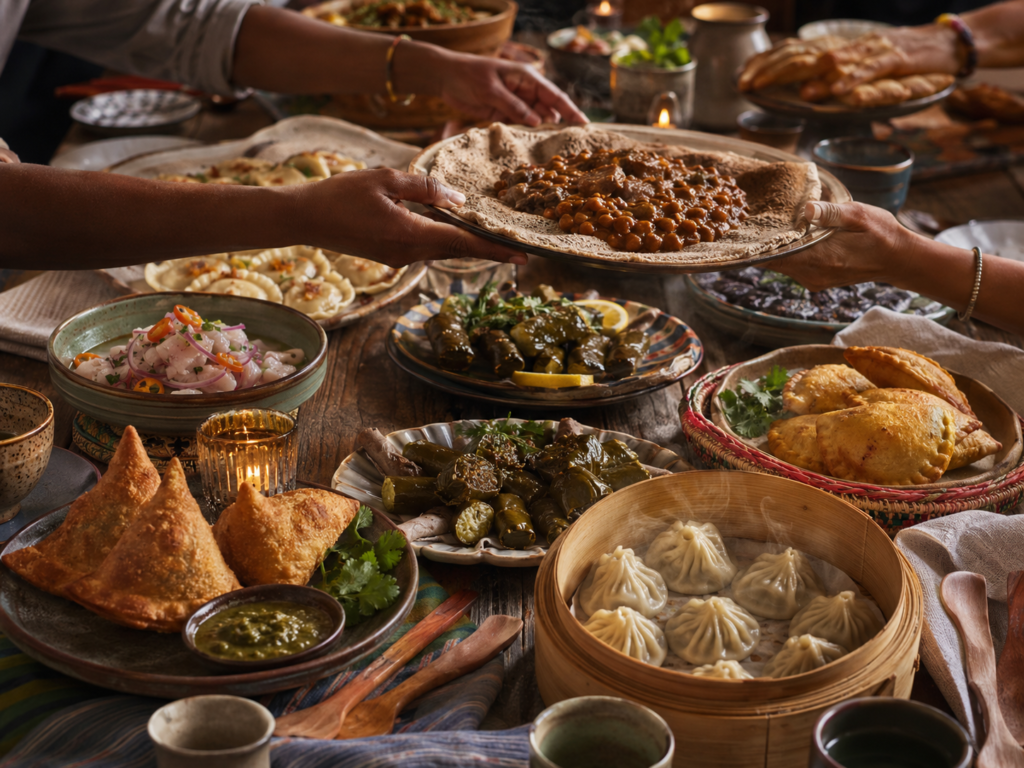
Hands Passing Memory Across the Table
A Taste of History and Culture
Food traditions survive because people keep choosing to practice them. Sometimes they are protected through festivals, family gatherings, religious observances, seasonal harvests, and community meals. Sometimes they survive quietly in home kitchens, where someone still knows how much salt to add by feel.
Traditional Mexican cuisine, recognized by UNESCO, is deeply tied to corn, community, agricultural knowledge, and long-standing preparation practices. Tortillas, tamales, sauces, beans, chiles, and seasonal foods are not just menu items. They are part of a living food system shaped by Indigenous knowledge, regional identity, and family labor.
Couscous, shared across Algeria, Mauritania, Morocco, and Tunisia, is another powerful example. Its UNESCO recognition honors the knowledge and practices connected to making and sharing it. In many homes, couscous is not simply poured from a box and served. It is steamed, fluffed, seasoned, gathered around, and connected to family meals, celebrations, and regional expression.
In Indigenous communities across the Americas, the Three Sisters corn, beans, and squash reflect agricultural wisdom and cultural meaning. Grown together, they support one another in the field: corn offers structure, beans help enrich the soil, and squash shades the ground. But the lesson is more than practical. The Three Sisters show how food can teach relationship, balance, and care for the land.
African American foodways also remind us that food can carry survival, skill, resistance, and creativity. Greens, seafood, grains, street vending, family recipes, and regional dishes tell stories shaped by African heritage, forced migration, labor, adaptation, and community building. These foodways are not frozen in the past. They continue to evolve through home cooks, farmers, chefs, historians, and families who honor both memory and innovation.
In Japan, washoku is often described through seasonality, balance, local ingredients, and respect for nature. A meal may look simple at first glance, but simplicity can hold great care. Rice, soup, fish, vegetables, pickles, and tea can become a reminder that beauty does not always need excess.
Across these traditions, the common thread is not sameness. Each culture has its own history, values, ingredients, and way of gathering. The connection is that food becomes a living archive. It keeps memory edible.
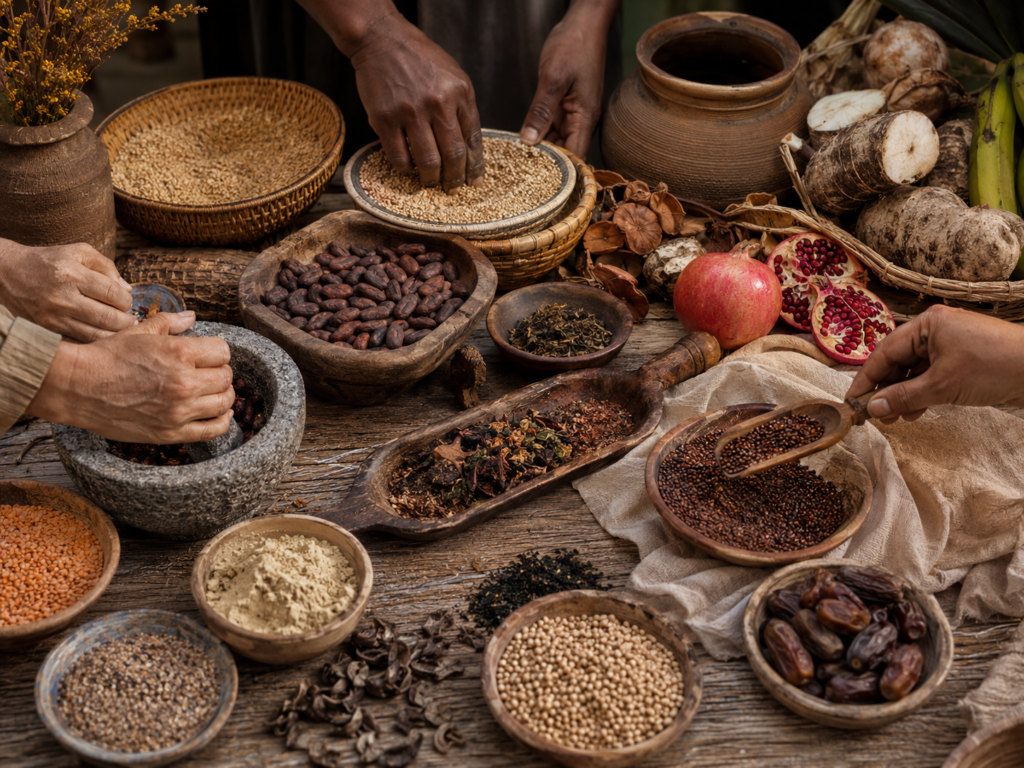
Ingredients That Carry Culture and Memory
What This Food Tradition Teaches Us
Cultural food traditions teach us to pay attention.
They remind us that gratitude can be practiced before the first bite. In Japanese dining customs, phrases of thanks before and after meals express appreciation for the food and those who prepared it. In many cultures, prayer, blessing, silence, or simply waiting until everyone is served carries a similar spirit.
They teach us that community is built in repetition. The same holiday dish. The same Sunday meal. The same pot brought to the family gathering. The same auntie who says she is not cooking much, then somehow feeds twenty people. These rituals become emotional landmarks.
They teach patience. Fermentation asks time from us. Slow stews ask time from us. Bread asks time from us. So do relationships.
They teach respect for nature. Seasonal food traditions remind us that people ate according to what the land, water, weather, and harvest made possible. Before food became available year-round in every supermarket aisle, seasons shaped the table. Many traditions still honor that rhythm.
They teach hospitality. Not performance. Not perfection. Hospitality. The kind that says, “Sit down, eat something, you are not a stranger here.”
Most of all, cultural food traditions teach us that everyday care matters. A meal does not have to be grand to be meaningful. Sometimes the most powerful food memory is the simplest one: rice in a bowl, soup on the stove, coffee poured slowly, bread passed across the table.
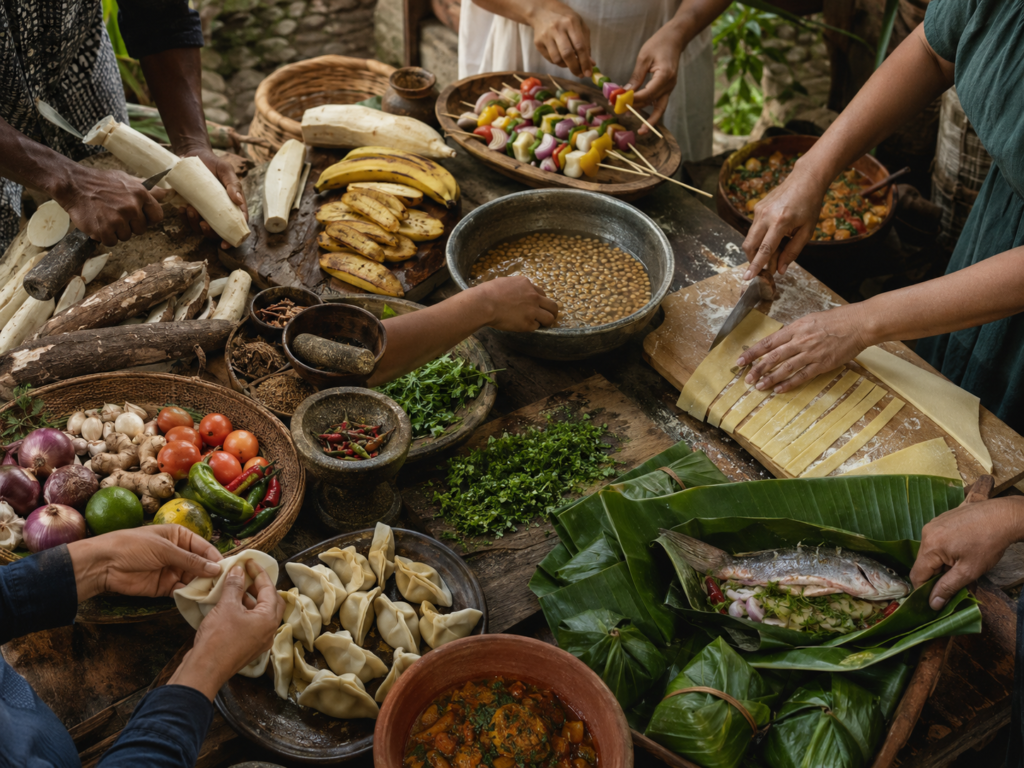
Gratitude, Simplicity, and the Shared Meal
How to Bring This Spirit Into Your Own Kitchen
You do not have to copy another culture’s tradition to learn from it. In fact, the most respectful place to begin is often your own table.
Start with memory. Ask yourself what foods shaped you. What did people cook when money was tight, when someone was sick, when guests came over, when the family celebrated, when grief entered the room? Those dishes matter. Write them down. Ask relatives for the story, not just the recipe.
Cook with seasonality when possible. Choose one ingredient that reflects the time of year: summer tomatoes, winter greens, autumn squash, spring herbs. Let the season guide the plate.
Make one meal slower. Turn off the rush. Set the table even if dinner is simple. Use real plates if you can. Add a small bowl of fruit, a folded napkin, a candle, fresh herbs in a cup, or a dish served family-style in the center.
Learn the background of foods you love. If you enjoy kimchi, learn about kimjang. If you cook couscous, learn about its North African roots. If you make tacos, learn why corn and masa matter. If you serve collard greens, learn about African American foodways beyond stereotypes. Curiosity is a form of respect when it is paired with humility.
Support people from the culture when possible. Buy from local restaurants, markets, farmers, cookbook authors, teachers, and food makers who carry the tradition with lived knowledge.
And when you host, do not chase perfection. Chase warmth. A slightly messy kitchen with real laughter will always feel better than a flawless table with no heart.
Simple Serving Ideas
Create a “memory table” dinner. Ask each guest to bring a dish that reminds them of home, family, travel, or a meaningful season of life. Let each person share the story behind it.
Serve a seasonal shared platter. Use roasted vegetables, bread, olives, beans, herbs, fruit, or grains. Keep it simple, colorful, and easy to pass.
Build a Three Sisters-inspired bowl with corn, beans, and squash, while clearly acknowledging the Indigenous agricultural roots of the combination. Add herbs, greens, or a simple dressing without pretending it represents every Native community.
Create a cozy rice-and-pickle meal. Serve steamed rice with vegetables, fermented foods, soup, and tea. Keep the mood quiet, balanced, and grateful.
Host a coffee or tea welcome. Instead of making drinks an afterthought, make them the beginning. Offer coffee, tea, or a warm nonalcoholic drink with dates, fruit, nuts, or small sweets.
Make family-style serving the focus. Put one or two dishes in the center of the table so people can serve one another. Passing food changes the energy of a meal. It turns eating into exchange.
Style the table with natural textures. Use woven placemats, wood boards, ceramic bowls, linen napkins, small flowers, or herbs. Let the food be the color.
A Thoughtful Note on Cultural Appreciation
Food appreciation should never flatten a culture into a trend. A dish is not just an aesthetic. A dining ritual is not just content. A sacred or ceremonial practice should not be borrowed casually for decoration or entertainment.
Respect begins with naming origins when you know them. It grows when you learn from credible sources, listen to people from the culture, avoid claiming expertise you do not have, and understand that no single dish represents an entire people.
It also means allowing traditions to be alive. Cultures are not museum pieces. Families adapt recipes. Immigrants adjust ingredients. Restaurants reinterpret dishes. Younger generations remix what they inherited. That does not automatically make the food less meaningful. Sometimes adaptation is how tradition survives.
The goal is not to perform someone else’s identity at your table. The goal is to become more aware, more grateful, and more careful with the stories food carries.
Final Thoughts: Remember the Hands Behind the Meal
To eat like you remember why is to slow down enough to see the hands behind the meal.
The farmer. The fisher. The grandmother. The street vendor. The auntie stirring the pot. The father pouring coffee. The child learning by watching. The community gathering before winter. The family holding on to a recipe after migration. The cook making something beautiful out of what was available.
Food traditions still matter because people still need belonging. We still need reminders that life is not only productivity, speed, and convenience. We still need tables where stories can land. We still need meals that make us feel rooted, even when the world keeps moving.
A cultural food tradition does not have to be elaborate to be powerful. Sometimes it is one bowl, one cup, one shared plate, one remembered phrase, one familiar smell coming from the kitchen.
And sometimes, that is enough to bring us back to ourselves.
References
- Japan National Tourism Organization. (n.d.). Understanding and mastering Japanese manners and etiquette. Travel Japan. https://www.japan.travel/en/guide/understanding-and-mastering-japanese-manners-and-etiquette/
- Ministry of Agriculture, Forestry and Fisheries of Japan. (n.d.). About us: Traditional foods in Japan. Ministry of Agriculture, Forestry and Fisheries of Japan. https://www.maff.go.jp/e/policies/market/dento_syoku/about/index.html
- Smithsonian Center for Folklife and Cultural Heritage. (2020). Corn, beans, and squash: What the Three Sisters tell us. Smithsonian Folklife Festival. https://festival.si.edu/event/corn-beans-and-squash-what-the-three-sisters-tell-us
- Smithsonian National Museum of African American History and Culture. (n.d.). Black foodways and cuisine. National Museum of African American History and Culture. https://nmaahc.si.edu/explore/stories/black-foodways-and-cuisine
- UNESCO. (n.d.). Arabic coffee, a symbol of generosity. UNESCO Intangible Cultural Heritage. https://ich.unesco.org/en/RL/arabic-coffee-a-symbol-of-generosity-02111
- UNESCO. (n.d.). Kimjang, making and sharing kimchi in the Republic of Korea. UNESCO Intangible Cultural Heritage. https://ich.unesco.org/en/RL/kimjang-making-and-sharing-kimchi-in-the-republic-of-korea-00881
- UNESCO. (n.d.). Knowledge, know-how and practices pertaining to the production and consumption of couscous. UNESCO Intangible Cultural Heritage. https://ich.unesco.org/en/RL/knowledge-know-how-and-practices-pertaining-to-the-production-and-consumption-of-couscous-01602
- UNESCO. (n.d.). Mediterranean diet. UNESCO Intangible Cultural Heritage. https://ich.unesco.org/en/RL/mediterranean-diet-00884
- UNESCO. (n.d.). Traditional Mexican cuisine: Ancestral, ongoing community culture, the Michoacán paradigm. UNESCO Intangible Cultural Heritage. https://ich.unesco.org/en/RL/traditional-mexican-cuisine-ancestral-ongoing-community-culture-the-michoacan-paradigm-00400
- UNESCO. (n.d.). Washoku, traditional dietary cultures of the Japanese, notably for the celebration of New Year. UNESCO Intangible Cultural Heritage. https://ich.unesco.org/en/RL/washoku-traditional-dietary-cultures-of-the-japanese-notably-for-the-celebration-of-new-year-00869
- U.S. Department of Agriculture, National Agricultural Library. (n.d.). The Three Sisters of Indigenous American agriculture. National Agricultural Library. https://www.nal.usda.gov/collections/stories/three-sisters
- vegstreet. (2026). Eating at a 600-year-old temple in Kyoto | Shigetsu at Tenryu-ji [Video]. YouTube. https://www.youtube.com/watch?v=wfs5t5i2jS0