Peru with a Kick: Bright Flavor, Bold Spirit, and Food That Wakes You Up
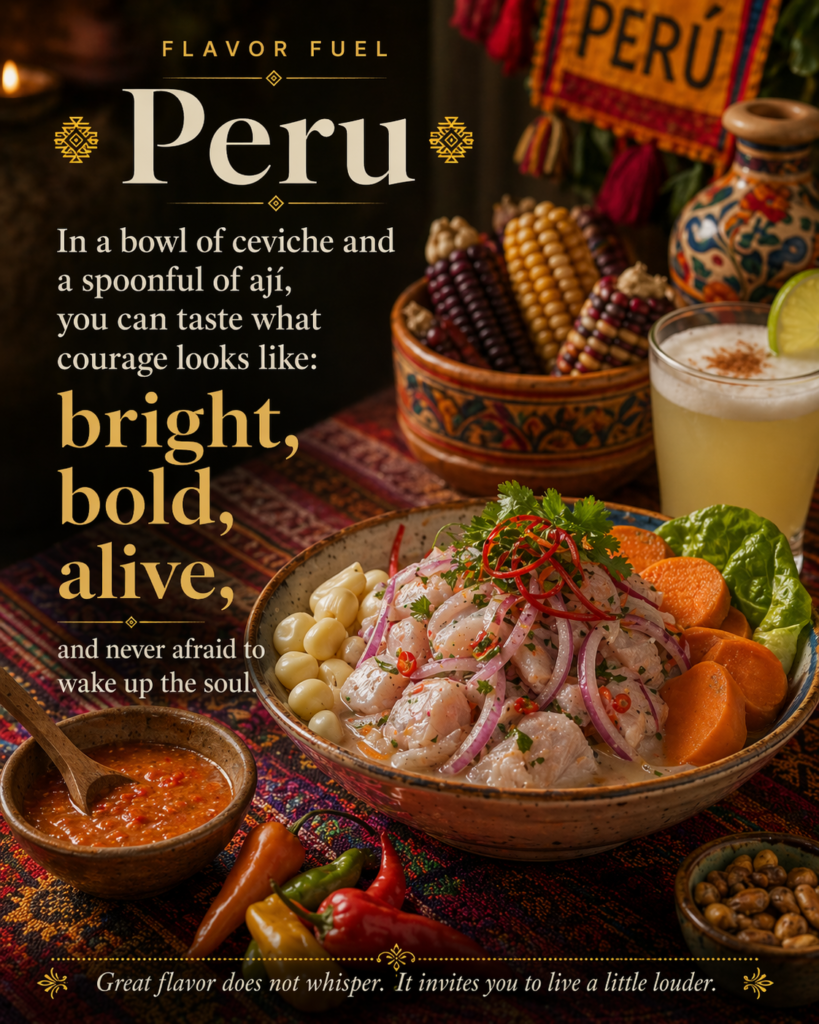
Peruvian food does not quietly enter the room. It arrives with lime on its breath, ají on its fingertips, herbs in its pockets, and the kind of color that makes a table feel alive before anyone takes a bite. A plate of ceviche glows with white fish, purple onion, orange sweet potato, yellow corn, and green cilantro. A spoonful of ají sauce brings heat, yes, but also fruitiness, depth, and a little mischief. Even a simple potato can feel like a story when it comes from a land where potatoes have been grown, protected, and celebrated for thousands of years.
This is the beauty of Peru with a kick. The “kick” is not only spice. It is brightness. It is movement. It is the squeeze of citrus, the patience of mountain cooking, the smoke of a grill, the comfort of rice, the snap of red onion, the softness of sweet potato, and the generous way food makes room for history without turning the table into a textbook.
Peruvian food wakes you up because it reminds you that flavor can be bold and thoughtful at the same time.
Why Peruvian Food Culture Feels So Meaningful
Peruvian food culture matters because it carries geography, memory, and identity on the same plate. Peru is shaped by three major natural regions: the Pacific coast, the Andes, and the Amazon. Each region brings its own ingredients, cooking styles, climate, and table traditions. Coastal cooking leans into seafood, lime, chilies, and freshness. Andean food celebrates potatoes, corn, grains, herbs, slow cooking, and highland resilience. Amazonian cooking draws from fruits, fish, cassava, plantains, leaves, and ingredients tied closely to forest life.
That variety makes Peruvian cuisine feel layered without feeling distant. It is food born from place, but also from movement. Indigenous foodways, Spanish colonization, African influence, Chinese migration, Japanese migration, and other communities all helped shape what Peruvians cook and eat today. Dishes such as chifa, the Chinese-Peruvian culinary tradition, and Nikkei, the Japanese-Peruvian style, show how food can adapt over time while still becoming deeply local.
That is why Peruvian food feels meaningful: it does not come from one single story. It comes from many hands, regions, migrations, markets, families, and everyday meals.
The Beauty of the Table
A Peruvian-inspired table is full of contrast. It can be bright and comforting, cool and warm, simple and celebratory. Imagine a bowl of ceviche placed at the center of the table, the fish chilled and glossy, the lime sharp enough to wake up the senses, the onions thin and crisp, the cilantro fresh and green. Next to it sits cancha, toasted corn that adds a nutty crunch. Sweet potato brings softness and sweetness. Corn brings chew. Ají brings the spark.
Then the table expands. Maybe there is arroz chaufa, Peruvian-style fried rice with roots in chifa cooking, warm from the wok and fragrant with soy sauce, scallions, and egg. Maybe there is papa a la huancaína, tender potatoes under a creamy yellow sauce made with ají amarillo and cheese. Maybe there is lomo saltado, where stir-fried beef, onions, tomatoes, potatoes, and rice meet in a dish that feels both homey and energetic.
The mood is not fussy. It is generous. Plates are passed. Sauces are shared. Someone reaches for more lime. Someone warns you that the rocoto sauce has a little attitude. Someone laughs because you tasted it anyway.
That is part of the hospitality. Peruvian food often invites you to participate. Add sauce. Share sides. Balance heat with sweetness. Let the meal become conversation.
A Taste of History and Culture
Ceviche is one of Peru’s most recognized dishes, and UNESCO has recognized the practices and meanings associated with preparing and consuming Peruvian ceviche as part of the world’s intangible cultural heritage. That recognition matters because ceviche is more than raw fish in citrus. It reflects regional ingredients, fishing knowledge, local produce, family customs, and the habit of gathering around freshness.
At its heart, ceviche is a lesson in balance: fish, citrus, salt, chili pepper, onion, and accompaniments that vary by region and household. It shows how simple ingredients can become deeply expressive when handled with care.
The Andean side of Peru tells another essential story. The potato began its long journey in the Andes of South America, and the region remains one of the world’s important centers of potato diversity. In Peru, potatoes are not just background starch. They can be purple, yellow, red, small, knobby, creamy, earthy, or firm. They appear in comforting dishes, festive dishes, market meals, and family cooking.
Peru’s culinary story also includes the powerful impact of migration. Chinese immigrants helped shape chifa, a Cantonese-Peruvian food tradition that gave Peru dishes such as arroz chaufa and influenced stir-fry techniques. Japanese immigrants contributed to Nikkei cuisine, where Peruvian ingredients and Japanese techniques created elegant seafood preparations, tiraditos, and other dishes that continue to evolve.
None of this makes Peruvian cuisine a trend. It makes it a living culture.
What This Food Tradition Teaches Us
Peruvian food teaches us that brightness can be a form of care. A squeeze of lime is not just acidity. It is attention. A spoonful of ají is not just heat. It is personality. A potato is not just a side dish. It can be memory, agriculture, family, and land.
This cuisine also teaches respect for region and season. What grows near the coast is not the same as what grows in the Andes or the Amazon. Peruvian cooking reminds us that food tastes different when it listens to its surroundings.
There is also a lesson in balance. Many Peruvian dishes do not chase heat for the sake of heat. Ají peppers bring color, aroma, fruitiness, and warmth. Citrus cuts richness. Sweet potato softens acidity. Corn adds body. Herbs lift the plate. Rice stretches the meal. Potatoes ground it.
That balance feels like a life lesson: boldness does not have to be loud all the time. Sometimes boldness is knowing when to add fire, when to add sweetness, and when to let simplicity speak.
How to Bring This Spirit Into Your Own Kitchen
You do not have to recreate Peru perfectly to appreciate the spirit of its table. A respectful home approach starts with curiosity, not imitation. Learn the names of ingredients. Read about the regions. Understand that “Peruvian food” is not one flavor or one dish. It is coastal, Andean, Amazonian, urban, rural, traditional, modern, home-cooked, and restaurant-driven all at once.
Start with brightness. Keep fresh limes, red onion, cilantro, and a good chili paste or sauce on hand. Ají amarillo paste is a helpful ingredient for home cooks because it brings fruity warmth and golden color to sauces, marinades, rice dishes, and roasted vegetables.
Bring in grounding ingredients. Potatoes, sweet potatoes, corn, beans, rice, and quinoa can help create a table that feels generous and satisfying. If you enjoy seafood, choose it carefully and follow reputable food safety guidance, especially with raw preparations like ceviche. For a beginner-friendly option, try cooked shrimp with lime, onion, cilantro, and ají-inspired sauce instead of raw fish.
Most importantly, serve with a sense of welcome. Peruvian food shines when the table feels relaxed, colorful, and shared.
Simple Serving Ideas
For a bright Peruvian-inspired table, try a few easy pairings:
- Serve ceviche or cooked shrimp salad with sweet potato, toasted corn, and lettuce cups.
- Make roasted potatoes with a creamy ají amarillo-style sauce on the side.
- Pair grilled chicken or vegetables with cilantro rice, lime wedges, and sliced avocado.
- Set out small bowls of sauces so guests can choose their own level of heat.
- Add color with purple onion, yellow corn, orange sweet potato, green herbs, and red chili.
- Use casual serving dishes instead of overly formal plating. Peruvian food feels beautiful when it looks abundant and alive.
- Offer a cooling side, such as sliced cucumber, avocado, or a simple salad, to balance spicy sauces.
For drinks, keep it simple and refreshing. Sparkling water with lime, passion fruit juice, chicha morada-inspired purple corn drink, or citrusy mocktails can all echo the brightness of the meal without overpowering the food.
A Thoughtful Note on Cultural Appreciation
Enjoying Peruvian food respectfully begins with remembering that dishes come from people, not just ingredients. Ceviche, ají sauces, chifa, Nikkei cooking, Andean potatoes, Amazonian ingredients, and regional dishes all have cultural roots. They belong to communities, histories, and places.
That does not mean you cannot cook with inspiration. It means you should do it with care. Learn the background. Give credit. Avoid reducing Peru’s cuisine to “spicy food” or one famous dish. Support Peruvian restaurants, chefs, markets, writers, and cultural resources when you can. If you adapt a dish, be honest that it is inspired by Peru rather than claiming it as traditional.
Respect also means avoiding shortcuts that flatten meaning. A dish can be modern and still connected to tradition. A home version can be simple and still be thoughtful. The goal is not perfection. The goal is appreciation with humility.
Final Thoughts: Let the Table Wake You Up
Peru’s food has a way of reminding us that life needs brightness. Not just comfort. Not just sweetness. Not just routine. Brightness.
It is there in the lime that sharpens the fish, the ají that warms the tongue, the potato that carries the memory of the Andes, the fried rice that tells a migration story, and the sauce passed from one hand to another at the table.
Peruvian food wakes you up because it refuses to be one-note. It is fresh, earthy, smoky, tender, crisp, spicy, cool, and generous. It honors the coast, the mountains, the forest, the market, the home kitchen, and the modern restaurant. It carries old knowledge while still making room for new expression.
And maybe that is the deeper invitation. To cook with more color. To eat with more attention. To let simple ingredients become something memorable. To understand that a meal can be bold without losing its warmth.
Peru, with a kick, is not just food that wakes up your mouth.
It is food that wakes up your gratitude.
References
- Aguirre-Sosa, J., Dextre, M. L., Lozada-Urbano, M., & Vargas-Merino, J. A. (2023). Background of Peruvian gastronomy and its perspectives: An assessment of its current growth. Journal of Ethnic Foods, 10, Article 50. https://doi.org/10.1186/s42779-023-00212-4
- Encyclopaedia Britannica. (2026). Peru. Encyclopaedia Britannica. https://www.britannica.com/place/Peru
- Food and Agriculture Organization of the United Nations. (2024, May 30). The potato’s travel through ages and continents. FAO. https://www.fao.org/newsroom/story/the-potatos-travel-through-ages-and-continents/en
- Perú Info. (n.d.). Gastronomic regions: Coast, highlands and Amazon. Perú Info. https://peru.info/en-us/gastronomy/regions
- U.S. Food and Drug Administration. (2024, March 5). Selecting and serving fresh and frozen seafood safely. FDA. https://www.fda.gov/food/buy-store-serve-safe-food/selecting-and-serving-fresh-and-frozen-seafood-safely
- UNESCO. (n.d.). Practices and meanings associated with the preparation and consumption of ceviche, an expression of Peruvian traditional cuisine. UNESCO Intangible Cultural Heritage. https://ich.unesco.org/en/RL/practices-and-meanings-associated-with-the-preparation-and-consumption-of-ceviche-an-expression-of-peruvian-traditional-cuisine-01952
- UNESCO. (2023, December 13). New inscription on the Intangible Heritage List: Practices and meanings associated with the preparation and consumption of ceviche, an expression of Peruvian traditional cuisine. UNESCO. https://www.unesco.org/en/articles/new-inscription-intangible-heritage-list-practices-and-meanings-associated-preparation-and