Morocco in Every Bite: Deep Flavor, Patience, and the Art of Gathering
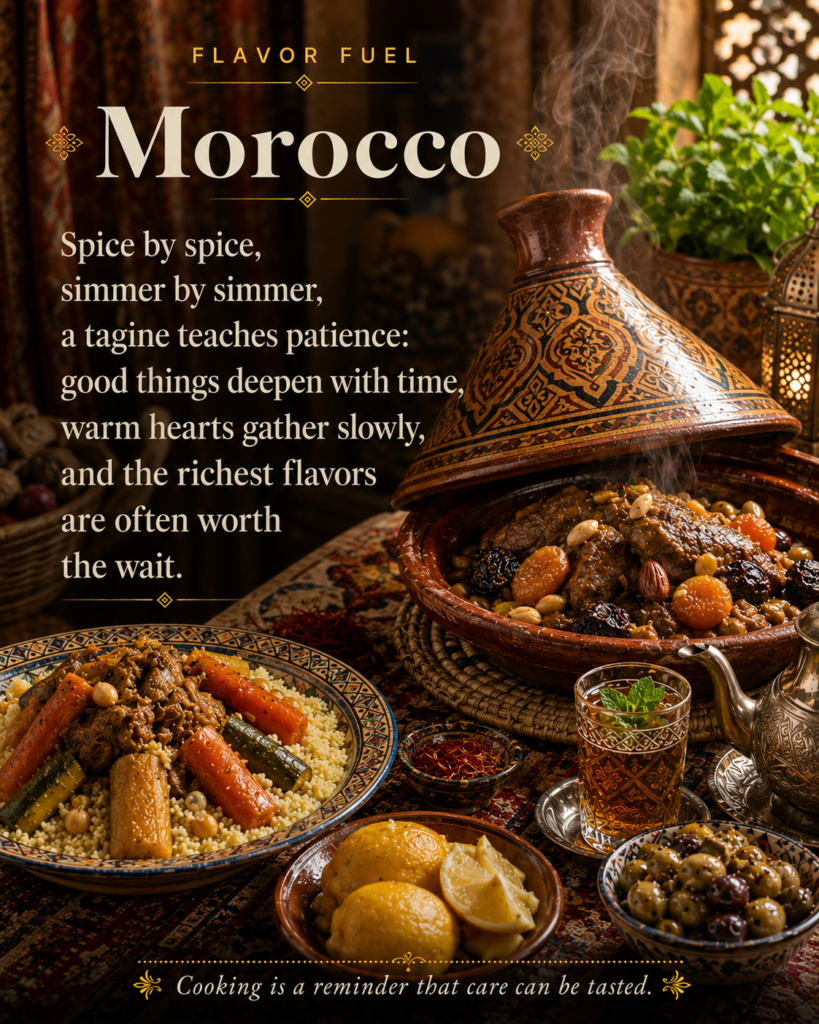
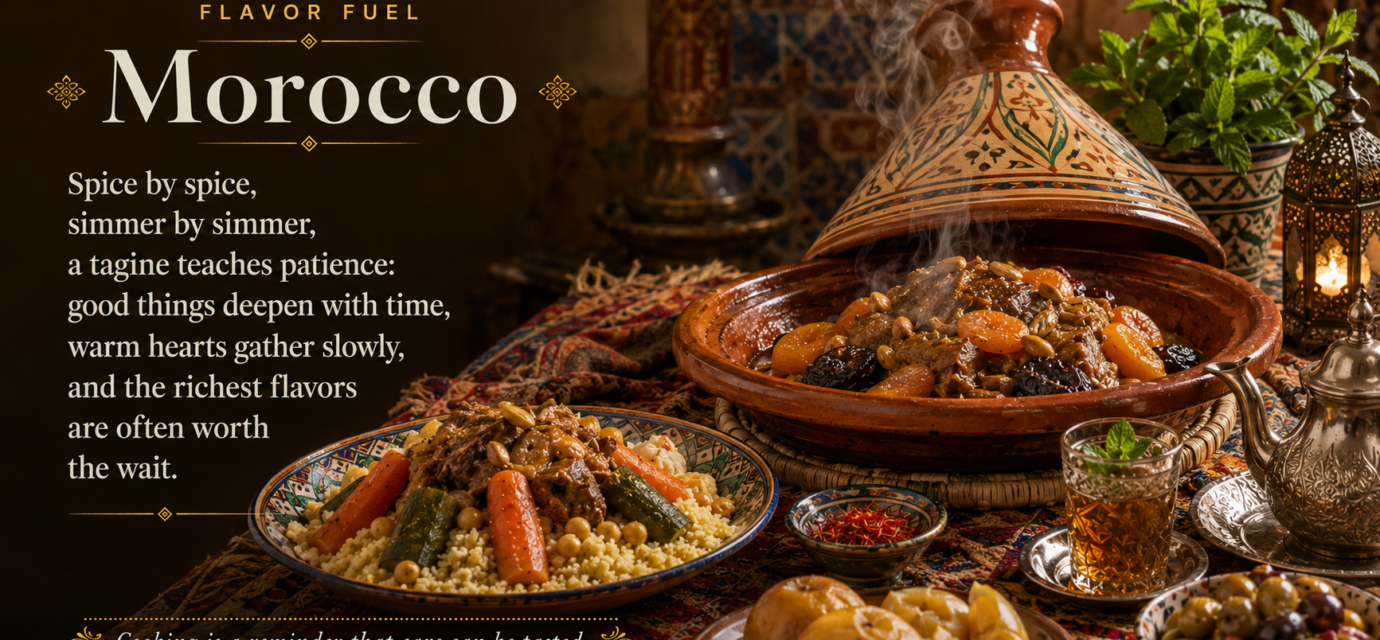
A Moroccan table rarely feels rushed. Even before the first bite, there is a quiet invitation in the air: sit down, slow your breathing, let the scent of simmered spices meet you before the food does. Maybe there is a clay tagine still warm from the stove, its conical lid lifted just enough for steam to curl upward. Maybe there is couscous resting like soft golden sand beneath vegetables, chickpeas, and tender meat. Maybe there is mint tea poured from high above the glass, catching light before it lands with a gentle foam.
Moroccan food culture has a way of reminding people that a meal is not only something to finish. It is something to enter.
Across Morocco, from the medinas of Fez and Marrakech to coastal kitchens, mountain villages, and family homes, food often carries more than flavor. It carries time. It carries welcome. It carries the memory of hands that rolled semolina, kneaded bread, toasted spices, preserved lemons, brewed tea, and made room for one more person at the table.
This is the beauty of Morocco in every bite: food that does not need to shout to be powerful. It simmers. It gathers. It waits until everyone is close enough to share.
Why Moroccan Food Culture Feels So Meaningful
Moroccan food culture feels meaningful because it understands something many busy modern tables forget: food is relationship. It is how families gather after long days, how guests are welcomed, how celebrations stretch across generations, and how everyday ingredients become something memorable through patience.
The country’s cuisine reflects Morocco’s geography and history. Morocco sits in northwest Africa, shaped by Atlantic and Mediterranean coastlines, mountain regions, oasis landscapes, agricultural valleys, and centuries of cultural exchange. Amazigh, Arab, Andalusian, Mediterranean, Jewish, Saharan, and other influences have all contributed to the country’s foodways over time. That does not mean Moroccan cuisine is one simple blend. It means it is layered, regional, and deeply rooted in place.
A dish like tagine can say a lot before anyone explains it. The vessel itself encourages slow cooking. The spices do not simply sit on the surface; they settle into onions, meat, vegetables, dried fruit, olives, and sauce until the dish becomes soft, fragrant, and generous. Couscous, often associated with family gatherings and Friday meals in many communities, reflects shared labor and shared eating. Mint tea, served throughout daily life, is not just a drink. It is a gesture of welcome.
In Morocco, flavor often begins before cooking starts. It begins in the market, in the choosing of herbs, in the smell of cumin and paprika, in preserved lemons stacked in jars, in bunches of parsley and cilantro, in saffron threads, dates, almonds, olives, and round loaves of khobz bread waiting to be torn and shared.
That kind of food asks for attention. Not perfection. Attention.
The Beauty of the Table
A Moroccan table is a feast for the senses without needing to be overly formal. The beauty often comes from warmth, color, texture, and togetherness.
There may be a patterned tablecloth or woven mat beneath ceramic plates painted in blue, green, yellow, and white. A clay tagine may sit in the center, its terracotta color glowing against the table. Bowls of olives, zaalouk, taktouka, or fresh salads may surround the main dish. A basket of khobz bread may be close enough for everyone to reach. The tea tray may shine nearby, holding small glasses ready for sweet mint tea.
The colors feel alive: golden turmeric, deep red paprika, bright preserved lemon, dark olives, orange carrots, green zucchini, pale couscous, and the soft brown crust of fresh bread. The aromas build slowly. Cinnamon warms the air. Cumin brings earthiness. Ginger adds brightness. Saffron, when used, gives a floral depth. Simmered onions become sweet. Herbs bring freshness back to the table.
The texture matters too. A good tagine feels tender and saucy, made for scooping. Couscous should feel light, not heavy. Bread should be sturdy enough to gather sauce but soft enough to tear easily. Mint tea brings heat, sweetness, and freshness at the end or middle of the meal, depending on the moment.
And then there is the sound: the soft clink of tea glasses, the lid of a tagine being lifted, bread tearing, conversation rising and falling, someone encouraging you to eat a little more.
Hospitality lives in those small details.
A Taste of History and Culture
Moroccan cuisine cannot be separated from the land and the communities that shaped it. The country’s food traditions reflect agriculture, trade routes, regional ingredients, religious and family customs, and long-standing techniques passed through home kitchens as much as formal culinary spaces.
Couscous is one of the clearest examples of food as cultural knowledge. UNESCO recognizes the knowledge, know-how, and practices surrounding the production and consumption of couscous as intangible cultural heritage shared by Algeria, Mauritania, Morocco, and Tunisia. The tradition includes growing cereals, producing semolina, rolling it by hand, steaming it, and serving it in ways tied to family and community life.
That matters because couscous is not only a dish on a plate. It is a process. It is labor. It is knowledge held in the hands.
Tagine carries another kind of cultural memory. The word refers both to the North African cooking vessel with its shallow base and conical lid and to the slow-cooked stew prepared inside it. Its design helps circulate steam, allowing ingredients to soften gently while keeping the dish moist. This is practical cooking, but it also creates a style of eating that favors patience over speed.
Moroccan mint tea is also central to daily hospitality. Often made with green tea, fresh mint, and sugar, it is commonly served to guests and enjoyed in homes, cafés, shops, and family gatherings. The tall pour is not only beautiful; it helps mix and aerate the tea while creating a light foam at the top of the glass.
Morocco’s food culture is also connected to broader Mediterranean food traditions. UNESCO’s recognition of the Mediterranean diet includes Morocco among the communities associated with this living heritage. The recognition focuses not only on ingredients, but also on knowledge, rituals, crops, fishing, animal husbandry, preservation, cooking, sharing, and respect for seasonal rhythms.
In other words, Morocco’s table is not just about what is eaten. It is about how food moves through land, hands, homes, and relationships.
What This Food Tradition Teaches Us
Moroccan food culture teaches patience in a world that often treats speed as success.
A tagine cannot be rushed into tenderness. Couscous asks for care. Tea is better when it is brewed, poured, and shared with attention. Bread tastes different when it is part of the meal instead of something placed on the side without thought.
This food tradition also teaches generosity. Moroccan hospitality is often expressed through abundance, not in a wasteful way, but in the sense of making sure a guest feels cared for. A table may be simple, but it is rarely cold. Even a small offering of tea can feel like a doorway into conversation.
There is also a lesson in balance. Moroccan cooking often brings together savory and sweet, soft and crisp, warm spices and fresh herbs. Lamb with prunes, chicken with preserved lemon and olives, pastries with almond and orange blossom water, couscous with vegetables and broth, these combinations remind us that contrast can be harmony when handled with care.
Most of all, Moroccan food culture honors gathering. The table is not only a place to eat. It is a place to pause, listen, laugh, remember, bless the ordinary, and reconnect with people in real time.
That may be the deepest flavor of all.
How to Bring This Spirit Into Your Own Kitchen
You do not need to recreate Morocco perfectly in your home to learn from its food culture. Respectful appreciation begins with curiosity, humility, and care.
Start with patience. Choose one slow-cooked dish and give it time. A vegetable tagine, chicken with preserved lemon and olives, lamb with apricots or prunes, or chickpea stew with warm spices can bring Moroccan-inspired comfort to your table without turning the meal into a performance.
Use spices thoughtfully. Moroccan cooking is not about dumping every spice into one pot. Build flavor with intention. Common ingredients include cumin, ginger, turmeric, cinnamon, paprika, saffron, black pepper, coriander, parsley, cilantro, olives, preserved lemons, dates, almonds, and chickpeas. Ras el hanout, a Moroccan spice blend whose name is often understood as “top of the shop,” can vary widely by maker, so taste and use it with balance.
Bring bread to the center. Serve warm flatbread or a rustic round loaf for sharing. Bread can make the meal feel communal, especially when served with saucy dishes, salads, and dips.
Make tea part of the experience. Fresh mint tea can be served after the meal or alongside sweets. Use a small teapot if you have one, but do not worry about perfection. The spirit is welcome, not a stage show.
Let the table feel alive. Use bowls, platters, woven textures, warm lighting, and simple flowers or herbs. A beautiful table does not have to be expensive. It just has to feel cared for.
And most importantly, do not flatten Moroccan food into one dish or one aesthetic. Morocco is a regional, diverse, and living. Let your kitchen be a place of learning, not claiming.
Simple Serving Ideas
For a cozy Moroccan-inspired dinner, center the meal around one generous dish and build gently around it.
A chicken tagine with preserved lemon and olives pairs beautifully with khobz, a crisp cucumber and tomato salad, and mint tea. A vegetable and chickpea tagine can be served with couscous, roasted carrots, or a simple green salad with citrus. Lamb with prunes or apricots works well for a special gathering, especially with toasted almonds and a side of lightly seasoned couscous.
For a lighter table, serve a spread of Moroccan-inspired small dishes: zaalouk made with eggplant and tomato, marinated olives, carrot salad, lentils, fresh herbs, warm bread, and tea. This style works well for relaxed hosting because people can graze, talk, and return to the table naturally.
For dessert, keep it simple. Offer dates, oranges with cinnamon, almond pastries, or tea cookies. Moroccan sweets can be beautifully detailed, but even fruit served with care can carry the feeling of the table.
Table styling can stay warm and grounded. Think ceramic bowls, linen napkins, a tea tray, candles, fresh mint in a glass, and colors inspired by spice markets: saffron gold, clay red, olive green, deep blue, and warm cream.
If you want to include a video in the post, a strong placement would be after “A Taste of History and Culture.” A short video about couscous-making, Moroccan tea service, or a respectful culinary travel clip can help readers see the patience and craft behind the food. Avoid videos that reduce the culture to stereotypes or treat sacred or family traditions like decoration.
A Thoughtful Note on Cultural Appreciation
Cultural appreciation begins with respect for people, not just admiration for flavors.
When cooking Moroccan food outside Morocco, it helps to name what you are making honestly. If you are using Moroccan ingredients or techniques but adapting the dish, call it Moroccan-inspired rather than presenting it as a definitive traditional version. That small choice shows respect.
Learn the names of dishes and ingredients. Read from Moroccan cooks, historians, museums, and cultural sources. Notice regional differences. A tagine in one family may not look exactly like another. A couscous tradition in one region may carry details that differ from another community’s practice. That diversity is not confusion. It is life.
Support Moroccan restaurants, food writers, artisans, spice sellers, cooking teachers, and cultural institutions when possible. If you buy Moroccan pantry items, look for quality sources and learn how they are used. If you travel, enter food spaces with gratitude instead of entitlement. Ask questions kindly. Receive hospitality with humility.
Food can be a bridge, but only when we cross it with care.
Final Thoughts: The Slow Grace of a Moroccan Table
Morocco, in every bite, is not only about spices, clay pots, tea glasses, or beautiful plates. It is about the feeling those things create when they come together with intention.
It is the patience of a stew softening over heat. The care of couscous is lifted by steam. The sound of tea meeting glass. The comfort of bread passed from hand to hand. The quiet generosity of a host, making sure the table feels full enough for everyone.
In a world that often asks us to hurry, Moroccan food culture offers a different kind of wisdom. Slow down. Season with care. Make room. Let the meal become a gathering, not just a task.
Because sometimes the most memorable food is not the dish that tries the hardest to impress us.
Sometimes it is the one that invites us to sit, breathe, taste, and remember that being together is its own kind of feast.
References
- Encyclopaedia Britannica. (2026). Tagine. Encyclopaedia Britannica. https://www.britannica.com/topic/tagine-cooking-vessel
- Food and Agriculture Organization of the United Nations. (n.d.). Argan-based system. Globally Important Agricultural Heritage Systems. https://www.fao.org/giahs/giahs-around-the-world/morocco-argan-based-system/en
- Food and Agriculture Organization of the United Nations. (2021, May 10). The Moroccan landscape, traditions and communities behind argan and its oil. FAO Newsroom. https://www.fao.org/newsroom/story/The-Moroccan-landscape-traditions-and-communities-behind-argan-and-its-oil/en
- Moroccan National Tourism Office. (n.d.). Moroccan food & drink. Visit Morocco. https://www.visitmorocco.com/en/travel-info/food-drinks
- Museum of Moroccan Culinary Art. (n.d.). Moroccan Culinary Art Museum. https://www.moroccan-cam.com/
- UNESCO. (n.d.). Knowledge, know-how and practices pertaining to the production and consumption of couscous. UNESCO Intangible Cultural Heritage. https://ich.unesco.org/en/RL/knowledge-know-how-and-practices-pertaining-to-the-production-and-consumption-of-couscous-01602
- UNESCO. (n.d.). Mediterranean diet. UNESCO Intangible Cultural Heritage. https://ich.unesco.org/en/RL/mediterranean-diet-00884
- UNESCO World Heritage Centre. (n.d.). Medina of Fez. UNESCO World Heritage Convention. https://whc.unesco.org/en/list/170/
- UNESCO. (n.d.). Video: Knowledge, know-how and practices pertaining to the production and consumption of couscous. UNESCO Intangible Cultural Heritage. https://ich.unesco.org/en/video/52557