
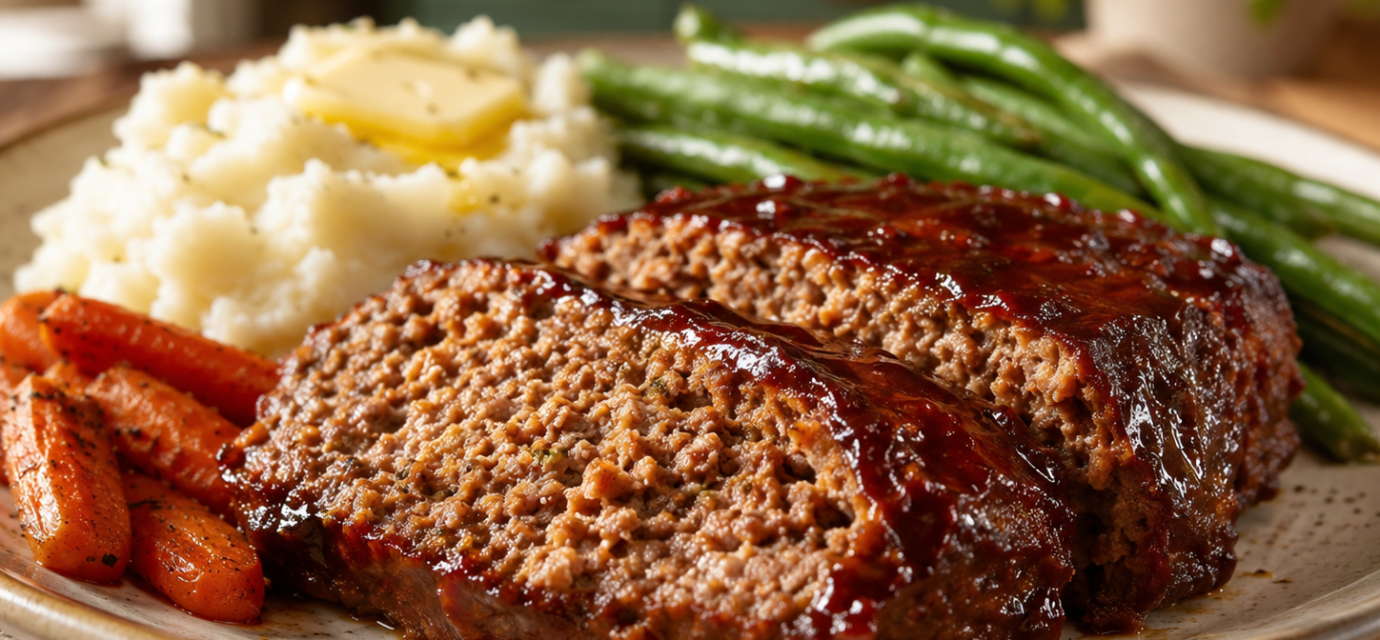
Classic American Meatloaf with Savory Pan Glaze
A good classic American meatloaf feels like the kind of dinner that knows how to bring people back to the table. It is warm, familiar, rich with savory aroma, and humble in the best possible way. The smell of onion, garlic, Worcestershire sauce, browned beef, and a tangy glaze drifting from the oven has a way of making a kitchen feel lived-in, steady, and loved.
This version keeps the heart of a traditional American meatloaf: ground beef, breadcrumbs, milk, egg, onion, ketchup, and a glossy glaze that bakes into a sweet-savory finish. The difference is in the care. The breadcrumbs are softened into a panade so the meatloaf stays tender. The onion and garlic are briefly cooked so they melt into the loaf instead of tasting harsh. The glaze is layered, not rushed, so it clings beautifully and caramelizes without burning.
Classic American meatloaf is not fancy, but it is thoughtful. It is the kind of recipe built from everyday ingredients and kitchen wisdom: stretch the meat, season it well, keep it moist, cook it safely, and let it rest before slicing. Serve it with mashed potatoes, roasted carrots, green beans, or a simple salad, and suddenly dinner feels like a small act of comfort.
This recipe is especially lovely for Sunday supper, cold-weather dinners, meal prep, family gatherings, and those nights when you want something dependable without making the kitchen complicated. It honors the old-school comfort of meatloaf while using clear, modern technique so every slice is moist, savory, and sturdy enough to hold its shape.
Quick Recipe Snapshot
- Prep Time: 20 minutes
- Cook Time: 55-65 minutes
- Total Time: 1 hour 15 minutes to 1 hour 25 minutes, plus resting time
- Servings: 6-8 slices
- Difficulty Level: Beginner-friendly
- Best For: Weeknight dinners, Sunday supper, family meals, meal prep, comfort-food cravings
- Expected Result: A moist, tender, sliceable classic American meatloaf with deep savory flavor, lightly browned edges, and a glossy, sweet-tangy pan glaze.
Why You’ll Love This Recipe
- It uses simple, easy-to-find ingredients that still taste deeply comforting.
- The milk-soaked breadcrumb panade helps keep the meatloaf tender instead of dense.
- The savory glaze adds tang, sweetness, shine, and old-fashioned comfort.
- Sautéed onion and garlic give the loaf a smoother, richer flavor.
- It slices cleanly after resting, making it great for dinner plates and leftovers.
- It can be made ahead, frozen, or turned into next-day meatloaf sandwiches.
- It feels traditional without being dry, bland, or heavy.
Cultural and Seasonal Background
Classic American meatloaf carries the kind of history that does not sit in one region, one family, or one cookbook. It belongs to the practical American kitchen: the place where leftovers were respected, pantry staples mattered, and a cook could turn a modest amount of ground meat into a full meal that fed several people with warmth and dignity.
The idea of shaping chopped or ground meat into a loaf did not begin in the United States. Many food cultures have long traditions of minced, chopped, or formed meat dishes, from European forcemeats and terrines to meatballs, pâtés, sausages, and savory loaves. What became known as American meatloaf, however, developed its own character through everyday home cooking. Instead of being a luxury dish, it became a flexible family meal made with ground beef or mixed meats, bread or cracker crumbs, milk, egg, onion, seasonings, and often a tomato-based topping.
By the late 19th and early 20th centuries, meatloaf fit naturally into American kitchens because it solved a real household need. It allowed cooks to stretch meat, use stale bread, soften leftovers into something new, and serve a filling dinner without wasting food. That spirit of resourcefulness became even more important during the Great Depression, when many families had to make meals go further. Breadcrumbs, oats, crackers, rice, vegetables, and inexpensive binders were not just texture tools; they were survival tools, helping small amounts of meat become a complete supper.
During World War II, this kind of cooking became part of a larger national home-front effort. Meat, sugar, fats, canned goods, and other foods were affected by rationing and wartime supply demands. Government campaigns encouraged families to conserve ingredients, stretch meat, reduce waste, and make thoughtful use of what they had. Library of Congress materials from the 1942 “Share the Meat” campaign show how loaf-style meals, including meatless and meat-stretched loaves, reflected the era’s kitchen creativity. Meatloaf’s flexibility made it especially useful because it could welcome fillers, vegetables, sauces, and seasonings without losing its identity as a hearty main dish.
After the war, meatloaf settled more deeply into the American comfort-food imagination. It became a weeknight dinner, a diner plate, a church supper dish, a school-night meal, and a Sunday table standby. In many homes, the recipe was not written down with exact measurements. It lived in memory: a handful of breadcrumbs, a splash of milk, one egg, a little ketchup, a shake of Worcestershire sauce, onion if there was one, and a glaze brushed on top before baking. That is part of why meatloaf feels personal. It is not only a recipe; it is a family accent.
Seasonally, classic American meatloaf feels especially at home in fall and winter, when cooler weather calls for oven-baked dinners, mashed potatoes, roasted vegetables, green beans, carrots, and warm gravy or glaze. It also works beautifully for casual holidays, Sunday suppers, potlucks, and meal-prep weeks because it slices well, reheats easily, and turns into satisfying leftovers. A cold meatloaf sandwich the next day is almost its own tradition, often loved as much as the original dinner.
Because American meatloaf has been shaped by so many households, it is best understood as traditional rather than fixed. Some families use all beef, while others mix beef with pork or veal. Some use oats, crushed saltines, or bread soaked in milk. Some top it with ketchup and brown sugar, while others prefer tomato sauce, chili sauce, barbecue sauce, brown gravy, or mushroom gravy. Regional and family variations are part of the dish’s authenticity, not a departure from it.
This version honors the classic American home-style approach: ground beef for richness, a milk-soaked breadcrumb panade for tenderness, onion and garlic for savory depth, Worcestershire sauce for old-fashioned umami, and a glossy ketchup-based pan glaze for that familiar sweet-tangy finish. It is the kind of meatloaf that respects where the dish came from: economical kitchens, family tables, wartime thrift, weeknight comfort, and the enduring belief that humble ingredients can still make a meal feel generous.
Why This Recipe Works
A great meatloaf needs balance. Too much meat and not enough binder can make it firm and dry. Too much liquid can make it mushy. Too much mixing can make it tight. This recipe is built around the right texture from the beginning.
The breadcrumbs and milk create a panade, which is a soft starch-and-liquid mixture. This helps hold moisture and keeps the ground beef from cooking into a tough, compact loaf. Egg adds structure so the slices hold together. The 80/20 ground beef brings enough fat for flavor and tenderness without making the loaf greasy when properly shaped and baked.
Sautéing the onion and garlic first makes a big difference. Raw onion can stay sharp and crunchy inside a meatloaf. Cooking it for a few minutes softens its bite and lets it blend into the meat mixture. Worcestershire sauce, ketchup, Dijon mustard, paprika, and black pepper add layers of savory, tangy, lightly sweet flavor without overpowering the beef.
The loaf is shaped freeform on a rimmed baking sheet instead of being packed tightly into a loaf pan. This helps the sides brown better and prevents the meatloaf from steaming in its own juices. The glaze is added in two layers: one early enough to bake into the surface, and one later so it stays glossy and bold. Finally, the meatloaf rests before slicing so the juices settle and the texture firms.
Ingredients
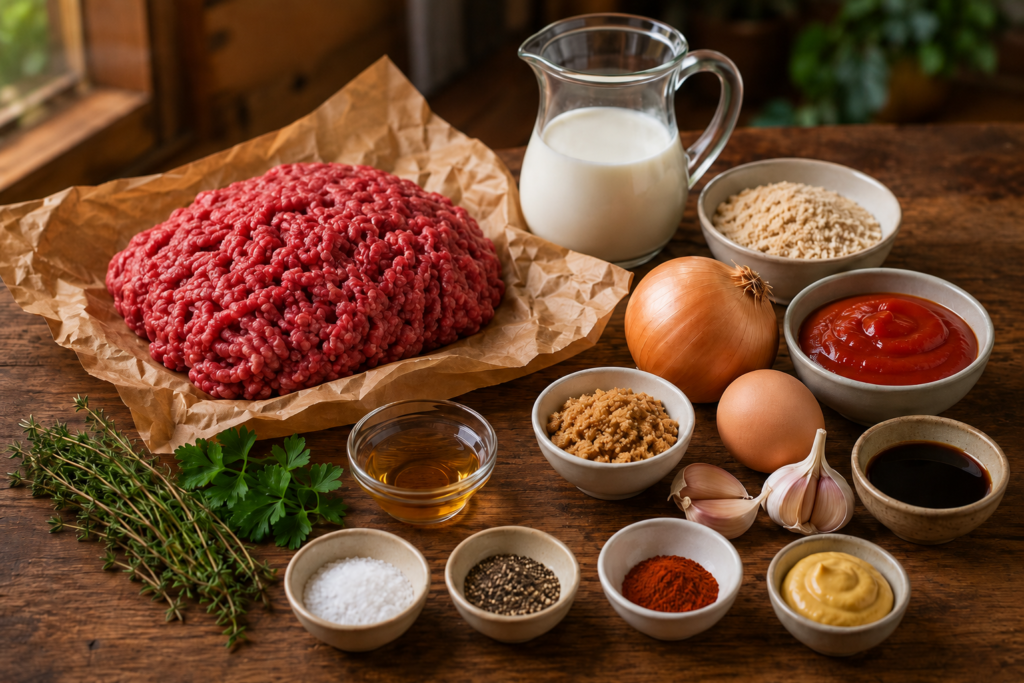
Classic American meatloaf with savory pan glaze served with mashed potatoes and green beans
For the Meatloaf
- 1 1/2 pounds ground beef, preferably 80/20
This fat ratio gives the meatloaf flavor, moisture, and tenderness. Leaner beef can work, but it may need extra moisture from grated vegetables or a slightly richer panade. - 1 cup plain breadcrumbs or panko
Breadcrumbs create structure and help keep the meatloaf from crumbling. Plain breadcrumbs give you the most control over seasoning. - 1/2 cup whole milk
Milk hydrates the breadcrumbs and creates a tender panade. It helps the loaf stay moist as it bakes. - 1 tablespoon olive oil or neutral cooking oil
Used to soften the onion and garlic before mixing them into the meat. - 1 small yellow onion, finely diced
Onion gives sweetness, moisture, and classic savory depth. - 3 garlic cloves, minced
Garlic brings aroma and warmth. Cooking it briefly keeps it mellow instead of sharp. - 1 large egg, lightly beaten
Egg binds the meat, breadcrumbs, and seasonings so the loaf slices cleanly. - 2 tablespoons ketchup
Adds moisture, gentle sweetness, and tomato tang inside the meatloaf. - 1 tablespoon Worcestershire sauce
Brings savory depth, umami, and old-fashioned meatloaf flavor. - 1 teaspoon Dijon mustard or yellow mustard
Adds brightness and helps balance the richness of the beef. - 1 1/4 teaspoons kosher salt
Seasons the meat thoroughly. If using table salt, use slightly less. - 3/4 teaspoon black pepper
Adds gentle heat and balances the sweetness of the glaze. - 1 teaspoon smoked paprika or sweet paprika
Adds color and subtle warmth. Smoked paprika gives a deeper, slightly smoky note. - 1/2 teaspoon dried thyme
Gives the meatloaf a familiar savory herb flavor. - 2 tablespoons chopped fresh parsley, optional
Adds freshness and color without changing the classic profile.
For the Savory Pan Glaze
- 1/2 cup ketchup
The classic glaze base. It bakes into a glossy, tangy finish. - 2 tablespoons brown sugar
Adds sweetness and helps the glaze caramelize. - 1 tablespoon Worcestershire sauce
Keeps the glaze savory instead of purely sweet. - 1 tablespoon apple cider vinegar
Adds acidity and balances the sugar. - 1 teaspoon Dijon mustard or yellow mustard
Adds tang and helps round out the glaze. - 1-2 tablespoons pan juices or low-sodium beef broth, optional
Stirred into the final glaze or spooned over slices for a looser savory finish.
Ingredient Notes and Smart Substitutions
Ground beef: 80/20 beef is a classic choice for tender meatloaf. If using 85/15, avoid overbaking and consider adding 1-2 tablespoons of extra milk or grated onion. If using very lean beef, the loaf may be firmer.
Breadcrumbs: Plain dry breadcrumbs, panko, crushed saltines, or rolled oats can all work. Panko gives a lighter texture. Crushed crackers add a more old-fashioned flavor. Oats make the loaf heartier.
Milk: Whole milk gives the richest texture, but 2% milk works. Unsweetened plain dairy-free milk can be used if needed, though flavor may vary. Low-sodium broth is another option.
Egg: Egg helps bind the loaf. If avoiding eggs, a flax egg may help, but the slices may be softer and less traditional in texture.
Worcestershire sauce: This is a classic savory booster. Some brands contain anchovies, so check labels if serving guests with fish allergies or dietary restrictions. Soy sauce or coconut aminos can be used in smaller amounts, but they will change the flavor.
Glaze: The ketchup-brown sugar glaze is classic American comfort style. For less sweetness, reduce the brown sugar to 1 tablespoon. For more tang, add another teaspoon of vinegar or mustard.
Herbs: Thyme and parsley keep the flavor familiar. Italian seasoning can be used, but a little goes a long way.
Equipment You’ll Need
- Large mixing bowl
- Small skillet
- Wooden spoon or spatula
- Measuring cups and spoons
- Rimmed baking sheet or shallow baking dish
- Parchment paper or foil
- Small bowl for glaze
- Pastry brush or spoon
- Instant-read food thermometer
- Cutting board
- Sharp knife
Step-by-Step Directions
1. Preheat and prepare the pan.
Preheat the oven to 350°F. Line a rimmed baking sheet with parchment paper or lightly greased foil. A rimmed pan catches juices while still allowing the loaf to brown better than a deep loaf pan.
2. Soften the onion and garlic.
Heat the oil in a small skillet over medium heat. Add the diced onion and cook for 4-5 minutes, stirring often, until softened and lightly translucent. Add the garlic and cook for 30-45 seconds, just until fragrant. Remove from heat and let cool for a few minutes. This step prevents raw onion flavor and helps the aromatics blend smoothly into the meat.
3. Make the panade.
In a large bowl, combine the breadcrumbs and milk. Stir and let the mixture sit for 5 minutes, until the breadcrumbs absorb the liquid and become soft. The texture should look like a thick paste, not a dry crumb mixture.
4. Mix the seasoning base.
Add the beaten egg, ketchup, Worcestershire sauce, mustard, salt, black pepper, paprika, thyme, parsley if using, and cooled onion-garlic mixture to the panade. Stir until evenly combined. Mixing the seasonings before adding the beef helps distribute flavor without overworking the meat.
5. Add the ground beef gently.
Add the ground beef to the bowl. Using clean hands or a fork, gently fold the mixture together until just combined. Do not squeeze or mash the meat aggressively. Overmixing can make meatloaf dense and springy.
6. Shape the loaf.
Transfer the mixture to the prepared baking sheet. Shape it into a loaf about 8-9 inches long and 4-5 inches wide. Keep the thickness even so it cooks consistently. Avoid packing it too tightly; a gentle hand gives a better texture.
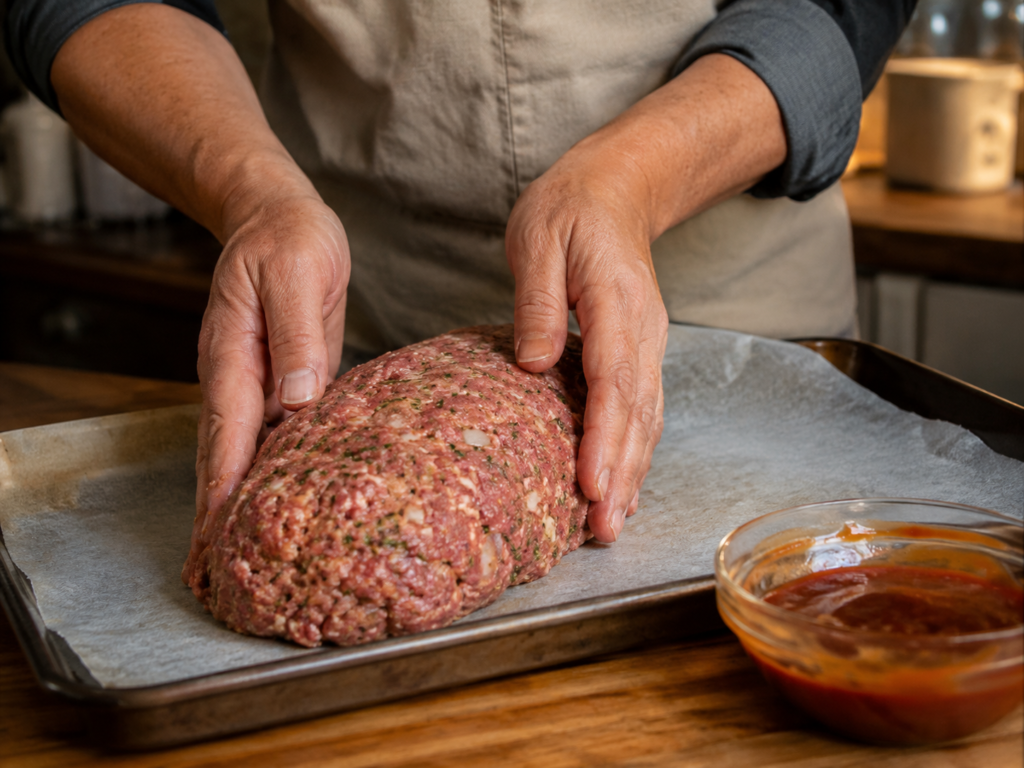
Ingredients for classic American meatloaf with breadcrumbs, ground beef, aromatics, and glaze
7. Make the glaze.
In a small bowl, stir together ketchup, brown sugar, Worcestershire sauce, apple cider vinegar, and mustard. The glaze should taste sweet, tangy, and savory.
8. Add the first glaze layer.
Spoon or brush about half of the glaze over the top and sides of the meatloaf. This first layer bakes into the surface and helps build that classic sticky finish.
9. Bake the meatloaf.
Bake uncovered for 40 minutes. The loaf should begin to firm up, release some juices, and darken slightly around the edges.
10. Add the second glaze layer.
Remove the pan from the oven and spoon the remaining glaze over the top. If the pan has flavorful juices, you may stir 1 tablespoon of those juices into the remaining glaze before spreading it on the loaf.
11. Finish baking to a safe temperature.
Return the meatloaf to the oven and bake for 15-25 minutes more, or until the center reaches 160°F on an instant-read thermometer. Insert the thermometer into the thickest part of the loaf for the most accurate reading. Ground beef should be cooked to 160°F for food safety.
12. Rest before slicing.
Let the meatloaf rest for 10-15 minutes before cutting. This helps the juices settle and gives the loaf time to firm up so the slices stay neat.
13. Serve warm.
Slice with a sharp knife and spoon a little pan glaze or warm pan juices over the top if desired. Serve with mashed potatoes, roasted vegetables, green beans, salad, or dinner rolls.
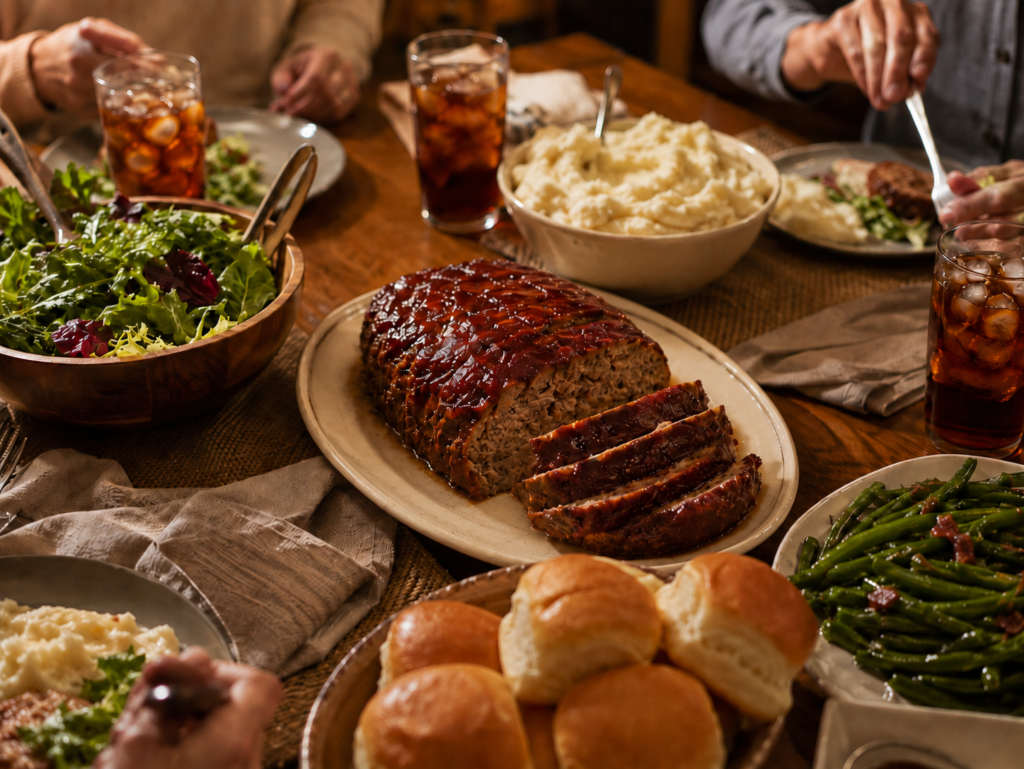
Cozy family-style dinner table with classic American meatloaf and comfort food sides
Pro Tips for Best Results
- Use 80/20 ground beef for the most classic tender texture.
- Let the breadcrumb and milk mixture sit long enough to soften fully.
- Cook the onion and garlic before adding them to the meat mixture.
- Mix seasonings into the panade before adding beef for even flavor.
- Use a gentle hand when mixing to avoid a dense loaf.
- Shape the loaf freeform for better browning around the edges.
- Glaze in two layers for deeper flavor and a prettier finish.
- Always check doneness with a food thermometer.
- Rest the meatloaf before slicing so it does not fall apart.
- Slice leftovers cold for sturdy sandwiches, then warm if desired.
Common Mistakes to Avoid
- Overmixing the meat: This can make the loaf tough. Mix only until combined.
- Skipping the panade: Dry breadcrumbs alone can pull moisture from the meat. Soak them first.
- Using raw chunks of onion: Large raw onion pieces can stay crunchy. Dice finely and sauté first.
- Packing the loaf too tightly: A tightly packed loaf can bake up heavy. Shape gently.
- Relying on color instead of temperature: Meatloaf can look done before it is safe. Use a thermometer.
- Cutting immediately after baking: Slicing too soon can make juices run out. Rest 10-15 minutes.
- Adding too much glaze too early: A sugary glaze can burn if baked too long. Layer it during cooking.
- Using an oversized loaf shape: A very thick loaf takes longer to cook and may dry at the edges before the center is done.
Flavor Variations
Classic Diner-Style Meatloaf: Use crushed saltines instead of breadcrumbs and yellow mustard in the glaze.
BBQ Meatloaf: Replace half of the ketchup in the glaze with barbecue sauce. Add a pinch of smoked paprika to the meat mixture.
Mushroom Onion Meatloaf: Sauté 1 cup finely chopped mushrooms with the onion until their moisture cooks off. This adds savory depth and tenderness.
Turkey Meatloaf: Use ground turkey and cook to 165°F. Add 1 tablespoon of olive oil and an extra tablespoon of milk to help with moisture.
Italian-Inspired Meatloaf: Add 1/4 cup grated Parmesan, 1 teaspoon Italian seasoning, and use marinara mixed with a little ketchup for the glaze.
Spicy Glazed Meatloaf: Add a pinch of cayenne or a few dashes of hot sauce to the glaze.
Brown Gravy Meatloaf: Skip the ketchup glaze and serve with onion gravy. This version feels more like a Sunday supper plate.
Serving Suggestions
Classic American meatloaf loves a comfort-food plate. Serve it with creamy mashed potatoes, roasted garlic potatoes, buttered egg noodles, green beans, roasted carrots, peas, corn, or a crisp side salad. For a holiday or Sunday table, add dinner rolls, macaroni and cheese, glazed carrots, or a simple cabbage slaw to balance the richness.
For drinks, keep it easy and family-friendly with iced tea, lemonade, sparkling water with lemon, or apple cider. For an adult dinner pairing, a smooth red wine, amber ale, or dry hard cider can complement the savory glaze without overpowering the dish.
Leftovers are part of the joy. Thick slices make excellent meatloaf sandwiches with toasted bread, lettuce, pickles, mustard, and a little extra glaze. You can also crumble leftover meatloaf into a quick tomato sauce, serve it with breakfast eggs, or warm it beside roasted vegetables for meal prep.
Storage, Freezing, and Reheating
Let the cooked meatloaf cool slightly, then refrigerate it within 2 hours of cooking. Store slices or the whole loaf in an airtight container in the refrigerator for 3-4 days.
To freeze cooked meatloaf, wrap individual slices tightly in plastic wrap or freezer-safe paper, then place them in a freezer bag or airtight freezer container. For best quality, use within 2-3 months. Frozen food kept continuously at 0°F can remain safe longer, but texture and flavor are best within the recommended quality window.
To reheat refrigerated meatloaf, place slices in a covered baking dish with a spoonful of broth, water, or extra glaze. Warm at 325°F until the internal temperature reaches 165°F. You can also microwave slices in short intervals, covered loosely, until steaming hot and 165°F in the center.
To reheat from frozen, thaw overnight in the refrigerator when possible. Reheat covered in the oven until hot throughout. Avoid thawing meatloaf on the counter.
Make-Ahead Tips
You can prepare the meatloaf mixture up to 24 hours in advance. Shape it, cover tightly, and refrigerate until ready to bake. Let it sit at room temperature only while the oven preheats, then bake as directed. Because a chilled loaf may take slightly longer, use a thermometer to confirm the center reaches 160°F.
The glaze can be mixed 3-4 days in advance and stored in a covered container in the refrigerator. Stir before using.
You can also bake the meatloaf fully, cool it, slice it, and refrigerate or freeze the slices for easy meals. Sliced meatloaf reheats faster and works beautifully for sandwiches.
Frequently Asked Questions
What is the secret to moist classic American meatloaf?
The biggest secret is using a panade, which is breadcrumbs soaked in milk. It helps the meatloaf stay tender and moist. Using 80/20 ground beef, mixing gently, and not overbaking also matter.
What temperature should meatloaf be cooked to?
Ground beef meatloaf should reach 160°F in the center. Use an instant-read food thermometer inserted into the thickest part of the loaf.
Can I make meatloaf without a loaf pan?
Yes. A freeform loaf on a rimmed baking sheet often browns better because the sides are exposed to heat. A loaf pan works too, but the meatloaf may steam more and collect extra juices.
Why does my meatloaf fall apart?
Meatloaf may fall apart if it has too little binder, too much liquid, not enough resting time, or if it is sliced while too hot. Egg, breadcrumbs, and a 10-15 minute rest help create clean slices.
Can I use oats instead of breadcrumbs?
Yes. Rolled oats are a traditional meatloaf binder in many American kitchens. Use the same amount of breadcrumbs and let them soften in milk before mixing.
Can I make this meatloaf ahead of time?
Yes. You can shape the uncooked meatloaf up to 24 hours ahead and refrigerate it tightly covered. You can also bake it, slice it, and reheat portions later.
How do I keep the glaze from burning?
Apply the glaze in two layers. Add the first layer before baking, then add the second layer near the end. This gives flavor and shine without overcooking the sugar.
Is meatloaf good for leftovers?
Yes. Meatloaf is excellent for leftovers when stored safely. Refrigerate within 2 hours, use within 3-4 days, and reheat to 165°F.
Final Thoughts
Classic American meatloaf is the kind of recipe that reminds us how powerful simple food can be when it is made with care. It does not need rare ingredients, complicated tools, or restaurant-level plating to feel special. It needs a bowl, a pan, a little patience, and the kind of seasoning that makes the whole kitchen smell like dinner is going to be good. That is part of its staying power. Meatloaf came from practical kitchens, from families making what they had stretch, from weeknights when dinner needed to be filling, affordable, and comforting. Yet even with all that practicality, it still has room for personality. One cook adds oats. Another adds crackers. Someone’s grandmother used chili sauce. Someone’s father always wanted extra glaze. Someone else swears the leftovers are the real reason to make it in the first place.
This version is meant to honor that tradition while giving today’s home cook a clear, dependable method. The panade keeps it tender. The sautéed aromatics build flavor. The glaze brings that familiar sweet-tangy shine. The thermometer keeps it safe. The resting time gives you neat slices that feel satisfying on the plate. It is humble food, yes, but humble does not mean careless. A well-made meatloaf can be deeply comforting, beautifully seasoned, and worthy of a place at the center of the table.
Serve it on a cool evening, make it for Sunday dinner, tuck slices into lunch sandwiches, or bring it back when you need a meal that feels steady and generous. Classic American meatloaf is not just a recipe. It is a reminder that comfort often comes from the foods that ask the least and give the most.
Quick Recipe Card
Recipe Name: Classic American Meatloaf with Savory Pan Glaze
Description:
A tender, flavorful classic American meatloaf made with ground beef, a milk-soaked breadcrumb panade, sautéed onion and garlic, Worcestershire sauce, and a glossy sweet-savory ketchup glaze.
Prep Time: 20 minutes
Cook Time: 55-65 minutes
Total Time: 1 hour 15 minutes – 1 hour 25 minutes
Servings: 6-8 slices
Ingredients
Meatloaf
- 1 1/2 pounds ground beef, preferably 80/20
- 1 cup plain breadcrumbs or panko
- 1/2 cup whole milk
- 1 tablespoon olive oil or neutral oil
- 1 small yellow onion, finely diced
- 3 garlic cloves, minced
- 1 large egg, lightly beaten
- 2 tablespoons ketchup
- 1 tablespoon Worcestershire sauce
- 1 teaspoon Dijon or yellow mustard
- 1 1/4 teaspoons kosher salt
- 3/4 teaspoon black pepper
- 1 teaspoon smoked or sweet paprika
- 1/2 teaspoon dried thyme
- 2 tablespoons chopped fresh parsley, optional
Savory Pan Glaze
- 1/2 cup ketchup
- 2 tablespoons brown sugar
- 1 tablespoon Worcestershire sauce
- 1 tablespoon apple cider vinegar
- 1 teaspoon Dijon or yellow mustard
- 1-2 tablespoons pan juices or low-sodium beef broth, optional
Instructions
- Preheat oven to 350°F. Line a rimmed baking sheet with parchment paper or lightly greased foil.
- Heat oil in a skillet over medium heat. Cook the onion for 4-5 minutes until softened. Add garlic and cook 30-45 seconds. Cool slightly.
- In a large bowl, combine breadcrumbs and milk. Let it sit for 5 minutes to form a panade.
- Add egg, ketchup, Worcestershire sauce, mustard, salt, pepper, paprika, thyme, parsley, and cooled onion-garlic mixture. Stir well.
- Add ground beef and mix gently until just combined.
- Shape into an 8- to 9-inch loaf on the prepared baking sheet.
- Stir together glaze ingredients. Brush half over the meatloaf.
- Bake for 40 minutes. Add remaining glaze and bake 15-25 minutes more, until the center reaches 160°F.
- Rest 10-15 minutes before slicing. Serve warm.
Notes
- Do not overmix the meat mixture.
- Use a thermometer for safe and accurate doneness.
- For a less sweet glaze, reduce brown sugar to 1 tablespoon.
- Ground turkey variation should be cooked to 165°F.
Storage
- Refrigerate cooked meatloaf within 2 hours.
- Store in an airtight container for 3-4 days.
- Freeze cooked slices for best quality within 2-3 months.
- Reheat leftovers to 165°F before serving.
Nutrition Disclaimer:
Nutrition information, if provided, is an estimate and may vary based on ingredients and preparation methods.
References
- Bon Appétit. (2017, March 6). A history of meatloaf, long may it reign. https://www.bonappetit.com/story/history-of-meatloaf
- Bon Appétit. (2023, June 30). For spoon-tender meatballs, you need to make a panade. https://www.bonappetit.com/story/what-is-panade
- Encyclopaedia Britannica. (2026, May 20). Great Depression. https://www.britannica.com/event/Great-Depression
- FoodSafety.gov. (2023, September 19). Cold food storage chart. U.S. Department of Health & Human Services. https://www.foodsafety.gov/food-safety-charts/cold-food-storage-charts
- FoodSafety.gov. (2024, November 21). Cook to a safe minimum internal temperature. U.S. Department of Health & Human Services. https://www.foodsafety.gov/food-safety-charts/safe-minimum-internal-temperatures
- Library of Congress. (2014, May 12). Feast your eyes: Meatless meatloaf Monday. https://blogs.loc.gov/picturethis/2014/05/feast-your-eyes-meatless-meatloaf-monday/
- National Park Service. (n.d.). Food rationing on the World War II home front. U.S. Department of the Interior. https://www.nps.gov/articles/000/food-rationing-on-the-world-war-ii-home-front.htm
- The National WWII Museum. (n.d.). Rationing. https://www.nationalww2museum.org/war/articles/rationing-during-wwii
- U.S. Department of Agriculture, Food Safety and Inspection Service. (n.d.). Ground beef and food safety. https://www.fsis.usda.gov/food-safety/safe-food-handling-and-preparation/meat/ground-beef-and-food-safety
- U.S. Department of Agriculture, Food Safety and Inspection Service. (n.d.). Leftovers and food safety. https://www.fsis.usda.gov/food-safety/safe-food-handling-and-preparation/food-safety-basics/leftovers-and-food-safety
- U.S. Department of Agriculture, Food Safety and Inspection Service. (n.d.). Safe minimum internal temperature chart. https://www.fsis.usda.gov/food-safety/safe-food-handling-and-preparation/food-safety-basics/safe-temperature-chart