Blood Type Diet: Science, Real-Life Nutrition, and the Table That Knows You
Food has a way of making us search for meaning.
A pot of beans simmering low on the stove can feel like family history. A bowl of rice can carry comfort from one generation to the next. A plate of greens, fish, lentils, herbs, fruit, and warm bread can feel like a small promise that the body still deserves care. Before nutrition becomes numbers, it is smell, memory, texture, rhythm, budget, geography, culture, and the quiet decision to feed yourself with intention.
That is why the blood type diet has remained so interesting to many readers. It offers a simple idea: maybe your blood type can tell you how to eat. Maybe the answer to energy, weight, digestion, and wellness is already written in your biology.
It sounds personal. It sounds organized. It sounds like a shortcut through the noise.
But the real story is more layered. Blood type matters deeply in medicine, especially for safe transfusions. It does not currently have strong evidence as a reliable guide for choosing your daily meals. The better question is not only, “Should I eat for my blood type?” The better question is, “How can I eat in a way that respects science, culture, tradition, health, and real life at the same time?”
Why the Blood Type Diet Feels So Meaningful
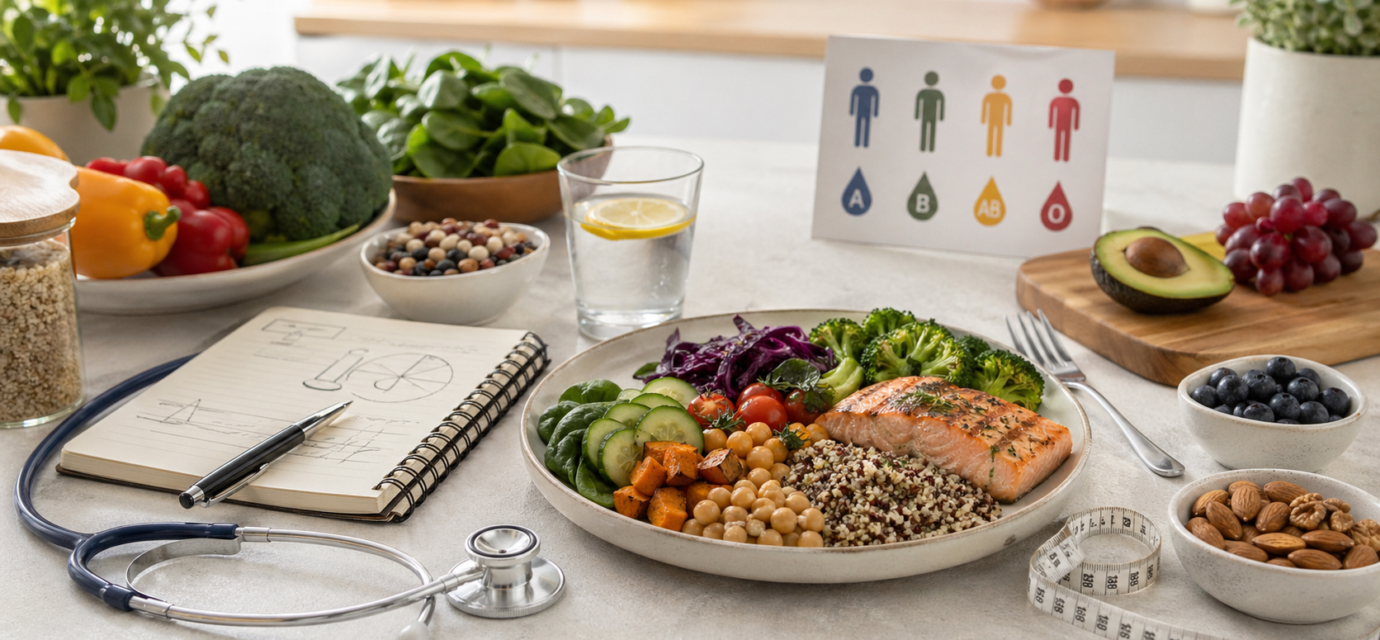
The blood type diet became popular because it made nutrition feel intimate. Instead of giving everyone the same advice, it seemed to offer a private map. Type O was often linked with a higher-protein diet. Type A was often linked with plant-forward eating. Type B was described as more flexible with dairy and animal foods. Type AB was framed as a blend of A and B patterns.
For people tired of confusing diet advice, that kind of structure can feel comforting.
There is also something emotional happening beneath the surface. Many people do not want another restrictive diet. They want to feel seen. They want a way of eating that explains why one person feels good eating one way while another person feels better eating differently. That desire is valid. Bodies are not identical. Food preferences are not identical. Cultural tables are not identical.
Still, personal does not always mean accurate.
According to the American Red Cross, the four major ABO blood groups are based on the presence or absence of A and B antigens on red blood cells. Rh factor adds the positive or negative part, creating the eight common blood types most people recognize. This is essential for blood donation and transfusion safety. It does not automatically mean those same blood types determine whether a person should eat lentils, beef, wheat, dairy, pineapple, or rice.
That is where nutrition science asks us to slow down.
The Beauty of the Table
A truly nourishing table does not begin with fear. It begins with awareness.
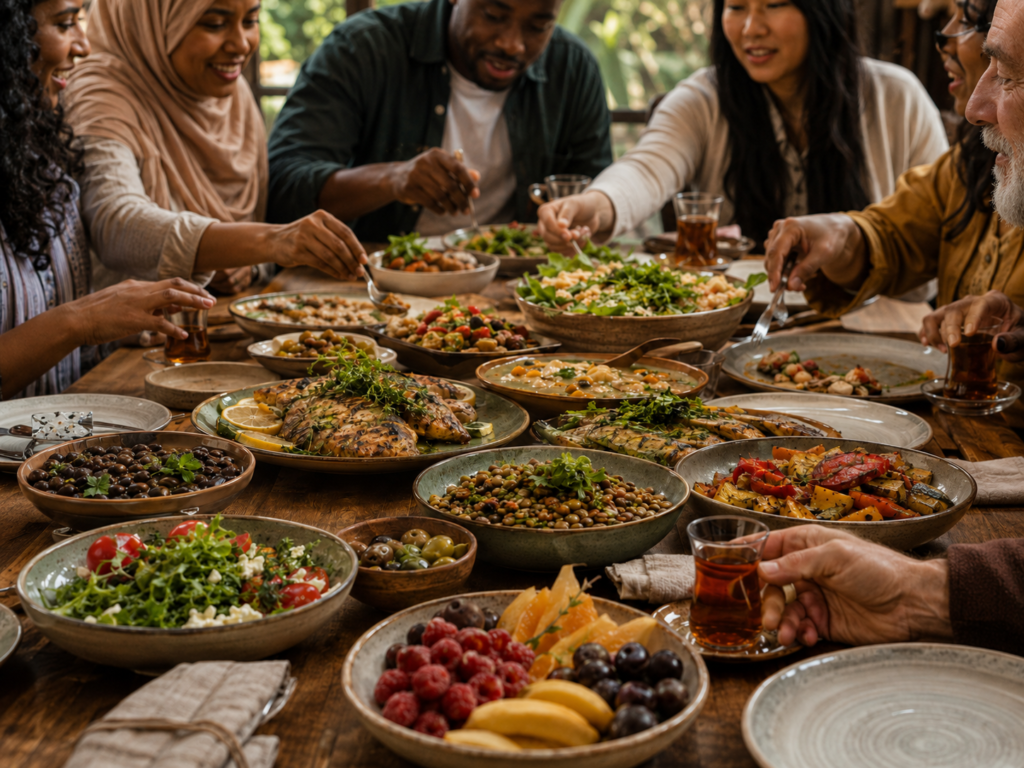
Think of a table filled with color: roasted carrots with browned edges, a bowl of black beans, rice fragrant with steam, grilled fish with lemon, greens softened with garlic, sliced mango, yogurt with herbs, lentil soup, warm flatbread, and tea poured into small cups. The table does not follow a trend. It is following life.
Many traditional food cultures already understand balance without needing modern diet branding. A West African table may bring together grains, greens, legumes, fish, peppers, and stews rich with layered seasoning. Mediterranean meals often center on vegetables, pulses, grains, olive oil, seafood, herbs, and shared eating. Japanese home meals may include rice, soup, vegetables, pickles, fish, and small portions arranged with care. Mexican, Indian, Middle Eastern, Caribbean, Korean, Southern, and Indigenous foodways all hold examples of nutrient-dense meals shaped by land, memory, preservation, celebration, and community.
These tables are not perfect because no culture eats perfectly. They are meaningful because they show us that food is not just a list of allowed and forbidden items. Food is a relationship. It is how people adapt to climate, migration, labor, family structure, faith, season, and survival.
The blood type diet tries to personalize the plate through one biological marker. Culture reminds us that the plate is shaped by many markers at once.
Culture & Blood-Type meets Food
A Taste of Science
The strongest research available does not support the central claim that people should eat according to ABO blood type.
A 2013 systematic review published in The American Journal of Clinical Nutrition concluded that no evidence existed at that time to validate the claimed health benefits of blood type diets. The authors noted that proper testing would require studies comparing health outcomes among people following blood-type-specific diets within the appropriate blood type groups.
A 2014 PLOS ONE study examined 1,455 young adults from the Toronto Nutrigenomics and Health Study. Researchers looked at whether adherence to blood-type-style diet patterns was associated with cardiometabolic markers such as body mass index, waist circumference, blood pressure, cholesterol, triglycerides, insulin, and related measures. Some diet patterns were linked with favorable markers. However, those benefits were independent of ABO blood type. In plain kitchen language, the healthier-looking results seemed connected to the overall food pattern, not whether the pattern matched the person’s blood type.
That finding matters because it explains why some people may feel better on a blood type diet. If a plan encourages more vegetables, fruit, legumes, fish, whole foods, or home cooking, someone may notice real improvements. But those improvements do not prove the blood type theory. They may simply reflect better diet quality.
Harvard Health has also noted that the theory behind the diet raises serious questions, including the claim that blood type is closely tied to digestion. Current evidence has not proven that connection.
This does not mean every person should eat the exact same way. It means the evidence points us toward broader, better-supported principles: variety, nutrient density, adequate protein, fiber-rich plant foods, healthy fats, less highly processed food, and cultural flexibility.
Harvard School of Public Health: Our Plate
What This Food Conversation Teaches Us
The blood type diet is not just a nutrition topic. It is a mirror.
It shows how deeply people want food to make sense. It shows how much we want our bodies to feel less mysterious. It shows how easily a neat category can feel comforting when the real work of nutrition is messy, personal, and sometimes emotional.
But food wisdom is not found only in restriction. It is also found in patterns.
The World Health Organization recommends that people older than 10 aim for at least 400 grams of fruits and vegetables per day and at least 25 grams of naturally occurring dietary fiber. WHO also recommends limiting free sugars to less than 10 percent of total daily energy intake, with 50 grams as an example for a 2,000-calorie diet. Adult salt intake should be limited to less than 5 grams per day, equal to about 2 grams of sodium.
These numbers are helpful, but they become more useful when translated into real food.
That could mean adding greens to eggs, beans to soup, berries to oatmeal, lentils to rice, cabbage to tacos, herbs to fish, chickpeas to salad, or vegetables to a stew your family already loves. It could mean checking the Nutrition Facts label for sodium, fiber, added sugars, iron, calcium, vitamin D, and potassium. It could mean reducing sugary drinks without making fruit feel forbidden. It could mean keeping cultural staples on the plate while adjusting portions, cooking methods, and sides.
A better diet does not have to erase your food story.
Cultural Food Wisdom and the Modern Plate
Around the world, food traditions often teach lessons that modern nutrition is still trying to communicate.
Beans and rice appear in many cultures because they are practical, filling, affordable, and adaptable. Fermented foods developed partly through preservation and often remain important in cultural meals, from kimchi and sauerkraut to yogurt, dosa batter, injera, miso, kefir, and pickled vegetables. Soups and stews stretch ingredients, build flavor slowly, and make room for vegetables, legumes, herbs, grains, and proteins. Shared plates teach moderation through community rather than strict calculation.
UNESCO describes the Mediterranean diet as more than a food list. It includes skills, knowledge, rituals, symbols, traditions, crops, harvesting, fishing, animal husbandry, preservation, cooking, and shared meals. That is a powerful reminder that a diet is not only what is eaten. It is also how food is grown, prepared, served, remembered, and respected.
The CDC also encourages institutions to consider cultural and regional food preferences when creating healthier food environments. That matters because nutrition advice is more likely to be followed when it respects the foods people recognize, value, and can realistically access.
This is where many diet trends fail. They often ask people to abandon their table before they understand it. A culturally aware approach asks better questions.
What foods already nourish this household?
Which traditional meals include vegetables, beans, seafood, grains, herbs, or fermented foods?
Which foods are celebratory and can remain part of life without becoming everyday excess?
Which ingredients are affordable, familiar, and satisfying?
What changes would support health without insulting heritage?
Those questions are more useful than asking whether your blood type allows a food your grandmother cooked with love.
UNESCO: Mediterranean Diet Intangible Cultural Heritage
How to Build a Better Plate Without Losing Your Food Culture
If the blood type diet made you curious about eating with more intention, keep the curiosity. Let go of the unsupported rules.
Start with a simple plate rhythm: protein, fiber, color, and satisfaction.
Protein can come from seafood, poultry, lean meats, eggs, yogurt, tofu, tempeh, beans, peas, lentils, nuts, seeds, or combinations of these foods. Fiber comes from vegetables, fruits, beans, lentils, oats, whole grains, nuts, and seeds. Color usually means more plant variety. Satisfaction comes from flavor, texture, fat, seasoning, and enough food to feel steady.
Try building meals around cultural staples instead of replacing them. If rice is central to your meals, keep rice and add beans, vegetables, herbs, and protein. If bread is part of your table, pair it with soup, salad, eggs, fish, hummus, or stewed vegetables. If pasta is a family comfort food, add vegetables, lentils, seafood, or a side salad. If meat is traditional in your household, consider portion, preparation, and what surrounds it on the plate.
Use the FDA Nutrition Facts label as a practical tool, not a source of fear. The label can help you compare packaged foods for nutrients to limit, such as saturated fat, sodium, and added sugars, and nutrients to increase, such as dietary fiber, vitamin D, calcium, iron, and potassium. The percent daily value can also help you see whether a serving is low or high in a nutrient.
This is real-life nutrition. It is not dramatic. It is repeatable.
FDA: Food for Thought – How to Use the Nutrition Facts Label
Simple Serving Ideas
Create a balanced family-style grain bowl table. Set out rice, quinoa, farro, couscous, roasted sweet potatoes, or noodles. Add beans, grilled fish, chicken, tofu, eggs, or lentils. Include toppings like cucumbers, tomatoes, greens, herbs, citrus, yogurt sauce, salsa, pickled onions, avocado, sesame seeds, or chili oil. Everyone builds a plate that feels personal without needing a restrictive diet rule.
Make soup the center of the table. A lentil stew, chicken vegetable soup, miso soup, gumbo-inspired vegetable bowl, black bean soup, minestrone, seafood stew, or chickpea curry can bring comfort and nutrition together. Serve with fruit, salad, rice, bread, or roasted vegetables.
Use herbs and spices as bridges. Garlic, ginger, cumin, turmeric, thyme, basil, cilantro, paprika, rosemary, curry leaves, scallions, parsley, mint, chiles, and citrus can make nourishing food feel alive. Flavor is not the enemy of health. Flavor is often what makes healthy patterns sustainable.
Host with ease. Put food in bowls. Use a simple cloth napkin or wooden board. Add lemons, herbs, tea, sparkling water, or seasonal fruit. Let the table feel cared for without making it perform.
A Thoughtful Note on Diet Claims and Cultural Appreciation
It is important to be careful with diet claims, especially when they borrow from ancestry, tradition, or identity.
Culture is not a costume for wellness marketing. Sacred food practices should not be turned into casual trends. Traditional dishes should not be labeled unhealthy without context. At the same time, cultural respect does not mean ignoring science. Both can sit at the same table.
A respectful approach gives credit, learns history, avoids stereotypes, and does not make cure-all promises. It also understands that every cuisine has everyday foods, celebration foods, regional differences, class differences, religious influences, and family variations.
The blood type diet may invite people to think about individuality, but culture teaches a wider form of individuality. You are not only a blood type. You are also your home kitchen, your grocery store, your budget, your health history, your traditions, your schedule, your appetite, and your memories.
If you have a medical condition, food allergies, anemia, diabetes, kidney disease, pregnancy-related needs, digestive issues, or a history of disordered eating, personalized nutrition should come from a qualified healthcare professional or registered dietitian. Blood type should not replace medical care.
Final Thoughts: Let Food Know Your Life, Not Just Your Type
The blood type diet promises a personal answer, but real nourishment asks for a fuller conversation.
Science tells us that blood type is essential for transfusion safety, but current evidence does not show that ABO type should decide the foods on your plate. Culture tells us that food is personal in a much richer way. It is personal because it carries the hands that taught us, the places that shaped us, the seasons that fed us, and the bodies we are learning to care for.
A wise plate does not need to be fearful. It can be colorful, practical, evidence-based, and culturally rooted. It can hold beans and rice, fish and greens, soup and bread, fruit and tea, celebration and simplicity.
Maybe the best diet is not the one that sorts us into categories.
Maybe it is the one that helps us pay attention, cook with care, honor where we come from, and choose what supports the life we are living now.
References
- American Red Cross. (n.d.). Blood types explained: A, B, AB and O. Red Cross Blood Services. https://www.redcrossblood.org/donate-blood/blood-types.html
- American Red Cross. (n.d.). What is your blood type? Red Cross Blood Services. https://www.redcrossblood.org/local-homepage/news/article/know-your-blood-type.html
- Centers for Disease Control and Prevention. (2025, September 25). Consider community and regional food preferences. Food Service Guidelines Toolkit. https://www.cdc.gov/food-service-guidelines-toolkit/php/strategize-act/cultural-food-preferences.html
- Cusack, L., De Buck, E., Compernolle, V., & Vandekerckhove, P. (2013). Blood type diets lack supporting evidence: A systematic review. The American Journal of Clinical Nutrition, 98(1), 99-104. https://doi.org/10.3945/ajcn.113.058693
- D’Adamo, P. J., & Whitney, C. (1996). Eat right 4 your type: The individualized diet solution to staying healthy, living longer & achieving your ideal weight. G. P. Putnam’s Sons.
- Harvard T.H. Chan School of Public Health. (n.d.). Healthy Eating Plate. The Nutrition Source. https://nutritionsource.hsph.harvard.edu/healthy-eating-plate/
- Harvard Health Publishing. (2022, February 10). Diet not working? Maybe it’s not your type. Harvard Health Publishing. https://www.health.harvard.edu/blog/diet-not-working-maybe-its-not-your-type-2017051211678
- MedlinePlus. (2024, March 31). Blood typing. U.S. National Library of Medicine. https://medlineplus.gov/ency/article/003345.htm
- UNESCO. (n.d.). Mediterranean diet. UNESCO Intangible Cultural Heritage. https://ich.unesco.org/en/RL/mediterranean-diet-00884
- U.S. Department of Agriculture & U.S. Department of Health and Human Services. (2025). Dietary Guidelines for Americans, 2025-2030. RealFood.gov. https://cdn.realfood.gov/DGA.pdf
- U.S. Food and Drug Administration. (2024, March 5). How to understand and use the Nutrition Facts label. FDA. https://www.fda.gov/food/nutrition-facts-label/how-understand-and-use-nutrition-facts-label
- Wang, J., Garcia-Bailo, B., Nielsen, D. E., & El-Sohemy, A. (2014). ABO genotype, “blood-type” diet and cardiometabolic risk factors. PLOS ONE, 9(1), e84749. https://doi.org/10.1371/journal.pone.0084749
- Wang, J., Jamnik, J., Garcia-Bailo, B., Nielsen, D. E., Jenkins, D. J. A., & El-Sohemy, A. (2018). ABO genotype does not modify the association between the “blood-type” diet and biomarkers of cardiometabolic disease in overweight adults. The Journal of Nutrition, 148(4), 518-525. https://doi.org/10.1093/jn/nxx074
- World Health Organization. (2026, January 26). Healthy diet. World Health Organization. https://www.who.int/news-room/fact-sheets/detail/healthy-diet