
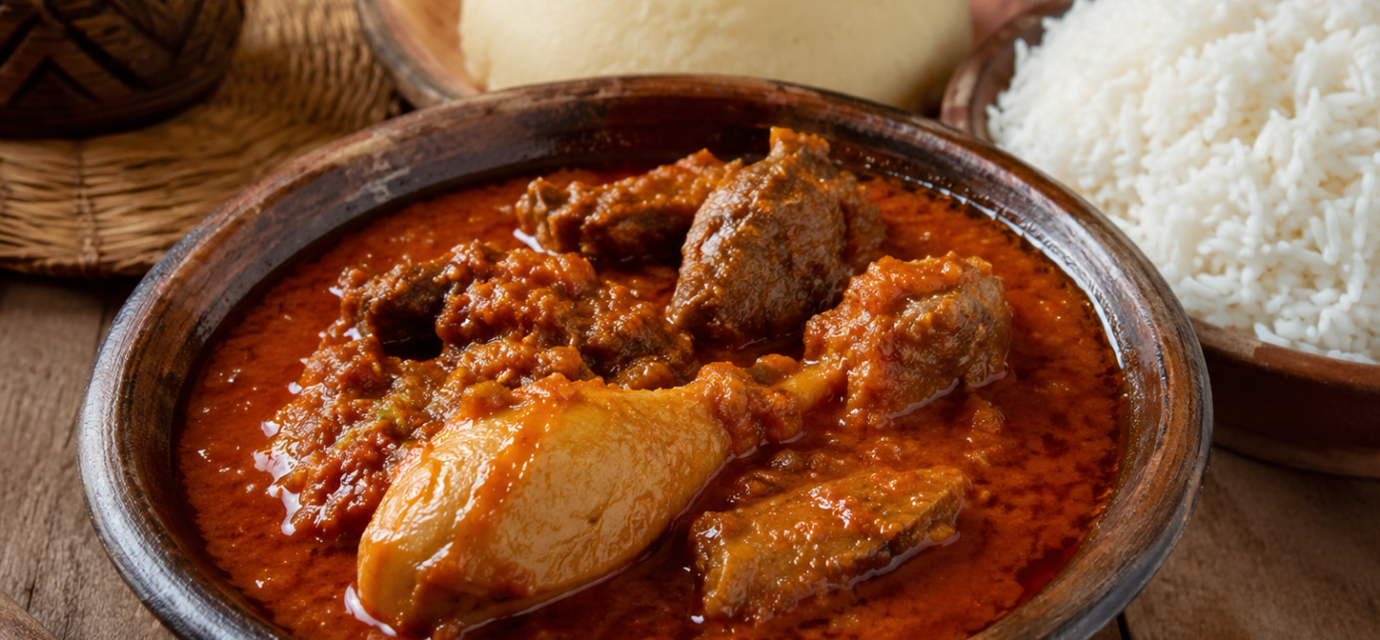
West African Peanut Stew with Chicken, Goat Meat, and Togolese-Style Peanut Sauce
Some stews do more than fill a bowl. They fill the kitchen with memory, warmth, and the kind of aroma that makes people ask, “When is it ready?” West African peanut stew is one of those dishes. It begins with onions, garlic, ginger, tomato, chile, and meat simmering together until the pot smells rich and alive. Then comes the heart of the recipe: a smooth peanut sauce that turns the stew creamy, savory, and deeply comforting.
This version is inspired by West African groundnut stew traditions, with special respect for Togolese-style sauce d’arachide, also known in some Togolese cooking contexts as Azi Dessi or Azindessi. In Togo, meals are often built around a satisfying starch such as fufu, akoume/la pâte, rice, yam, cassava, or plantain, served with a flavorful sauce made with meat, fish, vegetables, chile, tomato, palm oil, or peanut paste. This recipe honors that sauce-centered way of eating while staying practical for a home kitchen.
Instead of making a vegetable-forward peanut stew, this version focuses on chicken and goat meat. The chicken gives the stew familiar comfort, while goat meat brings deeper flavor and the slow-simmered character many West African meat stews are known for. Cow skin, often called ponmo or kpomo in parts of West Africa, is included as an optional addition for readers who enjoy chewy assorted-meat textures, though it is not required for a Togolese-style peanut sauce.
The soul of this recipe is the peanut sauce. You can make it with unsweetened natural peanut butter for ease, or you can prepare it in a more traditional-inspired way by blending roasted peanuts into a paste. Both methods work. What matters most is cooking the sauce gently, seasoning it well, and letting the peanut, tomato, pepper, and meat broth come together into something balanced and generous.
Quick Recipe Snapshot
- Prep Time: 30 minutes
- Cook Time: 1 hour 45 minutes
- Total Time: About 2 hours 15 minutes
- Servings: 6
- Difficulty Level: Beginner-to-intermediate
- Best For: Cozy family dinners, cultural comfort food, weekend cooking, fufu nights, rice bowls, meal prep
- Expected Result: Tender chicken and goat meat in a rich tomato-peanut sauce with ginger, garlic, chile warmth, and a silky stew-like texture
Why You’ll Love This Recipe
- It includes a clear homemade peanut sauce method, not just peanut butter stirred into the stew.
- It is meat-focused, hearty, and deeply satisfying.
- It highlights West African groundnut stew traditions while giving special attention to Togo.
- Chicken keeps the recipe approachable, while goat meat adds depth.
- The sauce is creamy without dairy.
- The spice level is flexible.
- It pairs beautifully with rice, fufu, akoume/la pâte, plantains, boiled yams, or cassava.
Cultural Background: West African Groundnut Stew, Togo, and the Power of Sauce
West African peanut stew is not one single dish with one fixed recipe. Across the region, cooks prepare peanut or groundnut sauces in different ways depending on local ingredients, family tradition, religion, season, budget, and occasion. In Senegal and nearby regions, many people recognize peanut stew as mafé or maafe, often made with beef, chicken, lamb, tomato, vegetables, and peanut sauce. In Ghana, groundnut soup may be served with fufu or omo tuo, also known as rice balls. In Nigeria, groundnut soup or stew may be served with swallows such as pounded yam, eba, or fufu, and may include chicken, beef, goat meat, dried fish, or assorted meats.
Togo has its own rich sauce culture. Togolese meals commonly include a starch paired with a sauce. Maize, cassava, yams, rice, and plantain are important staples, and dishes such as akoume/la pâte and fufu are often served with meat, fish, vegetables, palm nut, tomato, chile, or peanut-based sauces. In Togolese food contexts, peanut sauce may be called sauce d’arachide in French, and you may also see names such as Azi Dessi or Azindessi used for peanut sauce dishes.
A Togolese-style peanut sauce often leans into the same beautiful foundation found across many West African kitchens: ground peanuts or peanut paste, tomato, onion, garlic, ginger, chile, and a flavorful broth created from simmered meat or fish. Some versions include anise seed, cayenne, smoked seafood, palm oil, or local spices. Others are simple and homey, built from what is available.
This recipe does not claim to represent every Togolese household or every West African peanut stew. Instead, it offers a respectful, practical version inspired by the shared groundnut-sauce tradition, with a closer nod to Togo’s love of sauce-centered meals, fufu, la pâte, rice, chile, and comforting protein-rich stews.
What Is Togolese-Style Peanut Sauce?
Togolese-style peanut sauce, or sauce d’arachide, is a savory peanut-based sauce often served with a starch such as fufu, rice, or akoume/la pâte. The sauce may include chicken, beef, goat, fish, or other proteins. Its flavor usually comes from a layered base of onion, tomato, garlic, ginger, pepper, and ground peanuts or peanut paste.
In this recipe, the peanut sauce is made separately enough to give readers control over texture before it joins the stew. You will whisk or blend roasted peanut paste with warm stock until smooth, then simmer it with tomato, aromatics, chile, and meat juices. This prevents clumps, helps the sauce thicken evenly, and gives the final stew a glossy, spoon-coating body.
How to Make the Peanut Sauce
There are two good ways to make the peanut sauce for this recipe.
Option 1: Peanut Sauce from Roasted Peanuts
Use this method if you want a more traditional-inspired texture and flavor.
Ingredients for the peanut sauce:
- 1 ¼ cups roasted unsalted peanuts
- 1 cup warm chicken stock or goat broth from the stew
- 2 tablespoons tomato paste
- ½ cup crushed tomatoes or blended fresh tomatoes
- ½ small onion, chopped
- 2 garlic cloves
- 1 teaspoon grated ginger
- ¼ to ½ Scotch bonnet or habanero, or to taste
- ½ teaspoon salt, plus more as needed
How to make it:
- Add roasted peanuts to a blender or food processor.
- Blend until the peanuts become a thick paste. Scrape down the sides as needed.
- Add warm stock a little at a time and blend until smooth and pourable.
- Add tomato paste, crushed tomatoes, onion, garlic, ginger, chile, and salt.
- Blend again until the sauce is mostly smooth.
- Pour the sauce into the stew after the meat has begun to tenderize.
- Simmer gently, stirring often, until the sauce thickens and the raw onion/tomato flavor cooks out.
Option 2: Peanut Sauce from Natural Peanut Butter
Use this method if you want the easiest home-kitchen version.
Ingredients for the peanut sauce:
- ¾ cup unsweetened natural peanut butter
- 1 cup warm chicken stock or goat broth from the stew
- 2 tablespoons tomato paste
- ½ cup crushed tomatoes or blended fresh tomatoes
- 1 teaspoon grated ginger
- 1 minced garlic clove
- ¼ teaspoon cayenne or minced Scotch bonnet, optional
How to make it:
- Place peanut butter in a bowl.
- Add warm stock slowly while whisking.
- Whisk until smooth, creamy, and pourable.
- Stir in tomato paste, crushed tomatoes, ginger, garlic, and chile.
- Add the sauce to the stew and simmer gently until glossy and thick.
The roasted peanut version has a deeper, more rustic flavor. The peanut butter version is smoother and faster. Both can be delicious when cooked gently and seasoned well.
Why This Recipe Works
This recipe works because it builds flavor in layers. The goat meat starts first because it needs more time to soften. Chicken is added later, so it stays tender instead of falling apart too early. Browning the meat gives the pot a savory base, while onion, garlic, ginger, tomato paste, and chile create the aromatic backbone.
The peanut sauce is not rushed. Peanut-based sauces can scorch if the heat is too high, so this stew is simmered slowly and stirred often. Warm stock loosens the peanut paste before it enters the pot, which helps the sauce blend evenly. Tomato adds acidity, ginger adds brightness, chile adds heat, and the meat broth gives the sauce depth.
The final rest matters too. After simmering, the stew sits for 10 minutes off the heat. That short pause helps the sauce settle, thicken, and cling beautifully to the meat.
Ingredients
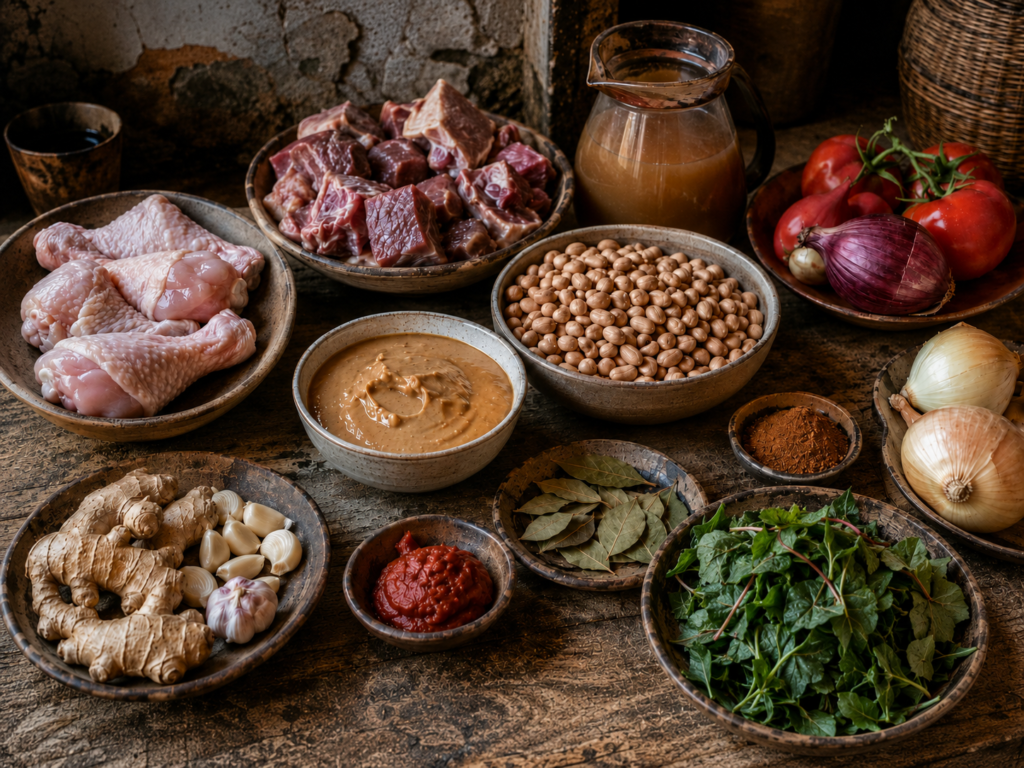
Ingredients for West African peanut stew with chicken, goat meat, roasted peanuts, tomatoes, ginger, and Scotch bonnet
Meat and Protein
- 1 ½ pounds bone-in chicken thighs or drumsticks
Bone-in dark meat stays juicy and gives the stew a deeper flavor. - 1 pound goat stew meat, cut into 1 ½- to 2-inch pieces
Goat meat adds savory depth and traditional stew character. It needs time to become tender. - 6-8 ounces prepared cow skin/ponmo, optional
Adds chewy texture and absorbs sauce well. Use only food-grade prepared cow skin from a trusted source.
For Browning and Aromatics
- 2 tablespoons peanut oil, palm oil, canola oil, or neutral oil
Peanut oil keeps the flavor aligned with the sauce. Palm oil gives a deeper West African-style color and richness, but use it lightly if desired. - 1 large yellow onion, finely chopped
Builds sweetness and body. - 4 garlic cloves, minced
Adds savory depth. - 1 tablespoon fresh ginger, grated
Adds warmth and brightness. - 1 Scotch bonnet or habanero pepper
Leave whole for gentle heat or mince for a hotter stew.
Tomato Base
- 3 tablespoons tomato paste
Adds concentrated tomato flavor and balances the peanut richness. - 2 medium fresh tomatoes, chopped, or 1 cup canned crushed tomatoes
Adds acidity, moisture, and natural sweetness.
Peanut Sauce
Choose one:
Roasted Peanut Sauce:
- 1 ¼ cups roasted unsalted peanuts
- 1 cup warm chicken stock or goat broth
- ½ small onion
- 2 garlic cloves
- 1 teaspoon grated ginger
- 2 tablespoons tomato paste
- ½ cup crushed tomatoes
- ¼ to ½ Scotch bonnet or habanero, optional
- ½ teaspoon salt
Or Peanut Butter Sauce:
- ¾ cup unsweetened natural peanut butter
- 1 cup warm chicken stock or goat broth
- 2 tablespoons tomato paste
- ½ cup crushed tomatoes
- 1 teaspoon grated ginger
- 1 minced garlic clove
- Cayenne or minced Scotch bonnet, optional
Stew Liquid and Seasoning
- 3-4 cups low-sodium chicken stock, goat broth, or water
Stock gives more flavor, while water lets the peanut and aromatics shine. - 1 ½ teaspoons kosher salt, plus more to taste
Adjust depending on your broth. - 1 teaspoon black pepper
Adds gentle heat. - ½ teaspoon ground anise seed, optional
A small amount can add a subtle sweet-warm note inspired by some Togolese peanut sauce preparations. - ½ teaspoon cayenne pepper, optional
Adds more heat. - 1 bay leaf
Adds background aroma.
Optional Vegetables
This is a meat-focused stew, but a few vegetables can support the sauce.
- 1 small sweet potato, cubed, optional
Adds body and gentle sweetness. - 1 cup chopped carrots or eggplant, optional
Adds texture without making the dish vegetable-heavy. - 2 cups chopped spinach, amaranth greens, or collard greens, optional
Adds color and freshness near the end.
Finishing
- 1 tablespoon lime juice or lemon juice
Brightens the sauce. - Chopped scallions, parsley, or cilantro
Adds freshness. - Crushed roasted peanuts
Adds crunch and reinforces the peanut flavor.
Ingredient Notes and Smart Substitutions
Chicken: Bone-in thighs and drumsticks work best. Boneless chicken can be used, but reduce the simmering time.
Goat meat: If goat meat is not available, use lamb stew meat, beef chuck, or more chicken. Goat meat should simmer until tender.
Cow skin/ponmo: Optional. It is common in some West African assorted-meat cooking, especially Nigerian-style stews and soups. For this Togo-inspired version, it is a texture addition, not a requirement.
Peanuts: Roasted unsalted peanuts give the sauce a more handmade flavor. Natural peanut butter gives smoother, faster results.
Peanut allergy note: This recipe contains peanuts, a major food allergen. Do not serve it to anyone with a peanut allergy.
Tomato: Tomato paste gives depth. Fresh tomatoes give a lighter flavor. Canned crushed tomatoes make the sauce smoother.
Scotch bonnet: This pepper is flavorful and hot. Leave it whole for less heat. Mince it for a spicier stew.
Anise seed: Optional, but a small amount can echo some Togolese-style peanut sauce flavor profiles. Do not overuse it.
Palm oil: Some West African sauces use palm oil. If using it, choose responsibly sourced red palm oil and use only a small amount for flavor and color.
Equipment You’ll Need
- Large Dutch oven or heavy-bottomed pot
- Blender or food processor
- Cutting board
- Sharp knife
- Wooden spoon
- Tongs
- Mixing bowl
- Whisk
- Measuring cups and spoons
- Food thermometer
- Ladle
Step-by-Step Directions
1. Season the meat.
Pat the chicken and goat meat dry. Season with 1 teaspoon salt and ½ teaspoon black pepper. Let’s sit for 15 minutes while you prep the aromatics. Dry meat browns better and gives the stew a stronger flavor base.
2. Pre-boil the cow skin if using.
Place prepared cow skin in a small pot, cover with water, and simmer for 20-30 minutes until softened. Drain and set aside. This improves the texture before it goes into the peanut stew.
3. Brown the goat meat.
Heat oil in a Dutch oven over medium-high heat. Add goat meat in a single layer and brown for 3-4 minutes per side. Work in batches if needed. Do not crowd the pot.
4. Start tenderizing the goat meat.
Add 2 cups of stock or water and the bay leaf. Scrape up the browned bits from the bottom of the pot. Cover and simmer gently for 35-45 minutes, until the goat begins to soften.
5. Brown the chicken.
Add chicken to the pot and brown for 4-5 minutes per side. The chicken does not need to be fully cooked yet. It will finish in the stew.
6. Build the aromatic base.
Add chopped onion and cook for 5-7 minutes, stirring often. Add garlic and ginger and cook for 1 minute until fragrant.
7. Cook the tomato paste.
Stir in tomato paste and cook for 2-3 minutes. It should darken slightly and smell sweeter. This step helps remove the raw tomato taste.
8. Add tomatoes and chile.
Stir in chopped tomatoes and the Scotch bonnet or habanero. Cook for 5 minutes until the tomatoes begin to break down.
9. Make the peanut sauce.
-For roasted peanut sauce, blend roasted peanuts into a paste, then blend with warm stock, tomato paste, crushed tomatoes, onion, garlic, ginger, chile, and salt until smooth.
-For peanut butter sauce, whisk peanut butter with warm stock until smooth, then stir in tomato paste, crushed tomatoes, ginger, garlic, and chile.
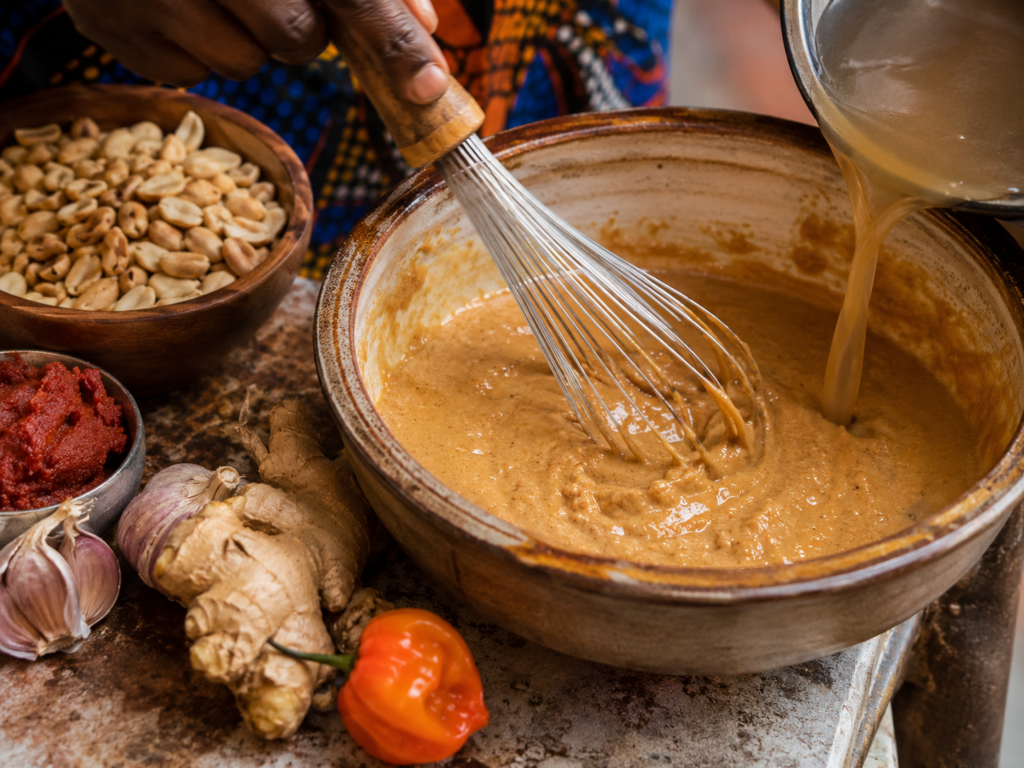
Homemade peanut sauce for West African peanut stew is being whisked with warm stock
10. Add the peanut sauce to the stew.
Pour the peanut sauce into the pot and stir well. Add 1-2 more cups of stock or water as needed. The sauce should be thick but loose enough to simmer.
11. Simmer gently.
Lower the heat to medium-low or low. Cover partially and simmer for 35-45 minutes, stirring every 8-10 minutes. Peanut sauce thickens as it cooks, so stir the bottom of the pot to prevent sticking.
12. Add cow skin and optional firm vegetables.
If using cow skin, sweet potato, carrot, or eggplant, add them now. Simmer for 15-20 minutes until the vegetables are tender and the sauce is glossy.
13. Check doneness safely.
Chicken should reach 165°F in the thickest part. Goat meat should be fork-tender. Whole cuts of goat, lamb, beef, and veal have a safe minimum internal temperature of 145°F with a 3-minute rest, but stew meat is usually cooked longer for tenderness.
14. Add greens. (Optional)
Stir in spinach, amaranth greens, or collards during the last 5 minutes. Cook until just wilted.
15. Finish the stew.
Remove the whole chile pepper if you used it whole. Stir in lime or lemon juice. Taste and adjust salt, pepper, and heat.
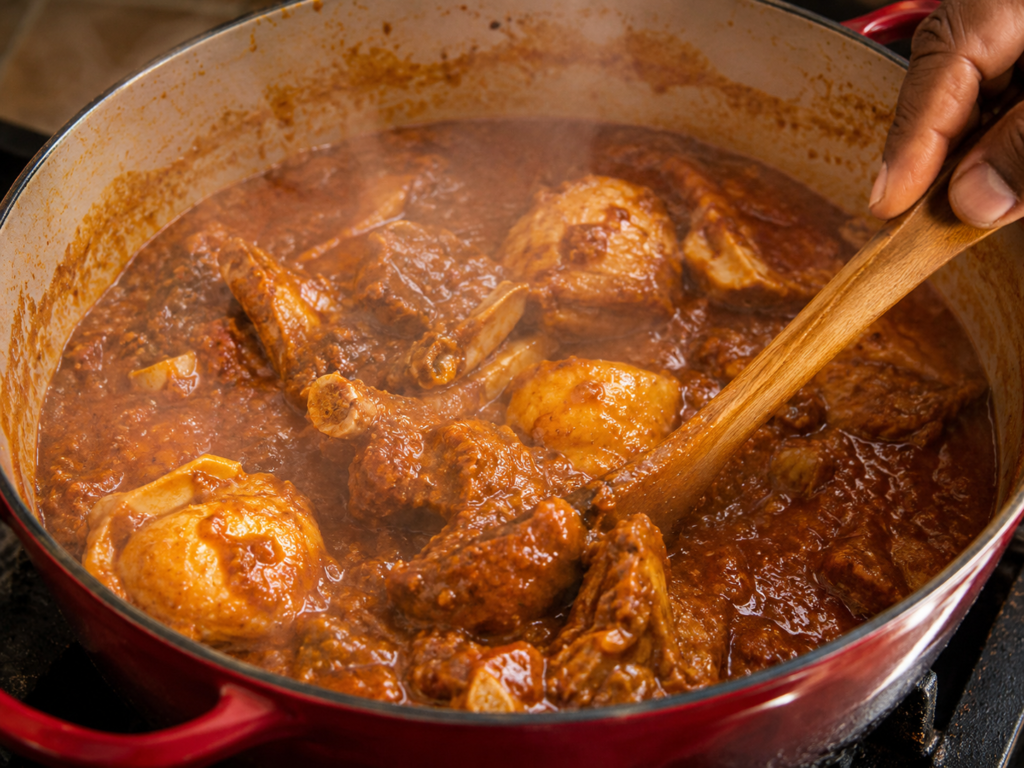
Chicken and goat meat simmering in tomato peanut sauce for West African stew
16. Rest before serving.
Turn off the heat and let the stew rest for 10 minutes. This helps the peanut sauce settle and thicken.
17. Serve warm.
Serve with rice, fufu, akoume/la pâte, boiled yams, cassava, couscous, or fried plantains. Garnish with scallions, herbs, or crushed peanuts.
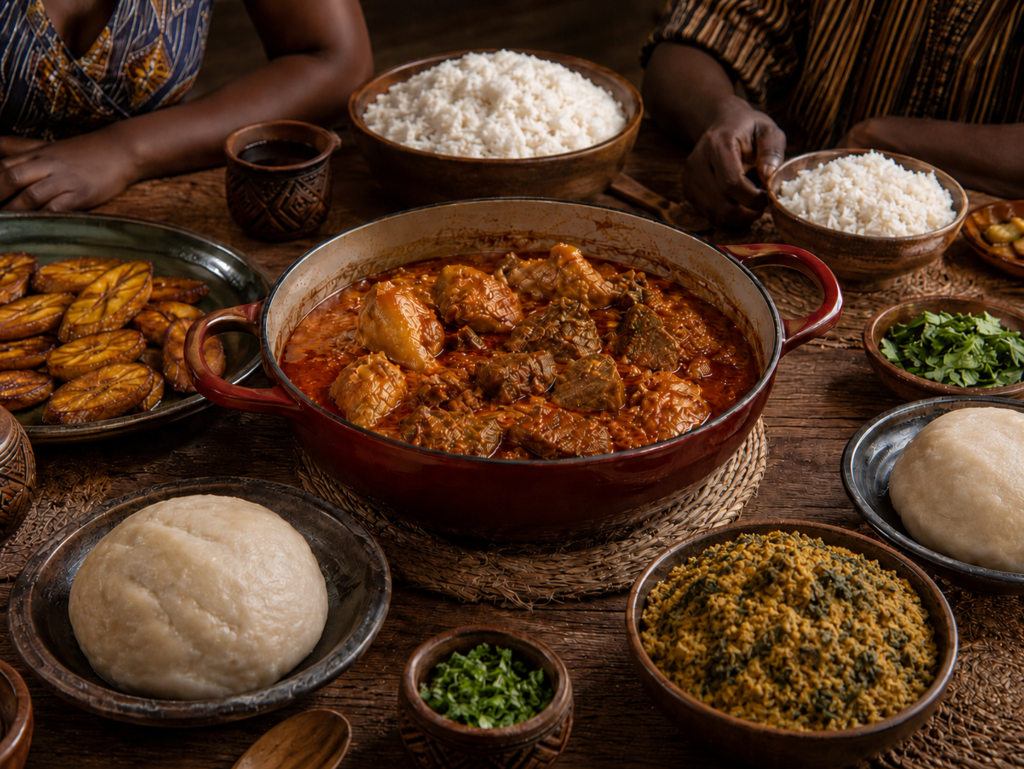
Family-style table with West African peanut stew, rice fufu la pâte, and plantains
Pro Tips for Best Results
- Blend or whisk the peanut sauce before adding it to the pot.
- Use warm stock to loosen the peanut paste smoothly.
- Brown the goat meat first for a deeper flavor.
- Give goat meat a head start before adding chicken.
- Simmer the peanut sauce gently; high heat can scorch it.
- Stir often once the peanut sauce is added.
- Keep the Scotch bonnet whole for flavor with less heat.
- Add more warm stock if the sauce gets too thick.
- Finish with lime or lemon to brighten the richness.
- Let the stew rest before serving.
Common Mistakes to Avoid
- Adding peanut butter directly to the boiling stew.
Fix: Whisk or blend it with warm liquid first. - Using sweetened peanut butter.
Fix: Use unsweetened natural peanut butter or roasted peanuts. - Boiling the sauce too hard.
Fix: Keep the heat low and stir often. - Not giving the goat meat enough time.
Fix: Simmer until fork-tender, not just until cooked. - Overcooking chicken.
Fix: Add chicken after the goat has had a head start. - Skipping acidity at the end.
Fix: Add lime or lemon juice to balance the rich peanut sauce. - Making the sauce too thick too soon.
Fix: Add stock or water in small amounts until it loosens.
Flavor Variations
Togolese-Inspired Chicken Azi Dessi Style: Use all chicken, roasted peanut sauce, tomato, onion, garlic, ginger, a little anise seed, and cayenne. Serve over rice or with fufu.
Goat Meat Groundnut Stew: Use 2 ½ pounds of goat meat and simmer until very tender. Serve with akoume/la pâte or pounded yams.
Assorted Meat Peanut Stew: Add cooked cow skin, tripe, smoked turkey, or beef along with chicken and goat. This version leans toward broader West African assorted-meat stew traditions.
Ghanaian-Inspired Groundnut Soup Directions: Use more liquid for a looser soup-like texture and serve with rice balls or fufu.
Senegalese-Inspired Maafe Direction: Add carrots, cabbage, or sweet potato and serve with rice.
Extra-Spicy Version: Mince the Scotch bonnet into the sauce and add cayenne.
Smoky Version: Add smoked fish or smoked turkey for a deeper flavor.
Serving Suggestions
For a Togolese-inspired table, serve this peanut stew with fufu, akoume/la pâte, rice, boiled yams, cassava, or plantains. Fufu is especially meaningful because it is a pounded starch commonly eaten with sauces and stews across western and central Africa. Akoume or la pâte, made with maize or fermented corn flour, is also deeply connected to Togolese home cooking.
For a simple family dinner, serve the stew over white rice with sliced scallions and crushed peanuts. For a fuller meal, add fried plantains, cucumber-tomato salad, sautéed greens, or a small bowl of chile sauce on the side.
Drink pairings can be simple and refreshing: ginger beer, hibiscus tea, sparkling water with lime, iced tea, or fresh pineapple juice.
Storage, Freezing, and Reheating
Cool leftovers quickly and transfer them to shallow airtight containers. Refrigerate within 2 hours of cooking, or within 1 hour if the room is above 90°F.
Refrigerate for 3 to 4 days. Freeze for 2-3 months for the best quality. Peanut sauce thickens as it cools, so add a splash of water or stock when reheating.
Reheat leftovers to 165°F. When reheating stew, sauce, or gravy on the stovetop, bring it to a rolling boil and stir often so the sauce heats evenly.
Do not leave the stew sitting out for long periods. If serving at a gathering, keep hot food at 140°F or above.
Make-Ahead Tips
You can season the meat up to 24 hours ahead and refrigerate it in a covered container. You can also chop the onion, garlic, ginger, and tomatoes the day before.
The peanut sauce can be blended up to 1 day ahead and refrigerated. Stir or whisk before adding it to the stew.
The full stew can be made 1 day ahead. Like many stews, it often tastes even richer the next day. Reheat gently with extra stock or water as needed.
Frequently Asked Questions
Is this recipe Togolese or West African?
It is a West African peanut stew inspired by broader groundnut stew traditions, with special attention to Togolese sauce d’arachide or Azi Dessi-style peanut sauce. It is not presented as the only traditional version.
What is Azi Dessi?
Azi Dessi, sometimes written Azindessi or Azin Dessi, is commonly used in Togolese food contexts for peanut sauce or peanut stew. Versions often include peanut paste, tomato, onion, garlic, ginger, pepper, and meat or fish.
Can I make the peanut sauce from scratch?
Yes. Blend roasted unsalted peanuts into a paste, then blend with warm stock, tomato, onion, garlic, ginger, chile, and salt. Simmer gently until smooth and cooked through.
Can I use peanut butter instead of roasted peanuts?
Yes. Use unsweetened natural peanut butter. Whisk it with warm stock before adding it to the stew so it blends smoothly.
What should I serve with West African peanut stew?
Serve it with rice, fufu, akoume/la pâte, boiled yams, cassava, couscous, or plantains.
Is cow skin required?
No. Cow skin is optional. It adds a chewy texture, but it is not necessary for this recipe.
How spicy is this stew?
It depends on how you use the chile. A whole Scotch bonnet gives flavor with less heat. Minced Scotch bonnet makes the stew much hotter.
Can I make this with only chicken?
Yes. Use about 3 pounds of bone-in chicken and reduce the cooking time because chicken cooks faster than goat meat.
Why is my peanut sauce separating?
The heat may be too high, or the sauce may need more stirring. Lower the heat, stir well, and add a splash of warm stock to bring it back together.
Can I freeze this stew?
Yes. Freeze in airtight containers for 2-3 months for best quality. Thaw in the refrigerator and reheat to 165°F.
Final Thoughts
A good peanut stew is generous food. It does not rush. It asks for a little patience, a little stirring, and enough care to let the sauce become what it is meant to be: thick, warm, savory, and comforting. That is part of the beauty of West African cooking traditions. The sauce is not an afterthought. It is the center of the meal.
This version gives home cooks a way to approach West African peanut stew with more intention. The meat matters. The aromatics matter. The way the peanut sauce is made matters. Blending roasted peanuts or whisking natural peanut butter with warm broth may seem like a small step, but it changes the whole pot. It helps the sauce become smooth, rich, and deeply seasoned instead of clumpy or flat.
The Togolese inspiration brings this recipe closer to the table culture of starch and sauce: fufu dipped into a rich stew, rice soaking up peanut-tomato gravy, la pâte served with something bold and flavorful, and meals enjoyed with gratitude and conversation. At the same time, this recipe leaves space for the truth of West African food: it changes by region, household, and memory.
Cook this stew with respect, not pressure. Taste as you go. Adjust the pepper. Add more broth if the sauce thickens. Let the meat become tender. Let the pot rest. Then serve it in the spirit of comfort, warmth, and welcome. That is where this dish shines.
Quick Recipe Card
Recipe Name: West African Peanut Stew with Chicken, Goat Meat, and Togolese-Style Peanut Sauce
Description: A rich meat-focused West African peanut stew inspired by Togolese sauce d’arachide/Azi Dessi traditions, made with chicken, goat meat, tomato, ginger, garlic, chile, and homemade peanut sauce.
Prep Time: 30 minutes
Cook Time: 1 hour 45 minutes
Total Time: About 2 hours 15 minutes
Servings: 6
Ingredients:
- 1 ½ pounds bone-in chicken thighs or drumsticks
- 1 pound goat stew meat, cut into chunks
- 6 to 8 ounces prepared cow skin/ponmo, optional
- 2 tablespoons peanut oil, palm oil, canola oil, or neutral oil
- 1 large yellow onion, finely chopped
- 4 garlic cloves, minced
- 1 tablespoon fresh ginger, grated
- 1 Scotch bonnet or habanero pepper
- 3 tablespoons tomato paste
- 2 medium tomatoes, chopped, or 1 cup canned crushed tomatoes
- 3 to 4 cups low-sodium chicken stock, goat broth, or water
- 1 ½ teaspoons kosher salt, plus more to taste
- 1 teaspoon black pepper
- ½ teaspoon ground anise seed, optional
- ½ teaspoon cayenne pepper, optional
- 1 bay leaf
- 1 small sweet potato, cubed, optional
- 1 cup chopped carrots or eggplant, optional
- 2 cups chopped spinach, amaranth greens, or collards, optional
- 1 tablespoon lime or lemon juice
- Chopped scallions, herbs, or crushed peanuts for garnish
Roasted Peanut Sauce Option:
- 1 ¼ cups roasted unsalted peanuts
- 1 cup warm stock or broth
- ½ small onion
- 2 garlic cloves
- 1 teaspoon grated ginger
- 2 tablespoons tomato paste
- ½ cup crushed tomatoes
- ¼ to ½ Scotch bonnet or habanero, optional
- ½ teaspoon salt
Peanut Butter Sauce Option:
- ¾ cup unsweetened natural peanut butter
- 1 cup warm stock or broth
- 2 tablespoons tomato paste
- ½ cup crushed tomatoes
- 1 teaspoon grated ginger
- 1 minced garlic clove
- Cayenne or minced Scotch bonnet, optional
Instructions:
- Pat chicken and goat meat dry. Season with salt and pepper.
- If using cow skin, simmer it in water for 20-30 minutes until softened. Drain.
- Heat oil in a Dutch oven. Brown the goat meat on all sides.
- Add 2 cups of stock or water and a bay leaf. Cover and simmer the goat meat for 35-45 minutes.
- Add chicken and brown lightly on both sides.
- Add onion and cook until softened.
- Stir in garlic and ginger and cook for 1 minute.
- Add tomato paste and cook for 2-3 minutes.
- Stir in tomatoes and Scotch bonnet. Cook for 5 minutes.
- Make the peanut sauce. For roasted peanut sauce, blend roasted peanuts with warm stock, tomato, onion, garlic, ginger, chile, and salt. For peanut butter sauce, whisk peanut butter with warm stock, then stir in tomato, ginger, garlic, and chile.
- Pour peanut sauce into the pot. Stir well.
- Simmer gently for 35-45 minutes, stirring often.
- Add cow skin and optional firm vegetables. Cook until tender.
- Check that the chicken reaches 165°F. Continue simmering the goat meat until fork-tender.
- Stir in greens during the last 5 minutes.
- Finish with lime or lemon juice.
- Rest for 10 minutes before serving.
Notes:
- Use unsweetened peanut butter or roasted unsalted peanuts.
- Keep the stew at a gentle simmer to prevent scorching.
- Add warm stock if the sauce becomes too thick.
- Leave the Scotch bonnet whole for milder heat.
- Serve with rice, fufu, akoume/la pâte, yams, cassava, or plantains.
Storage:
Refrigerate leftovers in shallow airtight containers within 2 hours. Store for 3 to 4 days. Freeze for 2 to 3 months for best quality. Reheat to 165°F before serving.
Nutrition Disclaimer: Nutrition information, if provided, is an estimate and may vary based on ingredients and preparation methods.
References
- Encyclopaedia Britannica. (2026, March 19). Fufu. Encyclopaedia Britannica. https://www.britannica.com/topic/fufu
- FoodSafety.gov. (2024, November 21). Cook to a safe minimum internal temperature. U.S. Department of Health & Human Services. https://www.foodsafety.gov/food-safety-charts/safe-minimum-internal-temperatures
- FoodSafety.gov. (n.d.). Cold food storage chart. U.S. Department of Health & Human Services. https://www.foodsafety.gov/food-safety-charts/cold-food-storage-charts
- National Peanut Board. (2024, June 4). Groundnuts, goobers & gourmet: Peanuts in African cuisine. USA Peanuts. https://nationalpeanutboard.org/podcast/groundnuts-goobers-and-gourmet-peanuts-in-african-cuisine/
- The Centenary Project. (2019). Of skins and snacks: The peppered ponmo delicacy. Google Arts & Culture. https://artsandculture.google.com/story/of-skins-and-snacks-the-peppered-ponmo-delicacy-pan-atlantic-university/DgVx6boFI1gTKQ
- Together Women Rise. (2015). Customs and cuisine of Togo. https://togetherwomenrise.org/customsandcuisine/customs-and-cuisine-of-togo/
- U.S. Food and Drug Administration. (2026, March 11). Food allergies. https://www.fda.gov/food/nutrition-food-labeling-and-critical-foods/food-allergies
- U.S. Department of Agriculture, Food Safety and Inspection Service. (2020, July 31). Leftovers and food safety. https://www.fsis.usda.gov/food-safety/safe-food-handling-and-preparation/food-safety-basics/leftovers-and-food-safety