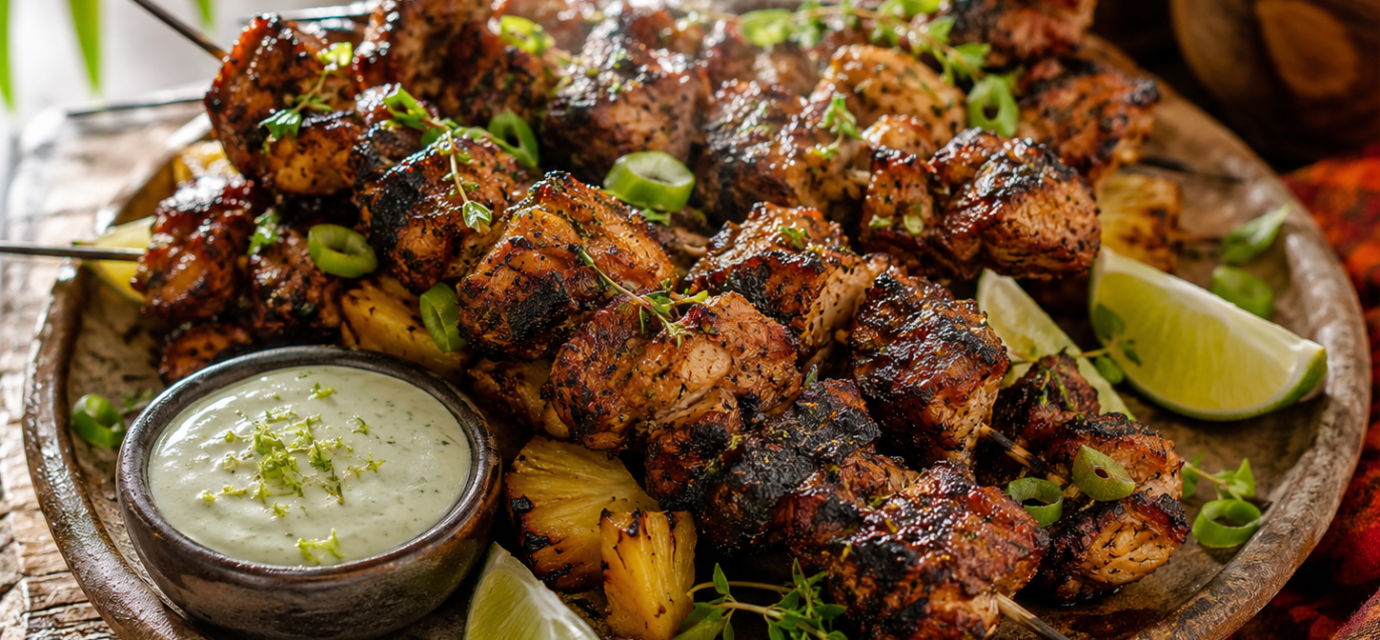
Jamaican Jerk Chicken Skewers with Lime Crema
Bold spice has a way of waking up the table before the first bite ever lands. These Jamaican jerk chicken skewers are juicy, smoky, warmly spiced, a little fiery, and brightened with lime. They carry the spirit of a backyard grill, the comfort of a family plate, and the kind of aroma that makes people wander into the kitchen asking, “What are you cooking?”
This recipe is inspired by Jamaican jerk, one of the Caribbean’s most recognizable and deeply loved cooking traditions. Classic jerk is not simply “spicy chicken.” It is a seasoning style and cooking method built around heat, smoke, pimento, herbs, and patience. Traditional jerk is often cooked over pimento wood, which gives the meat its signature smoky perfume. In this home-friendly version, boneless chicken thighs are cut into skewer-sized pieces, marinated with Scotch bonnet pepper, allspice, thyme, scallion, garlic, ginger, lime, and warm spices, then grilled until the edges are charred and the inside stays tender.
The lime crema is not traditional Jamaican jerk sauce, and it should not be presented as such. It is a cooling, modern companion for home cooks who enjoy the contrast of spicy grilled chicken with something creamy, tangy, and mellow. Think of it as a balancing spoonful on the plate rather than a replacement for the boldness of jerk.
Serve these skewers at a summer cookout, a weeknight dinner, a game-day spread, or a family table with rice and peas, grilled pineapple, cabbage slaw, fried plantains, or warm flatbread. They are easy enough for beginner-to-intermediate cooks but flavorful enough to feel special.
Quick Recipe Snapshot
- Prep Time: 25 minutes
- Marinating Time: 2-8 hours recommended
- Cook Time: 12-15 minutes
- Total Time: About 2 hours 40 minutes, including marinating
- Servings: 4
- Difficulty Level: Easy to moderate
- Best For: Cookouts, summer dinners, family meals, weekend grilling, bold-flavor meal prep
- Expected Result: Juicy chicken skewers with charred edges, warm pimento spice, Scotch bonnet heat, fresh thyme aroma, and a cool lime crema on the side.
Why You’ll Love This Recipe
- It uses the core flavors associated with Jamaican jerk: pimento/allspice, Scotch bonnet, thyme, scallion, garlic, ginger, and smoke-inspired char.
- Chicken thighs stay juicy and forgiving on the grill.
- The skewers cook faster than whole chicken pieces, making them practical for home kitchens.
- The lime crema cools the heat without covering up the spice.
- The marinade can be blended ahead, making dinner easier the next day.
- It works on an outdoor grill, grill pan, broiler, or oven.
- It is flavorful enough for guests but simple enough for a weeknight.
Cultural Background: A Respectful Note on Jamaican Jerk
Jerk is one of Jamaica’s most famous culinary traditions, but its history is layered and should be handled with care. Many food historians connect jerk cooking to Jamaica’s Maroon communities, descendants of Africans who escaped enslavement and formed free communities in Jamaica’s mountainous interior. Indigenous Taíno foodways are also often discussed in relation to early Caribbean smoking, preserving, and cooking techniques. The exact history is complex, and different sources emphasize different parts of the story, so it is best to describe jerk as a Jamaican tradition shaped by Indigenous Caribbean knowledge, African survival, adaptation, smoke, spice, and time (Francis, 2020).
In traditional jerk, meat is seasoned with a hot, aromatic spice mixture and cooked with smoke and fire. Pimento, also known outside Jamaica as allspice, is essential to the flavor. Scotch bonnet peppers bring heat and fruity brightness. Thyme, scallion, ginger, garlic, and warm spices build depth. Older descriptions of jerk mention ingredients such as bird peppers, pimento, and pepper elder, while many modern marinades use Scotch bonnet, scallions, garlic, ginger, pimento, thyme, and cinnamon (Francis, 2020).
Portland Parish, especially the Boston Bay area, is widely associated with modern jerk culture and commercial jerk stands. Visit Jamaica also highlights Portland as closely tied to the birthplace of jerk, making it an important place to mention when discussing the dish’s cultural setting (Visit Jamaica, n.d.).
This recipe honors the recognizable ingredients of Jamaican jerk while adapting the format for skewers. It does not claim to replace traditional jerk cooked over pimento wood. Instead, it offers home cooks a respectful, approachable way to enjoy the flavor profile with accessible tools.
Jamaica’s Portland: Untouched Beauty Around Every Corner | Episode 4
Why This Recipe Works
Chicken thighs are ideal for skewers because they contain more natural moisture and fat than chicken breasts. That gives the chicken a better chance of staying tender while the outside develops char.
The marinade works in layers. Pimento/allspice brings warm notes that can remind people of clove, cinnamon, and nutmeg; Britannica describes allspice as the dried berry of a tropical evergreen native to the West Indies and Central America, with a flavor that resembles a blend of those warm spices (Encyclopaedia Britannica, 2026). Scotch bonnet adds heat and fruitiness. Scallion, garlic, and ginger create a fresh aromatic base. Thyme gives the marinade an herbal backbone. Lime juice and vinegar add brightness, but the marinating time is kept reasonable so the chicken does not become mushy.
High heat is also important. Jerk flavor is closely tied to smoke and fire, so these skewers need a hot grill, grill pan, or broiler to create browned edges. The goal is not to burn the marinade, but to let the sugar, spices, and natural chicken juices caramelize into a smoky-looking crust.
The lime crema works because spicy food often benefits from contrast. The creaminess softens the pepper heat, while lime keeps it from feeling heavy. Keeping the crema on the side lets each person choose how much cooling balance they want.
Ingredients
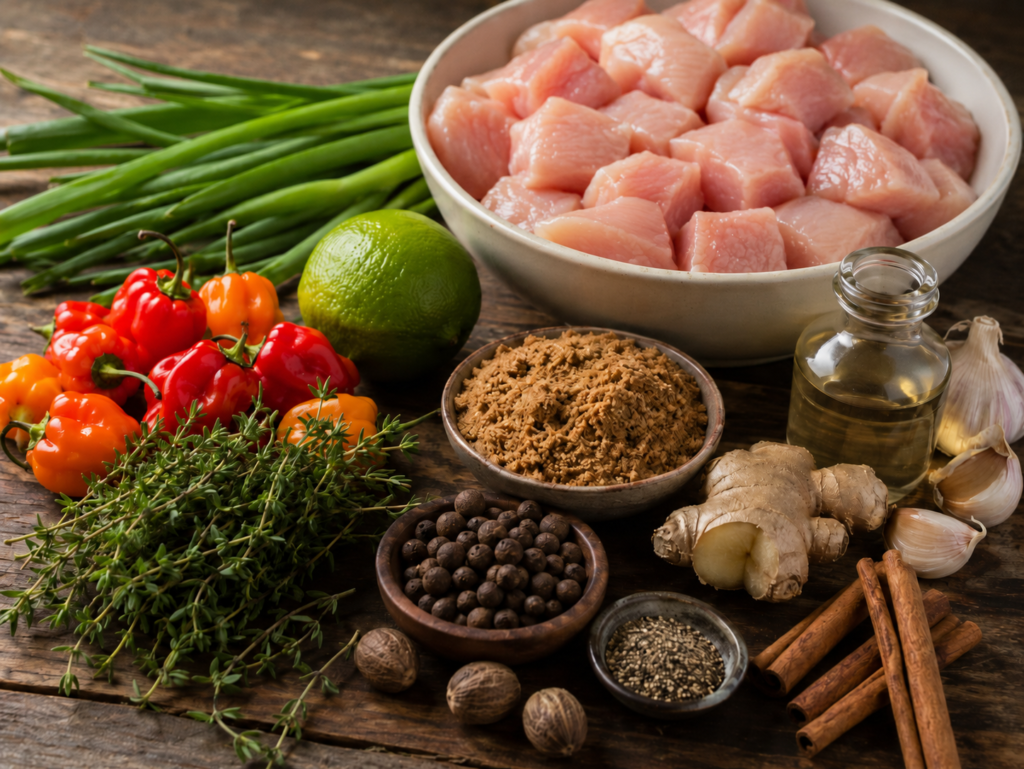
Ingredients for Jamaican jerk chicken skewers including Scotch bonnet, pimento, thyme, scallion, garlic, ginger, and lime
For the Jerk Chicken Skewers
1 1/2 pounds boneless, skinless chicken thighs, cut into 1 to 1 1/2-inch pieces
Chicken thighs stay juicy during high-heat grilling and are more forgiving than chicken breasts.
3 scallions, roughly chopped
Scallions are a classic aromatic in many modern jerk marinades and help create a fresh, savory base.
3 garlic cloves
Garlic adds depth and helps the marinade taste full rather than just hot.
1 tablespoon fresh grated ginger
Ginger brings warmth, brightness, and a gentle bite that works beautifully with Scotch bonnet and allspice.
1 Scotch bonnet pepper, stem removed
Scotch bonnet gives jerk its fruity heat. For moderate heat, remove the seeds and inner ribs. For more heat, leave some seeds in. Wear gloves if you are sensitive to chili oils.
2 tablespoons fresh lime juice
Lime adds brightness and balances the richness of chicken thighs.
1 tablespoon apple cider vinegar or white vinegar
Vinegar sharpens the marinade and helps the seasoning taste lively.
1 tablespoon soy sauce or coconut aminos
This adds salt and savory depth. Soy sauce is common in many modern jerk-style marinades, though not every traditional version uses it.
1 tablespoon brown sugar
Brown sugar helps the skewers caramelize and balances the chile heat.
1 1/2 tablespoons ground allspice, preferably freshly ground pimento berries if available
Allspice is one of the defining flavors of jerk. Freshly ground pimento berries give a deeper aroma.
1 tablespoon fresh thyme leaves or 1 teaspoon dried thyme
Thyme adds an earthy herbal flavor that supports the warm spices.
1 teaspoon kosher salt, plus more to taste
Salt helps season the chicken throughout and makes the marinade taste complete.
1 teaspoon freshly ground black pepper
Black pepper adds sharpness and supports the Scotch bonnet heat.
1/2 teaspoon ground cinnamon
Cinnamon adds warmth in a small amount without making the chicken taste sweet.
1/4 teaspoon ground nutmeg
Nutmeg brings gentle depth and warmth. Use lightly because it can become strong.
2 tablespoons neutral oil
Oil helps the marinade coat the chicken and supports browning on the grill.
Optional: 1/2 teaspoon smoked paprika
This is not traditional jerk, but it can help home cooks mimic a little smoky color and aroma when cooking indoors.
Wooden or metal skewers
Skewers help the chicken cook quickly and evenly. If using wooden skewers, soak them before grilling.
For the Lime Crema
1/2 cup sour cream or plain Greek yogurt
This creates a cool, creamy base. Greek yogurt gives a tangier flavor.
1 tablespoon mayonnaise, optional
A small amount of mayo makes the crema smoother and richer.
1 tablespoon fresh lime juice
Lime keeps the sauce bright and helps balance the spicy chicken.
1 teaspoon lime zest
Zest adds fragrant citrus flavor without thinning the sauce.
1 small garlic clove, finely grated, or 1/4 teaspoon garlic powder
Garlic gives the crema a savory note.
1/4 teaspoon kosher salt
Salt sharpens the lime and balances the creaminess.
1 teaspoon honey, optional
Honey softens the heat and acidity without making the sauce overly sweet.
1 tablespoon finely sliced scallion or chopped parsley, optional
Adds freshness and color. Scallion fits the jerk flavor profile especially well.
For Serving
Fresh lime wedges
For squeezing over the hot skewers.
Extra sliced scallions
For garnish and freshness.
Rice and peas, coconut rice, grilled pineapple, cabbage slaw, or fried plantains
These sides help make the meal feel complete.
Ingredient Notes and Smart Substitutions
Chicken thighs vs. chicken breast: Chicken thighs are recommended because they stay juicy. Chicken breast can be used, but cut it evenly and watch the temperature closely to avoid dryness.
Scotch bonnet substitute: If Scotch bonnet is unavailable, use habanero. It has a similar heat level and fruity profile, though the flavor is not exactly the same. For a milder version, use half a habanero or a small amount of hot sauce.
Allspice matters: Do not skip the allspice. In Jamaican cooking, allspice is commonly called pimento, and it is central to jerk flavor. A substitute of cinnamon, clove, and nutmeg can help in an emergency, but it will not taste the same.
Soy-free option: Use coconut aminos or simply increase the salt slightly and add a splash more vinegar.
Dairy-free crema: Use a plain unsweetened dairy-free yogurt or a cashew-based sour cream alternative. Taste carefully and adjust lime and salt.
Less spicy version: Remove the seeds and inner ribs from the Scotch bonnet, use only half the pepper, and serve extra hot sauce on the side for those who want more heat.
More traditional feel: If grilling outdoors, use hardwood charcoal if available. If you can source pimento wood chips from a reputable supplier, use them according to the package instructions.
Indoor cooking: A grill pan, cast-iron skillet, broiler, or oven will still create a delicious result. You may not get the same smoke, but you can still build char and flavor.
Equipment You’ll Need
- Cutting board
- Sharp knife
- Gloves for handling Scotch bonnet pepper
- Blender or food processor
- Mixing bowl or food-safe marinating bag
- Measuring spoons and cups
- Wooden or metal skewers
- Grill, grill pan, broiler, or oven-safe sheet pan
- Tongs
- Instant-read food thermometer
- Small bowl and whisk for crema
Step-by-Step Directions
1. Prepare the skewers
If using wooden skewers, soak them in water for at least 30 minutes before cooking. This helps reduce scorching on the grill. Metal skewers do not need soaking.
2. Cut the chicken evenly
Pat the chicken thighs dry with paper towels, then cut them into 1 to 1 1/2-inch pieces. Even pieces cook at the same pace, which helps prevent some pieces from drying out while others are still undercooked.
3. Make the jerk marinade
In a blender or food processor, combine the scallions, garlic, ginger, Scotch bonnet, lime juice, vinegar, soy sauce or coconut aminos, brown sugar, allspice, thyme, salt, black pepper, cinnamon, nutmeg, oil, and optional smoked paprika.
Blend until mostly smooth but still a little textured. The marinade should look thick, dark, fragrant, and speckled with herbs and spices.
Before adding raw chicken, taste a tiny amount of the marinade. It should taste bold, salty, spicy, tangy, and slightly sweet. Adjust salt, lime, or brown sugar if needed.
4. Marinate safely
Place the chicken in a bowl or food-safe bag. Pour the marinade over the chicken and toss until every piece is coated. Cover and refrigerate for at least 2 hours, or up to 8 hours for a deeper flavor.
For the best texture, avoid marinating these small chicken pieces for more than 24 hours. USDA guidance notes that poultry can be refrigerated in marinade for up to 2 days, but the acid and salt in this particular marinade can affect texture if left too long (USDA FSIS, n.d.).
Always marinate chicken in the refrigerator, not on the counter. The FDA advises that marinated foods should be kept refrigerated, and marinades that touched raw poultry should not be reused as a sauce unless boiled first (U.S. Food and Drug Administration, 2024).
5. Make the lime crema
In a small bowl, whisk together sour cream or Greek yogurt, optional mayonnaise, lime juice, lime zest, garlic, salt, and optional honey. Stir in scallion or parsley if using.
Cover and refrigerate until serving. Taste before serving and adjust with more lime or salt if needed.
6. Thread the chicken
Remove the chicken from the refrigerator. Thread the pieces onto skewers, leaving a little space between each piece. Do not pack the chicken too tightly; small gaps allow heat to circulate and help the edges brown.
Discard any raw marinade left in the bowl or bag unless you boil it rapidly first. For simplicity and safety, it is best to discard used marinade.
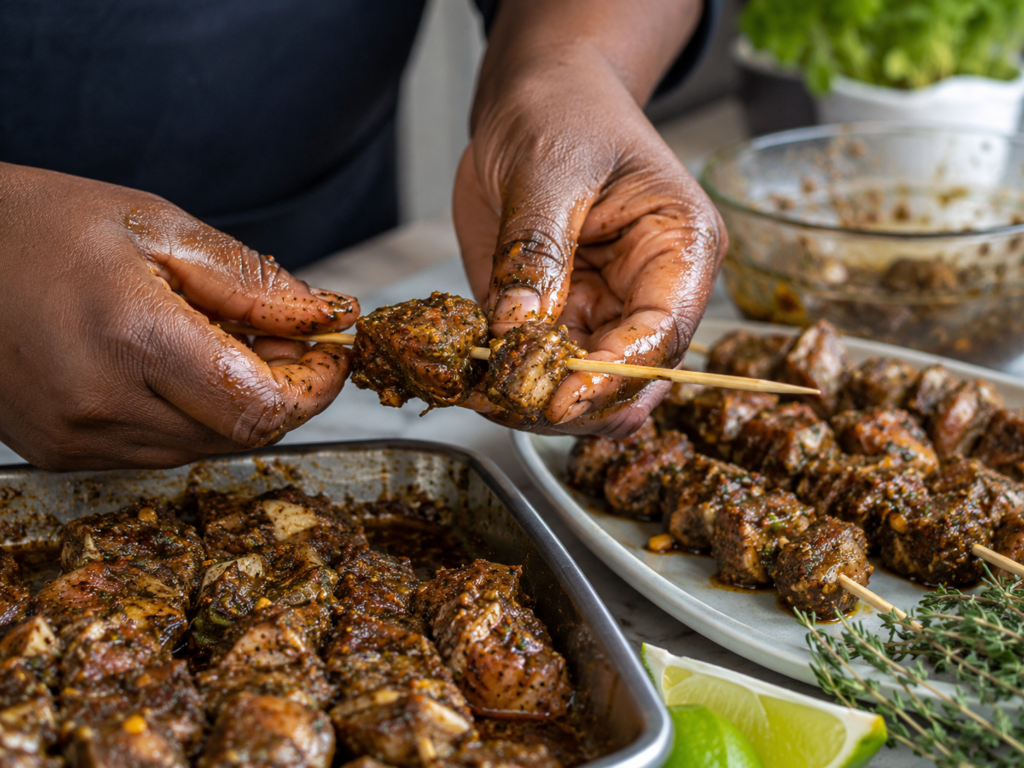
Hands threading marinated Jamaican jerk chicken pieces onto wooden skewers.
7. Preheat the grill or cooking surface
For an outdoor grill, preheat to medium-high heat, about 400°F to 450°F. Clean and lightly oil the grates.
For a grill pan or cast-iron skillet, heat over medium-high until hot. Add a light coating of oil.
For the oven, preheat to 425°F and place the skewers on a foil-lined sheet pan or a rack set over a sheet pan.
8. Cook the skewers
Grill or pan-cook the skewers for 12-15 minutes total, turning every 3 minutes, until the chicken is browned, lightly charred at the edges, and cooked through.
If baking, cook at 425°F for 14-18 minutes, turning once. For extra char, broil for 1-2 minutes at the end while watching closely.
The chicken must reach an internal temperature of 165°F as measured with an instant-read thermometer. Color alone is not a reliable sign of doneness; use the thermometer in the thickest piece of chicken.
9. Rest briefly
Transfer the skewers to a clean plate and rest for 3-5 minutes. Resting helps the juices settle, so the chicken tastes moist instead of dry.
10. Serve
Serve the skewers warm with lime crema on the side or lightly drizzled over the top. Add lime wedges, sliced scallions, and your favorite sides.
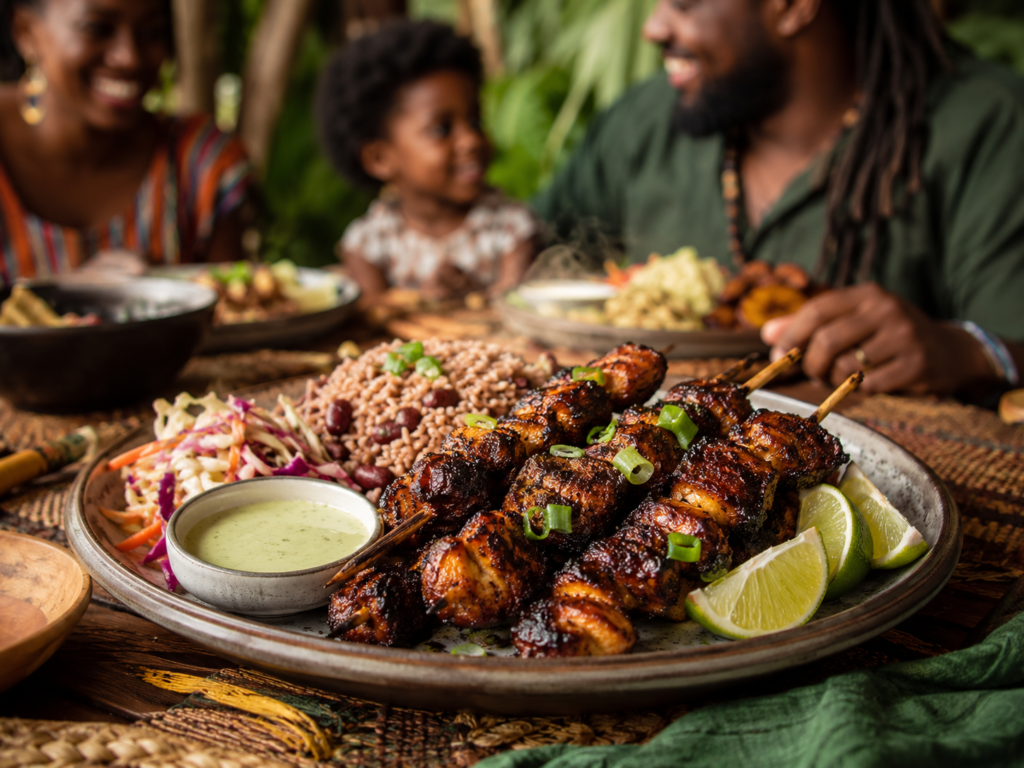
Finished Jamaican jerk chicken skewers served with rice and peas, slaw, plantains, and lime crema.
Pro Tips for Best Results
- Use chicken thighs for the juiciest texture.
- Grind whole pimento/allspice berries if you can; the flavor is deeper and more aromatic.
- Wear gloves when handling Scotch bonnet peppers.
- Do not skip the marinating time; even 2 hours makes a big difference.
- Leave space between chicken pieces on the skewers so they cook evenly.
- Use high heat to build char, but turn the skewers often to prevent burning.
- Always check doneness with a thermometer.
- Rest the chicken before serving.
- Keep the crema cold until ready to serve.
- Serve extra lime wedges for brightness.
Common Mistakes to Avoid
1. Skipping the allspice
Allspice is central to jerk flavor. Without it, the marinade will taste more like generic spicy chicken.
2. Using too much acid for too long
Lime and vinegar are helpful, but long marinating times can make small chicken pieces mushy. Keep the ideal window around 2 to 8 hours.
3. Crowding the skewers
Packed chicken steams instead of browns. Leave small gaps between pieces.
4. Cooking over heat that is too low
Low heat can make the chicken cook through without developing char. Use medium-high heat.
5. Guessing doneness by color
Chicken can look cooked before it reaches a safe temperature. Use an instant-read thermometer and cook to 165°F.
6. Reusing raw marinade as sauce
Marinade that touched raw chicken should be discarded unless boiled first. For an easy option, make a separate fresh sauce or use the lime crema.
7. Adding crema too early
Crema is best served after cooking. If added while the skewers are hot on the grill, it can melt and lose its fresh flavor.
Flavor Variations
Pineapple Jerk Chicken Skewers: Thread pineapple chunks between the chicken pieces. The fruit caramelizes and pairs beautifully with Scotch bonnet heat.
Extra-Hot Jerk Skewers: Use two Scotch bonnet peppers or leave in some seeds and ribs. Serve with cooling sides.
Mild Family-Friendly Skewers: Use half a Scotch bonnet with seeds removed, or substitute a small amount of habanero hot sauce to control heat.
Jerk Chicken and Vegetable Skewers: Add bell pepper, red onion, or zucchini. Keep vegetables in larger pieces so they do not overcook before the chicken is done.
Jerk Shrimp Variation: Use the same marinade on peeled shrimp, but marinate only 20-30 minutes and cook just until opaque and firm. Do not use the chicken marinade after it has touched raw chicken.
Jerk Chicken Bowl: Serve the cooked chicken over rice and peas, cabbage slaw, avocado, and a drizzle of lime crema.
Charcoal Grill Version: Cook over hardwood charcoal for a deeper smoky flavor. Add pimento wood chips if you can source them safely and legally.
Serving Suggestions
Serve these Jamaican jerk chicken skewers with sides that balance heat, brightness, and comfort. Rice and peas are a natural pairing because the coconut, beans, and rice soften the spice. Coconut rice also works well if you want something simple.
For freshness, add a crunchy cabbage slaw with lime, scallion, and a touch of vinegar. Grilled pineapple adds sweetness and looks beautiful on a summer platter. Fried plantains bring caramelized comfort. Roasted sweet potatoes, cucumber salad, grilled corn, or warm flatbread also make the plate feel full and welcoming.
For drinks, try iced hibiscus tea, ginger beer, limeade, coconut water, or a sparkling citrus drink. If serving adults who enjoy cocktails, a rum punch can fit the Caribbean-inspired table, but always offer a nonalcoholic option too.
For plating, arrange the skewers on a large platter, scatter sliced scallions over the top, place lime wedges around the edges, and serve the lime crema in a small bowl on the side. This keeps the dish colorful, practical, and family-style.
Storage, Freezing, and Reheating
Refrigerate cooked chicken skewers within 2 hours of cooking, or within 1 hour if the temperature is above 90°F. Store in an airtight container in a refrigerator set at 40°F or below. Cooked chicken is best used within 3 to 4 days.
Store lime crema separately in a sealed container in the refrigerator for up to 3 days. Do not leave crema sitting out for long periods, especially outdoors.
To freeze, remove the chicken from the skewers if desired and place it in a freezer-safe container or bag. Freeze for up to 2-3 months for the best quality. The chicken remains safe longer if kept frozen solid, but texture and flavor are best within that window. Do not freeze the lime crema, as dairy-based sauces can separate.
To reheat, warm the chicken in a covered skillet with a splash of water, in a 325°F oven, or in an air fryer at 350°F until hot. Leftovers should be reheated to 165°F. Add crema only after reheating.
Make-Ahead Tips
The marinade can be blended 1-2 days ahead and stored in the refrigerator before it touches raw chicken.
The chicken can be cut and marinated the night before cooking. For the best texture, aim for 2-8 hours, but overnight is acceptable if needed.
The lime crema can be made up to 1 day ahead. Stir before serving and adjust with a little fresh lime if the flavor tastes muted.
If hosting, thread the skewers a few hours ahead, place them on a tray, cover, and refrigerate until ready to grill. Keep raw chicken cold until cooking time.
Frequently Asked Questions
Can I make Jamaican jerk chicken skewers without a grill?
Yes. Use a grill pan, cast-iron skillet, broiler, or oven. You will not get the same smoky flavor as outdoor grilling, but high heat will still create browned edges and a delicious crust.
Is lime crema traditional with Jamaican jerk chicken?
No. Lime crema is a modern cooling sauce, not a traditional Jamaican jerk sauce. It is included to balance the heat for home cooks who enjoy a creamy, tangy contrast.
What makes jerk chicken taste authentic?
The most important flavor markers are pimento/allspice, Scotch bonnet pepper, thyme, scallion, garlic, ginger, salt, and smoke or char. Traditional cooking over pimento wood adds a flavor that is difficult to fully recreate indoors.
Can I use store-bought jerk seasoning?
Yes. Use a good-quality Jamaican jerk paste or marinade if you are short on time. Taste before adding extra salt, because many prepared seasonings are already salty. You can still add fresh scallion, lime, thyme, and ginger to brighten it.
How spicy are these jerk chicken skewers?
With one seeded Scotch bonnet, the skewers are medium-hot. For mild heat, use half a pepper. For bold heat, use the whole pepper with some seeds and ribs left in.
Can I use chicken breast instead of thighs?
Yes, but chicken breast dries out more quickly. Cut it evenly, marinate for 1-4 hours, and cook just until it reaches 165°F.
How long should I marinate jerk chicken?
For these small skewer pieces, 2-8 hours is ideal. Overnight works, but do not exceed 2 days in the refrigerator. Longer marinating can affect texture.
What should I serve with jerk chicken skewers?
Rice and peas, coconut rice, cabbage slaw, grilled pineapple, fried plantains, cucumber salad, roasted sweet potatoes, or grilled corn all pair well.
Final Thoughts
Jamaican jerk chicken skewers with lime crema bring together the kind of food experience Fly By Eats loves most: flavor with a story, comfort with a little spark, and cooking that invites people closer to the table. The beauty of jerk is that it is bold without being one-note. It is hot, yes, but it is also warm, herbal, smoky, sweet around the edges, savory at the center, and deeply aromatic. Every ingredient has a role. The pimento/allspice gives that unmistakable Jamaican warmth. The Scotch bonnet brings fire and fruit. The thyme, scallion, garlic, and ginger build the foundation. The grill gives the chicken those charred edges that make the whole kitchen smell alive.
This skewer version is not meant to replace the experience of traditional jerk cooked over pimento wood in Jamaica. Some foods carry a place so strongly that no home shortcut can fully recreate them. But home cooking can still be respectful, curious, and delicious. It can help readers understand why certain ingredients matter, why a cooking method became beloved, and why food traditions deserve more than a quick label.
The lime crema adds a cool modern touch, especially for families or guests who love jerk flavor but appreciate a little softness alongside the heat. Serve it on the side, let people drizzle as they please, and build the rest of the plate with color and care: rice and peas, plantains, slaw, pineapple, lime wedges, and something cold to drink.
Most of all, let the meal feel welcoming. Good food does not have to be complicated to be memorable. Sometimes all it takes is a hot grill, a good marinade, a little patience, and a table full of people ready to taste something with heart.
Quick Recipe Card
Recipe Name: Jamaican Jerk Chicken Skewers with Lime Crema
Description: Juicy chicken thigh skewers marinated with Jamaican jerk-inspired flavors, including pimento/allspice, Scotch bonnet, thyme, scallion, ginger, garlic, lime, and warm spices, grilled until charred and served with a cool lime crema.
Prep Time: 25 minutes
Marinating Time: 2-8 hours
Cook Time: 12-15 minutes
Total Time: About 2 hours 40 minutes, including marinating
Servings: 4
Ingredients:
For the chicken:
- 1 1/2 pounds boneless, skinless chicken thighs, cut into 1 to 1 1/2-inch pieces
- 3 scallions, roughly chopped
- 3 garlic cloves
- 1 tablespoon fresh grated ginger
- 1 Scotch bonnet pepper, stem removed; seeds removed for less heat
- 2 tablespoons fresh lime juice
- 1 tablespoon apple cider vinegar or white vinegar
- 1 tablespoon soy sauce or coconut aminos
- 1 tablespoon brown sugar
- 1 1/2 tablespoons ground allspice
- 1 tablespoon fresh thyme leaves or 1 teaspoon dried thyme
- 1 teaspoon kosher salt
- 1 teaspoon black pepper
- 1/2 teaspoon ground cinnamon
- 1/4 teaspoon ground nutmeg
- 2 tablespoons neutral oil
- Optional: 1/2 teaspoon smoked paprika
- Wooden or metal skewers
For the lime crema:
- 1/2 cup sour cream or plain Greek yogurt
- 1 tablespoon mayonnaise, optional
- 1 tablespoon fresh lime juice
- 1 teaspoon lime zest
- 1 small garlic clove, finely grated, or 1/4 teaspoon garlic powder
- 1/4 teaspoon kosher salt
- 1 teaspoon honey, optional
- 1 tablespoon finely sliced scallion or chopped parsley, optional
For serving:
- Lime wedges
- Extra scallions
- Rice and peas, coconut rice, cabbage slaw, grilled pineapple, or fried plantains
Instructions:
- If using wooden skewers, soak them in water for at least 30 minutes.
- Pat chicken dry and cut into even 1 to 1 1/2-inch pieces.
- In a blender or food processor, combine scallions, garlic, ginger, Scotch bonnet, lime juice, vinegar, soy sauce or coconut aminos, brown sugar, allspice, thyme, salt, black pepper, cinnamon, nutmeg, oil, and optional smoked paprika. Blend until mostly smooth.
- Add chicken to a bowl or food-safe bag. Pour marinade over chicken and toss to coat. Cover and refrigerate for 2-8 hours.
- Make the lime crema by whisking together sour cream or yogurt, optional mayo, lime juice, lime zest, garlic, salt, optional honey, and optional herbs. Refrigerate until serving.
- Thread marinated chicken onto skewers, leaving small gaps between pieces. Discard used marinade.
- Preheat grill or grill pan to medium-high heat, about 400°F to 450°F.
- Cook skewers for 12-15 minutes, turning every 3 minutes, until charred at the edges, and the thickest chicken pieces reach 165°F.
- Rest for 3-5 minutes.
- Serve warm with lime crema, lime wedges, scallions, and desired sides.
Notes:
- Use gloves when handling Scotch bonnet peppers.
- For milder heat, use half a pepper and remove seeds and ribs.
- For oven cooking, bake at 425°F for 14-18 minutes and broil briefly for char.
- Lime crema is a modern cooling sauce, not a traditional Jamaican jerk sauce.
Storage:
Refrigerate cooked chicken within 2 hours, or within 1 hour if the temperature is above 90°F. Store in an airtight container for 3-4 days. Reheat leftovers to 165°F. Freeze cooked chicken without crema for up to 2-3 months for the best quality. Store crema separately in the refrigerator for up to 3 days.
Nutrition Disclaimer: Nutrition information, if provided, is an estimate and may vary based on ingredients and preparation methods.
References
- Encyclopaedia Britannica. (2026, April 25). Allspice. Encyclopaedia Britannica. https://www.britannica.com/plant/allspice
- FoodSafety.gov. (2024, November 21). Safe minimum internal temperatures. U.S. Department of Health & Human Services. https://www.foodsafety.gov/food-safety-charts/safe-minimum-internal-temperatures
- Gray, V. S. (2020, December 22). A brief history of Jamaican jerk. Smithsonian Magazine. https://www.smithsonianmag.com/arts-culture/brief-history-jamaican-jerk-180976597/
- U.S. Department of Agriculture, Food Safety and Inspection Service. (n.d.). Chicken from farm to table. https://www.fsis.usda.gov/food-safety/safe-food-handling-and-preparation/poultry/chicken-farm-table
- U.S. Department of Agriculture, Food Safety and Inspection Service. (n.d.). Leftovers and food safety. https://www.fsis.usda.gov/food-safety/safe-food-handling-and-preparation/food-safety-basics/leftovers-and-food-safety
- U.S. Department of Agriculture, Food Safety and Inspection Service. (n.d.). Poultry: Basting, brining, and marinating. https://www.fsis.usda.gov/food-safety/safe-food-handling-and-preparation/poultry/poultry-basting-brining-and-marinating
- U.S. Food and Drug Administration. (2024, March 5). Safe food handling. https://www.fda.gov/food/buy-store-serve-safe-food/safe-food-handling
- Visit Jamaica. (n.d.). Iconic Jamaican meals. Retrieved June 12, 2026, from https://www.visitjamaica.com/discover-jamaica/cuisine/iconic-meals/
- Visit Jamaica. (n.d.). Explore Jamaican cuisine & rich culinary traditions. Retrieved June 12, 2026, from https://www.visitjamaica.com/discover-jamaica/cuisine/
- Visit Jamaica. (n.d.). Boston. Retrieved June 12, 2026, from https://www.visitjamaica.com/listing/boston/515/