
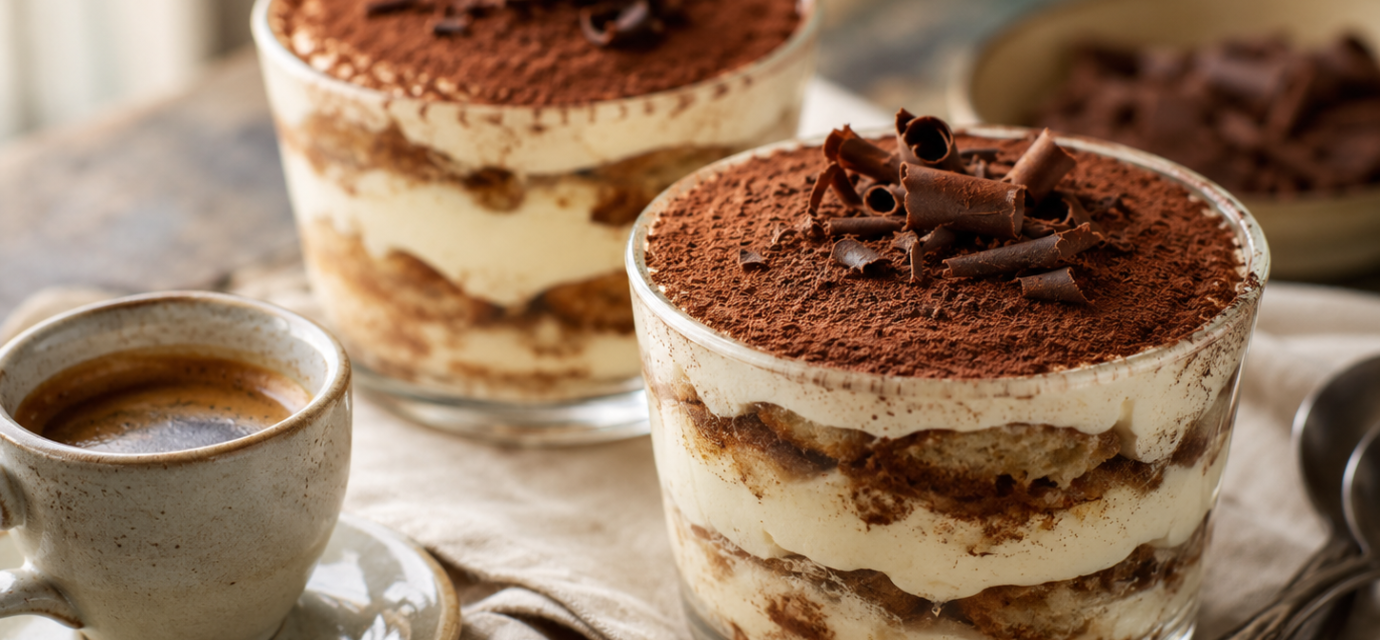
Italian Tiramisu Cups: A Classic No-Bake Dessert Made for Sharing
A chilled Italian tiramisu cup carries the kind of comfort that feels both elegant and familiar. The first spoonful moves through a soft dusting of cocoa, into a cloud of mascarpone cream, then down to espresso-kissed ladyfingers that have softened just enough to melt without turning soggy. It is rich, but not heavy. Sweet, but still balanced by coffee’s deep roasted edge.
This version keeps the soul of traditional tiramisu while presenting it in individual cups, which makes serving easier, cleaner, and especially lovely for gatherings. Instead of cutting into a large dish, each guest gets their own little layered dessert, beautiful enough for a holiday table, but simple enough for a weekend treat.
Italian tiramisu cups are ideal for home cooks who want something graceful without baking, frosting, or complicated decorating. The recipe leans on classic ingredients: savoiardi ladyfingers, strong coffee or espresso, mascarpone, eggs, sugar, and cocoa. Because tiramisu is a no-bake dessert and traditional versions often use eggs, this recipe uses pasteurized eggs for a safer home-kitchen approach while preserving the light, creamy texture that makes tiramisu so beloved.
The beauty of tiramisu is patience. A few hours in the refrigerator allows the layers to settle, the coffee to soften the cookies, and the mascarpone cream to become spoonable and luxurious. It is the kind of dessert that rewards you for making it ahead and that might be one reason it has found its way from Italian restaurants to family kitchens all over the world.
Quick Recipe Snapshot
- Prep Time: 25 minutes
- Cook Time: 0 minutes
- Chill Time: 6 hours, or overnight for best texture
- Total Time: 6 hours 25 minutes
- Servings: 6 individual cups
- Difficulty Level: Easy to moderate
- Best For: Dinner parties, holidays, date nights, coffee lovers, make-ahead desserts, Italian-inspired menus
- Expected Result: Creamy, chilled tiramisu cups with soft espresso-soaked ladyfinger layers, lightly sweet mascarpone cream, and a bittersweet cocoa finish.
Why You’ll Love This Recipe
- Beautiful individual servings: Clear cups show off the layers and make the dessert feel special without extra decorating.
- No oven needed: This is a chilled, no-bake dessert that works well when the oven is already busy.
- Classic flavor profile: Espresso, mascarpone, savoiardi, sugar, and cocoa create the familiar tiramisu experience.
- Make-ahead friendly: The cups taste even better after several hours of chilling.
- Balanced sweetness: Coffee and cocoa keep the dessert from tasting too sugary.
- Flexible for gatherings: Make it alcohol-free, add a touch of Marsala, or garnish with chocolate curls.
- Traditional texture with safer guidance: Pasteurized eggs help maintain the classic lightness while supporting better food-safety practices.
Cultural Background: The Story Behind Tiramisu
Tiramisu is one of Italy’s most recognized modern desserts, but its exact origin is still debated. Many food historians and culinary sources connect the dessert to northeastern Italy, especially Veneto and Friuli–Venezia Giulia. Treviso, in Veneto, is strongly associated with the version that became famous internationally, while other sources point to earlier desserts or similar preparations from nearby Friuli.
The name tiramisu comes from “tira mi sù,” often translated as “pick me up,” a fitting phrase for a dessert built around coffee, cocoa, sugar, and rich cream. According to Encyclopaedia Britannica, tiramisu is related to sbatudin, a simple northeastern Italian preparation of egg yolks beaten with sugar and served with ladyfingers. Le Beccherie, a historic restaurant in Treviso, states that its version was codified in 1972 after experimentation by Alba Campeol and pastry chef Roberto Linguanotto.
Because the history includes competing claims, it is most respectful to describe tiramisu as a modern Italian dessert with strong roots in northeastern Italy rather than assigning one uncontested birthplace. Traditional versions often use savoiardi ladyfingers, mascarpone, eggs, sugar, coffee, and cocoa. Alcohol appears in many modern versions, but it is not required in some traditional Treviso-style preparations. For these Italian tiramisu cups, the spirit of the classic remains: soft coffee-dipped cookies, creamy mascarpone, and a cocoa finish served cold.
Why This Recipe Works
Tiramisu depends on balance. The ladyfingers need enough coffee to soften, but not so much that they collapse. A very quick dip gives them moisture while preserving structure. As the cups chill, the cookies continue absorbing flavor from the coffee and cream, creating that signature soft-but-layered texture.
Mascarpone is important because it is richer and silkier than regular cream cheese. Its mild sweetness and velvety body create the luxurious cream layer tiramisu is known for. Pasteurized egg yolks whipped with sugar add richness, while whipped pasteurized egg whites lighten the filling without relying on whipped cream in the main recipe.
The cocoa powder matters too. Unsweetened cocoa brings a slightly bitter, aromatic finish that balances the sweet cream and coffee. Dusting it just before serving keeps the top fresh and visually clean.
Chilling is not optional. The refrigerator time allows the cream to set, the coffee to settle, and the layers to become cohesive. A freshly assembled tiramisu can taste unfinished; a properly chilled tiramisu tastes rounded, soft, and deeply satisfying.
Ingredients
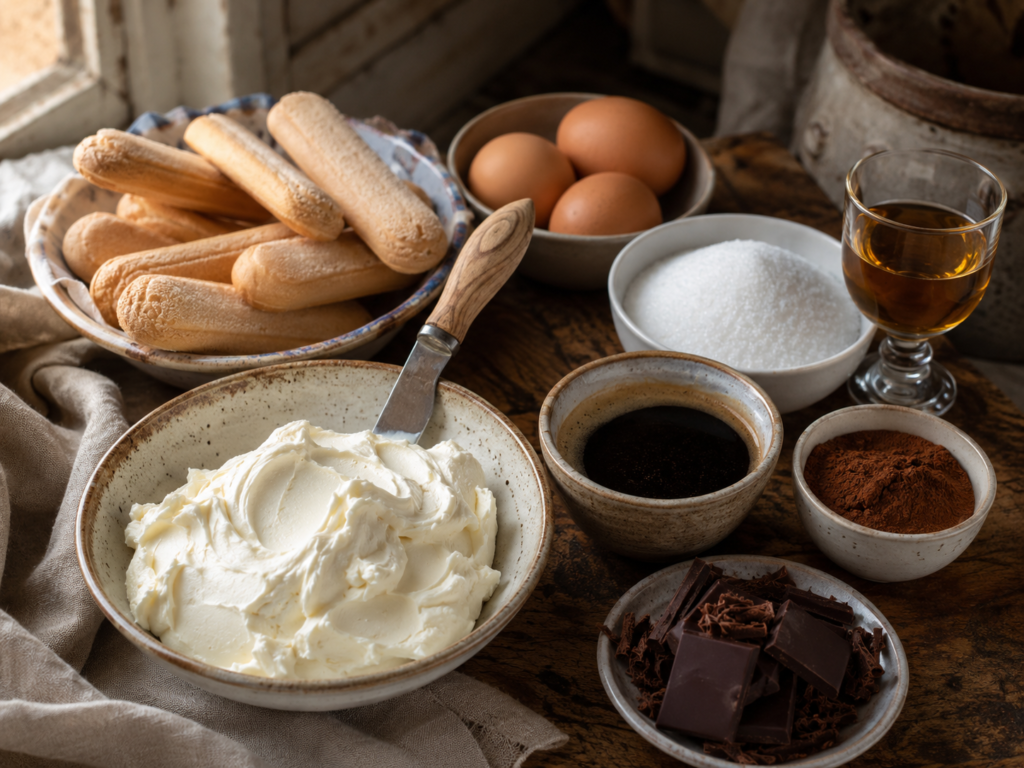
Ingredients for Italian tiramisu cups including mascarpone, ladyfingers, espresso, eggs, sugar, and cocoa.
For the Coffee Layer
- 1 cup strong brewed espresso or very strong coffee, cooled
- Coffee gives tiramisu its bold, roasted flavor. Let it cool completely so it does not melt the mascarpone cream.
- 1-2 tablespoons Marsala wine, dark rum, or coffee liqueur, optional
- Alcohol is optional. It adds warmth and depth, but these cups are just as delicious without it.
For the Mascarpone Cream
- 3 large pasteurized eggs, separated
- Pasteurized eggs are recommended because this no-bake dessert does not fully cook the eggs. Yolks add richness; whites add lightness.
- ½ cup granulated sugar
- Sugar sweetens the cream and helps the yolks whip into a pale, silky base.
- 8.8 ounces mascarpone cheese, softened slightly but still cool
- Mascarpone creates the rich, creamy body of tiramisu. Let it sit at room temperature for about 10 to 15 minutes so it blends smoothly.
- Pinch of fine salt
- A tiny amount of salt helps balance sweetness and brings out the coffee and cocoa notes.
- ½ teaspoon vanilla extract, optional
- Vanilla is not required for a traditional profile, but a small amount can round out the cream for home-style versions.
For the Layers and Finish
- 18-24 savoiardi ladyfingers
- Savoiardi are dry, crisp Italian ladyfingers that soften beautifully when dipped in coffee.
- 2-3 tablespoons unsweetened cocoa powder
- Cocoa gives the classic bittersweet finish and balances the creamy layers.
- Dark chocolate shavings, optional
- Use as a garnish for a more elegant presentation.
Ingredient Notes and Smart Substitutions
Pasteurized eggs: For best food-safety practice in this no-bake dessert, use pasteurized shell eggs or pasteurized egg products. If pasteurized shell eggs are unavailable, consider making an egg-free variation with whipped cream, though the texture will be less traditional.
Mascarpone substitute: Mascarpone is the most authentic choice for tiramisu. In a pinch, a mixture of cream cheese and heavy cream can work, but the flavor will be tangier and denser.
Coffee: Espresso is ideal, but strong brewed coffee works well. Avoid weak coffee because the flavor becomes muted after chilling.
Ladyfingers: Use crisp savoiardi-style ladyfingers, not soft cake-like ladyfingers, if possible. Crisp ladyfingers absorb coffee without falling apart too quickly.
Alcohol-free option: Skip the Marsala or liqueur and use only espresso or coffee. This keeps the dessert family-friendly and still flavorful.
Gluten-free option: Use gluten-free ladyfingers if needed and confirm that all other packaged ingredients are gluten-free.
Dairy-free option: Traditional tiramisu depends heavily on mascarpone, so dairy-free versions will not taste classic. A dairy-free mascarpone-style alternative may work for a variation, but texture and flavor will differ.
Equipment You’ll Need
- 6 small dessert cups, glasses, jars, or ramekins
- Mixing bowls
- Hand mixer or stand mixer
- Rubber spatula
- Shallow bowl for coffee dipping
- Fine-mesh sieve for cocoa
- Measuring cups and spoons
- Plastic wrap or lids for chilling
- Refrigerator thermometer, helpful for food safety
Step-by-Step Directions
1. Brew and Cool the Coffee
Brew 1 cup of espresso or very strong coffee. Pour it into a shallow bowl and let it cool to room temperature. If you are using Marsala, rum, or coffee liqueur, stir it in once the coffee is cool.
What to look for: The coffee should be bold and fully cooled. Warm coffee can soften the ladyfingers too quickly and loosen the mascarpone cream.
2. Prepare the Egg Yolks and Sugar
HOW TO PASTEURIZE EGGS: Cooking School with GZ
Place the pasteurized egg yolks in a mixing bowl with the granulated sugar and a pinch of salt. Beat on medium-high speed for 3-5 minutes, until the mixture becomes pale, thick, and slightly ribbon-like.
Why it matters: Whipping the yolks and sugar helps create a smoother, lighter cream. The sugar should begin dissolving so the filling does not taste grainy.
3. Add the Mascarpone
Add the mascarpone to the yolk mixture. Beat on low speed just until smooth, or fold it in with a spatula. Avoid overmixing.
What to look for: The mixture should be creamy and thick. If it looks slightly lumpy, keep mixing gently. If it becomes loose or watery, it may have been overworked or the mascarpone may have been too warm.
4. Whip the Egg Whites
In a clean bowl, beat the pasteurized egg whites until soft to medium peaks form. The peaks should hold their shape but still look glossy, not dry.
Food-safety note: Because tiramisu is not baked, use pasteurized eggs or pasteurized egg products. Keep the mixture refrigerated once assembled.
5. Fold the Cream Together
Add one-third of the whipped egg whites to the mascarpone mixture and fold gently to lighten it. Add the remaining whites in two additions, folding slowly until no large streaks remain.
Why it matters: Folding preserves air in the cream, giving tiramisu its soft, spoonable texture.
6. Dip the Ladyfingers
Break the ladyfingers as needed to fit your cups. Dip each piece into the cooled coffee for about 1 second per side.
What to look for: The outside should be moistened, but the center should still have some structure. Do not soak them until limp.
7. Layer the Cups
Add a small spoonful of mascarpone cream to the bottom of each cup. Add a layer of dipped ladyfingers, then more cream. Repeat once more, finishing with a smooth layer of cream on top.
Tip: Clear cups make the layers look beautiful. Ramekins work too if you prefer a more rustic presentation.
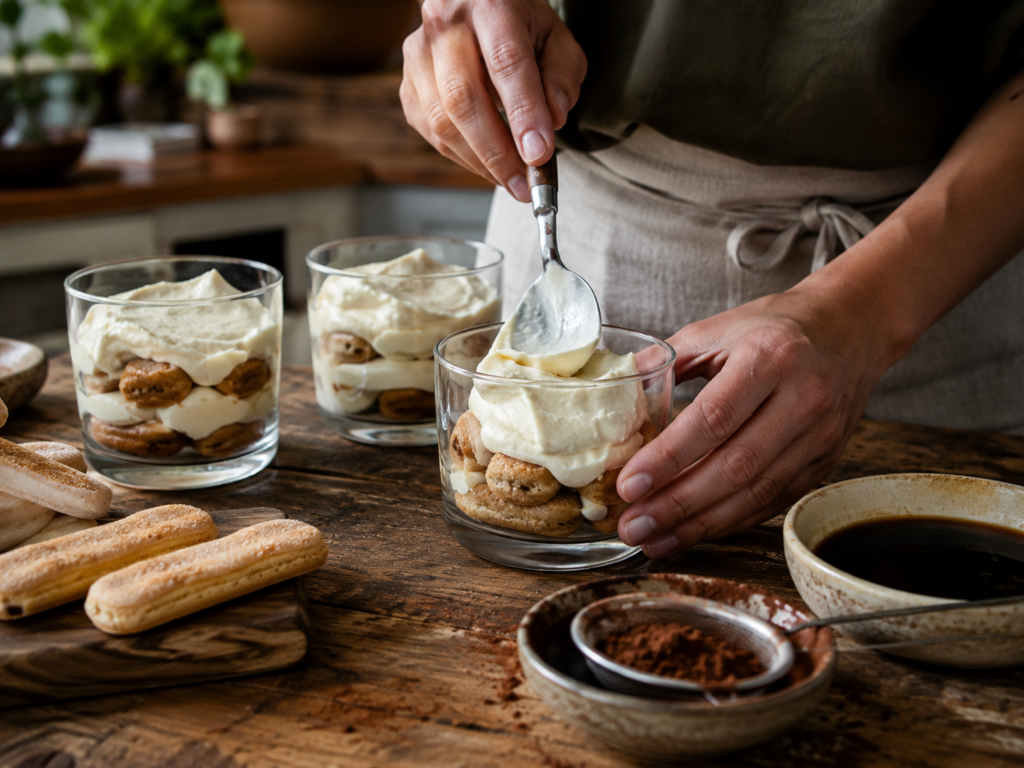
Hands layering mascarpone cream and espresso-dipped ladyfingers into Italian tiramisu cups.
8. Cover and Chill
Cover each cup with plastic wrap or a lid. Refrigerate for at least 6 hours, or overnight for the best flavor and texture.
Food-safety note: Keep tiramisu cups refrigerated at 40°F or below. Do not leave them sitting at room temperature for more than 2 hours.
9. Dust and Serve
Right before serving, dust the tops with unsweetened cocoa powder using a fine-mesh sieve. Add chocolate shavings if desired. Serve cold.
Why dust at the end: Cocoa can darken and absorb moisture in the refrigerator. A fresh dusting looks cleaner and tastes more aromatic.
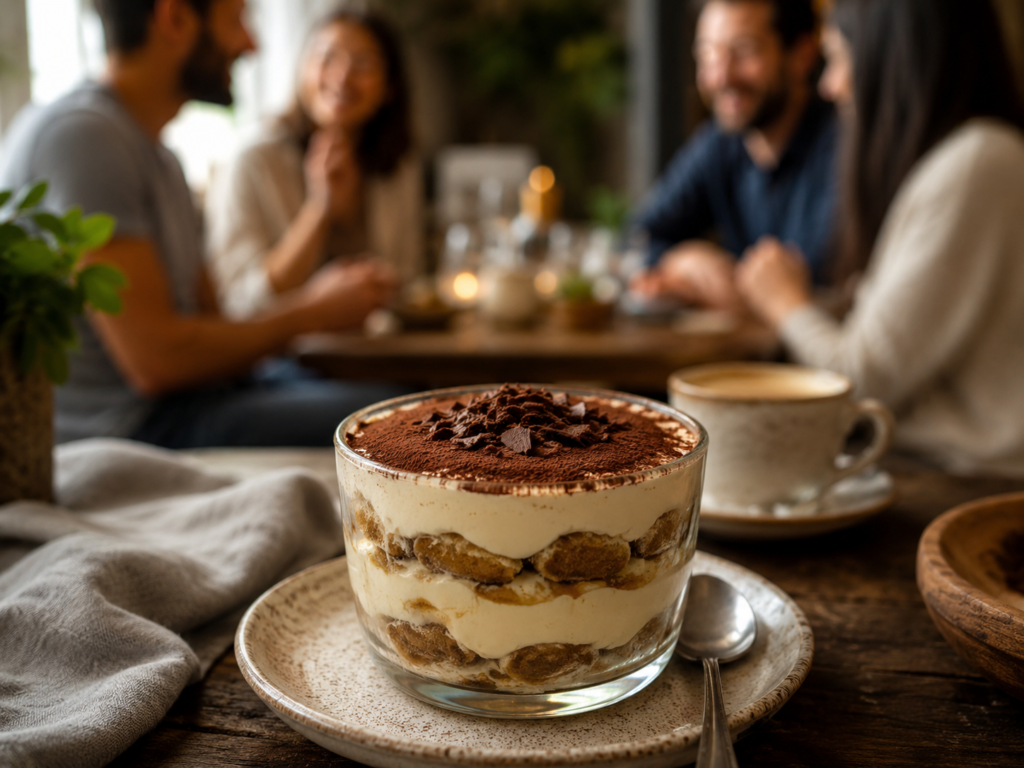
Finished Italian tiramisu cup served chilled with cocoa powder and espresso.
Pro Tips for Best Results
- Use pasteurized eggs for this no-bake recipe.
- Cool the coffee completely before dipping the ladyfingers.
- Dip quickly. Ladyfingers continue softening as the dessert chills.
- Do not overmix mascarpone; it can loosen or turn grainy.
- Chill for at least 6 hours, but overnight gives the best texture.
- Dust with cocoa right before serving for the prettiest finish.
- Use small cups, about 5-6 ounces each, for balanced portions.
- For a stronger coffee flavor, use espresso rather than regular brewed coffee.
- Keep the cups covered while chilling so they do not absorb refrigerator odors.
- Serve cold, not frozen, for the creamiest texture.
Common Mistakes to Avoid
- Over-soaking the ladyfingers: Quick dips are enough. If they become mushy before layering, the finished cups may collapse.
- Using warm coffee: Warm coffee can melt the cream and make the dessert watery.
- Skipping the chill time: Tiramisu needs time for the layers to set and soften evenly.
- Using unpasteurized eggs in a no-bake dessert: For safer preparation, use pasteurized eggs or an egg-free variation.
- Overbeating mascarpone: Mix gently and stop once smooth.
- Adding cocoa too early: Dust just before serving so the top stays fresh and attractive.
- Making the cups too large: Tiramisu is rich. Smaller cups feel elegant and satisfying.
- Leaving cups out too long: Keep chilled until serving, especially for gatherings.
Flavor Variations
Alcohol-Free Classic: Use only espresso or strong coffee for the dipping liquid. This keeps the flavor traditional and family-friendly.
Marsala Tiramisu Cups: Add 1-2 tablespoons Marsala wine to the coffee for a warm, classic dessert-wine note.
Chocolate Espresso Cups: Add a few dark chocolate shavings between the layers for extra texture.
Orange-Kissed Tiramisu: Add a small amount of finely grated orange zest to the mascarpone cream. Keep it subtle so it does not overpower the coffee.
Mocha Tiramisu Cups: Stir 1 teaspoon cocoa powder into the coffee while it is hot, then cool completely before dipping.
Berry-Topped Tiramisu: Add fresh raspberries or sliced strawberries on top just before serving. This is not traditional, but it makes a bright seasonal variation.
Mini Party Cups: Assemble in small 3-ounce cups for dessert tastings, showers, brunches, or holiday trays.
Serving Suggestions
Serve Italian tiramisu cups chilled with espresso, cappuccino, or strong coffee. For a dinner party, place each cup on a small dessert plate with a spoon, a chocolate curl, and a light cocoa dusting around the rim.
For an Italian-inspired meal, serve after pasta, roasted vegetables, seafood, chicken piccata, or a simple antipasto spread. Because tiramisu is rich, it pairs beautifully with lighter main dishes and fresh fruit.
For holidays, arrange the cups on a tray with linen napkins, small spoons, and a bowl of extra cocoa for a tableside dusting moment. For a romantic dessert, serve in stemmed glasses with chocolate shavings and two small cups of espresso.
Storage, Freezing, and Reheating
Refrigeration: Store tiramisu cups covered in the refrigerator at 40°F or below. For best quality, enjoy within 2-3 days. Food-safety guidance for prepared egg-containing foods and leftovers generally supports using refrigerated leftovers within 3-4 days.
Room temperature: Do not leave tiramisu cups out for more than 2 hours. If serving outdoors or in a warm room, keep them cold until close to serving time.
Freezing: Tiramisu cups can be frozen for up to 1 month for best texture. Wrap each cup tightly, freeze without the final cocoa dusting, and thaw overnight in the refrigerator. The cream may be slightly softer after thawing.
Reheating: Do not reheat tiramisu. It is meant to be served cold.
Serving after storage: Dust with fresh cocoa powder just before serving. If the tops look slightly moist, blot the inside rim of the cup gently with a clean paper towel before adding cocoa.
Make-Ahead Tips
Italian tiramisu cups are one of the best make-ahead desserts because the flavor improves as they chill. Assemble them the night before serving, cover tightly, and refrigerate.
You can brew the coffee up to 2 days ahead and keep it refrigerated in a covered container. Mascarpone cream is best made the same day you assemble the cups. Ladyfingers should be dipped only during assembly so they do not become too soft before layering.
For parties, arrange the finished cups on a tray and dust with cocoa right before guests arrive. If transporting, keep the cups in a cooler with ice packs and refrigerate them as soon as you arrive.
Frequently Asked Questions
What are Italian tiramisu cups?
Italian tiramisu cups are individual servings of classic tiramisu made with coffee-dipped ladyfingers, mascarpone cream, and cocoa powder. They have the flavor of traditional tiramisu but are layered in small cups for easy serving.
Can I make tiramisu cups without alcohol?
Yes. Alcohol is optional. Use cooled espresso or strong coffee by itself for a classic, family-friendly version.
Do I have to use raw eggs in tiramisu?
Traditional tiramisu often uses eggs, but for no-bake home recipes, pasteurized eggs are recommended. You can also make an egg-free variation with whipped cream, though it will taste less traditional.
How long should tiramisu cups chill?
Chill for at least 6 hours. Overnight chilling gives the best texture because the ladyfingers soften and the cream settles.
Can I use regular coffee instead of espresso?
Yes, but make it strong. Weak coffee can disappear under the mascarpone and cocoa.
Why did my tiramisu turn watery?
The most common reasons are over-soaked ladyfingers, warm coffee, overmixed mascarpone, or not enough chilling time. Use quick dips, cooled coffee, and gentle folding.
Can tiramisu cups be frozen?
Yes, but the texture is best fresh. Freeze tightly covered for up to 1 month, thaw overnight in the refrigerator, and dust with cocoa after thawing.
What cups should I use for tiramisu?
Small glass dessert cups, jars, ramekins, or stemmed glasses all work. A 5-6-ounce cup is a nice serving size.
Final Thoughts
Italian tiramisu cups remind us that a beautiful dessert does not have to be fussy to feel meaningful. Sometimes, the most memorable recipes are built from simple ingredients that know exactly what they are doing: coffee bringing depth, mascarpone bringing softness, cocoa adding contrast, and ladyfingers quietly holding everything together. Each layer has a purpose, but the finished dessert feels effortless.
What makes tiramisu special is the pause it creates. It asks for a little patience, a few hours in the refrigerator, and a willingness to let flavor settle into itself. That quiet transformation is part of its charm. The dessert you assemble in the afternoon becomes silkier, softer, and more complete by evening. By the time you lift the spoon, the layers have become one graceful bite.
Serving tiramisu in cups gives the classic dessert a personal touch. It feels generous without being oversized, elegant without being formal, and comforting without losing its sense of occasion. These cups can sit at the end of a holiday meal, a family Sunday dinner, a romantic table, or a casual gathering with coffee and conversation.
At Fly By Eats, recipes are about more than steps and measurements. They are about the feeling that food leaves behind the invitation to slow down, taste carefully, and share something made with intention. These Italian tiramisu cups bring that feeling beautifully. They honor a beloved Italian dessert while making it approachable for the home kitchen, one chilled, cocoa-dusted cup at a time.
Quick Recipe Card
Recipe Name: Italian Tiramisu Cups
Description:
Classic Italian-inspired tiramisu served in individual cups with espresso-dipped savoiardi ladyfingers, creamy mascarpone filling made with pasteurized eggs, and a cocoa powder finish.
Prep Time: 25 minutes
Cook Time: 0 minutes
Chill Time: 6 hours
Total Time: 6 hours 25 minutes
Servings: 6 cups
Ingredients:
- 1 cup strong brewed espresso or strong coffee, cooled
- 1-2 tablespoons Marsala wine, dark rum, or coffee liqueur, optional
- 3 large pasteurized eggs, separated
- ½ cup granulated sugar
- Pinch of fine salt
- 8.8 ounces mascarpone cheese, slightly softened but still cool
- ½ teaspoon vanilla extract, optional
- 18-24 savoiardi ladyfingers
- 2-3 tablespoons unsweetened cocoa powder
- Dark chocolate shavings, optional
Instructions:
- Brew espresso or strong coffee and let it cool completely. Stir in Marsala or liqueur if using.
- Beat pasteurized egg yolks, sugar, and salt for 3-5 minutes, until pale and thick.
- Add mascarpone and mix gently until smooth. Add vanilla if using.
- In a clean bowl, beat pasteurized egg whites until soft to medium peaks form.
- Fold the whipped egg whites into the mascarpone mixture in three additions.
- Quickly dip ladyfinger pieces into cooled coffee for about 1 second per side.
- Layer dipped ladyfingers and mascarpone cream in 6 small cups, finishing with cream on top.
- Cover and refrigerate for at least 6 hours, or overnight.
- Dust with cocoa powder just before serving and garnish with chocolate shavings if desired.
Notes:
- Use pasteurized eggs for this no-bake dessert.
- Do not soak ladyfingers; quick dips create the best texture.
- Chill overnight for the most balanced flavor.
- Skip alcohol for a family-friendly version.
- Dust cocoa just before serving for the freshest look.
Storage:
Store covered in the refrigerator at 40°F or below and enjoy within 2-3 days for best quality. Do not leave tiramisu cups at room temperature for more than 2 hours. Freeze tightly covered for up to 1 month if needed, then thaw overnight in the refrigerator.
Nutrition Disclaimer:
Nutrition information, if provided, is an estimate and may vary based on ingredients and preparation methods.
References
- Accademia del Tiramisù. (n.d.). Tiramisù: Traditional original recipe from Treviso. https://www.accademiadeltiramisu.com/en/tiramisu-traditional-original-recipe-from-treviso/
- Encyclopaedia Britannica. (2026, April 10). Tiramisu. Encyclopaedia Britannica. https://www.britannica.com/topic/tiramisu
- Encyclopaedia Britannica. (n.d.). Mascarpone. Encyclopaedia Britannica. https://www.britannica.com/topic/mascarpone
- Le Beccherie. (n.d.). Le Beccherie | Treviso. https://www.lebeccherie.it/en/
- U.S. Department of Agriculture, Food Safety and Inspection Service. (2020, July 31). Leftovers and food safety. https://www.fsis.usda.gov/food-safety/safe-food-handling-and-preparation/food-safety-basics/leftovers-and-food-safety
- U.S. Department of Agriculture, Food Safety and Inspection Service. (n.d.). Danger zone (40°F–140°F). https://www.fsis.usda.gov/food-safety/safe-food-handling-and-preparation/food-safety-basics/danger-zone-40f-140f
- U.S. Food and Drug Administration. (2024, March 5). What you need to know about egg safety. https://www.fda.gov/food/buy-store-serve-safe-food/what-you-need-know-about-egg-safety
- U.S. Food and Drug Administration. (2022, March 7). Assuring the safety of eggs and menu and deli items made from raw, shell eggs. https://www.fda.gov/food/retail-food-industryregulatory-assistance-training/assuring-safety-eggs-and-menu-and-deli-items-made-raw-shell-eggs