Malaysian Food Culture: The Breakfast Table Where Nasi Lemak, Roti Canai & Teh Tarik Tell a Bigger Story
Malaysia’s food culture feels like motion.
It moves through morning markets, roadside stalls, kopitiams, mamak restaurants, family kitchens, hawker centers, night markets, and bowls of noodles carried carefully through crowded spaces.
It is Malay, Chinese, Indian, Indigenous, Peranakan, regional, street-side, home-cooked, market-driven, and deeply social.
That is what makes Malaysian cuisine so powerful. It does not ask one culture to disappear so another can shine. It allows many food histories to meet at the table, often in the most ordinary moments of the day.
Breakfast is one of the clearest examples.
In 2024, Breakfast Culture in Malaysia: Dining Experience in a Multi-ethnic Society was recognized by UNESCO Malaysia as part of the country’s intangible cultural heritage. UNESCO Malaysia describes Malaysian breakfast as more than the first meal of the day. It is an invitation into the country’s multicultural identity, shaped by Malay, Chinese, Indian, Indigenous, and immigrant communities.
That says so much.
In Malaysia, food does not only nourish. It reflects coexistence, adaptation, memory, craft, and the everyday joy of gathering over things that are hot, fragrant, hand-pulled, coconut-rich, broth-deep, chili-bright, and meant to be eaten fresh.
A UNESCO feature on Malaysia’s breakfast culture as a living, multiethnic dining experience.
What Makes Malaysia’s Cultural Table So Exciting?
Malaysia’s food culture is exciting because it feels alive in public.
You do not have to wait for a formal dinner to see the country’s culinary identity. You can find it in a morning line for nasi lemak, in roti canai being stretched and flipped by hand, in the foam of teh tarik, in a bowl of laksa, in smoky satay, in a kopitiam breakfast, or in a hawker stall where regulars already know what they want before they sit down.
UNESCO Malaysia notes that street-side hawker stalls and kopitiams are at the heart of Malaysia’s breakfast culture, where people from different walks of life gather for humble but flavorful dishes. It also describes the communal nature of breakfast as something that fosters connection across ethnic boundaries.
That is the heart of the story.
Malaysian cuisine is not only a collection of dishes. It is a shared social world.
It is where food becomes a public language.
Why Breakfast Says So Much About Malaysia
There are countries where breakfast is quiet and functional.
Malaysia is not one of them.
Breakfast can be fragrant, fast, social, and full of identity. It can happen at a roadside stall, a neighborhood kopitiam, a wet market, a mamak restaurant, or a simple table where the food is humble but the meaning is deep.
Tourism Malaysia describes Malaysian breakfast as an integral part of the country’s culinary heritage and highlights nasi lemak, roti canai, and teh tarik as iconic breakfast foods that offer visitors the sights, smells, and tastes of Malaysia’s flavors.
That everyday rhythm matters.
A plate of nasi lemak is not just a plate of rice.
A piece of roti canai is not just bread.
A glass of teh tarik is not just tea.
Together, they show how culture can live inside morning habits. They show how a country can hold many communities at once without needing to flatten them into one flavor.
Malaysia’s breakfast table reminds us that heritage is not always locked away in museums or saved only for ceremonies.
Sometimes heritage is hot rice wrapped for takeaway.
Sometimes it is curry on the side.
Sometimes it is tea pulled high between two containers.
Sometimes it is everyone eating differently, but still together.
Nasi Lemak: The Dish That Says “Malaysia” in One Plate
If one dish is most often introduced as Malaysia’s national favorite, it is nasi lemak.
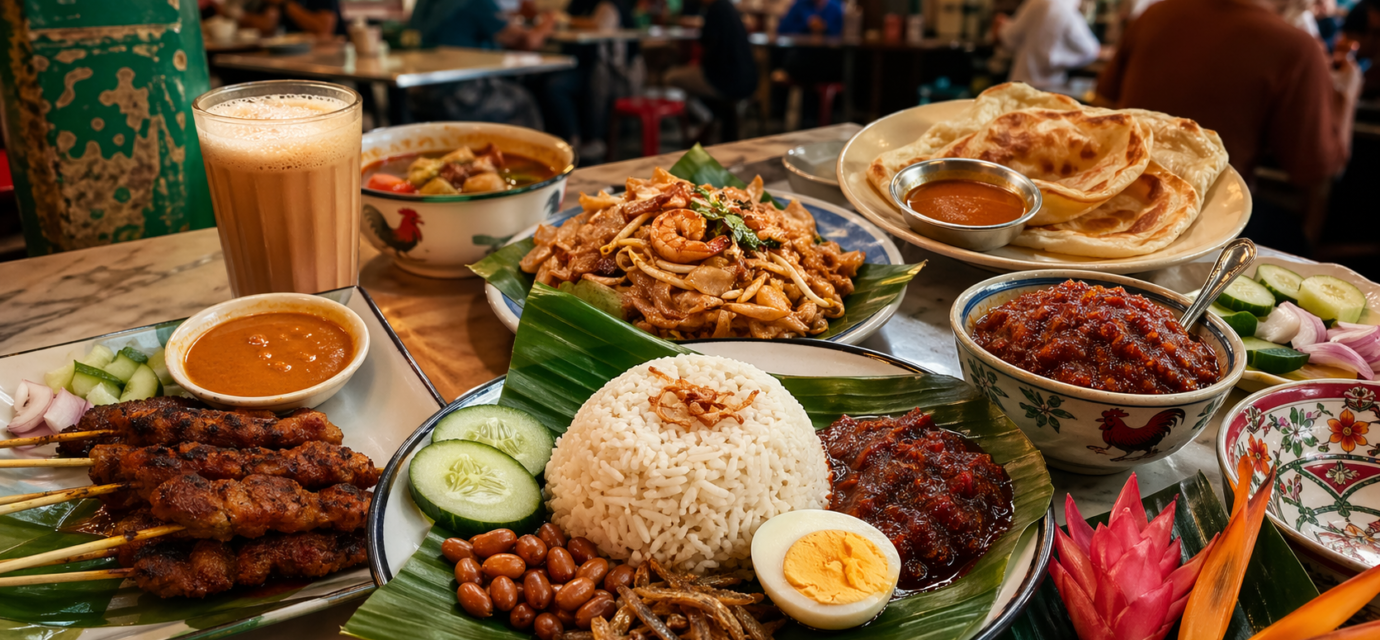
At first glance, nasi lemak can look simple: rice cooked with coconut milk, paired with sambal, fried anchovies, peanuts, cucumber, and egg. But like many important foods, simplicity is deceptive.
Every part has a job.
The rice is fragrant and softly rich.
The sambal brings heat, sweetness, and depth.
The anchovies add salty crunch.
The peanuts bring texture.
The cucumber cools the plate down.
The egg rounds everything out.
UNESCO Malaysia describes a typical Malay breakfast as nasi lemak made with fragrant coconut milk rice, sambal, fried anchovies, and boiled egg, often paired with teh tarik.
What makes nasi lemak so powerful is its flexibility.
It can be humble and portable, wrapped for a quick breakfast. It can also become a larger meal with fried chicken, rendang, seafood, sambal squid, or other additions. It can be breakfast, lunch, late-night comfort food, or a reminder of home.
Nasi lemak matters because it belongs to daily life.
It is not rare.
It is beloved.
And sometimes the foods people eat most often are the ones that carry the most emotional weight.
Roti Canai: Skill You Can Watch Become Breakfast
Roti canai wins people over quickly.
It is flaky, soft, chewy, crisp at the edges, and deeply satisfying when torn by hand and dipped into curry.
But part of its beauty is not only how it tastes. It is how it is made.
The stretching, tossing, flipping, folding, and cooking of the dough turns breakfast into visible craft. You can watch the skill happen in real time. The cook’s hands matter. The rhythm matters. The heat matters.
UNESCO Malaysia describes roti canai as a flaky flatbread commonly served with dhal curry, while Tourism Malaysia also identifies roti canai as one of the iconic Malaysian breakfast foods connected to the country’s culinary heritage.
That is why roti canai feels like more than bread.
It is performance, comfort, and community all at once.
In many mamak restaurants, roti canai belongs to the whole atmosphere: bright lights, open tables, regular customers, clinking cups, quick orders, curry gravies, and conversations that stretch longer than planned.
It is food that feels casual, but not careless.
Teh Tarik: The Pulled Tea That Turns a Drink Into a Moment
Then there is teh tarik.
Sweet, milky, frothy, and comforting, teh tarik is one of Malaysia’s most recognizable drinks. Its name means “pulled tea,” referring to the way the tea is poured back and forth between containers to create foam and blend the flavors.
UNESCO Malaysia describes teh tarik as a frothy sweetened milk tea often paired with nasi lemak, and Tourism Malaysia highlights live teh tarik demonstrations as part of showcasing Malaysian breakfast culture.
What makes teh tarik special is that it does not feel separate from the meal.
It helps create the mood.
It slows people down.
It gives the table something warm to hold.
It turns a quick breakfast into a social pause.
Together, roti canai and teh tarik tell one of Malaysia’s most charming food stories: craft does not always have to be expensive or formal. Sometimes craft is happening right in front of you, at a table you can actually afford to sit at.
Laksa, Satay & the Joy of Regional Difference
Once breakfast opens the door, Malaysia’s table keeps expanding.
Laksa is one of the clearest examples of the country’s regional diversity. The word “laksa” can lead to very different bowls depending on where you are. Some versions are sour and fish-based. Others are creamy, coconut-rich, and curry-deep.
Tourism Malaysia has highlighted laksa, nasi lemak, Penang char kway teow, rendang, lemang, ketupat, roti canai, satay Kajang, and teh tarik as part of Malaysia’s culinary and heritage food identity.
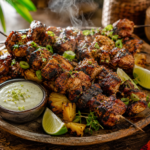
Satay brings another kind of pleasure.
Smoke.
Marinade.
Skewers.
Char.
Peanut sauce.
A good satay is not simply grilled meat on a stick. It is timing, seasoning, tenderness, and the right relationship between fire and flavor.
When you place nasi lemak, roti canai, teh tarik, laksa, satay, char kway teow, rendang, and regional dishes next to one another, you start to understand how Malaysian cuisine works.
It is not one flavor repeated again and again.
It is a conversation between coconut richness, chili heat, sour brightness, grilled savoriness, curry depth, fragrant herbs, wok smoke, and textural contrast.
That variety is one of the reasons Malaysia is such a strong subject for cultural food writing.
There is always another direction to go.
Melaka, Peranakan Food & the Beauty of Exchange
Malaysia’s food story is also a story of movement.
Ports, trade routes, migration, marriage, settlement, and local adaptation all helped shape the country’s food culture over time. Melaka is one of the strongest examples because of its long history as a trading center and its layered cultural identity.
Peranakan or Nyonya cuisine is especially important in this conversation. It reflects Chinese heritage meeting local ingredients, Malay influence, spice traditions, and generations of home cooking. The result is not a shallow “fusion” trend. It is a lived cuisine with its own identity, memory, and refinement.
That distinction matters.
When cultures meet at the table, the result is not always erasure. Sometimes the result is a new language of flavor.
Malaysia shows that beautifully.
Food here can hold difference without losing warmth.
It can carry many histories without becoming confused.
It can be deeply local and globally connected at the same time.
Popular Malaysian Dishes to Know
Nasi Lemak
Fragrant coconut milk rice served with sambal, fried anchovies, peanuts, cucumber, and egg, often expanded with fried chicken, rendang, seafood, or other sides.
Roti Canai
A flaky, hand-worked flatbread often served with dhal, curry, or other gravies. It is strongly connected to Malaysia’s breakfast and mamak dining culture.
Teh Tarik
A sweet, frothy pulled milk tea that is part drink, part craft, and part social ritual.
Laksa
A family of noodle soups with strong regional identities, from sour, fish-based styles to rich curry versions.
Satay
Marinated grilled skewers often served with peanut sauce, cucumber, onions, and rice cakes.
Char Kway Teow
Flat rice noodles stir-fried with soy sauce, chili, bean sprouts, Chinese chives, egg, prawns, and other ingredients.
Rendang
A slow-cooked meat dish made with coconut milk and spices, often served during festive occasions.
Nasi Kandar
A rice meal commonly associated with Indian Muslim food culture, usually served with a variety of curries and side dishes.
Peranakan or Nyonya Dishes
A distinctive food tradition shaped by Chinese heritage, Malay influence, local ingredients, and generations of adaptation.
Why Malaysian Food Feels So Human
Malaysia is a dream subject for food storytelling because the cuisine naturally leads to deeper questions.
You can write about breakfast and end up talking about coexistence.
You can write about laksa and end up exploring regional identity.
You can write about satay and find yourself thinking about public eating, smoke, night markets, and shared food spaces.
You can write about nasi lemak, and suddenly you are talking about national belonging.
That is what makes Malaysian cuisine bigger than a list of dishes.
It reflects a social world.
It is practical, but expressive.
It is casual, but meaningful.
It is everyday food that still carries a memory.
Sometimes heritage is not only found in grand feasts. Sometimes it is in the breakfast line, the tea being pulled, the bread being stretched, and the fact that people from many backgrounds can still meet at the same table.
How to Explore Malaysian Cuisine Respectfully
Malaysian cuisine deserves curiosity, specificity, and care.
Do not treat Malaysia as one single food culture. Its multiethnic and regional realities are central to the story.
Acknowledge Malay, Chinese, Indian, Indigenous, and Peranakan influences where relevant.
Avoid presenting iconic dishes as detached from the everyday communities that sustain them.
Highlight breakfast, kopitiams, mamak restaurants, hawker stalls, and markets as living social traditions, not only tourist attractions.
Use precise dish names and explain that different regions may serve very different versions.
Most importantly, remember that Malaysian food is not just about “must-try dishes.”
It is about how people live together through food.
The Next Table Is Already Calling
Malaysia can pull you in with one plate of nasi lemak, but it never stops there.
It keeps going through pulled tea foam, curry-dipped bread, smoky skewers, sour noodle bowls, coconut rice, wok-fired noodles, kopitiam mornings, and breakfast rooms where heritage still feels casual, loud, warm, and alive.
So here is the question worth sitting with:
What happens when a country’s most ordinary morning meal opens the door to one of the most layered culinary stories in the world?
Maybe that is the beauty of Malaysia’s table.
You think you are only eating breakfast.
Then suddenly, you are tasting belonging.
Frequently Asked Questions About Malaysian Food Culture
What is Malaysian food known for?
Malaysian food is known for nasi lemak, roti canai, teh tarik, laksa, satay, char kway teow, rendang, nasi kandar, Peranakan dishes, hawker stalls, kopitiams, mamak restaurants, and a multiethnic blend of Malay, Chinese, Indian, Indigenous, and regional food traditions.
Why is breakfast important in Malaysia?
Breakfast is important in Malaysia because it reflects the country’s multicultural identity and daily social life. UNESCO Malaysia recognizes Malaysian breakfast culture as a multiethnic dining experience tied to Malay, Chinese, Indian, Indigenous, and immigrant communities.
What is nasi lemak?
Nasi lemak is a Malaysian dish made with fragrant coconut milk rice, usually served with sambal, fried anchovies, peanuts, cucumber, and egg. It is often enjoyed for breakfast but can be eaten throughout the day.
What is roti canai?
Roti canai is a flaky flatbread commonly served with dhal or curry. It is especially popular for breakfast and at mamak restaurants.
What is teh tarik?
Teh tarik is Malaysia’s pulled milk tea. It is sweet, frothy, and made by pouring tea between containers to create foam and blend the drink.
What makes Malaysian cuisine unique?
Malaysian cuisine is unique because it brings together Malay, Chinese, Indian, Indigenous, Peranakan, regional, and immigrant food traditions while staying deeply connected to everyday public eating culture.
Is Malaysian food spicy?
Some Malaysian dishes are spicy, but the cuisine is not only about heat. It also includes coconut richness, sour brightness, curry depth, smoky grilled flavors, herbal freshness, sweet drinks, and many layered textures.
References and Further Reading
- UNESCO Malaysia, “Breakfast Culture in Malaysia: Dining Experience in a Multi-ethnic Society.” Used for Malaysian breakfast culture, multiethnic identity, nasi lemak, roti canai, teh tarik, kopitiams, hawker stalls, and communal breakfast traditions.
- Tourism Malaysia, “Tourism Malaysia Showcases Malaysian Breakfast Culture in Singapore.” Used for Malaysian breakfast as culinary heritage and the role of nasi lemak, roti canai, and teh tarik.
- Tourism Malaysia, “Savour and Experience Malaysian Food & Culture in Vientiane.” Used for Malaysian culinary identity, Malay, Chinese, and Indian food influences, heritage foods, regional dishes, nasi lemak, roti canai, satay Kajang, and teh tarik.