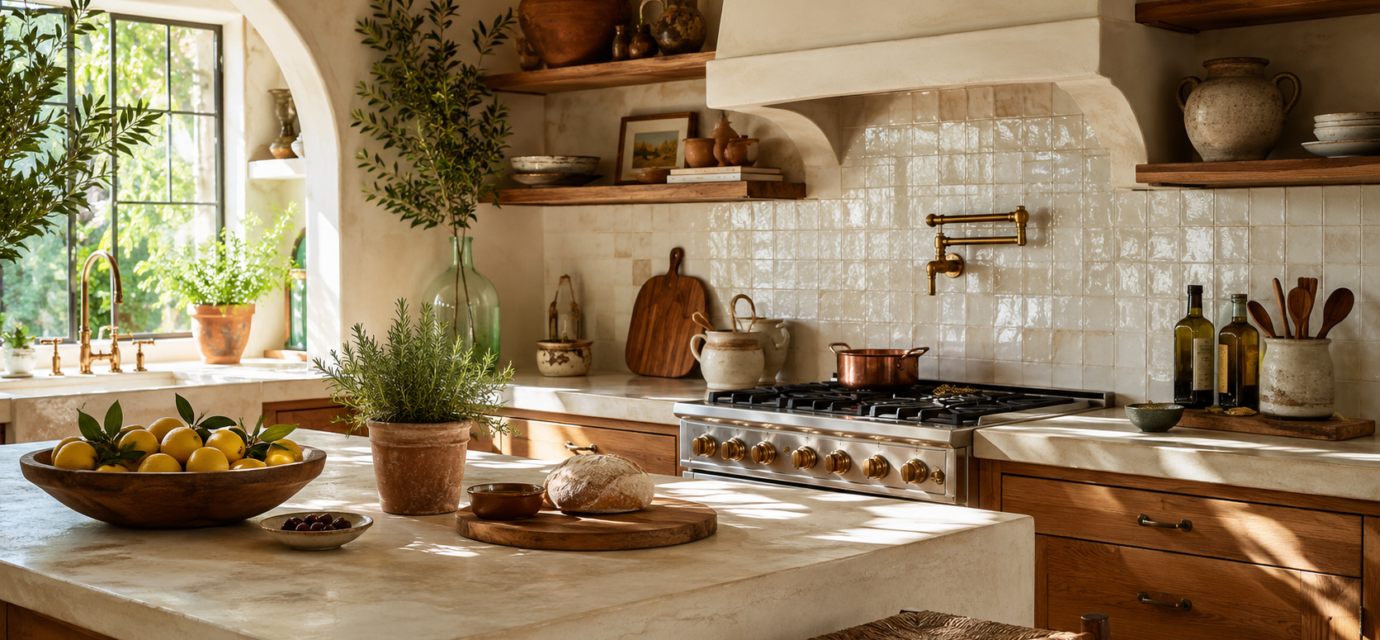
Mediterranean Kitchen Design That Feels Sunlit, Layered, and Full of Life
A Mediterranean kitchen does not simply decorate a home. It changes the feeling of the room.
It brings in warmth without feeling heavy. It welcomes natural texture without looking unfinished. It carries the glow of sun-washed walls, earthy tile, olive-toned details, weathered wood, stone surfaces, and the quiet beauty of a kitchen that looks like people actually gather there.
That is what makes Mediterranean kitchen design so special. It is not trying to be perfect. It is trying to feel alive.
At Fly By Eats, this style feels especially meaningful because the kitchen is more than a place to cook. It is where food, culture, memory, hospitality, and everyday life meet. UNESCO describes the Mediterranean diet as more than food alone, connecting it to skills, traditions, preparation, consumption, hospitality, social interaction, and communal meals. That cultural foundation is exactly why a Mediterranean-inspired kitchen can feel so emotionally rich when designed with care.
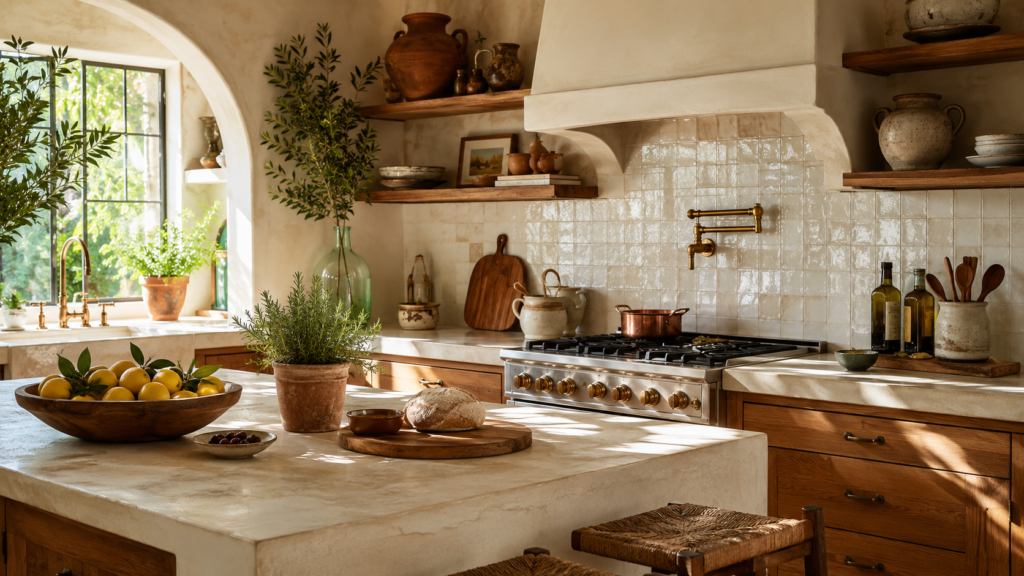
A Mediterranean palette feels strongest when warm neutrals are layered with earth tones, wood, stone, and small moments of color.
What Is Mediterranean Kitchen Design?
Mediterranean kitchen design draws inspiration from the regions surrounding the Mediterranean Sea, including parts of Southern Europe, North Africa, and Western Asia. Britannica describes the Mediterranean Sea as stretching from the Atlantic Ocean in the west to Asia in the east, separating Europe from Africa and connecting cultures across a long history of trade, travel, food, and exchange.
Because of that, Mediterranean design should never feel like one flat stereotype. A Spanish-inspired kitchen may lean into patterned tile and wrought iron. An Italian-inspired kitchen may feel rustic, stone-heavy, and softly elegant. A Greek-inspired kitchen may embrace white walls, blue accents, and airy simplicity. A Moroccan-influenced space may bring in arches, lanterns, carved wood, and layered pattern.
The shared language is usually this: warmth, natural materials, craft, sunlight, comfort, and hospitality.
Why Mediterranean Kitchens Feel So Welcoming
A Mediterranean kitchen works because it balances beauty with usefulness. It does not ask the room to feel cold, perfect, or untouchable. Instead, it invites people in.
The best Mediterranean kitchens often include:
Warm plaster-like walls
Terracotta, limestone, travertine, or natural stone
Wood cabinetry, beams, shelving, or island details
Handmade or handmade-look tile
Arches, curved hoods, niches, and softer architectural lines
Aged brass, bronze, iron, or copper accents
Olive green, clay, sand, cream, warm white, deep blue, and walnut tones
Open shelving used with restraint
Decorative pottery, woven baskets, herbs, olive branches, lemons, and serving boards
The goal is not to fill every corner. The goal is to create rhythm. A little texture here. A little warmth there. One beautiful focal point instead of ten competing ones.
A Style That Matches Current Kitchen Trends
Mediterranean design also aligns well with the current trend in kitchen design. The National Kitchen & Bath Association’s 2026 Kitchen Trends Report notes that organic and earthy aesthetics, natural materials, personalized expression, storage maximization, wellness, and multi-purpose kitchen hubs are among the major themes shaping kitchen design.
NKBA also reports that natural materials are gaining strength in kitchens, with wood grain, quartzite, wood flooring, statement lighting, natural lighting, and task lighting all playing major roles in the next wave of kitchen design.
That makes Mediterranean kitchen design especially practical for today’s home. It already celebrates the things many homeowners are moving toward: warmth, texture, natural finishes, human comfort, and spaces that support real life.
Mediterranean Kitchen Design Trends You NEED to See! – Video
Start With the Feeling, Not the Shopping List
The biggest mistake people make with Mediterranean design is buying “Mediterranean-looking” pieces before deciding how they want the kitchen to feel.
Before choosing tile, lighting, or cabinets, ask:
Do I want this kitchen to feel rustic and old-world?
Soft and coastal?
Elegant and European?
Earthy and casual?
Bright and whitewashed?
Moody and layered?
Colorful and patterned?
A Mediterranean kitchen can go in many directions. The magic comes from choosing one clear emotional direction and letting every design decision support it.
For Fly By Eats, the strongest version is warm, soulful, sunlit, and useful. It should feel like someone could chop herbs at the island, pass around warm bread, pour olive oil into a small ceramic dish, and linger in conversation long after dinner is finished.
Best Color Palette for a Mediterranean Kitchen
A strong Mediterranean kitchen palette usually begins with warm neutrals, then adds depth through natural accents.
Try this foundation:
Warm white
Cream
Sand
Limestone
Soft beige
Clay
Terracotta
Olive green
Deep blue
Walnut brown
Aged bronze
Muted black
If your kitchen receives a lot of natural light, you can go richer with terracotta, walnut, and deeper tile. If your kitchen is darker or smaller, keep the walls light and use color through the backsplash, lower cabinets, rugs, pottery, or art.
A helpful rule: let the walls breathe, then add warmth through texture.
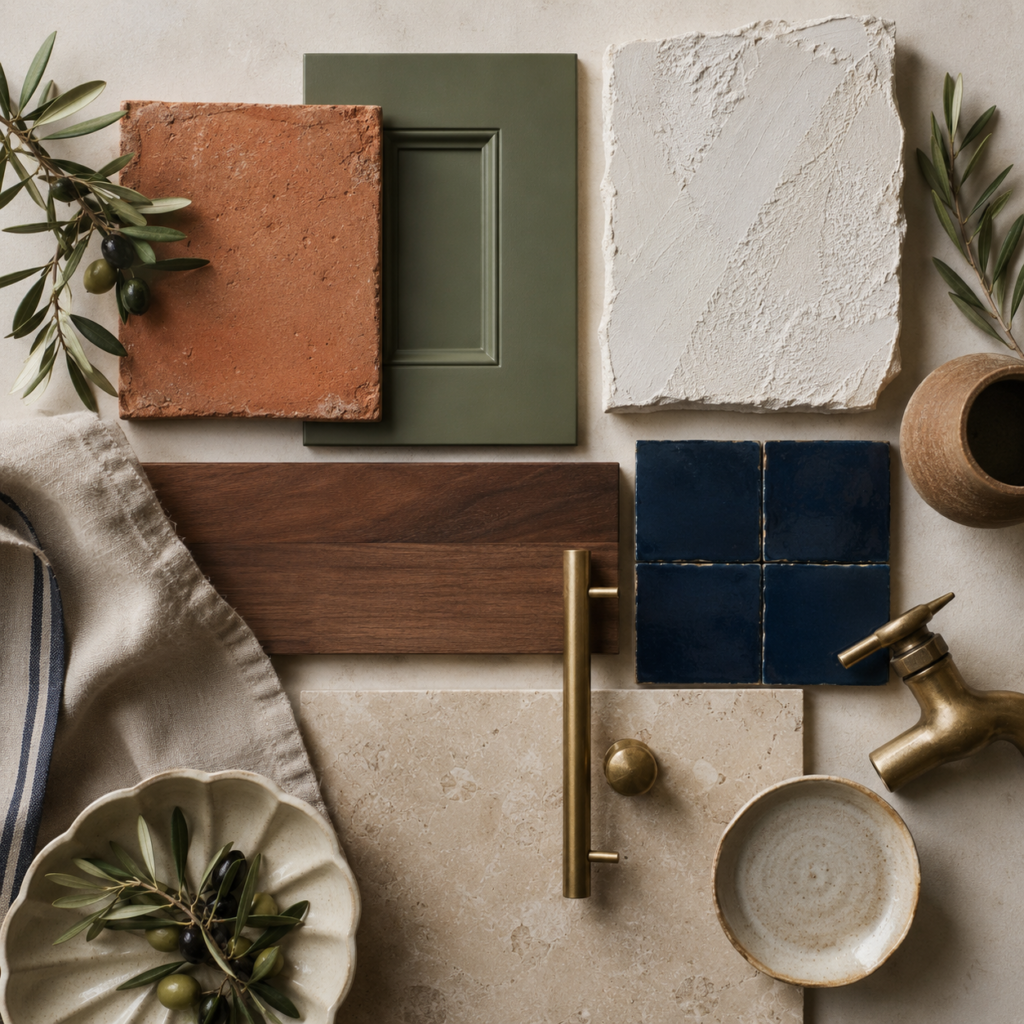
A Mediterranean palette feels strongest when warm neutrals are layered with earth tones, wood, stone, and small moments of color.
Materials That Make the Kitchen Feel Real
Mediterranean kitchen design depends heavily on materials. If the materials feel too shiny, thin, or artificial, the whole room can lose its soul.
Strong material choices include:
Terracotta flooring for warmth and age
Limestone or travertine for softness and movement
Quartzite or warm-toned quartz for durable countertops
Wood cabinetry or open shelving for visual grounding
Plaster or limewash-style walls for gentle texture
Handmade-look tile for character
Aged brass, bronze, copper, or iron for depth
Linen, woven shades, and ceramic pieces for softness
This does not mean everything has to be expensive or imported. The more important goal is material honesty. Choose finishes that look touchable, useful, and believable.
If you use a budget-friendly option, choose the simplest version. A quiet warm-white wall often looks better than a faux-stone surface that tries too hard.
The Backsplash: Where Mediterranean Style Can Shine
The backsplash is one of the best places to bring personality into a Mediterranean kitchen.
You could use:
Zellige-style tile
Handmade-look ceramic tile
Terracotta tile
Blue and white patterned tile
Soft green tile
Warm neutral square tile
Stone slab backsplash
A small patterned tile behind the range only
The key is restraint. If the backsplash is bold, keep the countertops and cabinets calmer. If the cabinetry is colorful, choose a simpler backsplash. If the flooring is patterned, let the walls and backsplash stay quiet.
Mediterranean design is layered, but it should not feel noisy.
Cabinets: Warm, Grounded, and Practical
Cabinetry can completely change the tone of a Mediterranean kitchen.
For a brighter version, choose warm white, cream, natural oak, or light wood. For a more grounded version, try walnut, deep olive, muted clay, or warm taupe. For a modern Mediterranean look, use flat or simple cabinet fronts and let the texture of the tile, stone, and lighting do the storytelling.
Avoid overly ornate cabinets unless the rest of the kitchen is very restrained. Too many carved details can make the room feel heavy or dated.
A beautiful direction for Fly By Eats would be:
Warm cream upper cabinets
Olive or walnut lower cabinets
Natural stone counters
Aged brass hardware
A handmade tile backsplash
One open shelf for pottery, oils, and serving pieces
That combination feels cultural, homey, and elevated without looking cluttered.
Lighting Matters More Than People Think
A Mediterranean kitchen should glow. Not glare. Glow.
Lighting should come in layers:
Natural light during the day
Task lighting under cabinets
Pendants over the island
A soft fixture over the dining nook
Accent lighting in a niche or open shelf
Warm bulbs for evening atmosphere
NKBA’s 2026 trend reporting highlights natural lighting, quality lighting, and task lighting as major kitchen design considerations, which fits perfectly with Mediterranean design’s emphasis on warmth and atmosphere.
Choose lighting with aged brass, iron, ceramic, woven, or glass details. Avoid overly cold chrome or harsh blue-toned bulbs. The room should feel calm in the morning and intimate in the evening.
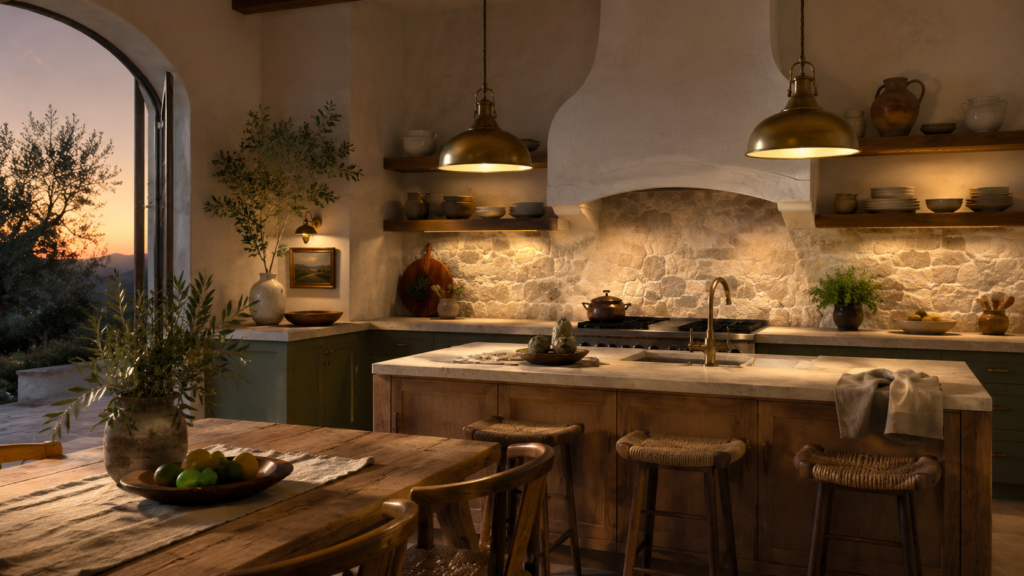
Mediterranean kitchen with warm pendant lighting, plaster hood, wood shelves, and soft evening atmosphere.
Add Arches, Niches, and Curves Without Overdoing It
Arches are one of the most recognizable Mediterranean design elements, but they do not need to appear everywhere.
Good places to add soft curves:
A range hood
An open doorway
A built-in niche
A coffee or oil station
An arched cabinet detail
A curved island end
A rounded shelf opening
A small arched niche for olive oil, spices, salt, or serving bowls can add more personality than a large forced architectural feature. Curves work best when they feel useful, not decorative for decoration’s sake.
Make the Kitchen Work for Real Cooking
A beautiful kitchen still has to function. This matters for the reader experience, and it also helps the article feel more useful for ad review because it gives practical, original value instead of thin, inspirational content.
The NKBA Planning Guidelines are positioned as a professional reference for planning code-compliant, functional, accessible, and beautiful kitchen and bath spaces, covering topics such as activity centers, storage, indoor air quality, lighting, electrical planning, universal design, and sustainable design.
In a Mediterranean kitchen, function might look like:
Deep drawers for cookware
A pull-out spice drawer near the range
A dedicated oil and vinegar station
A hidden trash and recycling pull-out
A large cutting board zone
A pantry cabinet for grains, beans, pasta, and baking staples
A landing zone near the refrigerator
Durable counters for daily cooking
Easy-to-clean backsplash behind the stove
Ventilation that actually supports indoor air quality
A kitchen can be soulful and still be smart.
Do Not Forget Ventilation
Mediterranean kitchens often celebrate cooking, searing, simmering, roasting, and gathering. That means ventilation should not be treated as an afterthought.
The EPA recommends turning on a vented range hood whenever cooking, leaving it on for 10 to 20 minutes after cooking, using back burners when possible, and regularly cleaning the range hood’s grease filter. ENERGY STAR also notes that cooking can release particulates, humidity, carbon monoxide, and nitrogen dioxide, and that vented kitchen range hoods can help lower cooking-related pollutants when used properly.
For design, this means the hood can be both beautiful and useful. A plaster-style range hood, curved hood, stone-wrapped hood, or simple warm-white hood can become the focal point of the kitchen while still supporting real cooking.
Indoor Air Pollution from Cooking
Decor That Feels Collected, Not Cluttered
Mediterranean decor works best when it feels gathered over time.
Try:
A ceramic bowl of lemons
Olive branches in a clay vase
Wooden cutting boards
Aged pottery
A woven runner
A small herb pot near the window
Hand-thrown mugs
A vintage-style landscape print
A linen café curtain
A tray with olive oil, salt, and pepper
Open shelves with only the items you truly use
Avoid filling every shelf with props. If everything is decorative, nothing feels personal. Leave open space so the eye can rest.
Small Kitchen Mediterranean Ideas
You do not need a large kitchen to create this feeling.
For a small kitchen, focus on:
Warm white walls
One beautiful tile moment
Wood shelves instead of heavy upper cabinets
Aged brass or bronze hardware
A compact bistro table
A soft Roman shade or café curtain
One statement pendant
Light stone or butcher block counters
A few useful ceramic pieces
In smaller spaces, Mediterranean design should feel airy, not crowded. Use fewer colors and let texture carry the style.
Budget-Friendly Mediterranean Kitchen Updates
A full remodel is not always necessary. You can create a Mediterranean feeling in stages.
Start with these lower-cost updates:
Paint walls warm white or creamy beige
Replace cool-toned hardware with aged brass or bronze
Add a terracotta-colored runner
Use ceramic bowls, wood boards, and olive branches
Install a warm pendant light
Add peel-and-stick tile behind a coffee bar or pantry wall
Use linen curtains or woven shades
Style open shelves with everyday serving pieces
Swap cold gray decor for warm earth tones
Then, if the budget allows it later, consider bigger changes like new backsplash tile, stone counters, wood flooring, cabinet painting, or a custom hood.
Common Mistakes to Avoid
Mediterranean kitchen design can lose its charm when it becomes too themed.
Avoid these mistakes:
Using too many patterns at once
Choosing fake rustic finishes that look theatrical
Making everything dark and heavy
Using overly shiny gold instead of aged metal
Adding arches where they do not make sense
Cluttering open shelves
Ignoring storage
Choosing beauty over ventilation
Forgetting task lighting
Copying one culture’s design details without context or care
The best Mediterranean kitchen feels inspired, not costume-like.
A Thoughtful Mediterranean Kitchen Is About Hospitality
At its heart, this design style is about welcome.
A Mediterranean kitchen should make people feel like they can sit down, exhale, and stay awhile. It should support slow breakfasts, family-style dinners, weeknight cooking, weekend baking, and conversations that continue while someone washes herbs at the sink.
That is why this style fits Fly By Eats so well. It connects kitchen design with culture, food, and feeling. It reminds us that a kitchen is not just a room with cabinets. It is a living space. A memory space. A place where flavor meets home.
Final Takeaway
A Mediterranean kitchen feels sunlit because it honors natural light. It feels layered because it welcomes texture, craft, and history. It feels full of life because it is designed around people, not perfection.
Start with warmth. Add natural materials. Use color with intention. Let one feature shine at a time. Build in storage, lighting, ventilation, and comfort. Then leave enough room for the real beauty of the kitchen to happen: cooking, gathering, sharing, and returning to the table again.
That is the kind of kitchen that does more than look beautiful. It lives beautifully.
References
- Bolt, N. (2023, October 26). Introducing Microsoft pubCenter: Empowers small and medium-sized businesses to earn more from their website. Microsoft Advertising Blog. https://about.ads.microsoft.com/en/blog/post/october-2023/microsoft-pubcenter-empowers-small-and-medium-sized-businesses-to-earn-more-money
- ENERGY STAR. (n.d.). Indoor air quality features. ENERGY STAR. Retrieved May 21, 2026, from https://www.energystar.gov/newhomes/features-benefits/indoor-air-quality-features
- Google. (2024, August 16). AdSense Program policies. Google AdSense Help. https://support.google.com/adsense/answer/48182
- National Kitchen & Bath Association. (2025, September 18). KBIS releases annual 2026 Kitchen Trends Report. NKBA. https://nkba.org/press/nkba-kbis-releases-annual-2026-kitchen-trends-report/
- Salah, M. (2026, May 16). Mediterranean Sea. Encyclopaedia Britannica. https://www.britannica.com/place/Mediterranean-Sea
- UNESCO. (n.d.). Mediterranean diet. Intangible Cultural Heritage. Retrieved May 21, 2026, from https://ich.unesco.org/en/RL/mediterranean-diet-00884
- UNESCO. (2010, December 10). The Mediterranean diet. UNESCO Archives. https://www.unesco.org/archives/multimedia/document-1680-eng-2
- U.S. Environmental Protection Agency. (2026, March 10). Strategies for improving indoor air quality while cooking infographic. https://www.epa.gov/indoor-air-quality-iaq/strategies-improving-indoor-air-quality-while-cooking-infographic
Recommended Reads
This post may contain affiliate links. As an Amazon Associate, Fly By Eats may earn from qualifying purchases at no extra cost to you.