
Not Just Dinner: Wild Restaurants Around the World That Turn a Meal Into a Full Experience
Meals do not become unforgettable by flavor alone. The ones that linger often carry the feeling of a place, the hush of the room, the shape of the light, the sound of water nearby, or the quiet realization that dinner has turned into a memory before the plates are even cleared.
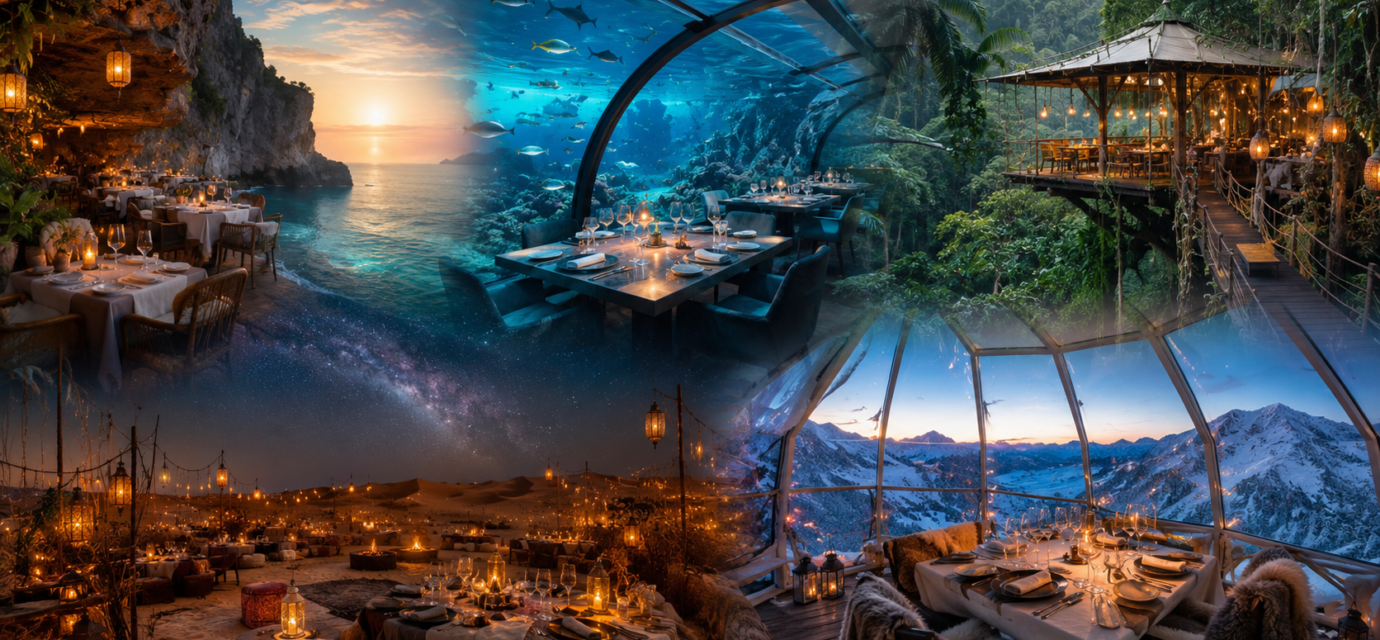
Picture a table carved into the mood of a sea cave, where waves breathe against ancient stone. Imagine dining beneath the ocean while reef fish drift past like moving jewels. In Japan, a seasonal meal may arrive with the gentleness of a changing leaf. In Mexico, corn, chiles, masa, and memory can hold generations in a single bite. Around a Mediterranean table, the meal may stretch slowly, not because anyone is delaying the evening, but because belonging is part of what is being served.
Experience dining, when done with meaning, is not about spectacle for spectacle’s sake. It is about remembering that food has never been only fuel. A meal can become a doorway into place, culture, ceremony, geography, family history, creativity, gratitude, and hospitality. It can ask us to pause long enough to notice not only what we are eating, but where we are, who prepared it, and what the table is trying to teach us.
The world’s most imaginative restaurants may use caves, cranes, underwater rooms, projected walls, open fire, music, gardens, boats, rooftops, forests, or moonlit landscapes to awaken our senses. Yet the deeper magic is much older than any dining trend. Across cultures, people have always known that a meaningful meal is created when place, people, ingredients, rhythm, and care come together with intention.
Why Wild Restaurants Around the World Feel So Meaningful
Wild restaurants are not memorable simply because they are unusual. A restaurant can be high in the sky or deep under the sea and still feel empty if the experience has no heart. What makes a meal meaningful is the way the setting supports the story.
In many cultures, dining has always been shaped by atmosphere. The French gastronomic meal, recognized by UNESCO as an intangible cultural heritage practice, emphasizes togetherness, celebration, taste, and the balance between people and nature. In Japan, washoku honors seasonal ingredients, careful presentation, and respect for the natural world. Traditional Mexican cuisine, especially as reflected in the Michoacán paradigm recognized by UNESCO, connects food to corn, community, ritual, agriculture, and living knowledge passed down through generations.
UNESCO Traditional Mexican Cuisine – https://ich.unesco.org/en/video/4489
These traditions remind us that a meal can be a full experience without needing anything flashy. A grandmother pressing masa. A host pouring coffee. A family setting out small dishes. A table arranged with fruit, herbs, bread, soup, and warm light. The experience is not only in the spectacle. It is in the attention.
Modern destination restaurants often build on that same human desire: to feel present. We want to sit somewhere and think, “I will remember this.”
Dinner in the Sky Experience
The Beauty of the Table
A full dining experience begins before the first bite.
It starts with sound: the low murmur of guests settling in, the clink of glasses, the scrape of a chair, the hiss of steam leaving a pot. It starts with scent: toasted spices, fresh herbs, citrus peel, warm bread, roasted vegetables, seafood near the coast, coffee beans turning dark over heat.
Then comes color. A deep red chile sauce. Bright green herbs. Golden olive oil. White rice in a small bowl. Pink pickled vegetables. Charred bread. Amber tea. A tagine lid lifted at the center of a table. A ceramic plate carrying one careful bite like a tiny landscape.
The most memorable restaurants understand that the table is a stage, but not always in a loud way. Sometimes it is quiet and intimate. Sometimes it is joyful and communal. Sometimes it asks you to look around before you look down at your plate.
At Ithaa Undersea Restaurant in the Maldives, the experience is tied to the Indian Ocean itself. Guests dine below the surface, surrounded by curved transparent walls and marine life moving beyond the table. At Grotta Palazzese in Polignano a Mare, Italy, the drama comes from a natural sea cave used for gatherings and banquets since the 1700s. At Ultraviolet by Paul Pairet in Shanghai, technology, lighting, sound, scent, and food are arranged into a multi-sensory dining journey.
Each one is different, but they all understand something simple: setting changes how we taste.
A Taste of History and Culture
Before immersive restaurants became a modern travel trend, cultures around the world were already creating dining experiences through ritual, rhythm, and shared meaning.
In Ethiopia and Eritrean communities, coffee is often treated as a social experience rather than a quick drink. The Ethiopian coffee ceremony may include roasting green coffee beans, grinding them, brewing in a jebena, burning incense, and serving guests slowly. The beauty is in the time it takes. It says, “You are welcome here long enough for the beans to roast.”
In Arab hospitality traditions, Arabic coffee has been recognized by UNESCO as a symbol of generosity. The preparation and serving of coffee can carry rules of respect, including serving honored or older guests first. Here, a small cup can say more than a long speech.
In Korea, the table often speaks through banchan, the small side dishes served with rice and other foods. Banchan is not just decoration. It creates variety, balance, sharing, and care. Korea’s jang-making tradition, connected to fermented soybean pastes and sauces such as doenjang, ganjang, and gochujang, was also added to UNESCO’s intangible cultural heritage list. These flavors are not rushed; they are built through time.
In Thailand, tomyum kung carries the sensory language of herbs, heat, sourness, and aroma. Lemongrass, galangal, kaffir lime leaves, shallots, and prawns come together in a soup that reflects local ingredients and culinary knowledge. In 2024, tomyum kung was inscribed on UNESCO’s Representative List of the Intangible Cultural Heritage of Humanity.
Across the Mediterranean, eating together is part of cultural continuity. The Mediterranean diet, as UNESCO describes it, is not only a list of foods. It includes skills, agriculture, fishing, harvesting, preservation, cooking, and especially the sharing of meals. The table becomes a place where family and community identity are renewed.
UNESCO Mediterranean Diet – https://ich.unesco.org/en/video/4661
That is why experience dining matters when done thoughtfully. It is not new. It is a modern expression of an ancient truth: food becomes powerful when it gathers meaning around it.
What This Food Tradition Teaches Us
The best dining experiences teach us to pay attention.
They teach us that seasonality is not just a chef’s word. It is a way of noticing where we are in the year. Spring herbs, summer tomatoes, autumn squash, winter citrus, fresh fish, preserved vegetables, dried beans, grains, and warm spices all carry a relationship to time.
They teach us that hospitality is not measured only by luxury. It can be found in the person who gives you the best seat, refills your tea, remembers that you do not eat something, or sends you home with leftovers wrapped with care.
They teach us that simplicity can be powerful. A bowl of rice, a piece of bread, a spoonful of sauce, a few olives, fresh herbs, or warm soup can feel complete when served with attention.
They also teach us that wonder does not have to replace respect. A restaurant in a cave, forest, floating platform, or underwater room should still honor the land, sea, culture, labor, and ingredients that make the meal possible. The setting may impress us, but the people behind the meal deserve to be seen too: farmers, fishers, cooks, servers, artisans, dishwashers, designers, and cultural knowledge keepers.
At its heart, a meaningful meal says: slow down, look closer, receive what is in front of you.
How to Bring This Spirit Into Your Own Kitchen
You do not need a sea cave, crane, underwater room, or Michelin-level tasting menu to create a memorable dining experience at home. You need intention.
Start with one small story. Maybe the meal is inspired by a place you visited, a culture you are learning about, a family memory, or a season you want to honor. Instead of trying to recreate an entire culture on your table, choose one respectful entry point: a shared dish, a traditional ingredient, a cooking method, or a hospitality practice.
Set the mood with what you already have. Use a clean tablecloth or a simple linen towel. Add fresh herbs in a jar. Light a candle if appropriate. Put citrus or bread at the center of the table. Serve food in bowls that invite sharing. Play music softly, not as a costume, but as atmosphere.
Build the meal around conversation. Ask everyone one question: “What is a meal you still remember?” That one question can turn dinner into story.
You can also create a sensory table. Choose one aroma, one texture, one color, and one sound. For example: toasted cumin, crisp cucumbers, golden roasted squash, and tea pouring into small cups. Small details make a meal feel cared for.
For ingredients, think globally but cook honestly. Use olive oil, beans, lentils, rice, corn, herbs, citrus, yogurt, spices, flatbreads, seasonal vegetables, seafood, mushrooms, or slow-cooked stews. Let the food be generous without becoming complicated.
Most importantly, give yourself permission to be practical. A meaningful table can include store-bought bread, a simple salad, roasted vegetables, soup from leftovers, or fruit with honey. The spirit matters more than perfection.
Simple Serving Ideas
Create a “sense of place” dinner with one centerpiece dish and several small sides. For a Mediterranean-inspired table, serve grilled vegetables, olives, warm bread, beans, citrus salad, herbs, and a simple fish or chicken dish. Keep the focus on sharing.
For a Japanese-inspired quiet meal, think about seasonality and balance. Serve rice, miso soup, pickled vegetables, greens, fish or tofu, and a small sweet finish. Use small plates and leave space on the table so the meal feels calm.
For a Mexican-inspired gathering, honor corn respectfully. Serve handmade or quality tortillas, beans, salsa, roasted vegetables, herbs, lime, and a slow-cooked filling. Include a note at the table about the importance of maize in Mexican foodways.
For a Korean-inspired table, offer rice with a few small banchan-style side dishes such as seasoned vegetables, kimchi, cucumbers, mushrooms, or egg. Do not worry about making everything from scratch. Focus on variety, balance, and sharing.
For a coffee or tea gathering, make the drink the experience. Serve Arabic coffee, Ethiopian-style coffee, mint tea, chai, or herbal tea with dates, fruit, nuts, or small pastries. Let the gathering be slow.
For table styling, use warm textures: wood, ceramic, linen, woven baskets, small bowls, glass jars, and fresh herbs. Avoid turning cultural objects into props if you do not understand their meaning. Let the food, care, and learning guide the beauty.
A Thoughtful Note on Cultural Appreciation
Cultural appreciation begins with respect, curiosity, and humility.
It is perfectly beautiful to learn from global food traditions. Food has always traveled through trade, migration, adaptation, survival, creativity, and exchange. But appreciation becomes stronger when we avoid flattening a culture into a trend.
That means learning the names of dishes correctly when possible. It means crediting the culture or region that inspired the meal. It means understanding that not every ritual is meant to be performed casually by outsiders. Some traditions are sacred, ceremonial, or tied to specific communities and should be approached with care.
It also means supporting people from the cultures you are learning about. Buy from local restaurants, markets, farmers, cookbook authors, food educators, and artisans. Listen to voices from within the community. Let them explain what the food means in their own words.
If you visit a wild restaurant abroad, remember that you are not only buying a meal. You are entering a place where workers, local communities, ecosystems, and cultural histories matter. Ask thoughtful questions. Respect local customs. Tip appropriately where tipping is customary. Do not treat people or traditions like scenery.
Food curiosity is a gift when it leads to gratitude.
References
- CACT Lanzarote. (n.d.). CACT Lanzarote restaurants. Centros de Arte, Cultura y Turismo de Lanzarote. Retrieved June 22, 2026, from https://cactlanzarote.com/en/centre/cact-lanzarote-restaurants/
- CACT Lanzarote. (n.d.). El Diablo Restaurant menu. Centros de Arte, Cultura y Turismo de Lanzarote. Retrieved June 22, 2026, from https://cactlanzarote.com/en/menus/el-diablo-restaurant/
- Dinner in the Sky. (n.d.). Dinner in the Sky: Gourmet dining 50 metres above the city. Retrieved June 22, 2026, from https://dinnerinthesky.com/
- Grotta Palazzese. (n.d.). Cave restaurant. Hotel Grotta Palazzese. Retrieved June 22, 2026, from https://www.grottapalazzese.it/en/restaurant/
- Hilton. (n.d.). Ithaa Undersea Restaurant. Conrad Maldives Rangali Island. Retrieved June 22, 2026, from https://www.hilton.com/en/hotels/mlehici-conrad-maldives-rangali-island/dining/ithaa-undersea-restaurant/
- O.Noir. (n.d.). About O.Noir. Retrieved June 22, 2026, from https://onoir.com/about/
- O.Noir Toronto. (n.d.). O.Noir Toronto. Retrieved June 22, 2026, from https://www.onoirtoronto.com/
- Tinajo Town Council. (n.d.). Restaurante El Diablo. Retrieved June 22, 2026, from https://www.tinajo.es/en/empresas/restaurante-el-diablo
- UNESCO. (n.d.). Gastronomic meal of the French. UNESCO Intangible Cultural Heritage. https://ich.unesco.org/en/RL/gastronomic-meal-of-the-french-00437
- UNESCO. (n.d.). Mediterranean diet. UNESCO Intangible Cultural Heritage. https://ich.unesco.org/en/RL/mediterranean-diet-00884
- UNESCO. (n.d.). Traditional Mexican cuisine—ancestral, ongoing community culture, the Michoacán paradigm. UNESCO Intangible Cultural Heritage. https://ich.unesco.org/en/RL/traditional-mexican-cuisine-ancestral-ongoing-community-culture-the-michoacan-paradigm-00400
- UNESCO. (n.d.). Washoku, traditional dietary cultures of the Japanese, notably for the celebration of New Year. UNESCO Intangible Cultural Heritage. https://ich.unesco.org/en/RL/washoku-traditional-dietary-cultures-of-the-japanese-notably-for-the-celebration-of-new-year-00869
- Villa Escudero Plantations and Resort. (n.d.). Villa Escudero. Retrieved June 22, 2026, from https://villaescudero.com/
Optional Video Inspiration References
- YouTube. (n.d.). 10 unusual restaurants in the world [Video]. YouTube. https://www.youtube.com/watch?v=Xholc40RLXY
- YouTube. (n.d.). 15 most extravagant restaurants [Video]. YouTube. https://www.youtube.com/watch?v=V3bF4Ix7E00
- YouTube. (n.d.). Top 10 most unusual restaurants in the world | Truly out-of-this-world dining [Video]. YouTube. https://www.youtube.com/watch?v=4vwnk6e_pg8