
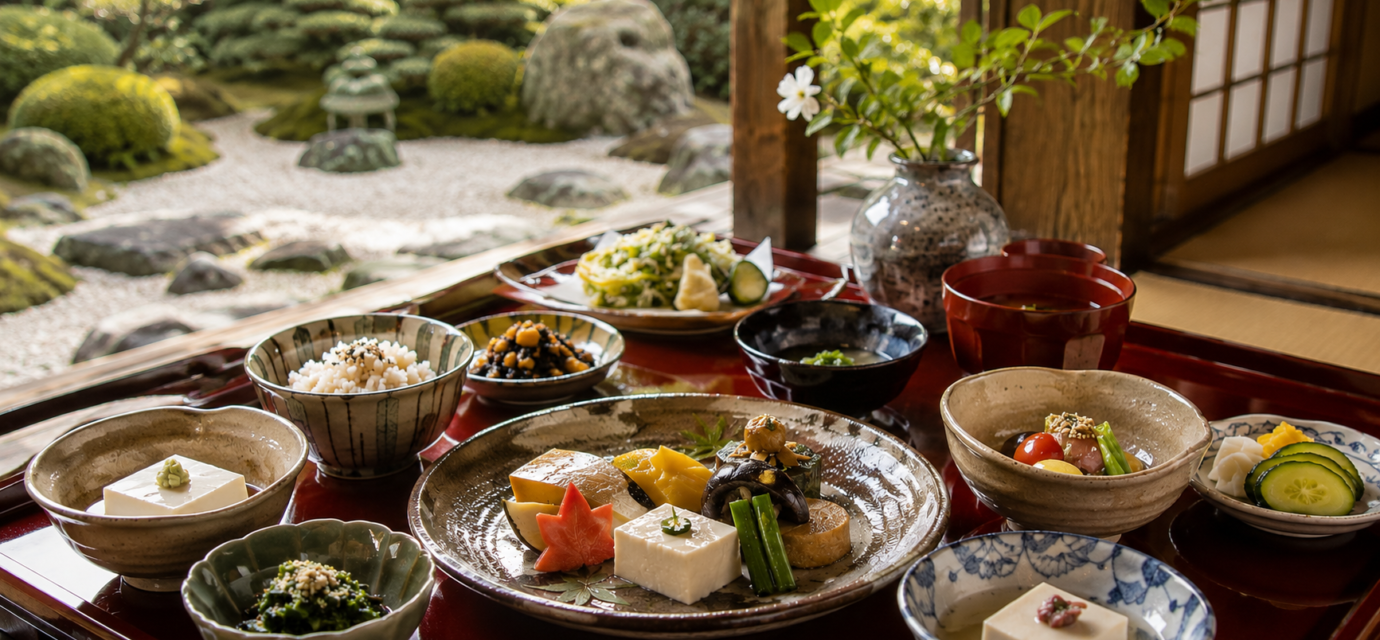
Kyoto’s Quiet Power Lunch: Inside Shigetsu and the Calm Beauty of Shojin Ryori
Some meals walk into the room before the food ever arrives.
At Shigetsu, tucked within the grounds of Tenryu-ji in Kyoto’s Arashiyama district, lunch does not begin with a dramatic entrance or a loud plate placed in front of you. It begins with quiet. The kind of quiet that settles over the shoulders after walking through temple gardens, hearing footsteps soften, and noticing how the world seems to lower its voice around old wood, stone paths, moss, and seasonal green.
This is not a meal built to chase attention. Shojin ryori, the Zen vegetarian cuisine served at Shigetsu, asks for something different. It asks the diner to slow down long enough to notice the steam rising from rice, the gloss of simmered vegetables, the softness of tofu, the shape of a lacquer bowl, the clean edge of a seasonal garnish, and the gentle rhythm of food served with care.
In a world where lunch often means multitasking, scrolling, rushing, or eating without remembering what the food tasted like, Shigetsu offers a different kind of power. It is not loud power. It is not flashy power. It is the quiet power of enough.
Why Kyoto Shojin Ryori Feels So Meaningful
Shojin ryori matters because it carries more than flavor. It carries a way of seeing food.
At Tenryu-ji’s Shigetsu, the restaurant describes cooking and eating as natural parts of everyday life that are also understood in Zen as forms of spiritual practice. That idea changes the whole mood of a meal. Food is not only something to consume. It becomes something to approach with attention.
Shojin ryori has roots in Chinese Zen and came to Japan along with Zen teachings during the 13th century. In practice, it developed as a vegetarian cuisine shaped by Buddhist values, especially the desire to prepare satisfying meals without taking animal life. At Shigetsu, the emphasis is on seasonal vegetables, herbs, wild plants, rice, soup, and carefully prepared side dishes that feel composed rather than crowded.
That is what makes the meal so meaningful. It is not simply “vegetarian food in Kyoto.” It is a dining tradition connected to restraint, gratitude, care, seasonality, and respect for nature. It invites the eater to pay attention not only to what is on the tray, but to the relationship between the cook, the ingredient, the place, and the person receiving the meal.
And honestly, that lesson travels well.
You do not have to live beside a Kyoto temple garden to understand the beauty of a thoughtful table. You only have to know what it feels like when someone prepares food with patience and places it in front of you, as if it matters.
Eating at a 600-Year-Old Temple in Kyoto | Shigetsu at Tenryu-ji
The Beauty of the Table
The beauty of shojin ryori is often quiet at first glance.
There may be rice, soup, and small side dishes arranged with balance. One bowl might hold something soft and pale, another something deep green, another something simmered until it carries the warmth of broth. A piece of vegetable may appear simple until you taste how much care is hidden inside it. A mushroom may be tender and earthy. Tofu may feel delicate but steady. A pickle may bring brightness. A sesame sauce may add richness without needing to shout.
The colors are not thrown together for drama. They feel seasonal. Spring may bring lighter greens and tender shoots. Autumn may lean into deeper golds, browns, and the quiet sweetness of root vegetables. Winter can make warm soup feel like a small kindness. Summer may make chilled textures, clean flavors, and fresh herbs feel especially alive.
The table itself matters too. Japanese food culture pays close attention to serving ware, placement, and the visual expression of the seasons. A meal can reflect nature through a leaf, a bowl, a garnish, a color, or the empty space left around the food. That space is part of the beauty. It gives the eye room to rest.
At Shigetsu, the setting deepens the experience. The restaurant is surrounded by the natural beauty of Tenryu-ji’s World Heritage gardens, and that matters because the food does not feel separate from the place. The garden, the temple grounds, the season, and the meal all speak in the same low tone.
Nothing feels accidental. Nothing feels rushed. The food seems to say: look closer.
A Taste of History and Culture
To understand Shigetsu, it helps to understand Kyoto’s place in Japanese cultural memory.
Kyoto was founded as the imperial capital in 794 and remained Japan’s cultural center for more than a thousand years. UNESCO recognizes the Historic Monuments of Ancient Kyoto for their religious architecture, wooden structures, and garden traditions, all of which shaped Japanese cultural life in lasting ways. Tenryu-ji is part of that larger Kyoto heritage, and Shigetsu sits inside that environment rather than outside of it.
Shojin ryori belongs to the broader world of Japanese food culture, but it has its own spirit. Unlike many familiar Japanese meals that may include fish-based dashi, seafood, or meat, shojin ryori is rooted in Buddhist vegetarian practice. Traditional preparations often rely on ingredients such as vegetables, tofu, yuba, sesame, mushrooms, seaweed, rice, miso, and plant-based broths made from kombu or dried shiitake.
The goal is not to imitate meat or overwhelm the senses. The goal is to draw out the natural character of each ingredient. A carrot does not need to become something else. A mushroom does not need to pretend. A bowl of rice can stand with dignity. A simple soup can hold the warmth of the whole meal.
This is where shojin ryori connects beautifully with Washoku, the traditional dietary cultures of Japan recognized by UNESCO in 2013. Washoku is not only about food items. It is also about skills, knowledge, seasonality, presentation, family and community bonds, and respect for nature. It values freshness, balance, beauty, and the connection between meals and annual events.
Shigetsu brings those values into a temple restaurant setting. Its menu changes with the season, and its courses are named with natural imagery such as Snow, Moon, and Flower. Those names are poetic, but they are also practical reminders that food can follow the rhythm of the year.
*MICHELIN Guide, Shigetsu – https://guide.michelin.com/us/en/kyoto-region/kyoto/restaurant/shigetsu *
What This Food Tradition Teaches Us
Shojin ryori teaches that simplicity is not the same as emptiness.
Sometimes people hear “simple food” and imagine something plain, boring, or lacking. But in this tradition, simplicity asks for skill. It takes care to make a vegetable taste like its best self. It takes patience to season without hiding. It takes attention to create a meal that feels calm but still satisfying.
This food tradition also teaches gratitude. In Japanese dining, the phrase “itadakimasu” is often said before eating. It is commonly understood as an expression of receiving with humility and appreciation. Even for readers outside Japan, the spirit behind the phrase can be meaningful: pause before eating, recognize the effort behind the meal, and receive it with care.
Shojin ryori also teaches respect for limits. It does not depend on excess to feel special. It honors what is available, what is seasonal, and what can be prepared without wastefulness. That kind of thinking feels especially relevant today, when many home cooks are trying to eat more thoughtfully, waste less food, and make everyday meals feel intentional.
Most of all, this tradition teaches that a meal can change the pace of a day. A quiet lunch can become a reset. A bowl of soup can become a reminder to breathe. A small dish can become proof that care does not need to be complicated to be felt.
How to Bring This Spirit Into Your Own Kitchen
You do not need to recreate a temple meal to bring the spirit of shojin ryori into your own kitchen. In fact, the most respectful way to begin may be to start small.
Choose one seasonal vegetable and prepare it with attention. Steam it, simmer it, roast it gently, or dress it simply. Notice its color before cooking and after cooking. Taste it before adding too much seasoning. Ask what the ingredient needs instead of deciding too quickly.
Build a calm meal around rice, soup, and a few small vegetable dishes. Use tofu for softness and protein. Try yuba if you can find it at a Japanese market. Make a simple plant-based broth with kombu and dried shiitake. Add mushrooms for depth, greens for freshness, and pickles for contrast.
Keep the table uncluttered. Use small bowls if you have them. Leave space between dishes. Serve portions with care. Place a cloth napkin or simple placemat down. Add one seasonal element, such as a small flower, a leaf, a citrus wedge, or a beautiful bowl that makes the food feel honored.
Most importantly, slow the meal down. Put the phone away for a few minutes. Eat while the soup is still warm. Notice texture. Notice aroma. Notice how a quiet table can make even a simple meal feel more generous.
That is the part of the tradition that can meet you anywhere.
Simple Serving Ideas
For a shojin ryori-inspired table at home, think in small, balanced pieces rather than one large centerpiece.
Start with steamed rice. Add a clear vegetable soup or miso soup made with plant-based dashi. Serve tofu with grated ginger, scallions, or a light soy-based sauce. Add simmered mushrooms, roasted sweet potato, blanched greens with sesame dressing, quick cucumber pickles, or daikon prepared simply.
For texture, include something soft, something crisp, something warm, and something bright. A meal becomes more memorable when the mouth has different experiences to move through.
For hosting, keep the mood gentle. This is not the table for overloading plates or rushing people through courses. Serve tea. Use low music or no music. Let conversation breathe. Invite guests to notice the ingredients without turning the meal into a lecture.
If you want a travel-inspired touch, place a small card near the table explaining that the meal was inspired by Kyoto’s shojin ryori tradition and your desire to honor seasonality, simplicity, and gratitude. Keep the wording humble. You are not claiming to recreate a sacred temple meal. You are allowing the spirit of care to shape your own table.
A Thoughtful Note on Cultural Appreciation
Shojin ryori deserves respect because it is connected to religious practice, history, and place. It should not be reduced to a trendy “clean eating” idea or treated as a decorative theme without context.
A respectful approach begins with learning. Read from Japanese cultural institutions, official tourism sources, restaurants connected to the tradition, and scholars or practitioners who understand the cuisine deeply. Learn that shojin ryori is not just a menu style. It is tied to Zen Buddhist values, discipline, and attention.
Use the correct names when you can. Give credit to the tradition. Avoid making unsupported claims about health, spirituality, or “ancient secrets.” Food traditions are living cultures, not props.
Also remember that appreciation does not require perfection. A home cook outside Japan may not have every ingredient or every tool. That is okay. Respect is shown through honesty, care, and humility. Instead of saying, “This is authentic shojin ryori,” it may be more accurate to say, “This meal is inspired by shojin ryori and the values of seasonality, simplicity, and gratitude.”
That small difference matters. It keeps the door open for learning.
Final Thoughts: The Meal That Teaches You to Slow Down
The beauty of Shigetsu is not only that it serves a memorable lunch in Kyoto. The beauty is that it reminds us what food can do when it is prepared with restraint and received with attention.
Shojin ryori does not need to overwhelm the senses to stay with you. It lingers because it respects quiet things: a warm bowl, a seasonal vegetable, the shape of a dish, the patience of a cook, the calm of a garden, the silence between bites.
That may be why this kind of meal feels so powerful. It does not pull you away from yourself. It brings you back.
At Shigetsu, lunch becomes a softer lesson: eat with gratitude, honor what is in season, take only what you need, and let simple things be enough.
And maybe that is the kind of beauty many of us are hungry for now.
References
- Japan External Trade Organization. (n.d.). Washoku, as an UNESCO Intangible Cultural Heritage. The Japan Food Product Overseas Promotion Center. https://www.jetro.go.jp/en/jfoodo/washoku.html
- Japan House Los Angeles. (n.d.). WASHOKU: Nature and Culture in Japanese Cuisine. Japan House Los Angeles. https://www.japanhousela.com/exhibitions/washoku-food-nature-culture-traditional-japanese-cuisine-kaiseki-unesco-asahi-shimbun/
- Japan National Tourism Organization. (n.d.). Japanese Food Etiquette Guide. Travel Japan. https://www.japan.travel/en/guide/japanese-food-etiquette/
- Ministry of Agriculture, Forestry and Fisheries of Japan. (n.d.). About. Traditional Foods in Japan. https://www.maff.go.jp/e/policies/market/dento_syoku/about/index.html
- Tenryu-ji Temple. (n.d.). Shigetsu: Tenryu-ji’s Zen Vegetarian Restaurant. Tenryu-ji Temple. https://www.tenryuji.com/en/shigetsu/
- The MICHELIN Guide. (n.d.). Shigetsu – Kyoto. The MICHELIN Guide. https://guide.michelin.com/us/en/kyoto-region/kyoto/restaurant/shigetsu
- UNESCO. (n.d.). Historic Monuments of Ancient Kyoto (Kyoto, Uji and Otsu Cities). UNESCO World Heritage Centre. https://whc.unesco.org/en/list/688/
- UNESCO. (n.d.). Washoku, traditional dietary cultures of the Japanese, notably for the celebration of New Year. UNESCO Intangible Cultural Heritage. https://ich.unesco.org/en/RL/washoku-traditional-dietary-cultures-of-the-japanese-notably-for-the-celebration-of-new-year-00869
- YouTube. (n.d.). Eating at a 600-Year-Old Temple in Kyoto | Shigetsu at Tenryu-ji [Video]. YouTube. https://www.youtube.com/watch?v=wfs5t5i2jS0