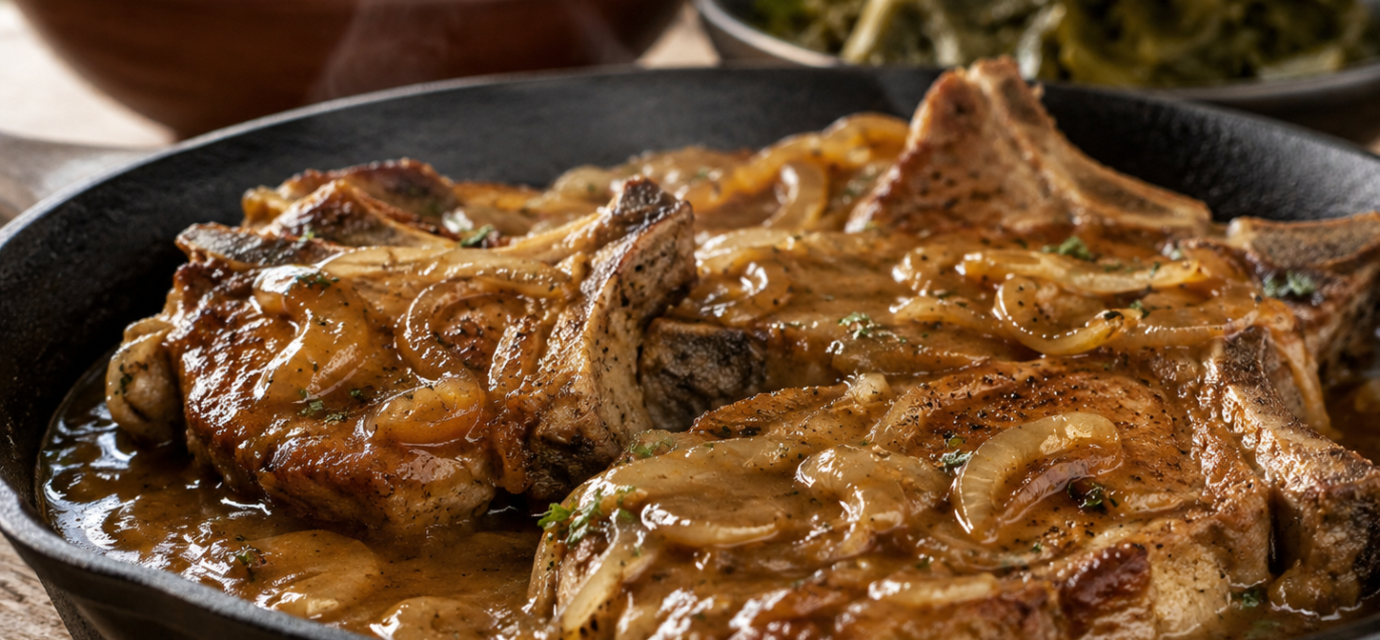
Southern-Style Smothered Pork Chops with Onion Gravy
A skillet of southern smothered pork chops has a way of making the whole kitchen slow down. The onions soften into sweetness, the gravy turns glossy and rich, and the pork chops settle into that tender, comforting place where a simple dinner starts feeling like Sunday supper.
This is the kind of dish that invites you to pull out the cast iron, warm up a pot of rice, and let the gravy do what gravy does best: bring everybody closer to the table. Every bite carries that deep pan-seared flavor from the browned pork, the cozy aroma of garlic and onion, and the soft, savory finish of a homemade gravy made from the same skillet.
Southern-style smothered pork chops are rooted in the practical beauty of Southern home cooking, especially the tradition of turning everyday ingredients into something generous, flavorful, and filling. This recipe honors that spirit with a classic sear-and-simmer method, a seasoned flour dredge, and a from-scratch onion gravy that clings beautifully to each chop.
The goal is not to overcomplicate the dish. It is to help you make pork chops that are juicy, gravy that is smooth, and a meal that tastes like care was stirred into every step.
Quick Recipe Snapshot
- Prep Time: 15 minutes
- Cook Time: 35-40 minutes
- Total Time: 50-55 minutes
- Servings: 4
- Difficulty Level: Beginner-friendly to intermediate
- Best For: Sunday supper, family dinner, cozy weeknights, holiday side-table comfort, soul food-inspired meals
- Expected Result: Tender pork chops coated in a rich, savory onion gravy with deep skillet flavor and a warm Southern comfort finish
Why You’ll Love This Recipe
- It uses simple, affordable ingredients but builds big, slow-cooked flavor.
- The pork chops are seared first, giving the gravy a richer base.
- The onion gravy is homemade, silky, and deeply savory without needing canned soup.
- It pairs beautifully with rice, mashed potatoes, cornbread, greens, or roasted vegetables.
- The recipe includes doneness cues, food safety guidance, and easy troubleshooting.
- It works with bone-in or boneless pork chops, though bone-in gives the best traditional texture.
- It feels special enough for Sunday dinner but practical enough for a weeknight.
Cultural and Seasonal Background
Southern smothered pork chops belong to a broad family of Southern “smothered” dishes, where meat is browned and then gently cooked with onions, broth, drippings, or gravy until tender. In many homes, smothering is less about one fixed recipe and more about a trusted cooking method: build flavor in the pan, add aromatics, create gravy, then let everything come together low and slow.
The dish is often associated with Southern home cooking and African American soul food traditions, though its story is layered. Southern food developed through many hands and histories, including African, Indigenous, European, and later regional American influences. The Smithsonian’s National Museum of African American History and Culture explains that African American foodways include not only what people eat, but how food is grown, prepared, shared, remembered, and carried through community life. Encyclopaedia Britannica also describes soul food as a cuisine connected to African American cooking traditions in the United States, especially the South.
Smothered pork chops reflect that wider Southern habit of making flavor from the pan. Browning meat creates savory drippings, onions stretch the dish and bring sweetness, and gravy turns the meal into something that can feed a table when served over rice, potatoes, or bread. In many families, this is the food of Sundays, reunions, church suppers, winter evenings, and “come on in, I made enough” hospitality.
Because Southern cooking is deeply regional and personal, this recipe does not claim to be the only authentic version. Some cooks use milk gravy. Some use broth. Some add bell pepper, celery, mushrooms, cayenne, hot sauce, or a touch of cream. This version stays close to the classic skillet approach: seasoned pork chops, a light flour dredge, onions, garlic, broth, and a gravy built from the browned bits left behind.
Reference notes: Cultural context informed by the National Museum of African American History and Culture, Encyclopaedia Britannica, and Smithsonian Magazine’s foodways reporting on the Black roots of Southern cuisine.
Why This Recipe Works
The flavor starts before the gravy even begins. Patting the pork chops dry helps them brown instead of steaming. A light coating of seasoned flour creates a delicate crust and leaves just enough starch in the skillet to help build the gravy.
Searing the chops creates browned bits on the bottom of the pan. Those bits, often called fond, are full of savory flavor. When broth is added, the liquid loosens them from the skillet and carries that flavor into the gravy.
The onions matter just as much as the pork. Cooking them until softened and lightly golden brings out their natural sweetness, which balances the pepper, garlic, paprika, and savory broth. A small amount of butter and flour forms a simple roux, helping the gravy thicken smoothly instead of turning watery.
The final simmer is gentle. Pork chops can become dry if blasted with high heat, so this recipe keeps them covered in gravy over low heat until they reach a safe internal temperature of 145°F, followed by a short rest. That gives you pork that is fully cooked, tender, and still juicy.
Ingredients
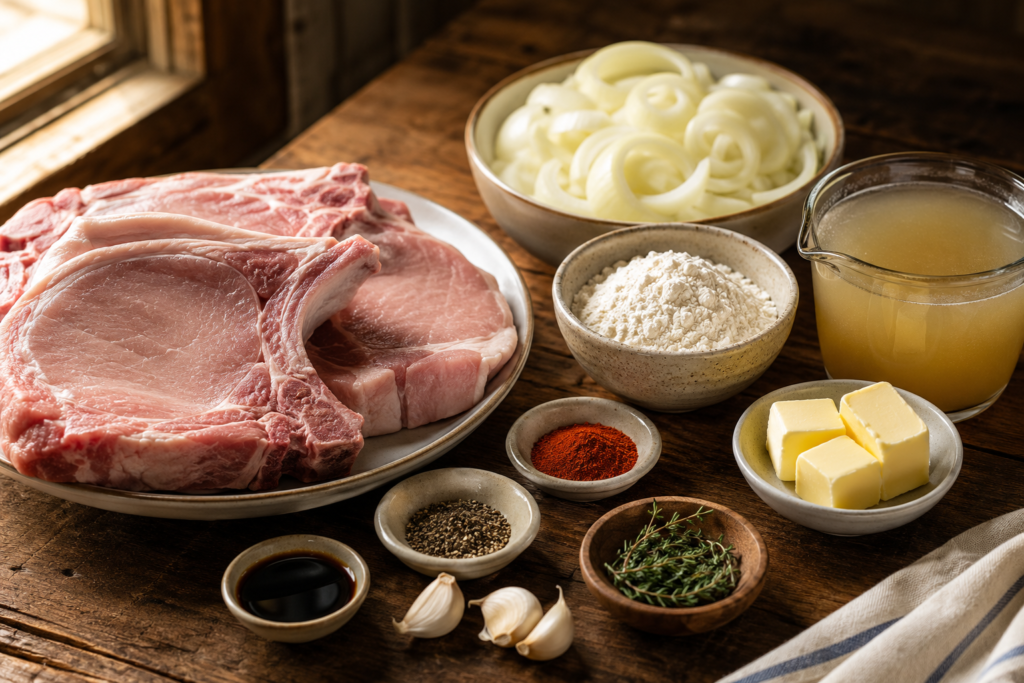
Ingredients for Southern smothered pork chops with onion gravy
- 4 bone-in pork chops, about ¾ to 1 inch thick
Bone-in chops are classic for this style because the bone and surrounding fat help support flavor and moisture. Boneless chops also work, but they usually cook faster. - 1 ½ teaspoons kosher salt, divided
Salt seasons the pork and the gravy. Dividing it helps prevent the finished dish from becoming too salty. - 1 teaspoon black pepper
Black pepper gives the gravy warmth and a traditional Southern-style bite. - 1 teaspoon garlic powder
Garlic powder seasons the pork evenly and blends well into the flour dredge. - 1 teaspoon onion powder
Onion powder deepens the savory flavor and supports the fresh onions in the gravy. - ¾ teaspoon smoked or sweet paprika
Paprika adds color and gentle warmth. Smoked paprika gives a deeper flavor, while sweet paprika keeps it mild. - ¼ teaspoon cayenne pepper, optional
Cayenne adds a little heat. Use less or skip it for a milder family-style version. - ¾ cup all-purpose flour, divided
Flour lightly coats the chops and helps thicken the onion gravy. Dividing it keeps the dredge and gravy measurements controlled. - 2 tablespoons neutral oil, such as canola, vegetable, or avocado oil
Oil helps sear the chops without burning quickly. - 2 tablespoons unsalted butter
Butter adds richness to the gravy and helps cook the flour into a smooth roux. - 1 large yellow onion, thinly sliced
Onion is the heart of the gravy. As it cooks, it softens, sweetens, and gives the sauce its classic Southern comfort flavor. - 3 cloves garlic, minced
Fresh garlic brings aroma and depth. Add it after the onions soften so it does not burn. - 2 cups low-sodium chicken broth, plus more if needed
Broth forms the body of the gravy. Low-sodium broth gives you more control over seasoning. - ½ cup whole milk or evaporated milk, optional
Milk makes the gravy creamier. For a darker onion gravy, use extra broth instead. - 1 teaspoon Worcestershire sauce
Worcestershire adds savory depth and a subtle tang. - ½ teaspoon dried thyme
Thyme adds an earthy note that works well with pork, onions, and gravy. - 1 bay leaf, optional
Bay leaf adds a quiet background flavor during the simmer. Remove before serving. - 1 tablespoon chopped parsley, optional garnish
Parsley adds freshness and color at the end.
Ingredient Notes and Smart Substitutions
For boneless pork chops: Use chops that are at least ¾ inch thick if possible. Begin checking the internal temperature earlier because boneless chops cook faster.
For thin pork chops: Thin chops can overcook quickly. Sear briefly, remove them, make the gravy, then return them for only a short simmer until they reach 145°F.
For thicker pork chops: Thick chops may need extra simmering time. Keep the heat low and use a thermometer instead of guessing.
For a cream-free gravy: Skip the milk and use all chicken broth. The gravy will be more brown and savory.
For a richer gravy: Add 2 tablespoons of heavy cream at the end, after the pork is cooked. Keep the heat low so the gravy stays smooth.
For onion lovers: Use two onions and let them cook slowly until golden before adding garlic.
For a gluten-free version: Use a trusted gluten-free all-purpose flour blend for dredging and thickening. Make sure the broth and Worcestershire sauce are also gluten-free.
For a pork-free approach: The same smothering method can work with chicken thighs, but the safe internal temperature for chicken is different. Chicken should reach 165°F.
Equipment You’ll Need
- Large cast-iron skillet or heavy-bottomed skillet with lid
- Tongs
- Shallow dish for flour dredge
- Cutting board
- Sharp knife
- Measuring spoons and cups
- Wooden spoon or spatula
- Whisk
- Instant-read food thermometer
- Plate or tray for holding seared pork chops
Step-by-Step Directions
1. Pat and season the pork chops.
Pat the pork chops dry with paper towels. In a small bowl, mix 1 teaspoon salt, black pepper, garlic powder, onion powder, paprika, and cayenne if using. Season both sides of the pork chops. Dry pork browns better, while wet pork tends to steam in the skillet.
2. Prepare the flour dredge.
Add ¾ cup of flour to a shallow dish. Season it with the remaining ½ teaspoon salt. Dredge each pork chop lightly in the flour, coating both sides, then shake off the excess. You want a thin coating, not a heavy crust. Reserve 2 tablespoons of the seasoned flour for the gravy and discard the rest that touched raw pork.
4. Sear the pork chops.
Heat oil in a large skillet over medium-high heat. When the oil shimmers, add the pork chops in a single layer. Sear for 3-4 minutes per side, or until golden brown. Work in batches if needed so the pan is not crowded. The pork does not need to be fully cooked yet. Transfer the chops to a clean plate.
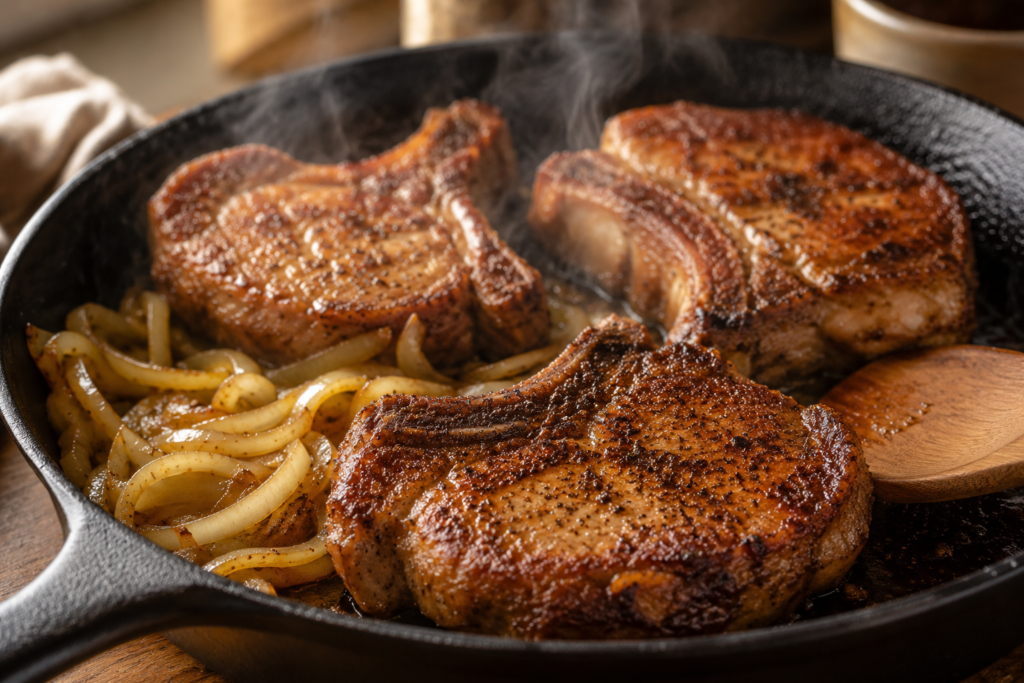
Pork chops searing in a skillet before making onion gravy
5. Soften the onions.
Lower the heat to medium. Add the sliced onions to the same skillet. Stir them into the browned bits and cook for 7-9 minutes, until softened and lightly golden around the edges. If the pan looks too dry, add a small splash of broth to prevent scorching.
6. Add garlic and butter.
Stir in the minced garlic and cook for 30 seconds, just until fragrant. Add butter and let it melt into the onions. Garlic burns quickly, so keep it moving and do not walk away from the skillet.
7. Build the roux.
Sprinkle the reserved 2 tablespoons of seasoned flour over the onions. Stir constantly for 1-2 minutes. The flour should look slightly golden and smell lightly toasted, not raw. This step helps the gravy thicken smoothly.
8. Deglaze and make the gravy.
Slowly pour in the chicken broth while stirring or whisking. Scrape the bottom of the skillet to lift the browned bits into the sauce. Add Worcestershire sauce, thyme, bay leaf if using, and milk if you want a creamier gravy. Bring the gravy to a gentle simmer.
9. Return the pork chops to the skillet.
Nestle the pork chops into the gravy and spoon some of the onions over the top. Cover the skillet and reduce the heat to low. Simmer gently for 15-20 minutes, depending on thickness. Flip the chops once halfway through.
10. Check doneness safely.
Use an instant-read thermometer inserted into the thickest part of the chop, away from the bone. Whole-cut pork chops should reach 145°F and rest for at least 3 minutes. If the chops need more time, cover and continue simmering in 3-5 minute intervals.
11. Adjust the gravy.
Remove the bay leaf. If the gravy is too thick, add a splash of broth. If it is too thin, simmer uncovered for a few minutes until it coats the back of a spoon. Taste and adjust salt and pepper as needed.
12. Rest and serve.
Let the pork chops rest for 3 minutes before serving. Spoon plenty of onion gravy over the top and garnish with parsley if desired. Serve hot with rice, mashed potatoes, cornbread, or greens.
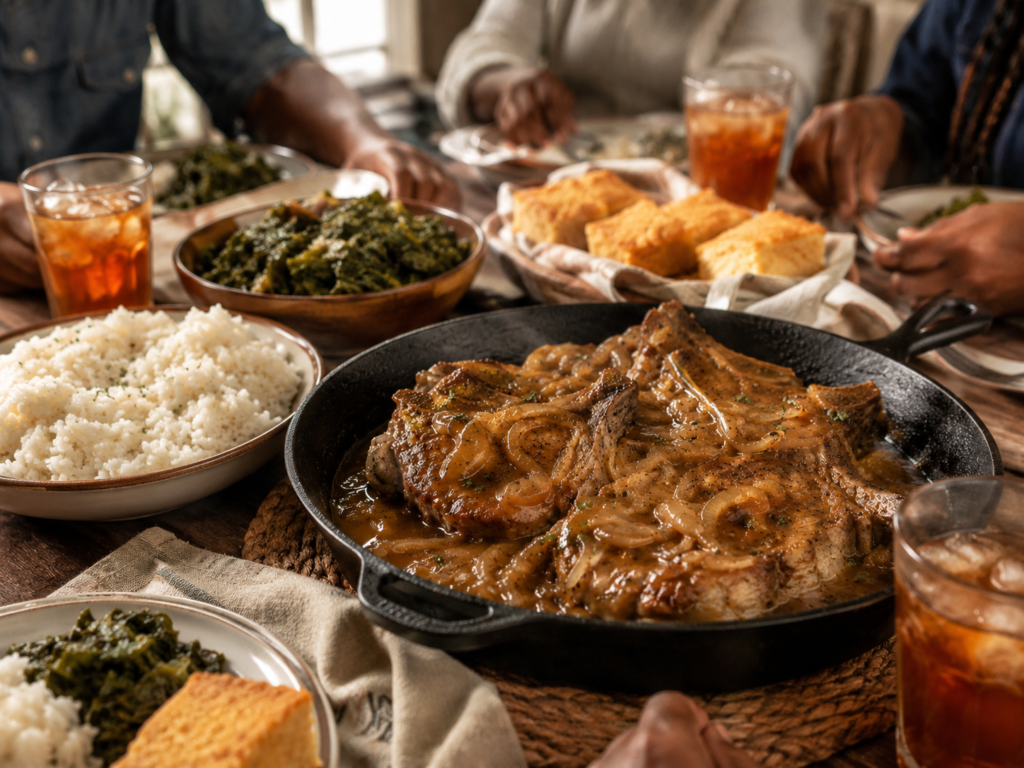
Southern Sunday supper table with smothered pork chops and classic sides
Pro Tips for Best Results
- Use pork chops that are close in thickness so they cook evenly.
- Do not skip drying the pork before seasoning; moisture blocks browning.
- Shake off excess flour to avoid a pasty coating.
- Sear in batches if needed. Crowding the pan creates steam.
- Keep the gravy at a gentle simmer, not a hard boil.
- Use low-sodium broth so you can control the final salt level.
- A thermometer is the best way to avoid dry pork.
- Let the pork rest before serving so the juices settle.
- If using milk, keep the heat gentle to help the gravy stay smooth.
- Taste at the end. Gravy reduces as it cooks, so seasoning can intensify.
Common Mistakes to Avoid
- Overcooking the pork chops
Quick fix: Start checking early with a thermometer. Pull the chops when they reach 145°F. - Using high heat during the simmer
Quick fix: Lower the heat. The gravy should bubble gently, not boil aggressively. - Adding dry flour directly to hot broth
Quick fix: Cook the flour with butter and onions first to make a roux. - Crowding the skillet
Quick fix: Sear in batches so each chop has room to brown. - Forgetting to scrape up the browned bits
Quick fix: Deglaze with broth and scrape the skillet well. That is where much of the flavor lives. - Making the gravy too salty too early
Quick fix: Use low-sodium broth and adjust seasoning only after simmering. - Letting garlic burn
Quick fix: Add garlic after the onions soften and cook it briefly. - Serving immediately without resting
Quick fix: Rest the chops for at least 3 minutes after they reach temperature.
Flavor Variations
- Mushroom Smothered Pork Chops: Add 8 ounces of sliced mushrooms with the onions and cook until browned.
- Spicy Southern Gravy: Add extra cayenne or a few dashes of hot sauce to the gravy.
- Creamy Onion Gravy: Use ½ cup evaporated milk or whole milk for a silkier finish.
- Cajun-Inspired Version: Add 1 teaspoon Cajun seasoning and a little diced bell pepper with the onions. Use less salt if the seasoning blend is salty.
- Herb-Garlic Version: Add fresh thyme and a little chopped rosemary near the end.
- Bacon-Onion Gravy: Cook 2 chopped bacon slices first, remove them, and use some of the drippings with the oil. Sprinkle the bacon over the finished dish.
- Sunday Supper Style: Add a splash of cream and serve over whipped mashed potatoes with collard greens.
Serving Suggestions
Southern smothered pork chops are made for sides that catch gravy. Spoon them over fluffy white rice, creamy mashed potatoes, buttered egg noodles, or stone-ground grits. For a classic Southern-inspired plate, serve them with collard greens, green beans, cabbage, cornbread, or roasted sweet potatoes.
For a cozy Sunday dinner, add a crisp salad with a tangy vinaigrette to balance the richness. For a holiday table, serve the chops family-style in a wide platter with gravy poured over the top and extra gravy on the side.
Drink pairings can stay simple: sweet tea, unsweetened iced tea with lemon, sparkling water, ginger ale, or a light red wine such as Pinot Noir for adults who enjoy wine. The best pairing is something refreshing enough to balance the rich onion gravy.
Storage, Freezing, and Reheating
Refrigeration: Let leftovers cool slightly, then transfer pork chops and gravy to shallow airtight containers. Refrigerate within 2 hours of cooking. Store in the refrigerator for 3-4 days.
Freezing: Freeze pork chops with gravy in freezer-safe containers for up to 3 months for best quality. The gravy helps protect the pork from drying out. Thaw overnight in the refrigerator before reheating.
Reheating on the stove: Place pork chops and gravy in a covered skillet over medium-low heat. Add a splash of broth or water if the gravy is too thick. Heat until the leftovers reach 165°F.
Reheating in the oven: Place pork chops and gravy in a covered baking dish. Heat at 325°F until warmed through to 165°F.
Reheating in the microwave: Use a microwave-safe dish, cover loosely, and heat in short intervals. Stir the gravy and rotate the pork as needed for even heating. Check that leftovers reach 165°F.
Food safety note: Reheat gravy until hot and bubbling, and avoid leaving cooked pork at room temperature for longer than 2 hours.
Make-Ahead Tips
You can season the pork chops up to 12 hours ahead and refrigerate them covered. This gives the seasoning time to settle into the meat.
You can slice the onions and mince the garlic a day ahead. Store them separately in airtight containers in the refrigerator.
The gravy can be made ahead, but it is best when finished with the pork chops, so it picks up the flavor from the seared meat. If making the full dish ahead, store the pork chops in the gravy and reheat gently with a splash of broth.
For easier entertaining, sear the pork chops and make the gravy earlier in the day, then finish the covered simmer shortly before serving.
Frequently Asked Questions
What are Southern smothered pork chops?
Southern smothered pork chops are pork chops that are seasoned, lightly dredged in flour, seared, and simmered in a savory gravy, often with onions. The method creates tender meat and a rich sauce for serving over rice, potatoes, or cornbread.
Are bone-in or boneless pork chops better for smothered pork chops?
Bone-in pork chops are often preferred because they bring more flavor and are a little more forgiving during simmering. Boneless pork chops work too, but they cook faster and should be checked early.
How do I keep pork chops from drying out?
Use chops that are not too thin, sear them quickly, simmer gently, and use a thermometer. Cook whole-cut pork chops to 145°F, then let them rest for at least 3 minutes.
Can I make smothered pork chops without milk?
Yes. Use all chicken broth for a darker onion gravy. Milk or evaporated milk makes the gravy creamier, but it is not required.
Why is my gravy lumpy?
Lumps often happen when dry flour is added directly to hot liquid. To prevent this, stir flour into butter and onions first, then slowly add broth while whisking or stirring.
Can I use thin pork chops?
Yes, but thin chops cook quickly. Sear them briefly and return them to the gravy only long enough to reach 145°F.
What should I serve with smothered pork chops?
Rice, mashed potatoes, cornbread, collard greens, cabbage, green beans, grits, and roasted sweet potatoes all work beautifully.
Can I freeze smothered pork chops?
Yes. Freeze the pork chops with gravy in an airtight freezer-safe container for up to 3 months for best quality. Thaw in the refrigerator and reheat to 165°F.
Final Thoughts
Southern-style smothered pork chops remind us that comfort food does not have to be complicated to feel meaningful. A few pork chops, an onion, a skillet, and a little patience can become a meal that feels generous, familiar, and deeply satisfying. That is the beauty of this dish: it takes everyday ingredients and lets technique bring them to life.
The real magic begins when the pork hits the hot skillet and leaves behind those browned bits that later melt into the gravy. It continues when the onions soften, the flour toasts, and the broth turns into something silky enough to spoon over everything on the plate. By the time the pork chops are nestled back into the skillet, the meal has already started telling its story.
This recipe honors Southern comfort cooking with a practical home-kitchen approach. It respects the traditions that shaped smothered dishes while leaving room for the way real families cook today. Maybe your table wants extra pepper. Maybe you like mushrooms in the gravy. Maybe your family serves it over rice, while someone else swears by mashed potatoes. That flexibility is part of the dish’s charm.
Cooking well is often about paying attention: listening for the sizzle, watching the onions soften, checking the temperature instead of guessing, and tasting the gravy before it reaches the table. When you do that, even a simple skillet dinner can feel like an act of care.
Serve these smothered pork chops hot, with enough gravy to pass around and a side that makes sense for your home. Whether it lands on a Sunday table, a chilly weeknight, or a family gathering where everyone comes back for one more spoonful of gravy, this is the kind of recipe that earns its place in the rotation.
Quick Recipe Card
Recipe Name: Southern-Style Smothered Pork Chops with Onion Gravy
Description: Tender pork chops are seasoned, lightly dredged, pan-seared, and simmered in a rich homemade onion gravy for a comforting Southern-style skillet dinner.
Prep Time: 15 minutes
Cook Time: 35-40 minutes
Total Time: 50-55 minutes
Servings: 4
Ingredients:
- 4 bone-in pork chops, ¾ to 1 inch thick
- 1 ½ teaspoons kosher salt, divided
- 1 teaspoon black pepper
- 1 teaspoon garlic powder
- 1 teaspoon onion powder
- ¾ teaspoon smoked or sweet paprika
- ¼ teaspoon cayenne pepper, optional
- ¾ cup all-purpose flour, divided
- 2 tablespoons neutral oil
- 2 tablespoons unsalted butter
- 1 large yellow onion, thinly sliced
- 3 cloves garlic, minced
- 2 cups low-sodium chicken broth, plus more if needed
- ½ cup whole milk or evaporated milk, optional
- 1 teaspoon Worcestershire sauce
- ½ teaspoon dried thyme
- 1 bay leaf, optional
- 1 tablespoon chopped parsley, optional garnish
Instructions:
- Pat pork chops dry. Season with 1 teaspoon salt, pepper, garlic powder, onion powder, paprika, and cayenne if using.
- Place flour in a shallow dish and season with the remaining ½ teaspoon salt. Lightly dredge pork chops and shake off excess. Reserve 2 tablespoons of flour for gravy and discard the flour that touched raw pork.
- Heat oil in a large skillet over medium-high heat. Sear pork chops for 3-4 minutes per side until golden. Transfer to a clean plate.
- Lower the heat to medium. Add onions and cook 7-9 minutes until softened and lightly golden.
- Add garlic and cook for 30 seconds. Add butter and melt.
- Sprinkle in reserved flour and stir for 1-2 minutes to form a light roux.
- Slowly add chicken broth, scraping browned bits from the skillet. Stir in Worcestershire sauce, thyme, bay leaf, and milk if using.
- Return pork chops to the skillet. Cover and simmer on low for 15-20 minutes, flipping once, until pork reaches 145°F.
- Rest pork chops for at least 3 minutes. Adjust gravy thickness and seasoning.
- Serve hot with onion gravy spooned over the top.
Notes:
- Bone-in pork chops give the best classic flavor and texture.
- Boneless chops may cook faster, so check early.
- Use all broth instead of milk for a darker brown gravy.
- Add mushrooms, hot sauce, or Cajun seasoning for variation.
- Whole-cut pork chops should reach 145°F and rest for at least 3 minutes.
Storage:
Store leftovers in shallow airtight containers in the refrigerator for 3-4 days. Freeze with gravy for up to 3 months for the best quality. Reheat leftovers to 165°F before serving.
Nutrition Disclaimer: Nutrition information, if provided, is an estimate and may vary based on ingredients and preparation methods.
References
- Encyclopaedia Britannica. (n.d.). Soul food. Encyclopaedia Britannica. https://www.britannica.com/topic/soul-food-cuisine
- FoodSafety.gov. (2023, September 18). 4 steps to food safety. U.S. Department of Health & Human Services. https://www.foodsafety.gov/keep-food-safe/4-steps-to-food-safety
- Gritzer, D. (n.d.). How to make a roux and use it right. Serious Eats. https://www.seriouseats.com/a-brief-guide-to-roux
- National Museum of African American History and Culture. (n.d.). Foodways. Smithsonian Institution. https://nmaahc.si.edu/foodways
- National Pork Board. (n.d.). Pork cooking temperature. https://pork.org/pork-cooking-temperature/
- National Pork Board. (n.d.). Learn how to bake, fry, and grill pork chops. https://pork.org/cuts/pork-chops/
- U.S. Department of Agriculture. (2011, May 25). Cooking meat? Check the new recommended temperatures. https://www.usda.gov/about-usda/news/blog/cooking-meat-check-new-recommended-temperatures
- U.S. Department of Agriculture, Food Safety and Inspection Service. (n.d.). Safe minimum internal temperature chart. https://www.fsis.usda.gov/food-safety/safe-food-handling-and-preparation/food-safety-basics/safe-temperature-chart
- U.S. Department of Agriculture, Food Safety and Inspection Service. (2020, July 31). Leftovers and food safety. https://www.fsis.usda.gov/food-safety/safe-food-handling-and-preparation/food-safety-basics/leftovers-and-food-safety
- U.S. Food and Drug Administration. (2024, March 5). Safe food handling. https://www.fda.gov/food/buy-store-serve-safe-food/safe-food-handling