Luxurious Rooftop Sushi Dinner at Twilight: A City-Light Feast Rooted in Japanese Food Culture
A rooftop sushi dinner has a way of making time feel softer. The city lights begin to glow, the sky turns that deep blue-purple just before night fully settles in, and every small plate on the table feels intentional: glossy sushi rice, cool cucumber, creamy avocado, pink shrimp, folded nori, soy sauce poured with care, and ginger waiting quietly on the side.
But sushi is more than something beautiful to arrange under string lights. At its heart, sushi is about rice, preservation, patience, seasonality, and the hands that shape food into something shared. Encyclopaedia Britannica defines sushi as a Japanese rice dish made with cooked rice flavored with vinegar and paired with ingredients such as vegetables, egg, or seafood. Nigiri, maki, and pressed sushi are all part of that larger family.
For Fly By Eats, this kind of dinner is not about pretending your balcony is Tokyo or turning culture into decoration. It is about appreciation. It is about learning why the food matters, preparing it safely, and creating a table where people slow down long enough to notice texture, temperature, color, and care.
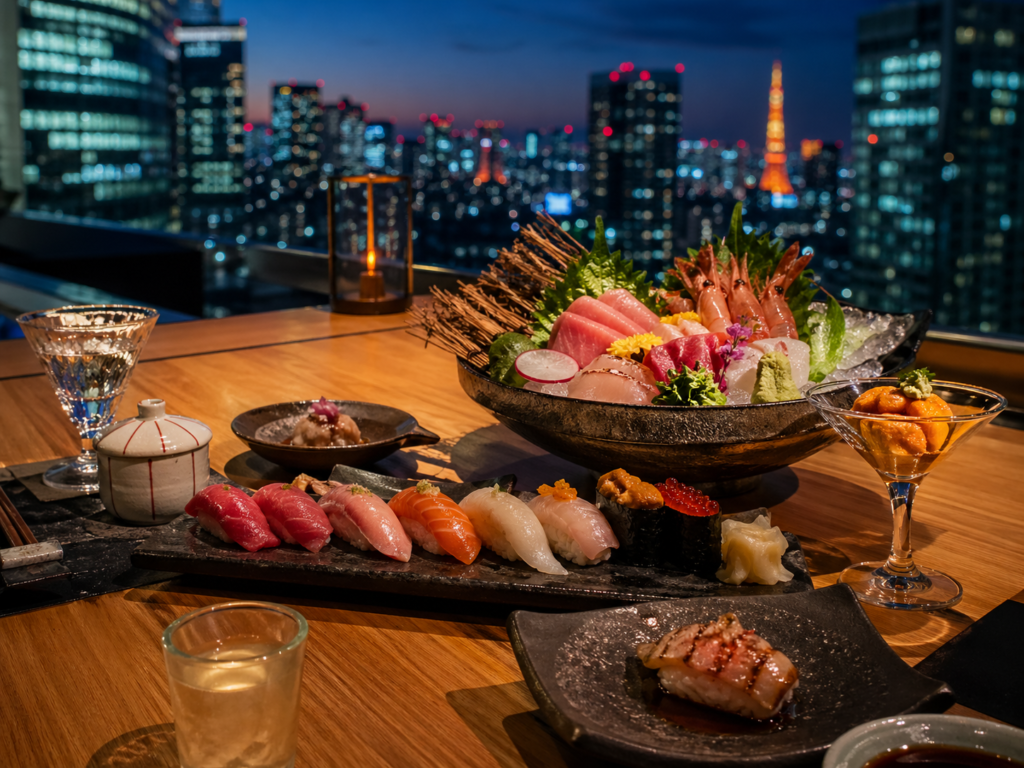
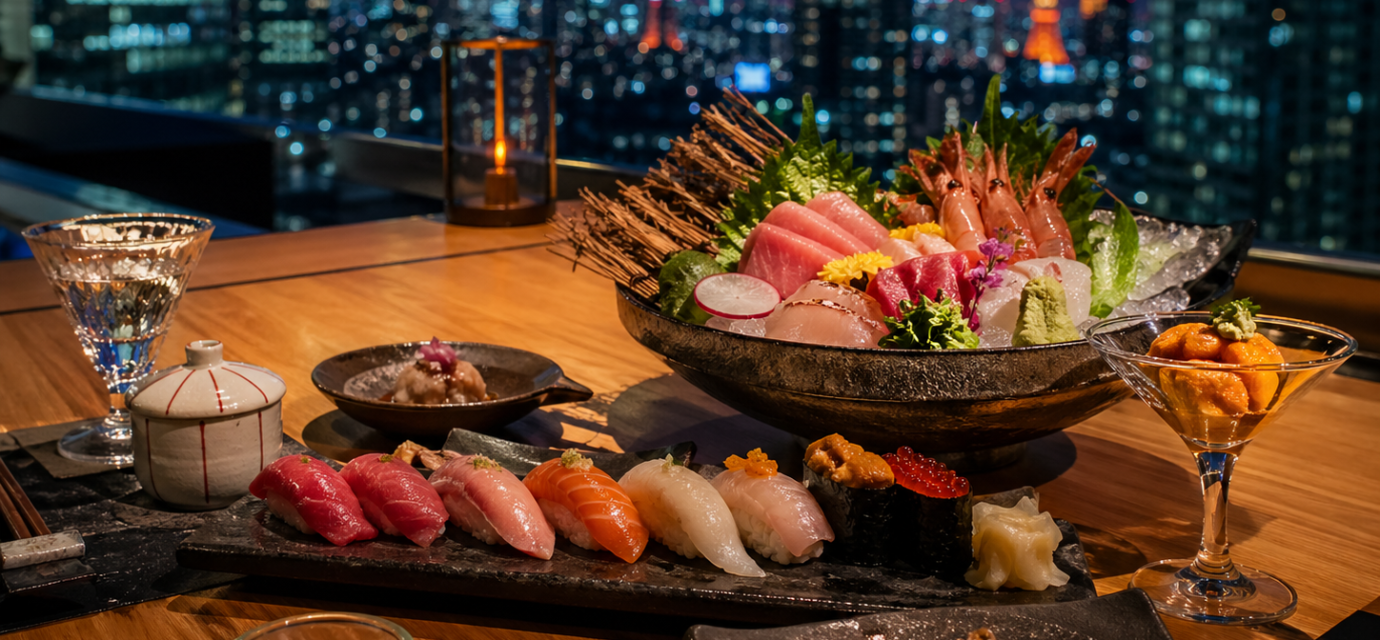
Photo Story: An elegant rooftop sushi spread overlooks a glowing city skyline at dusk, featuring sashimi, nigiri, uni, and beautifully crafted drinks. The mood feels refined, cinematic, and intimate.
The Cultural Story Behind Sushi
Sushi did not begin as the luxury tasting experience many people imagine today. The Ministry of Agriculture, Forestry and Fisheries of Japan explains that early forms of sushi included nare-zushi, where salted fish was preserved with cooked rice and fermentation created a sour flavor. Over time, sushi changed through regional creativity, and during the Edo period, forms such as fast sushi, pressed sushi, and nigiri-zushi became more familiar.
Nigiri-zushi became especially popular in Edo, now Tokyo, as stall food for everyday people. It was practical, filling, and quick enough for city life. Later, more refined sushi restaurants emerged, but the roots of nigiri were not distant or untouchable; they were close to the street, shaped for busy hands and hungry workers.
Kikkoman’s food culture history notes that by the early nineteenth century, non-fermented sushi had emerged through vinegared rice paired with seafood. It also explains that early nigiri often used seafood that was marinated, boiled, grilled, or otherwise prepared to help prevent spoilage before modern refrigeration changed sushi culture.
That detail matters for home cooks today. Sushi has always carried a conversation between freshness and preservation, beauty and practicality, pleasure and responsibility. A rooftop sushi dinner can be elegant, but it should still respect the food’s history and the safety of the people gathered around the table.
Washoku, traditional dietary cultures of the Japanese, notably for the celebration of New Year
Why Sushi Matters Beyond the Plate
Japanese food culture is often rooted in balance, seasonality, presentation, and gratitude. Washoku, the traditional dietary cultures of Japan, was added to UNESCO’s Representative List of the Intangible Cultural Heritage of Humanity in 2013. UNESCO describes washoku as knowledge, skills, and traditions connected to preparing and consuming food with respect for natural resources.
The Japan National Tourism Organization describes Japanese table etiquette as being connected to appreciation for the effort taken by hosts, and notes that washoku often honors seasonality, ingredient beauty, and thoughtful service ware.
That is the spirit to bring into this dinner. Not perfection. Not imitation. Appreciation.
Use a simple platter. Keep the colors clean. Let the ingredients breathe. Serve with enough space for conversation. A rooftop sushi dinner at twilight should feel less like showing off and more like saying, “I thought about this meal before you arrived.”
Sushi: Global Catch | Full Documentary Movie
The Ingredient Story: Rice, Nori, Seafood, and Quiet Technique
The soul of sushi is not the fish. It is the rice.
Good sushi rice should be glossy, seasoned, gently sticky, and tender without turning mushy. Japanese Cooking 101 recommends mixing vinegar seasoning into hot rice with a gentle cutting motion so the grains do not get mashed, and notes that fanning the rice helps extra moisture evaporate.
For home cooks, the best approach is simple: rinse the rice until the water runs mostly clear, cook it carefully, season it while warm, and handle it gently. The rice should taste lightly tangy, barely sweet, and softly salted. It should support the toppings, not overpower them.
Nori brings that ocean-deep aroma. Cucumber adds snap. Avocado adds richness. Shrimp offers a home-friendly cooked seafood option. Crab or imitation crab gives the platter an easy California-roll feeling. Optional raw fish can be included only when purchased from a trustworthy source and handled with serious care.
A Safer Way to Build a Beautiful Sushi Night at Home
Because raw seafood carries risk, this recipe is designed around cooked and ready-to-eat ingredients first: cooked shrimp, crab or imitation crab, cucumber, avocado, toasted sesame, and seasoned rice. The FDA states that cooking seafood thoroughly is the safest way to reduce foodborne illness risk. If someone chooses to eat raw fish, the FDA recommends fish that has been previously frozen, while also noting that freezing does not kill all harmful germs.
The FDA also advises that pregnant people, children, older adults, and people with weakened immune systems avoid raw or undercooked fish or shellfish, including sashimi and some sushi.
For a rooftop or outdoor dinner, temperature control matters. FoodSafety.gov says seafood and other perishable foods should not sit out for more than two hours, or more than one hour when temperatures are above 90°F. Cold seafood should stay refrigerated until serving, and if it will sit out longer, it should be served on ice.
How to Make the Dinner Feel Luxurious Without Making It Complicated
Luxury does not always come from expensive ingredients or a perfectly styled table. Sometimes, it comes from softness, the kind of evening where the lights are low, the air feels calm, and every detail says, I wanted this to feel special for us.
For a romantic rooftop sushi dinner, let the setting do most of the work. Begin just before twilight, when the sky is still holding a little color and the city lights are beginning to shimmer. Set the table low and intimate, with only what you need: a chilled sushi platter, small dipping bowls, chopsticks, linen napkins, two beautiful glasses, and a few candles or warm string lights. The goal is not to crowd the table, but to create space for the food, for conversation, and for the quiet feeling of being fully present with someone.
Choose serving pieces that make the sushi feel intentional. A dark slate board, ceramic platter, wooden tray, or simple white plate can make the colors stand out beautifully: the green of avocado, the pale pink of shrimp, the glossy black of nori, the soft ivory of rice, and the bright touch of pickled ginger. Chill the platter before serving so the sushi stays fresh and the presentation feels polished.
Small touches make the night feel more intimate. Pour soy sauce into shallow bowls instead of placing the bottle on the table. Add wasabi and ginger in little side dishes. Fold napkins neatly. Place a small vase of greenery, a single flower, or a few sprigs of herbs near the center of the table. Keep the lighting warm and flattering, not bright. Play soft Japanese jazz, lo-fi instrumentals, or gentle acoustic music in the background just enough to create atmosphere without taking over the conversation.
The food itself should feel effortless to enjoy. Slice the rolls cleanly with a damp knife, fan the avocado, arrange hand rolls so they look abundant but not crowded, and place everything within easy reach. A romantic dinner should never feel like a performance. It should feel relaxed, generous, and thoughtful.
If the evening is breezy, use heavier dishes and keep napkins tucked beneath plates. If it is warm outside, keep the sushi chilled until the last possible moment and place the serving platter over a tray of ice if needed. Practical care is part of hospitality, too; it allows both of you to settle in and enjoy the moment without worry.
The most luxurious part of the meal is not the rooftop view or even the sushi itself. It is the feeling of being considered. The quiet pause before the first bite. The clink of glasses. The glow of the skyline. The sense that dinner was not rushed, not random, but made with tenderness. That is what turns a simple sushi night into a romantic twilight memory.
Pairing and Gathering Ideas
This dinner works beautifully for date night, a small birthday gathering, a summer evening with friends, or a quiet “we made it through the week” meal. Serve it with miso soup, edamame, seaweed salad, cucumber sunomono, or a simple citrus-dressed green salad.
For drinks, try chilled green tea, sparkling water with yuzu or lime, ginger lemonade, sake, a crisp Japanese beer, or a dry sparkling wine. Keep the mood light and refreshing. Sushi does not need heavy sides; it shines best when the meal feels clean, cool, and balanced.
Closing Thought: Food, Memory, and the View From the Table
A rooftop sushi dinner at twilight is more than a pretty plate against a skyline. It is a reminder that food travels through time before it reaches us. Sushi carries old preservation methods, Edo street food energy, careful rice technique, regional creativity, and modern hospitality all in one small bite.
When you make this meal at home, make it with humility. Choose ingredients thoughtfully. Keep the seafood safe. Invite people to notice the rice. Let the evening unfold slowly. The best rooftop sushi dinner is not the one that looks the most expensive; it is the one that makes people feel welcomed, cared for, and present.
Recipe: Twilight Rooftop Sushi Platter
Prep Time: 50 minutes
Cook Time: 25 minutes
Total Time: 1 hour 15 minutes
Servings: 4
Skill Level: Beginner-to-intermediate
This home-friendly sushi platter includes seasoned sushi rice, cooked shrimp nigiri, cucumber-avocado maki, spicy crab hand rolls, and optional previously frozen raw fish for guests who can safely eat it.
Ingredients
For the sushi rice:
- 2 cups Japanese short-grain rice
- 2 1/4 cups water, or according to rice cooker instructions
- 1/3 cup unseasoned rice vinegar
- 2 tablespoons sugar
- 1 1/2 teaspoons kosher salt
For the platter:
- 8 sheets of toasted nori
- 16 cooked shrimp, peeled, deveined, tails removed
- 8 ounces crab meat or imitation crab, shredded
- 1/4 cup Japanese mayonnaise or regular mayonnaise
- 1–2 teaspoons sriracha or chili crisp, optional
- 1 English cucumber, cut into thin strips
- 2 ripe avocados, sliced
- 2 scallions, thinly sliced
- 2 tablespoons toasted sesame seeds
- Pickled ginger
- Wasabi
- Soy sauce or tamari
- Lemon or lime wedges, optional
- Optional: 8 ounces previously frozen sushi/sashimi-style tuna or salmon from a reputable seafood source, kept very cold until serving
Sushi Rice Recipe – Japanese Cooking 101
Step-by-Step Directions
- Rinse the rice. Place rice in a bowl and rinse with cool water, gently swirling with your hand. Drain and repeat until the water is mostly clear.
- Cook the rice. Add rinsed rice and water to a rice cooker or pot. Cook until tender. Let it rest covered for 10 minutes after cooking.
- Make the sushi vinegar. In a small saucepan or microwave-safe bowl, warm rice vinegar, sugar, and salt just until dissolved. Do not boil.
- Season the rice. Transfer hot rice to a wide bowl. Drizzle the vinegar mixture over the rice and fold with a rice paddle using gentle cutting motions. Fan lightly as you mix so the rice becomes glossy, not wet.
- Cool the rice. Let rice cool until warm-room-temperature. Do not refrigerate the rice before rolling, because it can become hard.
- Prepare the fillings. Pat shrimp dry. Slice the cucumber and avocado. Mix crab with mayonnaise and sriracha, if using.
- Make cucumber-avocado maki. Place one nori sheet shiny-side down on a bamboo mat. Spread a thin layer of rice over the nori, leaving a 1-inch border at the top. Add cucumber, avocado, and sesame seeds. Roll tightly, seal with a little water, and slice with a damp, sharp knife.
- Make spicy crab hand rolls. Cut nori sheets in half. Add a small amount of rice, crab mixture, cucumber, avocado, and scallion. Roll into a cone and serve soon so the nori stays crisp.
- Make shrimp nigiri. Wet your hands lightly. Shape small oval mounds of rice. Place a cooked shrimp on each mound. Add a thin nori strip around the middle if desired.
- Add the optional raw fish carefully. If serving raw fish, keep it refrigerated until the last moment. Slice with a clean, sharp knife on a sanitized cutting board. Serve immediately on a chilled platter.
- Plate the sushi dinner. Arrange rolls, shrimp nigiri, hand rolls, ginger, wasabi, and sauce dishes on a chilled platter. For outdoor dining, place the platter over a tray of ice if it will sit out.
Helpful Tips
- Keep a small bowl of water nearby for your hands and knife.
- Use less rice than you think; overfilled rolls are harder to close.
- Wipe the knife between cuts for cleaner slices.
- Make hand rolls last because nori softens quickly.
- For the prettiest platter, vary shape: sliced rolls, hand rolls, nigiri, and small garnish bowls.
Substitutions
- Use roasted sweet potato, mango, tofu, or tamago-style omelet instead of seafood.
- Use tamari for a gluten-free soy sauce option.
- Use cooked salmon, cooked crab, or cooked scallops instead of raw fish.
- Use brown sushi rice if preferred, but expect a firmer texture.
- Use vegan mayonnaise and marinated tofu for a plant-forward platter.
Storage and Reheating
Sushi is best eaten fresh. If you have leftovers, refrigerate cooked seafood or vegetable sushi in a shallow airtight container within two hours, or within one hour if the temperature is above 90°F. For the best quality, eat cooked or vegetable rolls within 24 hours. Avoid reheating assembled sushi; the rice and nori texture will suffer. Do not keep raw fish sushi that has been sitting out.
Food Safety Notes
- Cooked seafood is the safest choice for home sushi. FoodSafety.gov states that most seafood should be cooked to 145°F.
- Keep cold seafood refrigerated until serving, and use ice for longer outdoor serving.
- If serving raw fish, buy from a reputable seafood supplier and ask whether it has been previously frozen and handled for raw consumption. The FDA notes that freezing can kill parasites in some fish, but it does not kill all harmful germs.
- Pregnant people, young children, older adults, and people with weakened immune systems should avoid raw or undercooked seafood.
- Wash hands, cutting boards, knives, and surfaces before and after handling seafood.
What to Serve With It
- Miso soup
- Edamame with sea salt
- Seaweed salad
- Cucumber sunomono
- Pickled vegetables
- Green tea
- Sparkling water with lime
- Sake, Japanese beer, or crisp sparkling wine for adults
Make-Ahead Notes
You can prep cucumber, sauces, serving dishes, and drink pairings several hours ahead. Cook and season the rice the same day. Slice avocado shortly before serving to prevent browning. Assemble rolls close to dinner time for the best texture.
Experience Add-On
Best music pairing: Soft Japanese jazz, city pop instrumentals, lo-fi beats, or gentle acoustic playlists.
Best occasion: Date night, rooftop dinner party, summer gathering, birthday toast, or intimate friend night.
Table setting idea: Use a dark slate platter, small ceramic dipping bowls, linen napkins, chopsticks, tea lights, and one simple floral or greenery accent.
Drink pairing: Chilled green tea, yuzu sparkling water, ginger lemonade, dry sake, Japanese lager, or brut sparkling wine.
Conversation starter: “What is one meal that instantly makes you slow down and feel present?”
Cultural appreciation note: Enjoy sushi with respect for its Japanese roots, its rice-centered history, and the skill behind even the simplest roll. Avoid treating sushi as just an aesthetic trend; learn a little, handle ingredients carefully, and honor the people and traditions that shaped the food.
References
- Encyclopaedia Britannica. (2026, May 9). Sushi. https://www.britannica.com/topic/sushi
- FoodSafety.gov. (2023, September 18). 4 steps to food safety. https://www.foodsafety.gov/keep-food-safe/4-steps-to-food-safety
- FoodSafety.gov. (n.d.). Safe selection and handling of fish and shellfish. Retrieved June 5, 2026, from https://www.foodsafety.gov/blog/safe-selection-and-handling-fish-and-shellfish
- GO TOKYO Gourmet. (2025, December 18). Discover Edomae sushi in Tokyo, where nigiri continues to evolve. Tokyo Convention & Visitors Bureau. https://www.gourmet.gotokyo.org/article/25.html
- Japanese Cooking 101. (2011, September 7). Sushi rice recipe. https://japanesecooking101.com/sushi-rice-recipe/
- Japan National Tourism Organization. (n.d.). Japanese food etiquette guide. Retrieved June 5, 2026, from https://www.japan.travel/en/guide/japanese-food-etiquette/
- Kikkoman Corporation. (n.d.). Regional varieties and traditions. Retrieved June 5, 2026, from https://www.kikkoman.com/en/culture/foodforum/the-japanese-table/38-2_sushi.html
- Ministry of Agriculture, Forestry and Fisheries. (n.d.). Nigiri zushi: Our regional cuisines. Retrieved June 5, 2026, from https://www.maff.go.jp/e/policies/market/k_ryouri/search_menu/1121/index.html
- Tokyo Metropolitan Government. (n.d.). SUSHI: Edo’s fast-food revolution. Journey Through Edo’s Legacy. Retrieved June 5, 2026, from https://edolegacytravel.metro.tokyo.lg.jp/films/sushi-edos-fast-food-revolution/
- U.S. Food and Drug Administration. (2024, March 5). Selecting and serving fresh and frozen seafood safely. https://www.fda.gov/food/buy-store-serve-safe-food/selecting-and-serving-fresh-and-frozen-seafood-safely
- UNESCO. (n.d.). Washoku, traditional dietary cultures of the Japanese, notably for the celebration of New Year. Retrieved June 5, 2026, from https://ich.unesco.org/en/RL/washoku-traditional-dietary-cultures-of-the-japanese-notably-for-the-celebration-of-new-year-00869
- UNESCO Multimedia Archives. (2013). Washoku, traditional dietary cultures of the Japanese, notably for the celebration of New Year. https://www.unesco.org/archives/multimedia/document-3516