
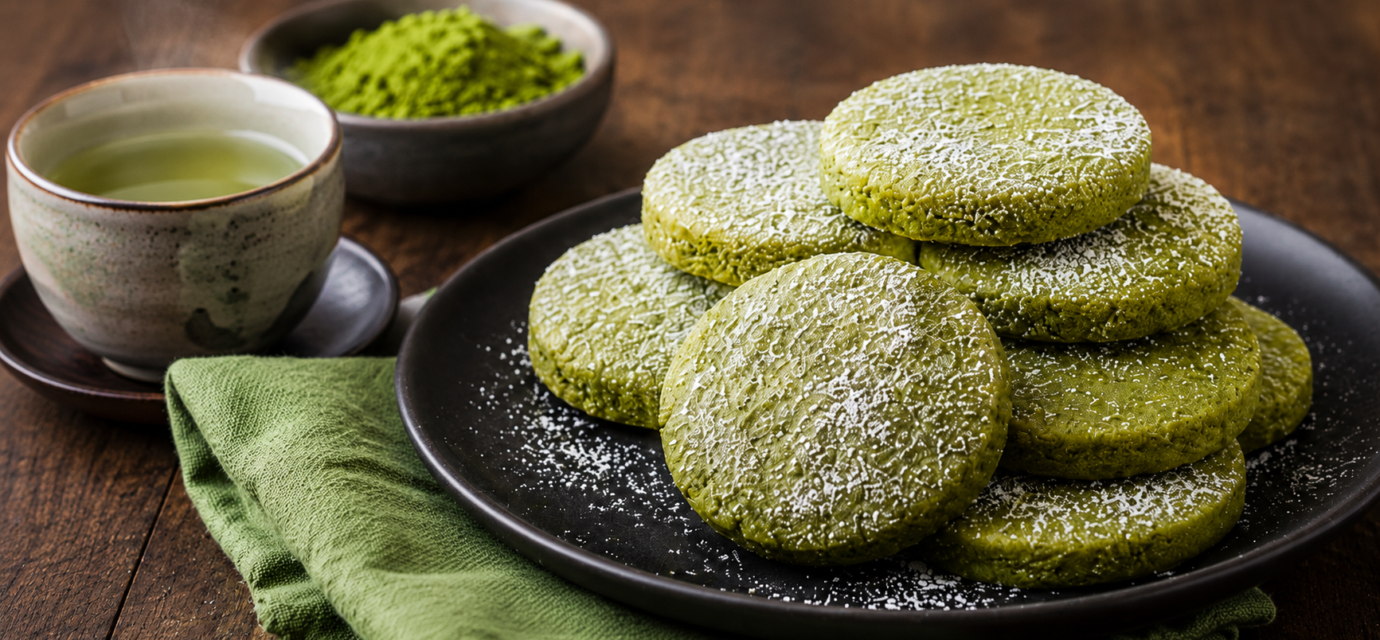
Japanese Matcha Shortbread Cookies
A quiet cookie can still make a beautiful statement. These Japanese matcha shortbread cookies are tender, buttery, lightly crisp at the edges, and shaded with that calm green color matcha does so well. They feel elegant without being fussy, simple without being plain, and just sweet enough to let the green tea flavor come forward.
Matcha brings an earthy, slightly grassy depth that balances beautifully with butter and powdered sugar. Instead of a sugary cookie that shouts, this one whispers. It has the kind of flavor that feels right beside a warm cup of tea, tucked into a holiday cookie tin, or served after dinner when everyone wants something small but memorable.
This recipe is best described as Japanese-inspired rather than traditional wagashi. Matcha has deep roots in Japanese tea culture, while shortbread comes from Western baking traditions. Together, they create a modern tea-time cookie that respects matcha’s character while using an approachable home-baking technique.
The result is a cookie that feels calm, polished, and comforting: crisp enough to snap softly, tender enough to melt on the tongue, and balanced enough for both matcha lovers and curious first-timers.
Quick Recipe Snapshot
- Prep Time: 20 minutes
- Chill Time: 45 minutes
- Cook Time: 12-15 minutes
- Total Time: About 1 hour 20 minutes
- Servings: 22-26 cookies
- Difficulty Level: Easy to moderate
- Best For: Tea time, holiday cookie boxes, edible gifts, spring gatherings, cozy desserts, beginner-friendly baking
- Expected Result: Buttery, tender-crisp shortbread cookies with a smooth matcha flavor, soft green color, lightly sweet finish, and delicate melt-in-your-mouth texture
Why You’ll Love This Recipe
- It uses simple ingredients but feels refined and gift-worthy.
- The matcha flavor is noticeable without being harsh or overly bitter.
- Powdered sugar gives the cookies a fine, delicate crumb.
- The dough can be made ahead, chilled, sliced, and baked when needed.
- The recipe works beautifully for holidays, tea parties, spring gatherings, and quiet afternoon baking.
- The cookies are sturdy enough for cookie tins and careful gifting.
- The flavor is not overly sweet, making it lovely with tea, coffee, fruit, or vanilla ice cream.
Cultural or Seasonal Background
Matcha is a finely powdered Japanese green tea with roots connected to Buddhist tea practices and the Japanese way of tea, often called chanoyu or sadō. In formal tea culture, matcha is not treated as just a flavor. It is part of a practice shaped by hospitality, attention, simplicity, and respect.
In Japanese tea settings, sweets are often served before or alongside matcha to soften the tea’s natural bitterness. This pairing idea is one reason matcha works so beautifully in desserts. A small sweet bite can highlight matcha’s grassy, umami-rich character without covering it up.
Shortbread, however, is not traditionally Japanese. Classic shortbread belongs to Scottish and broader Western baking traditions, usually built from butter, sugar, flour, and salt. These cookies bring matcha into that buttery shortbread structure, creating a modern Japanese-inspired cookie rather than an old traditional Japanese confection.
That distinction matters. Calling every matcha dessert “traditional Japanese” can flatten the beauty of both Japanese food culture and modern home baking. This recipe honors matcha’s cultural roots while being honest about the cookie’s fusion style. It is a thoughtful bridge: Japanese tea flavor, Western shortbread technique, and a home-kitchen method that feels warm, practical, and welcoming.
Seasonally, these cookies fit beautifully into spring tables because of their soft green color, but they are just as lovely in winter cookie boxes, Lunar New Year dessert spreads, Mother’s Day tea trays, bridal showers, or calm Sunday baking.
Why This Recipe Works
Shortbread depends on balance. Too much flour and the cookies become dry. Too much butter and they spread. Too much mixing and the texture becomes tough instead of tender. This version uses a classic butter-cookie foundation with powdered sugar for a softer crumb and a low baking temperature to help preserve the matcha color.
Sifting the matcha with the flour is one of the most important steps. Matcha naturally clumps because it is finely powdered. If it goes into the dough in small lumps, the cookies can bake with bitter green pockets. Sifting spreads the matcha evenly through the flour so every bite tastes balanced.
Chilling the dough gives the butter time to firm back up. That helps the cookies hold their shape in the oven and keeps the texture short, delicate, and clean. The bake is gentle at 325°F, which allows the cookies to set without browning too aggressively. Matcha can turn dull or taste more bitter when overbaked, so the goal is set edges and barely golden bottoms, not deeply browned cookies.
A small amount of salt matters, too. Salt does not make the cookies salty. It helps the butter taste fuller and keeps the sweetness from feeling flat.
Ingredients
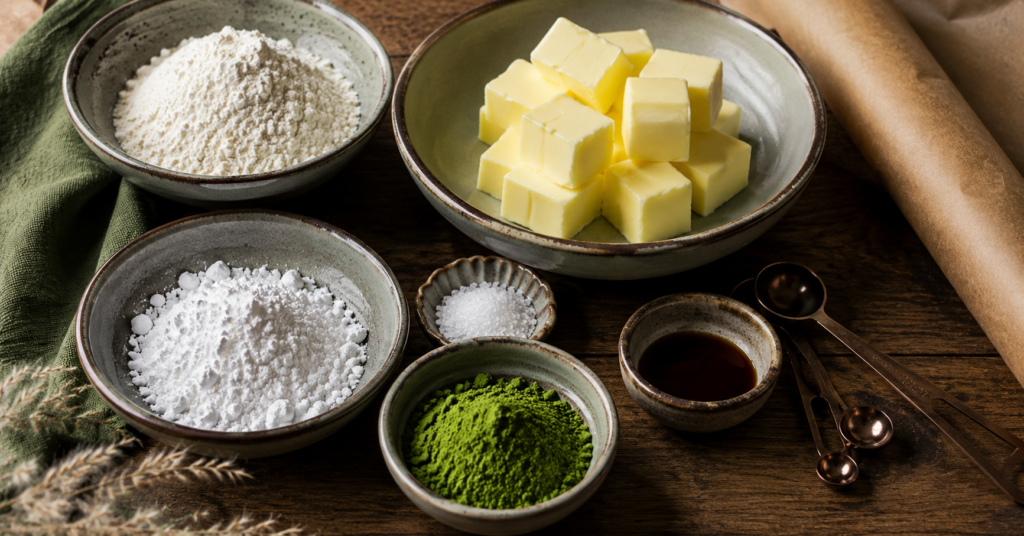
Ingredients for Japanese matcha shortbread cookies with matcha powder and butter
Cookie Dough:
- 1 cup unsalted butter, softened but still cool, 226g
Butter creates the rich shortbread flavor and tender, melt-in-your-mouth texture. Use good-quality butter if possible because it is the main flavor after matcha. - ⅔ cup powdered sugar, 75g
Powdered sugar dissolves easily and gives the cookies a smoother, more delicate crumb than granulated sugar. - 1 teaspoon vanilla extract
Vanilla adds warmth and rounds out matcha’s grassy edge. Use a light hand so it does not overpower the tea flavor. - 2 cups all-purpose flour, 240g
Flour gives the cookies structure. For best results, weigh it or spoon it into the measuring cup and level it off. - 1½ tablespoons matcha powder, 9-12g depending on strength
Matcha gives the cookies their green tea flavor and natural color. A fresh, vibrant powder gives the best result. - ¼ teaspoon fine sea salt
Salt balances the sweetness and enhances the butter and matcha.
Optional Finishes:
- 2-3 tablespoons white chocolate, melted
White chocolate adds sweetness and creamy contrast. It pairs well with matcha but is optional. - 1 tablespoon sesame seeds or finely chopped pistachios
Adds texture and visual interest without overwhelming the cookie. - Extra sifted matcha or powdered sugar for a light dusting
Use very lightly. Too much dry matcha on top can taste bitter.
Ingredient Notes and Smart Substitutions
Matcha: Use fresh matcha with a bright green color and pleasant aroma. For baking, a good culinary matcha works well. Very expensive drinking matcha is not necessary, but avoid dull olive-brown powders if possible because they may taste flat or bitter.
Butter: Unsalted butter gives you control over salt. If using salted butter, reduce the added salt to a small pinch.
Powdered Sugar: This is also called confectioners’ sugar or icing sugar. It creates a finer shortbread texture. Granulated sugar can work, but the cookie will be slightly more sandy and crisp.
Flour: All-purpose flour keeps the recipe accessible. For a more delicate cookie, replace 2 tablespoons of flour with cornstarch. This softens the crumb slightly.
Vanilla: Vanilla is optional. Almond extract can be used, but only use ¼ teaspoon because it is stronger and can cover the matcha.
Gluten-Free Option: Use a cup-for-cup gluten-free baking flour blend that contains xanthan gum. Texture may be a little more delicate, so chill the dough well and handle gently.
Dairy-Free Option: A plant-based butter stick may work, but choose one made for baking. Avoid soft tub spreads because they contain more water and may cause spreading.
White Chocolate: White chocolate is a classic matcha pairing in modern baking because its creamy sweetness softens the tea’s bitterness. Keep it optional for a cleaner matcha flavor.
Equipment You’ll Need
- Mixing bowl
- Hand mixer, stand mixer, or sturdy spatula
- Fine mesh sieve
- Measuring cups and spoons
- Kitchen scale, optional but recommended
- Rubber spatula
- Parchment paper
- Plastic wrap or reusable food wrap
- Baking sheet
- Sharp knife for slicing
- Wire cooling rack
Flour is a Raw Food! | FDA In Your Day Ep. 15
Step-by-Step Directions
1. Soften the butter correctly.
Let the butter sit at room temperature until it is soft enough to press with a finger but not greasy or melted. It should feel cool and pliable. Butter that is too warm can make the cookies spread.
2. Sift the dry ingredients.
In a bowl, sift together the flour, matcha powder, and salt. This removes matcha clumps and helps distribute the tea evenly. If any larger bits remain in the sieve, press them through gently or discard hard bits.
3. Cream the butter and powdered sugar.
In a separate bowl, beat the softened butter and powdered sugar for 1½ to 2 minutes, until smooth and creamy. Do not whip it for too long. Shortbread should be tender, not airy like cake.
4. Add vanilla.
Mix in the vanilla extract just until combined. Scrape down the bowl so the butter mixture is even.
5. Add the flour-matcha mixture.
Add the dry ingredients in two additions. Mix on low speed or fold by hand until the dough looks crumbly at first, then begins to come together. Stop when no dry flour streaks remain. Overmixing can make the cookies firm or tough.
6. Bring the dough together.
Use your hands to gently press the dough into one mass. If it feels slightly crumbly, keep pressing gently. Shortbread dough often looks dry before it comes together. Avoid adding liquid unless absolutely necessary.
7. Shape the dough.
For slice-and-bake cookies, shape the dough into a log about 2 inches wide. For square cookies, shape them into a flat rectangle. Wrap tightly in plastic wrap or parchment.
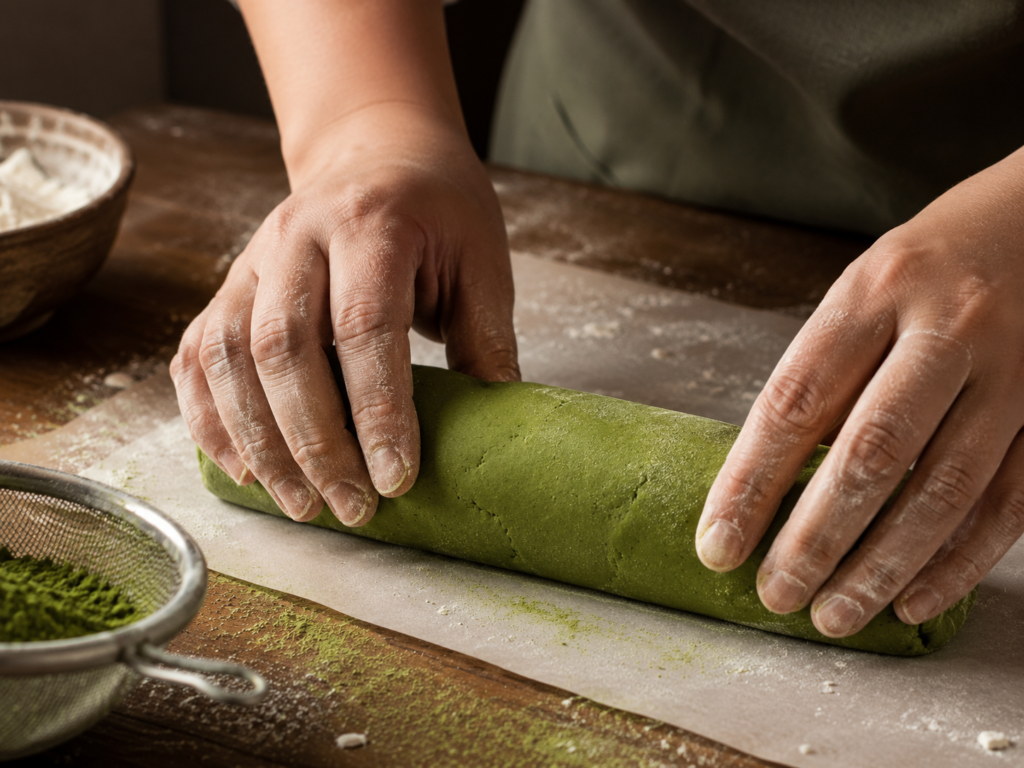
Hands shaping matcha shortbread dough into a slice-and-bake log
8. Chill the dough.
Refrigerate for at least 45 minutes, or until firm. Chilling helps the butter set and gives the cookies cleaner edges.
9. Preheat the oven.
Heat the oven to 325°F. Line a baking sheet with parchment paper. Avoid placing dough on a hot baking sheet because it can melt the butter too quickly.
10. Slice the cookies.
Slice the chilled log into cookies about ¼ inch thick. If the dough cracks at the edges, let it sit for 3-5 minutes, then smooth the edges with your fingers.
11. Arrange on the baking sheet.
Place cookies about 1 inch apart. They should not spread much, but they need a little space for even heat circulation.
12. Bake gently.
Bake for 12-15 minutes, rotating the pan halfway through if your oven has hot spots. The cookies are done when the edges look set, and the bottoms are just barely golden. The tops should stay green, not brown.
13. Cool before moving.
Let the cookies rest on the baking sheet for 5 minutes. They will be delicate while hot. Transfer to a wire rack to cool completely.
14. Add an optional finish.
Once fully cooled, drizzle with melted white chocolate or dip one edge lightly. Let the chocolate set before storing.
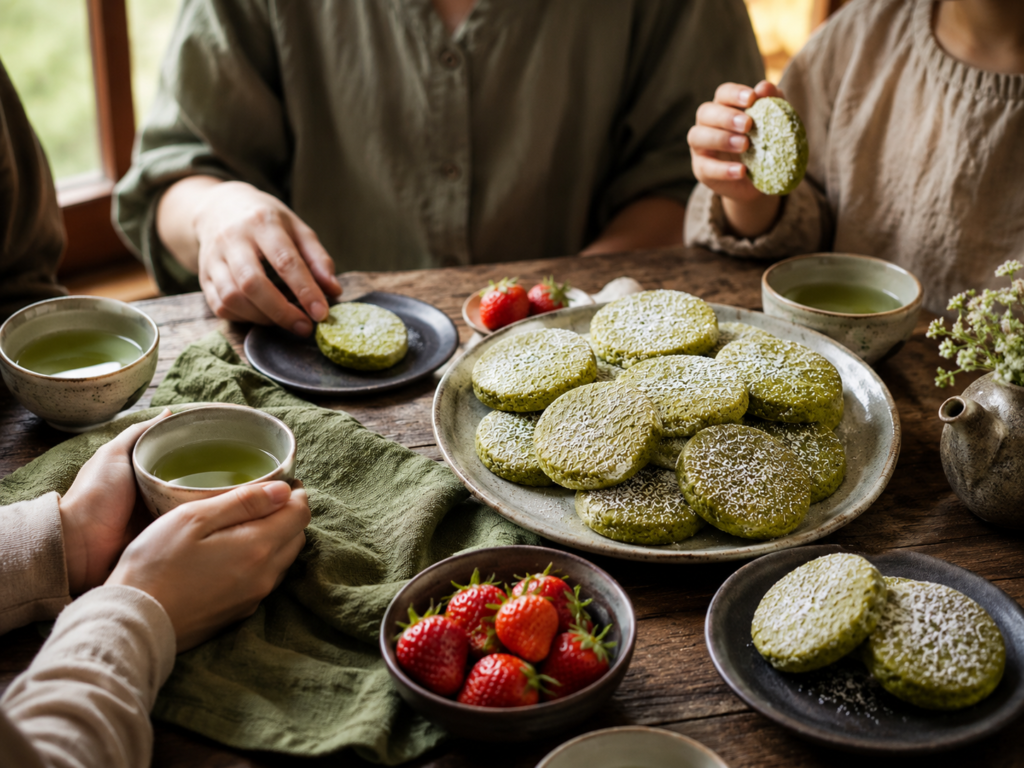
Cozy tea-time table with matcha shortbread cookies and green tea
Food Safety Note: Do not taste raw dough. Raw flour can contain harmful bacteria, and baking is what makes flour-based dough safe to eat.
Pro Tips for Best Results
- Use fresh matcha and store it away from heat, light, and moisture.
- Sift matcha with the flour every time, even if the powder looks smooth.
- Keep the butter softened but cool, never oily or melted.
- Do not overmix once the flour is added.
- Chill the dough long enough for clean slicing.
- Bake at a lower temperature to protect the green color.
- Pull the cookies when the bottoms are just lightly golden.
- Let cookies cool fully before judging texture; they firm as they cool.
- Use parchment paper for even bottoms and easy cleanup.
- For gifting, let any chocolate drizzle set completely before packing.
Common Mistakes to Avoid
- Using old matcha: Dull matcha can make the cookies taste bitter or flat. Use powder that smells fresh and looks green.
- Skipping the sift: Matcha clumps can create bitter spots in the dough. Sifting is worth the extra minute.
- Over-softening butter: Greasy butter can cause spreading. The butter should be soft but still cool.
- Overmixing the dough: Too much mixing develops the flour and can make the cookies tough.
- Skipping chill time: Warm dough loses shape quickly in the oven.
- Overbaking: Deep browning can mute the matcha flavor and turn the color dull.
- Storing with soft cookies: Crisp shortbread can absorb moisture from chewy cookies. Store separately.
- Dusting too much matcha on top: A heavy layer of dry matcha can taste unpleasantly bitter.
Flavor Variations
White Chocolate Matcha Shortbread: Dip half of each cooled cookie in melted white chocolate and let it set on parchment.
Black Sesame Matcha Cookies: Add 1 tablespoon toasted black sesame seeds to the dough for a nutty, slightly savory note.
Yuzu Matcha Shortbread: Add ½ teaspoon finely grated lemon zest or yuzu zest if available. Citrus brightens the tea flavor.
Almond Matcha Shortbread: Replace vanilla with ¼ teaspoon almond extract and top with sliced almonds before baking.
Pistachio Matcha Cookies: Roll the dough log in finely chopped pistachios before chilling for a green-on-green finish.
Matcha Sandwich Cookies: Spread a thin layer of white chocolate ganache or vanilla buttercream between two cookies. Keep the filling light so it does not overpower the tea.
Hojicha-Inspired Version: Replace matcha with hojicha powder for a roasted green tea cookie with a warmer, toastier flavor.
Serving Suggestions
Serve these cookies with hot matcha, sencha, hojicha, jasmine tea, black tea, or a simple cup of coffee. Their buttery texture also pairs nicely with cold milk, oat milk, or a lightly sweet matcha latte.
For a tea-time plate, arrange the cookies on a small ceramic dish with sliced strawberries, orange wedges, or a few squares of white chocolate. The fruit adds brightness and color without making the dessert feel heavy.
For holidays, tuck them into a cookie box with vanilla shortbread, almond cookies, citrus cookies, and dark chocolate bark. The green color makes them especially pretty for winter holidays, spring gatherings, and edible gifts.
For a dessert board, pair them with fresh berries, whipped cream, mochi, small butter cookies, and a pot of tea. Keep the styling simple and calm. Matcha looks best when the setting feels natural rather than overly busy.
Storage, Freezing, and Reheating
Room Temperature: Store fully cooled cookies in an airtight container at room temperature for best quality for 5-7 days. Keep them in a cool, dry place away from sunlight.
Longer Storage: Plain shortbread-style cookies are generally low-moisture baked goods, but flavor and texture are best when enjoyed within the first week. If your kitchen is humid, store them with parchment between layers and avoid opening the container often.
Refrigeration: Refrigeration is not usually necessary for plain shortbread cookies and can sometimes make them taste stale faster. If the cookies are filled with perishable cream or dairy-based filling, refrigerate them and follow the filling’s storage needs.
Freezing Baked Cookies: Freeze fully cooled cookies in a freezer-safe container for up to 2-3 months for best quality. Layer parchment between cookies to prevent sticking or breakage.
Freezing Dough: Wrap the dough log tightly and freeze for up to 2 months. Thaw in the refrigerator until sliceable, then bake as directed.
Refreshing Cookies: If cookies lose a little crispness, warm them in a 300°F oven for 3-4 minutes, then cool before serving. Do not microwave shortbread unless you want a softer texture.
Food Safety Reminder: Do not taste raw dough or let children play with it. Wash hands, bowls, utensils, and counters after handling raw flour.
Make-Ahead Tips
The dough can be made 2–3 days ahead and kept wrapped in the refrigerator. Let it sit at room temperature for a few minutes before slicing if it becomes too firm.
You can also freeze the shaped dough log. This is helpful for holidays, tea parties, or last-minute guests. Slice the dough while still cold but not rock-hard.
Baked cookies can be made a few days before serving. For the cleanest flavor, store them plain and add any white chocolate drizzle the day before serving.
If gifting, bake and cool completely before packing. Add parchment between layers and choose a snug tin or box so the cookies do not slide around and break.
Frequently Asked Questions
Can I use ceremonial matcha for baking?
You can, but it is not required. A good-quality culinary matcha is usually enough for cookies. Save your most delicate drinking matcha for tea if you prefer.
Why did my matcha cookies turn brown?
They may have baked too long or at too high a temperature. Matcha is sensitive to heat. Bake at 325°F and remove the cookies when the edges are set, and the bottoms are only lightly golden.
Why is my dough crumbly?
Shortbread dough can look crumbly before it comes together. Press it gently with your hands. If it still will not hold after patient mixing, add ½ teaspoon of milk at a time, but only as a last resort.
Can I roll and cut this dough with cookie cutters?
Yes. Chill the dough as a disc, roll it to about ¼ inch thick, and cut shapes. If the dough warms up, chill the cut cookies for 10–15 minutes before baking.
Can I make these cookies less sweet?
The recipe is already lightly sweet, but you can reduce the powdered sugar by 1-2 tablespoons. Reducing it too much may affect texture.
Do matcha cookies contain caffeine?
Yes, matcha naturally contains caffeine because it is made from tea leaves. The amount per cookie depends on the matcha used and the size of the cookies.
Can I add chocolate chips?
Yes, but keep them small and modest. White chocolate works especially well with matcha. Dark chocolate can be delicious too, but it may dominate the delicate green tea flavor.
Are these traditional Japanese cookies?
They are Japanese-inspired, not traditional wagashi. The matcha flavor connects to Japanese tea culture, while the shortbread style comes from Western baking.
Final Thoughts
Japanese matcha shortbread cookies are the kind of recipe that reminds us how beautiful simple baking can be. A few familiar ingredients become something special when handled with care: butter softened just enough, matcha sifted until smooth, dough chilled until calm and firm, and cookies baked gently so the color stays soft and green.
What makes this cookie so lovely is its restraint. It does not need heavy frosting, bright sprinkles, or complicated decoration to feel memorable. The flavor comes from balance: earthy matcha, creamy butter, delicate sweetness, and a small pinch of salt. It is a cookie made for slowing down, sharing tea, wrapping gifts, or adding a quiet touch of elegance to a dessert table.
This recipe also gives Fly By Eats readers a meaningful cultural doorway without pretending to be something it is not. Matcha carries a rich place in Japanese tea culture, and shortbread carries its own history in Western baking. Together, they create a modern home-baked treat that feels globally inspired, respectful, and approachable.
Bake these when you want something peaceful but polished. Serve them after dinner, pack them into tins, place them beside a teacup, or keep a small batch in the freezer for future cozy moments. Food does not always have to be loud to be full of feeling. Sometimes the most comforting recipes are the ones that invite you to pause, breathe, and enjoy one tender green cookie at a time.
Quick Recipe Card
Recipe Name: Japanese Matcha Shortbread Cookies
Description: Buttery, tender-crisp shortbread cookies flavored with Japanese matcha powder. These cookies are lightly sweet, earthy, elegant, and perfect for tea time, holidays, and edible gifts.
Prep Time: 20 minutes
Chill Time: 45 minutes
Cook Time: 12-15 minutes
Total Time: About 1 hour 20 minutes
Servings: 22-26 cookies
Ingredients:
- 1 cup unsalted butter, softened but still cool, 226g
- ⅔ cup powdered sugar, 75g
- 1 teaspoon vanilla extract
- 2 cups all-purpose flour, 240g
- 1½ tablespoons matcha powder, 9-12g
- ¼ teaspoon fine sea salt
- Optional: melted white chocolate, sesame seeds, chopped pistachios, or a light dusting of powdered sugar
Instructions:
- Sift flour, matcha powder, and salt together in a medium bowl.
- In a separate bowl, beat butter and powdered sugar until smooth and creamy, about 1½ to 2 minutes.
- Mix in vanilla extract.
- Add the dry ingredients in two additions, mixing just until a soft dough forms.
- Press the dough together and shape it into a 2-inch-wide log or flat rectangle.
- Wrap tightly and chill for at least 45 minutes.
- Preheat oven to 325°F and line a baking sheet with parchment paper.
- Slice dough into ¼-inch cookies and place 1 inch apart on the baking sheet.
- Bake for 12–15 minutes, until edges are set and bottoms are barely golden.
- Cool on the baking sheet for 5 minutes, then transfer to a wire rack.
- Add optional melted white chocolate or toppings once cookies are completely cool.
Notes:
- Do not overbake; matcha can turn dull and bitter with too much browning.
- Sift matcha for the smoothest flavor and color.
- Keep dough chilled for cleaner edges.
- Do not taste raw dough because raw flour can carry food safety risks.
Storage:
Store fully cooled cookies in an airtight container at room temperature for best quality for 5–7 days. Freeze baked cookies for up to 2–3 months or freeze wrapped dough for up to 2 months. Refresh cookies in a 300°F oven for 3–4 minutes if needed.
Nutrition Disclaimer: Nutrition information, if provided, is an estimate and may vary based on ingredients and preparation methods.
References
- Centers for Disease Control and Prevention. (2025, November 24). Raw flour and dough. https://www.cdc.gov/food-safety/foods/no-raw-dough.html
- Japan External Trade Organization. (n.d.). Japanese green tea: Inspire the table. https://japan-food.jetro.go.jp/greentea/business/index.html
- Japan Matcha Association. (n.d.). What is matcha? https://matcha.or.jp/en/details/
- Japan National Tourism Organization. (n.d.). Japanese tea ceremony. https://www.japan.travel/en/guide/tea-ceremony/
- King Arthur Baking Company. (n.d.). Matcha Christmas tree cookies recipe. https://www.kingarthurbaking.com/recipes/matcha-christmas-tree-cookies-recipe
- King Arthur Baking Company. (n.d.). Shortbread cookies recipe. https://www.kingarthurbaking.com/recipes/shortbread-cookies-recipe
- McNamee, G. L. (n.d.). Matcha. Encyclopaedia Britannica. https://www.britannica.com/topic/matcha
- U.S. Department of Agriculture Food Safety and Inspection Service. (n.d.). How should cookies be stored? Ask USDA. https://ask.fsis.usda.gov/article/How-should-cookies-be-stored
- U.S. Food and Drug Administration. (2024, March 5). Handling flour safely: What you need to know. https://www.fda.gov/food/buy-store-serve-safe-food/handling-flour-safely-what-you-need-know
- U.S. Food and Drug Administration. (2023, December 5). Flour is a raw food and other safety facts. https://www.fda.gov/consumers/consumer-updates/flour-raw-food-and-other-safety-facts