Warm Lantern-Lit Street Dining at Dusk: Pho, Rain, and the Beauty of Slowing Down
There are meals that simply feed you, and then there are meals that seem to gather the whole evening around the table.
Warm lantern-lit street dining at dusk belongs to that second kind of experience. It is not only about what is in the bowl. It is about the way the air changes when the day begins to soften. It is about the quiet shimmer of rain on the pavement, the amber glow of lanterns overhead, the steam rising from broth, and the feeling that the world has finally slowed down long enough for you to notice it.
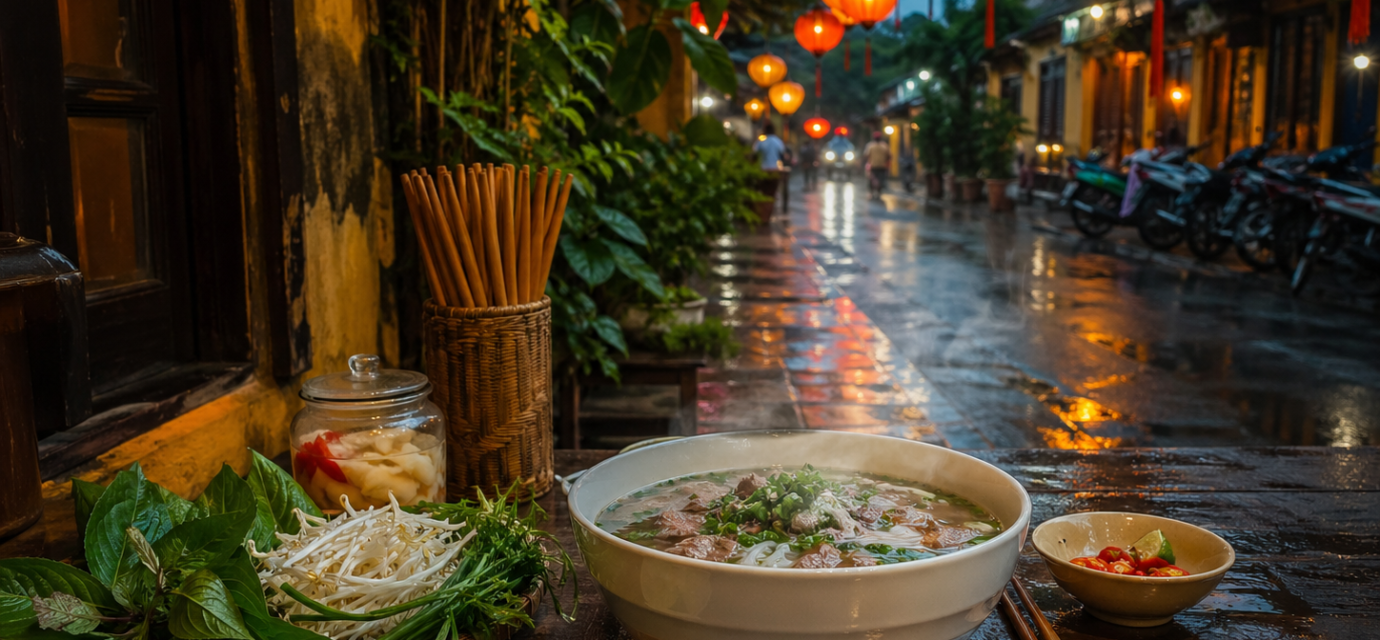
In this scene, a bowl of pho sits at the center of the table. The broth is hot and fragrant. The noodles are soft but still full of life. Fresh herbs, lime, bean sprouts, and sliced chiles wait on the side, ready to brighten each spoonful. The street around you hums gently, not loudly. Chairs scrape. Chopsticks tap against ceramic bowls. Someone laughs nearby. Somewhere down the block, another kitchen door swings open and releases the smell of something simmering.
This is the kind of dinner that reminds you food is never just food. It is place. It is atmosphere. It is memory forming before you even realize you are inside one.
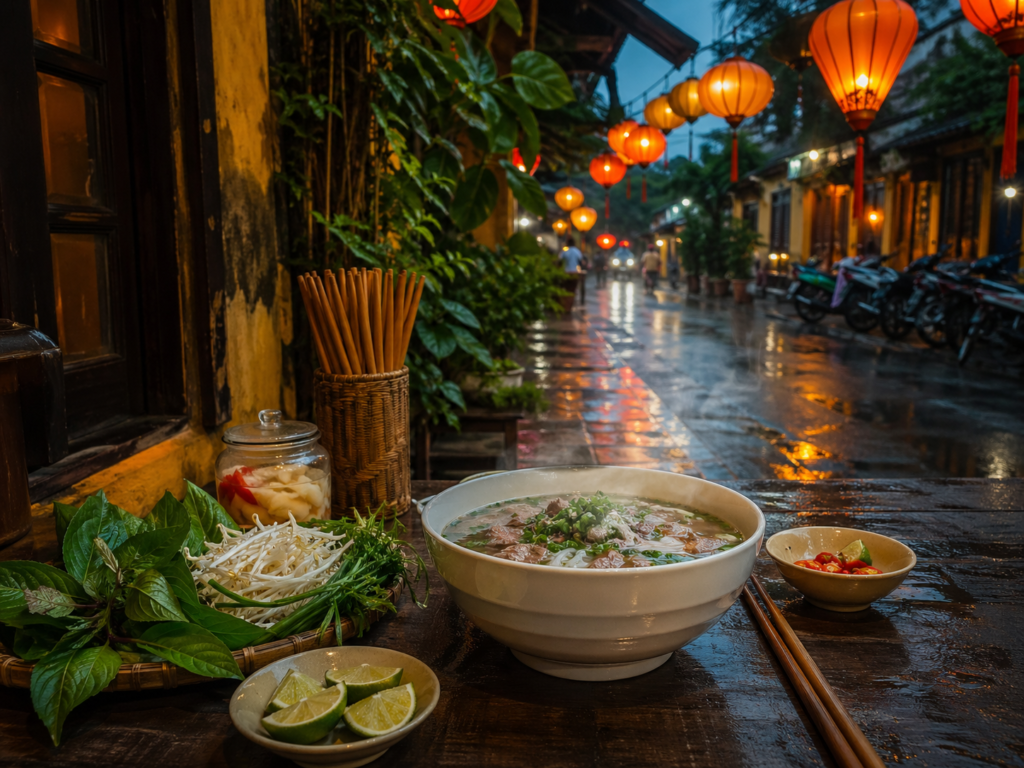
A steaming bowl of pho sits along a rain-kissed lantern-lit street at dusk, surrounded by fresh herbs, lime, chopsticks, and the kind of soft glow that makes dinner feel like a memory before it even ends.
When Dinner Feels Like a Place You Want to Stay
There is a moment at dusk when a street begins to change its language.
The afternoon noise softens. The sky lowers into blue. Lanterns wake up one by one, and the pavement, still damp from rain, starts holding light like memory. At a small table, close enough to hear footsteps pass and chairs scrape gently against the ground, a bowl of pho sends up steam.
It is not loud. It does not need to be.
This is the kind of dinner that reminds you food is never only about eating. It is also about where you are, how the air feels, who is sitting across from you, and whether you allow yourself to slow down long enough to notice it all.
Pho, often spelled phở, is a Vietnamese dish built around broth, noodles, and protein, commonly beef, though variations can include chicken, tofu, fish, pork, and other ingredients. Britannica notes that pho broth is often supported by spices such as star anise, cloves, cinnamon, cardamom, coriander, and fish sauce, while familiar garnishes include scallions, Thai basil, lime, bean sprouts, onion, and cilantro.
That is what makes this scene feel so full. The bowl is simple at first glance, but it carries layers. Fragrance rises before the first spoonful. The broth brings warmth. The noodles bring comfort. The herbs bring brightness. The lime sharpens the edges. The lanterns do the rest.
The Quiet Power of Pho Under Lantern Light
Pho has a way of grounding a table.
Unlike meals that demand attention through size or richness, pho draws you in through patience. It asks you to lean closer. You taste the broth first, then the spice, then the freshness of herbs, then the small personal choices that make the bowl yours. More lime. More basil. A little chile. Maybe a spoonful of sauce. Maybe nothing at all.
Food historians often trace pho’s development to northern Vietnam, with Nam Dinh frequently identified as an important birthplace and Hanoi described as its spiritual home. Vietnam’s official tourism site explains that French colonial demand increased the availability of beef, while vendors used beef bones to deepen broth, helping shape pho’s evolution into the dish recognized today.
That history matters because it reminds us that iconic dishes are rarely born from one moment. They form through movement, trade, hardship, adaptation, and everyday people feeding other everyday people. Pho carries that layered story beautifully. It is both humble and complex. It belongs to home kitchens, street stalls, family restaurants, late-night meals, early breakfasts, and the kind of sidewalk table where the whole city feels close
Vietnam Street Food – ULTIMATE PHO TOUR!! (How Pho Became World’s #1 Vietnamese Food)
A Street Table Can Teach You How to Notice
One reason street dining feels unforgettable is because it does not separate you from the world around you.
Inside a restaurant, the room is designed for you. Outside, the city joins the meal. You hear a scooter pass. You notice a vendor wiping down a counter. Someone laughs two tables away. A lantern sways slightly in the evening air. A spoon touches ceramic. Steam rises and disappears.
The beauty is not perfection. It is presence.
That is why a lantern-lit pho dinner at dusk feels so emotionally rich. It brings together contrast. The air is cool, but the broth is warm. The street is public, but the table feels intimate. The rain makes the pavement shine, but the food makes the moment feel grounded. The lanterns add romance, but not the polished, distant kind. This is romance with texture. Real chairs. Real weather. Real hunger. Real comfort.
In a broader cultural sense, places such as Hoi An, Vietnam, show how atmosphere, architecture, food, and evening street life can become part of a destination’s identity. UNESCO describes Hoi An Ancient Town as a well-preserved Southeast Asian trading port from the 15th to 19th centuries, shaped by both local and foreign influences. Although this article is a mood-based food story rather than a location guide, lantern-lit Vietnamese streets often call to mind that kind of living heritage: narrow streets, warm lights, old textures, and everyday commerce continuing after sunset.
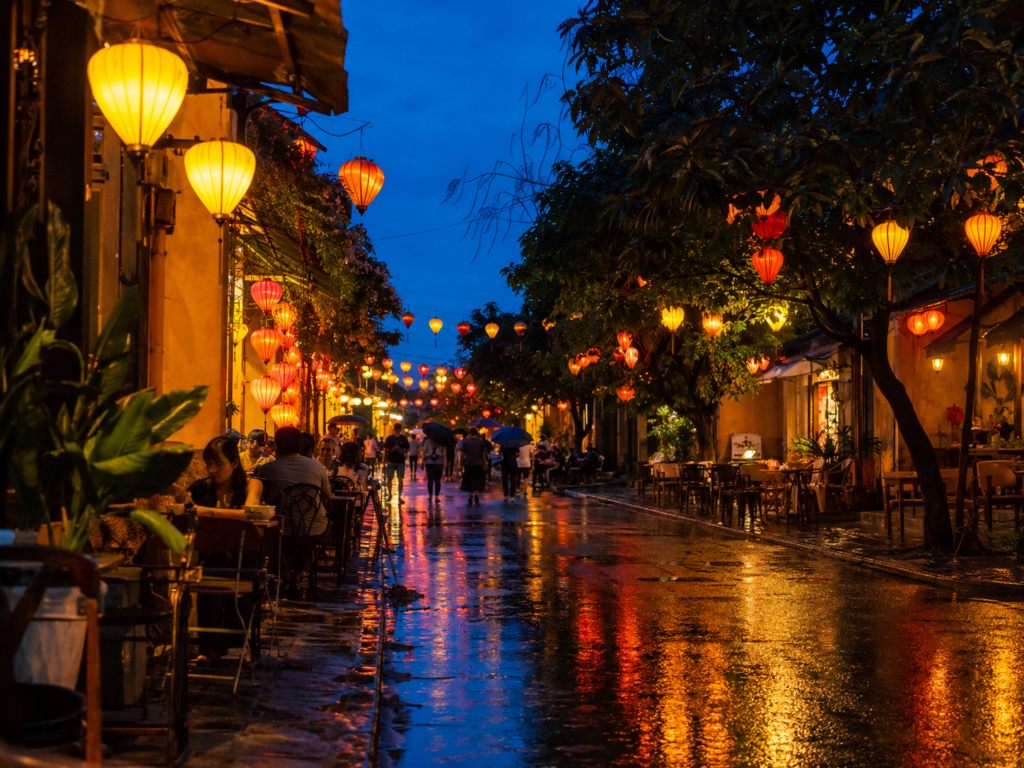
Lantern-lit Vietnamese street at dusk with outdoor dining tables and glowing reflections after rain.
Why This Kind of Meal Feels So Human
The best food memories often come from a combination of taste and feeling.
You may remember the broth, but you also remember the temperature of the evening. You may remember the herbs, but you also remember the person who passed you the lime. You may remember the lanterns, but you also remember how the street seemed to slow down right when you needed it to.
That is the gift of eating with attention.
Pho is especially suited to this kind of moment because it is interactive without being complicated. You build the bowl as you eat. You adjust. You taste. You pause. The meal changes slightly from the first spoonful to the last. Britannica also notes that pho is personal for many Vietnamese diners, with different regions, proteins, cuts, broths, and garnishes allowing the dish to change while still remaining recognizable.
In northern-style pho, the broth is often treated as the quiet center. In southern-style pho, the bowl may arrive with more herbs, bean sprouts, sauces, and sweet or aromatic additions. Vietnam Tourism describes the move south after Vietnam’s 1954 partition as one reason pho developed broader garnish traditions and regional differences.
That flexibility gives pho part of its emotional appeal. It can be precise. It can be generous. It can be minimal. It can be abundant. It can carry memory without becoming frozen in time.
How to Recreate the Mood at Home
You do not need a lantern-filled street to bring this feeling into your own space. You only need intention.
Start with lighting. Use warm lamps, outdoor string lights, small lanterns, or candles placed safely away from napkins and table edges. Keep the light low enough to feel soft, but bright enough for people to see the food clearly. A good food moment should feel beautiful without making the meal difficult to enjoy.
Serve pho or another fragrant noodle soup in deep bowls. If making pho from scratch, build the experience around the broth. If ordering from a local Vietnamese restaurant, turn the takeout into a table moment instead of eating directly from containers. Place herbs, lime wedges, sliced chiles, sprouts, and sauces in small dishes so guests can personalize their bowls.
Add texture to the table. Linen napkins, ceramic bowls, a small dish for lime, chopsticks, soup spoons, and a simple tray of herbs can make the setting feel considered without becoming formal. Put on a quiet playlist. Let the meal breathe.
If eating outdoors, keep food safety in mind. The CDC advises travelers who choose street food to follow food safety rules, including choosing food that is cooked and served steaming hot. For home or patio dining, the FDA recommends keeping hot foods at or above 140°F and not leaving perishable foods out for more than two hours, or one hour if the outdoor temperature is above 90°F.
That practical care does not take away from the romance of the meal. It protects it.
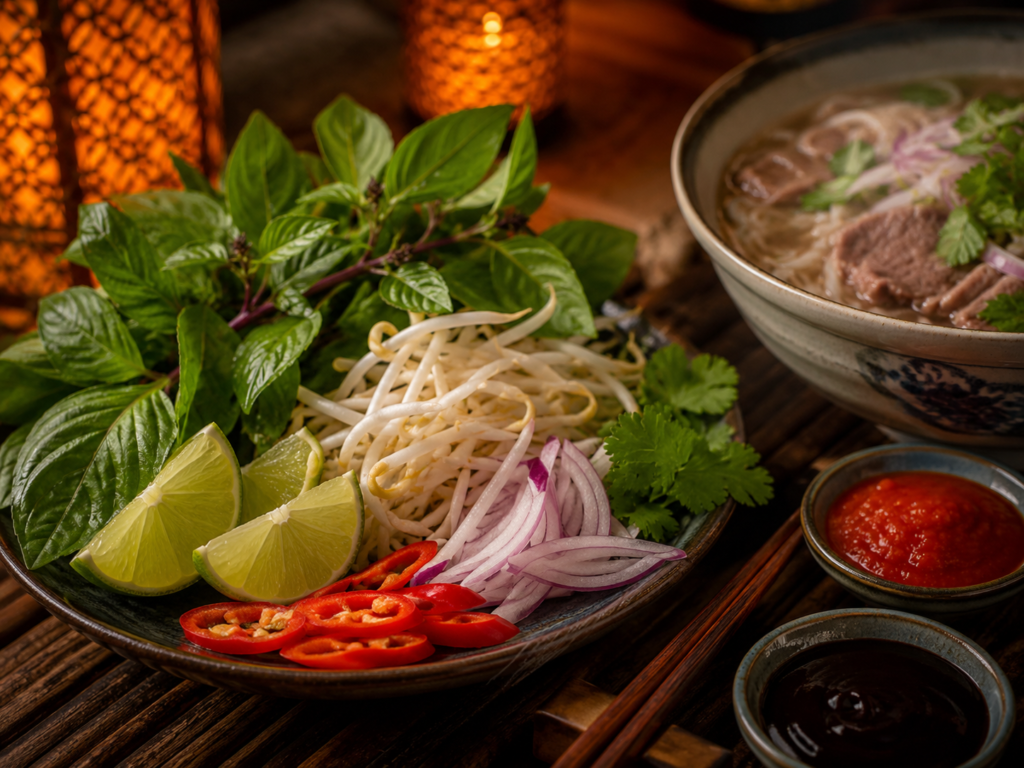
Fresh pho garnishes with basil, lime, bean sprouts, chile, onion, and cilantro beside a warm bowl of soup.
A Better Way to Think About Street Dining
Street dining is not simply a cheaper or more casual version of restaurant dining. In many food cultures, it is where the city reveals itself most honestly.
It is where recipes meet routine. Where cooks repeat gestures they have mastered over years. Where diners arrive tired, hungry, hopeful, distracted, in love, alone, or with friends. Where food is not separated from daily life, but folded into it.
That is why this kind of scene belongs on Fly By Eats. It is not only about a bowl of pho. It is about the emotional architecture of a meal. Light. Weather. Sound. Texture. Culture. Care. Appetite. Memory.
A lantern-lit street dinner at dusk reminds us that food does not have to be extravagant to feel luxurious. Sometimes luxury is a warm bowl. A clean spoon. A little rain. A place to sit. A glow overhead. A moment that lets you exhale.
Final Bite
Warm lantern-lit street dining at dusk is a reminder that some meals stay with us because they feed more than hunger.
Pho brings the warmth. The herbs bring freshness. The rain brings reflection. The lanterns bring softness. The street brings life. Together, they create the kind of dinner that feels both ordinary and unforgettable.
And maybe that is the point.
The most meaningful meals are not always the ones planned down to the last detail. Sometimes they are the ones that invite us to look up between bites and realize that, for a few quiet minutes, we are exactly where we need to be.
Explore more cozy food stories, cultural flavor notes, and kitchen inspiration at Fly By Eats, where kitchen, culture, and flavor meet.
FAQ Section
What is pho?
Pho, or phở, is a Vietnamese noodle soup commonly made with broth, rice noodles, herbs, spices, and protein such as beef or chicken. It can also be adapted with tofu, fish, pork, or other ingredients depending on the cook and region.
Why does pho feel so comforting?
Pho feels comforting because it combines warm broth, soft noodles, aromatic spices, fresh herbs, and customizable garnishes. The bowl can feel light and deeply satisfying at the same time.
What makes lantern-lit street dining special?
Lantern-lit street dining blends food with atmosphere. The glow of lanterns, outdoor sounds, shared tables, and fresh evening air can make a simple meal feel memorable and emotionally rich.
Is street food safe to eat while traveling?
Street food safety depends on preparation, cleanliness, and temperature. The CDC recommends choosing food that is cooked and served steaming hot when eating street food while traveling.
References
- Encyclopaedia Britannica. “Pho.” Used for pho ingredients, garnishes, variations, and cultural background.
- Vietnam National Authority of Tourism. “The Story of Vietnamese Pho.” Used for historical context on Nam Dinh, Hanoi, French colonial influence, beef bones, and regional pho development.
- UNESCO World Heritage Centre. “Hoi An Ancient Town.” Used for cultural and heritage context related to Vietnam’s preserved trading-port streets and cross-cultural influences.
- CDC Travelers’ Health. “Food and Drink Considerations When Traveling.” Used for street food safety guidance.
- FDA. “Handling Food Safely While Eating Outdoors.” Used for outdoor dining food safety temperature guidance.