A Cozy Moroccan Courtyard Feast: Lantern Light, Mint Tea, and the Beauty of a Table That Slows You Down
A Courtyard That Feels Like an Invitation
A cozy Moroccan courtyard feast does not begin with the first bite. It begins with the atmosphere.
It begins with lanterns casting soft gold across patterned tiles. It begins with the scent of cumin, saffron, ginger, cinnamon, preserved lemon, and slow-cooked onions moving through the air. It begins with a table that feels prepared, not performed. The bowls are close enough to share. The bread is within reach. The tea glasses catch the light. The meal does not ask anyone to rush.
That is the quiet beauty of a Moroccan-inspired courtyard table. It turns dinner into a pause.
Moroccan cuisine is deeply connected to hospitality, regional identity, and cultural layering. The Moroccan National Tourist Office describes Moroccan gastronomy as shaped by Berber, Arab-Andalusian, and Jewish culinary traditions, with emblematic dishes such as couscous, tajine, pastilla, rfissa, and mrouzia. This matters because a Moroccan table is never only about flavor. It is also about memory, craft, family, patience, and the joy of gathering around food that was given time to become itself.
The Soul of the Moroccan Table
At the center of this courtyard feast is the tagine, both the name of a North African cooking vessel and the slow-simmered dish often prepared inside it. Britannica notes that tagines often bring sweet and savory ingredients together, including classic combinations such as chicken with preserved lemons, lamb with apricots or plums, and fish with herbs and citrus.
That balance is what makes the food so captivating. A Moroccan-inspired dish may feel warm, fragrant, savory, briny, and lightly sweet all at once. It can be bold without being harsh. It can be comforting without feeling plain. Preserved lemons brighten the dish. Olives bring salt and depth. Herbs lift the sauce. Spices build the background like music.
Serious Eats, drawing on chefs and Moroccan cooking experts such as Paula Wolfert, Mourad Lahlou, Ana Sortun, and Cassie Piuma, highlights several ingredients that help define Moroccan pantry flavor, including preserved lemons, ras el hanout, saffron, harissa, honey, cinnamon, and orange blossom water. These are not just ingredients to list for decoration. They are the details that give Moroccan cooking its emotional pull.
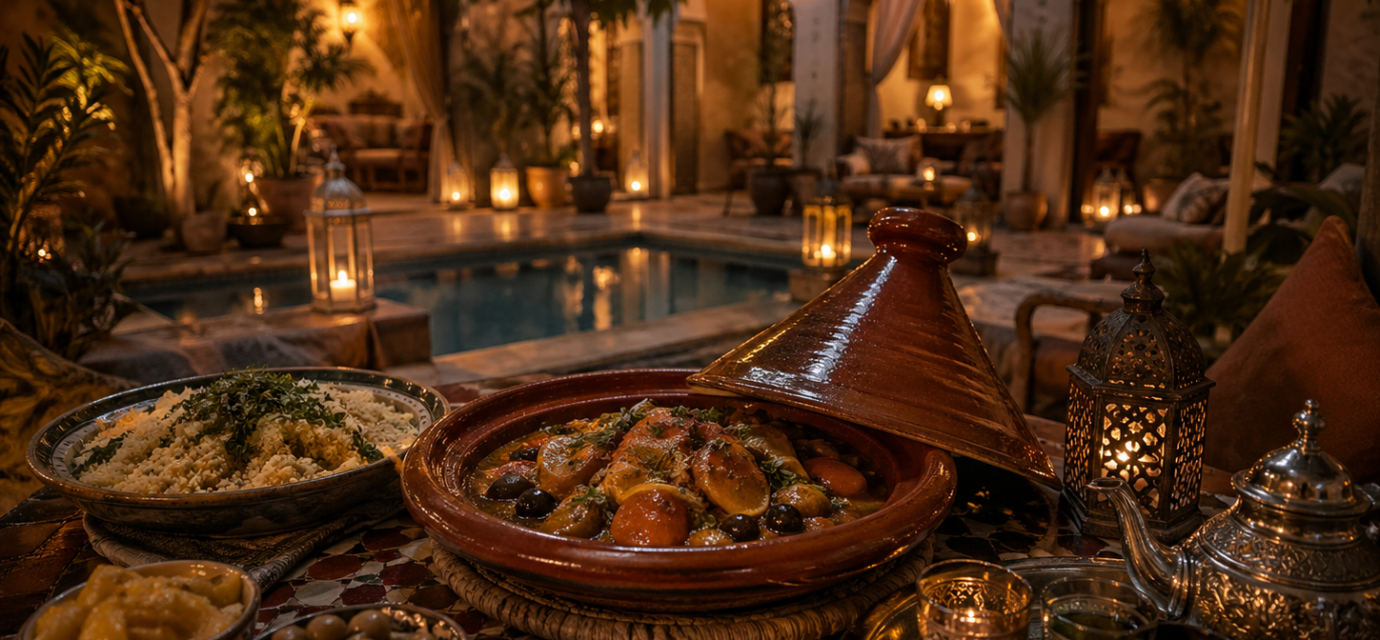
Open Moroccan tagine with preserved lemons, olives, couscous, herbs, and bread on a courtyard table.
Couscous, Comfort, and Communal Memory
Couscous deserves its own moment at the table.
In many North African homes, couscous is more than a side dish. It is a food of gathering. UNESCO recognizes the knowledge, know-how, and practices connected to the production and consumption of couscous across Algeria, Mauritania, Morocco, and Tunisia as intangible cultural heritage. That recognition helps explain why couscous carries such a strong sense of place and shared tradition.
On a courtyard table, couscous softens the meal. It catches sauce beautifully. It makes vegetables feel abundant. It welcomes chickpeas, raisins, carrots, zucchini, lamb, chicken, herbs, and broth. It also creates the kind of table where people naturally pass bowls, lean in, and serve one another.
That is where the feast becomes more than dinner. It becomes a shared rhythm.
The Ritual of Mint Tea
Then comes mint tea.
Moroccan mint tea is one of the most recognizable gestures of welcome. National Geographic describes the ritual of serving hot herbal tea as a convivial way to say hello, commonly made with Chinese gunpowder green tea and fresh herbs, then poured from a height to aerate the tea.
There is something beautiful about that pour. It is practical, but it also feels ceremonial. It slows the room down. It gives people a reason to stay after the meal instead of standing up too quickly. The tea becomes a bridge between food and conversation.
For a Fly By Eats reader, this is the kind of detail that turns a recipe idea into an experience. You do not have to recreate every part of a Moroccan home or riad to honor the feeling. You can begin with care. Brew the tea. Use fresh mint. Serve it in small glasses. Let it become the closing note of the meal.
Les savoirs, savoir-faire et pratiques liés à la production et à la consommation du couscous, UNESCO: Representative List of the Intangible Cultural Heritage of Humanity – 2020
Why Courtyard Dining Feels So Intimate
A courtyard has a special kind of magic. It is protected, but open. It feels private, but not closed off. The sky is still present. The air still moves. The lanterns glow differently because the darkness has somewhere to settle.
That balance makes courtyard dining feel deeply human. It invites people to soften their shoulders. It makes a simple table feel intentional. The architecture becomes part of the meal. The tiles, arches, cushions, pottery, plants, candles, and low lighting all help tell the same story: stay awhile.
This is why the image of a Moroccan courtyard feast feels so captivating. It speaks to a kind of dining many people are craving right now. Not louder. Not faster. Not more complicated. Just warmer, richer, slower, and more connected.
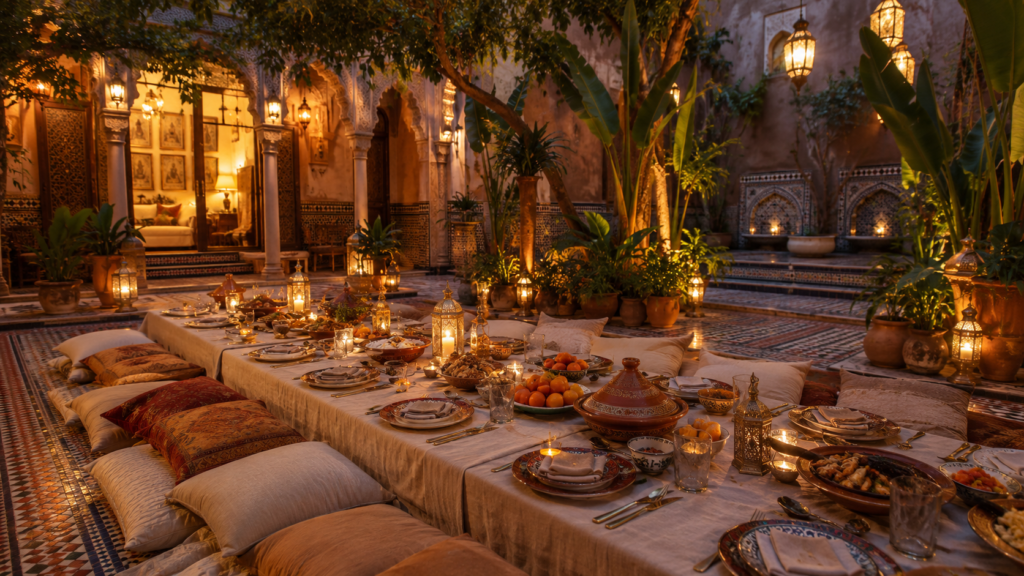
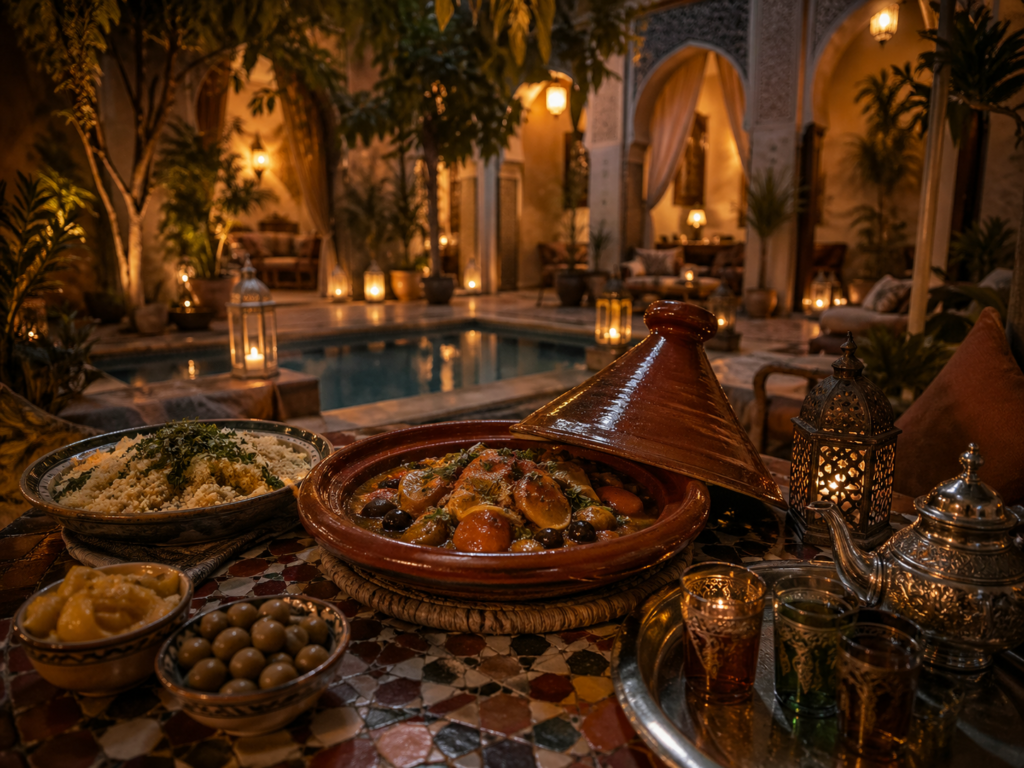
Moroccan-inspired riad courtyard dinner setting with lanterns, mosaic tiles, plants, cushions, and a shared feast table.
How to Create a Moroccan-Inspired Courtyard Feast at Home
You do not need a full courtyard to create the feeling. A patio, balcony, dining room, or small kitchen table can still carry the mood if the experience is thoughtful.
Start with warm lighting. Use lanterns, candles, or soft lamps instead of harsh overhead light. Add texture with woven placemats, ceramic bowls, linen napkins, patterned plates, or small serving dishes. Keep the table layered, but not cluttered.
Choose one main dish with depth. A chicken tagine with preserved lemon and olives, a vegetable tagine with chickpeas, or couscous with roasted vegetables can become the heart of the meal. Add small bowls of olives, a fresh tomato and cucumber salad, warm flatbread, and mint tea. The goal is not to overwhelm the table. The goal is to make the meal feel generous and easy to share.
For readers who love a little sweetness, add dried apricots, dates, honeyed almonds, or orange slices with cinnamon. For freshness, bring in parsley, cilantro, mint, lemon, and seasonal vegetables. For heat, offer harissa on the side so guests can choose their own comfort level.
Making Traditional Moroccan Mint Tea | Amazing Hotels: Life Beyond the Lobby | The Travel Edit
A Thoughtful Note on Culture and Respect
A Moroccan-inspired feast should be written and presented with respect. Moroccan cuisine is not a trend or a decoration. It is a living culinary heritage connected to families, regions, markets, home cooks, professional chefs, and generations of food knowledge.
That is why the best way to approach this table is with curiosity instead of imitation. Learn what the ingredients mean. Name the dishes carefully. Avoid calling something “authentic” unless the recipe and cultural context truly support that claim. When adapting the meal for a home kitchen, use language such as “Moroccan-inspired,” “inspired by Moroccan flavors,” or “a respectful home-style interpretation.”
This also helps with reader trust. Readers can feel the difference between content that borrows from a culture and content that honors it.
Final Bite
A cozy Moroccan courtyard feast reminds us that food can turn a room into a refuge.
The tagine brings patience. The couscous brings comfort. The olives and preserved lemons bring brightness. The mint tea brings hospitality. The lanterns bring softness. The shared table brings everyone back to what matters.
In a world that often asks us to move quickly, this kind of meal asks something different.
Sit down. Breathe in the spices. Pour the tea. Pass the bread. Let the conversation stretch a little longer.
That is the real beauty of a Moroccan courtyard feast. It does not simply feed the body. It creates a place where people feel welcomed, remembered, and invited to stay.
References
- Moroccan National Tourist Office, “The Welcoming Moroccan Gastronomy.” Used for Moroccan culinary heritage, major dishes, spices, conviviality, and hospitality context.
- Encyclopaedia Britannica, “Tagine.” Used for tagine as a vessel and dish, including common sweet-savory combinations.
- UNESCO Intangible Cultural Heritage, “Knowledge, know-how and practices pertaining to the production and consumption of couscous.” Used for couscous cultural heritage context across Morocco, Algeria, Mauritania, and Tunisia.
- Serious Eats, “How to Stock a Moroccan Pantry.” Used for Moroccan pantry ingredients, preserved lemons, ras el hanout, saffron, harissa, cinnamon, and expert culinary context.
- National Geographic, “Morocco’s top five food experiences, from mint tea to tagine.” Used for Moroccan mint tea ritual and pouring technique context.
- TIME, “Moroccan Culinary Arts Museum.” Used for context on Moroccan culinary heritage, riad architecture, traditional tableware, couscous-making, ras el hanout, tagine, and zaalouk.
- The Travel Edit. “Making Traditional Moroccan Mint Tea | Amazing Hotels: Life Beyond the Lobby.” YouTube. This video features Monica Galetti learning the traditional Moroccan mint tea ritual with local staff at Kasbah Tamadot in Morocco’s Atlas Mountains, making it a fitting educational visual for the mint tea section of the article.