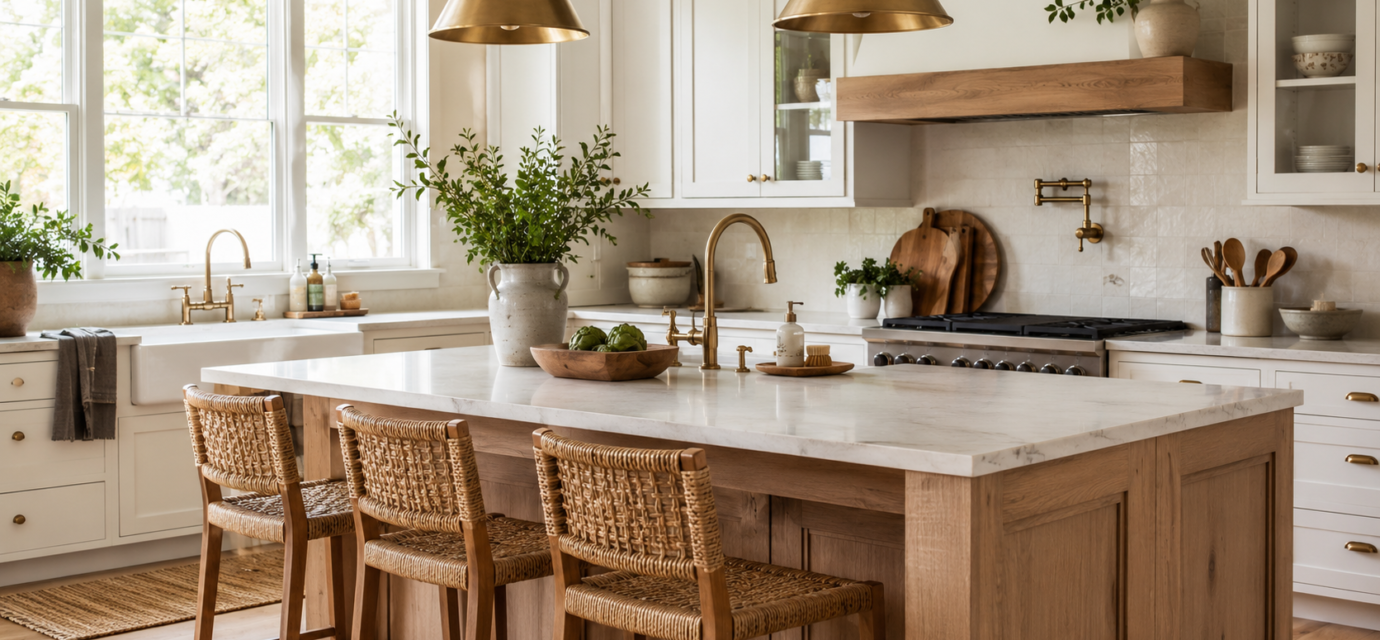
Modern Farmhouse Kitchen Design That Feels Collected, Comfortable, and Ready for Real Life
A modern farmhouse kitchen should feel like the kind of room people naturally drift toward.
Not because it is perfect. Not because every shelf is styled like a catalog. But it feels warm, useful, familiar, and easy to live in. It is the place where coffee gets poured before the house fully wakes up, where dinner smells start to soften a hard day, and where people somehow end up leaning against the island long after the meal is over.
That is the real beauty of modern farmhouse kitchen design. It is not only about white cabinets, apron-front sinks, wood beams, or pretty pendant lights. It is about creating a kitchen that feels grounded while still supporting the way people actually cook, clean, gather, store, prep, snack, host, and live.
Modern farmhouse style works best when it respects both sides of its personality. The farmhouse side brings warmth, natural texture, history, simplicity, and comfort. The modern side brings cleaner lines, smarter storage, better lighting, durable materials, and a calmer visual flow. When those two ideas meet in balance, the kitchen feels timeless instead of trendy.
Expected Result: A clear design roadmap for creating a farmhouse kitchen that feels cozy, polished, and current without becoming overly themed or overly rustic.
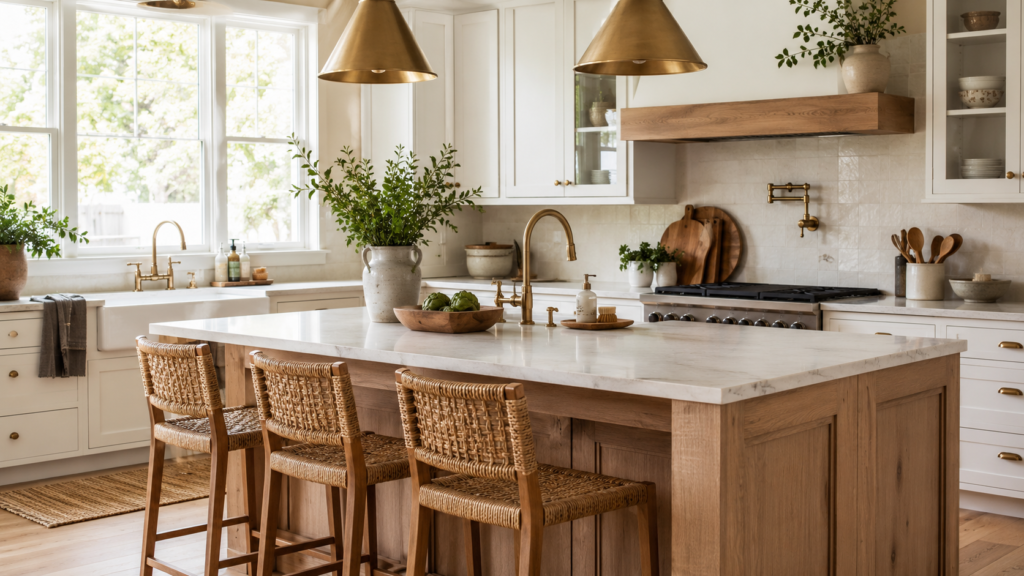
Modern farmhouse kitchen design with warm wood island, shaker cabinets, natural light, and cozy seating.
What Modern Farmhouse Really Means
Modern farmhouse design is often misunderstood. The strongest version of this style is not about covering a kitchen with rustic signs, fake barnwood, and distressed everything. It is about function first, warmth second, and decoration last.
Historically, farmhouse living was tied to practical homes built around daily needs. Food preparation, storage, gathering, and work all mattered. That practical spirit still matters today, even if the materials, appliances, and layouts have evolved. Design writer Nancy Hiller also makes an important distinction between authentic farmhouse thinking and the overuse of “barn” aesthetics, reminding readers that style can become confusing when the language is used carelessly.
That is why the best modern farmhouse kitchens feel collected, not staged. They use honest materials. They make storage easy. They support movement. They invite people in without making the room feel crowded.
Start With the Kitchen You Actually Need
Before choosing cabinet colors or backsplash tile, start with this question:
How does this kitchen need to serve real life?
A beautiful kitchen can still become frustrating if the aisles are too tight, the island blocks movement, the pantry is too small, or the lighting fails where you actually prep food. NKBA kitchen planning guidance recommends work aisles of at least 42 inches for one cook and 48 inches for multiple cooks, which is especially important in family kitchens and open-concept spaces where more than one person may be moving through the room.
That matters because modern farmhouse kitchens are often social kitchens. People cook, talk, help, snack, unload groceries, and gather at the same time. A central island can be wonderful, but only if it leaves enough room for cabinet doors, appliance doors, stools, and foot traffic.
A good modern farmhouse layout should include:
- A clear path between the sink, refrigerator, and cooking area
- Enough aisle space around the island
- A prep zone near the sink
- Storage close to where items are used
- Landing space near the refrigerator, oven, and sink
- Seating that does not interrupt the main cooking path
NKBA guidance also recommends at least a 24-inch landing area on one side of the sink and 18 inches on the other side, plus a continuous prep/work area at least 36 inches wide and 24 inches deep next to a sink.
That may not sound glamorous, but it is what makes a kitchen feel calm instead of chaotic.
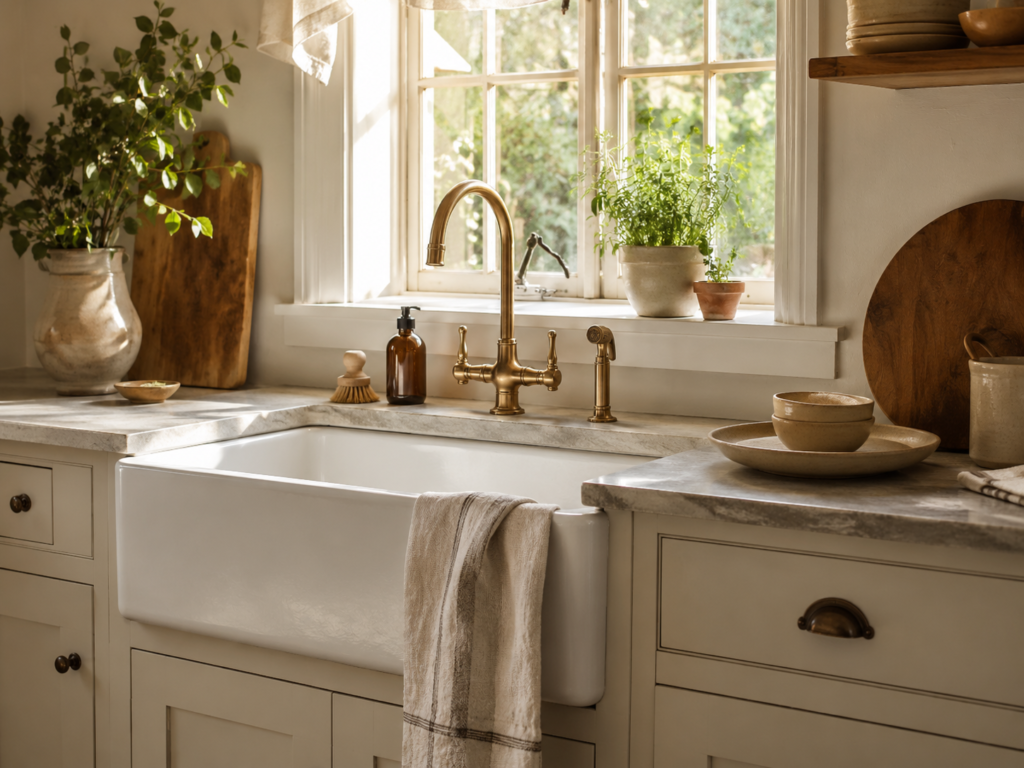
Modern farmhouse apron-front sink with brass faucet, natural light, herbs, and soft white cabinetry.
Why This Style Still Connects With People
Modern farmhouse kitchens remain appealing because they offer something many people crave at home: warmth without clutter, style without coldness, and comfort without looking outdated.
Recent kitchen trend research supports this shift toward kitchens that do more than look pretty. The 2026 Houzz Kitchen Trends Study, based on a survey of 1,780 U.S. homeowners, found that dysfunction or deterioration is a growing renovation trigger, with 38 percent of renovating homeowners citing it as a reason to remodel. Style dissatisfaction still matters, but function is clearly part of the conversation.
The NKBA 2026 Kitchen Trends Report also points to kitchens becoming more personalized, intelligent, health-conscious, and connected to the rest of the home. The report highlights open layouts, smart technology, wellness-focused spaces, better storage, and whole-home connection as major design drivers.
That fits the modern farmhouse perfectly. This style is not just about nostalgia. At its best, it is a bridge between emotional comfort and practical living.
Choose a Color Palette That Feels Warm, Not Flat
The classic modern farmhouse palette often starts with warm whites, creams, putty tones, greige, mushroom, oatmeal, soft taupe, sage, olive, muted blue, charcoal, and natural wood. The goal is not to make everything white. The goal is to create a soft, layered backdrop that can handle real life.
NKBA’s 2026 Kitchen Trends Report found that neutrals remain highly popular, with 96 percent of respondents identifying neutrals as a top color direction, followed by greens and blues. That supports the move toward softer, nature-connected palettes instead of stark, cold spaces.
A modern farmhouse kitchen can look beautiful with:
- Creamy white perimeter cabinets and a warm wood island
- Mushroom cabinets with brass hardware
- Sage lower cabinets with white uppers
- A charcoal or deep green island against lighter cabinetry
- White oak cabinets with stone countertops
- Soft black accents for contrast
The key is warmth. If the room feels too white, add wood. If it feels too rustic, simplify the lines. If it feels too plain, bring in texture through tile, lighting, woven stools, linen roman shades, vintage pottery, or a natural stone surface.
Cabinetry Should Feel Simple, But Not Boring
Shaker cabinets are popular in modern farmhouse kitchens for a reason. Their recessed-panel design feels clean enough for modern homes and traditional enough to hold warmth. But cabinet style is only one piece of the story.
The real value is in how the cabinetry works.
Houzz found that more than three-quarters of renovating homeowners incorporate built-in features during kitchen renovations, with pantry cabinets leading the list. This is an important design cue for modern farmhouse kitchens because the style looks best when everyday items have a place to land.
Consider adding:
- A full pantry wall
- Deep drawers for pots and pans
- Pull-out spice storage near the range
- Appliance garages for small appliances
- Tray dividers for sheet pans and cutting boards
- A hidden trash and recycling pull-out
- Glass-front cabinets for a few pretty pieces
- Closed storage for everything else
Open shelving can be beautiful, but it should be used with restraint. A few wooden shelves with everyday dishes, cookbooks, olive oil, bowls, or plants can add charm. Too many open shelves can quickly turn into visual clutter.
A modern farmhouse kitchen should feel lived in, not overloaded.
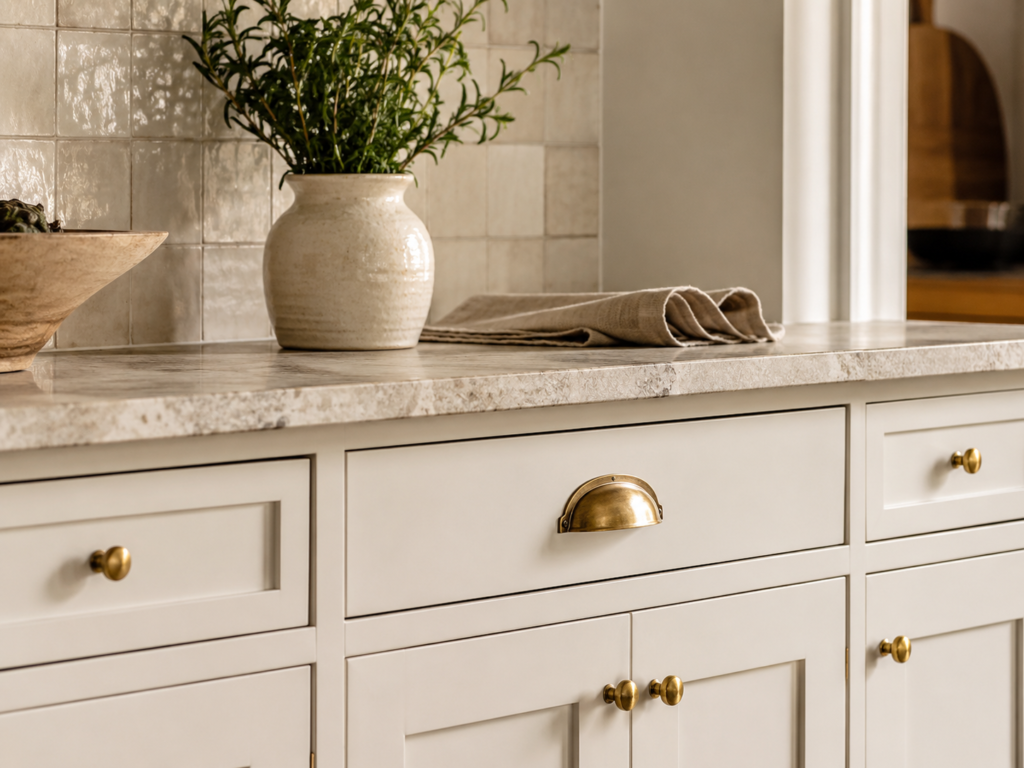
Shaker cabinet details with brass hardware, stone countertop, handmade tile, and warm farmhouse kitchen styling.
Use Natural Materials That Age Gracefully
Modern farmhouse style depends heavily on material honesty. Real wood, stone, ceramic tile, iron, brass, linen, and woven textures all help the room feel grounded.
NKBA’s 2026 report notes that natural materials continue to lead kitchen design interest, with wood grain growing in popularity and white oak identified as a top wood type. The same report also highlights quartz and quartzite as strong countertop and backsplash materials.
That does not mean every kitchen needs expensive stone or custom cabinetry. It means the room should avoid finishes that look overly fake, overly distressed, or overly themed.
Better choices include:
- White oak shelves instead of faux barnwood
- Handmade-look tile instead of overly glossy imitation patterns
- Honed or softly polished countertops instead of flashy surfaces
- Aged brass or matte black hardware instead of novelty fixtures
- Warm wood flooring or durable wood-look alternatives with a realistic grain
- Natural woven counter stools instead of overly industrial seating
The most inviting farmhouse kitchens often feel slightly imperfect in the best way. A little variation in tile, a warm wood grain, a stone surface with movement, or a vintage bowl on the counter can bring the room to life.
The Island Should Earn Its Space
A farmhouse kitchen island is often the emotional center of the room. It is where people chop vegetables, sip coffee, help with homework, serve casual meals, and talk while someone cooks.
But the island should not simply be large. It should be useful.
A strong modern farmhouse island may include:
- Seating for two to four people
- Deep drawers for cookware
- A trash pull-out near the prep zone
- A microwave drawer or beverage fridge, if useful
- Bookshelf storage at one end
- A wood, stone, or quartz top
- Pendant lighting that adds warmth without blocking sightlines
If your kitchen is smaller, a freestanding table-style island can create farmhouse character without crowding the room. If your kitchen is larger, a furniture-style island in wood, sage, navy, charcoal, or warm taupe can add depth and contrast.
The best island is not the biggest one. It is the one that makes cooking, gathering, and moving easier.
Lighting Is Where the Room Comes Alive
Lighting can make or break a modern farmhouse kitchen.
A kitchen with beautiful cabinets and poor lighting will feel unfinished. A kitchen with layered lighting feels warmer, more expensive, and more usable.
NKBA’s 2026 report found that kitchens are increasingly seen as spaces for decorative statement lighting, while natural lighting, quality lighting, and task lighting remain top design considerations.
A good modern farmhouse lighting plan should include:
- Natural light where possible
- Recessed ceiling lighting for overall brightness
- Under-cabinet lighting for prep work
- Pendant lights over the island
- A statement fixture over a breakfast nook or dining area
- Soft lamps or picture lights in nearby open-concept spaces
For the farmhouse look, try lantern pendants, schoolhouse lights, aged brass fixtures, woven shades, black metal pendants, or simple glass globes. The fixture should feel warm and intentional, but not too decorative.
Modern Farmhouse Kitchen Inspirations That Mix Classic Comfort with Sleek Upgrades – Video
How to Keep It From Feeling Corny
The easiest way to weaken a modern farmhouse kitchen is to turn it into a theme.
Too many signs. Too many distressed finishes. Too much faux barnwood. Too many decorative objects that do not serve the room. When every piece tries to announce “farmhouse,” the kitchen loses the quiet confidence that made the style attractive in the first place.
A better approach is restraint.
Choose one or two farmhouse anchors, then let the rest of the room breathe. A farmhouse sink, a wood island, handmade tile, vintage-inspired lighting, or a classic range hood may be enough. You do not need all of them shouting at once.
Ask yourself:
- Does this piece add warmth or just clutter?
- Does it feel authentic or overly staged?
- Will it still look good five years from now?
- Does it help the kitchen function better?
- Does it feel like my home, not just a trend?
Modern farmhouse design should feel personal, not performative.
Budget-Friendly Ways to Add the Look
You do not need a full renovation to bring modern farmhouse warmth into a kitchen. Sometimes, the right smaller updates can change the feeling of the room.
Try:
- Replacing hardware with aged brass, matte black, or warm nickel
- Adding woven counter stools
- Painting an island sage, mushroom, navy, or charcoal
- Installing open wood shelves in one small area
- Swapping a harsh light fixture for a warmer pendant
- Adding under-cabinet lighting
- Styling the counter with a wooden board, a ceramic bowl, herbs, or a linen towel
- Using peel-and-stick tile temporarily until a larger renovation is possible
- Adding a runner rug for warmth and softness
- Decluttering counters so the materials can breathe
The goal is not to copy someone else’s kitchen. The goal is to create a space that feels more welcoming, more useful, and more connected to your life.
Best Design Features to Include
A strong modern farmhouse kitchen usually includes a thoughtful blend of classic comfort and modern practicality. The following features work well when used with balance:
- Shaker or inset-style cabinetry
- Warm white, cream, sage, mushroom, navy, charcoal, or natural wood finishes
- Apron-front or deep single-basin sink
- Large island or table-style island
- Natural wood shelves, beams, stools, or island base
- Stone, quartz, butcher block, or wood-look surfaces
- Handmade-look tile backsplash
- Pantry cabinets or hidden storage
- Soft layered lighting
- Vintage-inspired hardware
- Durable flooring
- A restrained mix of old and new pieces
Common Mistakes to Avoid
Avoid designing the room only for photos. A kitchen needs to work when groceries are on the counter, dishes are in the sink, someone is making breakfast, and someone else is walking behind the stools.
Common mistakes include:
- Choosing style over workflow
- Making aisles too narrow
- Adding a large island that blocks movement
- Using too much open shelving
- Overdecorating with signs or novelty pieces
- Mixing too many metals without a plan
- Forgetting task lighting
- Choosing fake distressed finishes that age poorly
- Using all white with no warmth or texture
- Ignoring storage for small appliances
A farmhouse kitchen should feel generous, not crowded. Warm, not cluttered. Designed, but still human.
Final Thought
A modern farmhouse kitchen should not feel like a trend you are trying to keep up with. It should feel like a room that knows how to hold people.
The best version is warm, but not cluttered. Practical, but not cold. Beautiful, but not fragile. It gives you storage where you need it, light where you work, texture where the room needs life, and enough comfort to make people want to stay.
That is what makes modern farmhouse design last. It is not really about copying an old farmhouse. It is about bringing the spirit of one into modern life: useful, welcoming, grounded, and ready for real meals, real conversations, and real living.
References
- Architectural Digest. (2023, January 4). Farmhouse style: Everything you need to know about this functional and cozy aesthetic. Architectural Digest.
- Houzz Inc. (2025). 2026 U.S. Houzz kitchen trends study.
- Houzz. Houzz Inc. (2026). 2026 U.S. Houzz kitchen trends study.
- Houzz. Hiller, N. R. (2020). Kitchen Think: A guide to design and construction, from refurbishing to renovation. Lost Art Press.
- National Kitchen & Bath Association. (n.d.). Kitchen planning guidelines with access standards. NKBA.
- National Kitchen & Bath Association. (2025, September 18). NKBA | KBIS releases annual 2026 kitchen trends report. NKBA.
Recommended Reads
This post may contain affiliate links. As an Amazon Associate, Fly By Eats may earn from qualifying purchases at no extra cost to you.