A Georgian Full Table: Khachapuri, Khinkali, Qvevri Wine, And The Living Spirit Of Supra
This is not just a food article about Georgia.
It is an invitation to sit at a table where bread arrives hot, dumplings hold broth like a secret, herbs brighten the room, and wine carries thousands of years of cultural memory.
If you have never explored Georgian food before, begin with this truth: Georgia feeds people with heart.
The country sits in the South Caucasus, where Europe and Asia meet in a way that feels layered, rooted, and beautifully its own. Georgian cuisine is not simply comfort food, although it is deeply comforting. It is mountain food, vineyard food, village food, feast food, family food, and story food all at once.
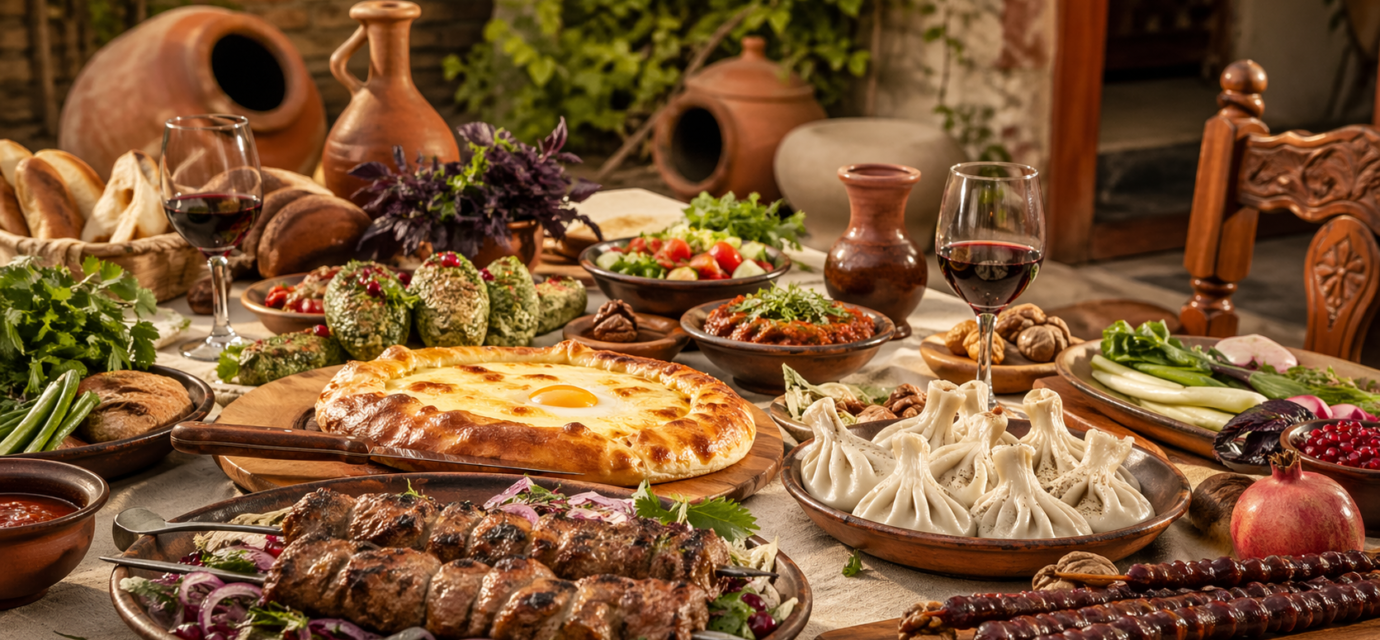
You taste soft bread, sharp cheese, fresh herbs, walnuts, plum sauce, pomegranate, grilled meats, clay-aged wine traditions, and the kind of hospitality that makes a meal feel personal. Nothing about Georgian food feels flat. It feels lived in, passed down, celebrated, and shared.
Georgia’s official tourism platform describes the country’s cuisine through regional ingredients, vegetable dishes, eggplant with walnuts, tkemali plum sauce, ajika, coriander, grape traditions, churchkhela, and a wide range of dishes shaped by place and season.
A visual look at Georgia’s wine, food, and hospitality culture.
What Makes Georgian Food So Unforgettable?
Georgian food stays with people because it is not only about flavor. It is about how food moves around the table.
A Georgian meal often feels generous before the first bite is even taken. Dishes are placed in the center. Bread is torn. Sauces are passed. Dumplings arrive in piles. Toasts are made. People talk, laugh, remember, and linger.
That spirit comes through most clearly in the Georgian supra, a traditional feast centered on abundance, hospitality, conversation, and toasts. A supra is often guided by a tamada, or toastmaster, who leads the rhythm of the meal through blessings, reflection, humor, memory, and welcome.
At a Georgian table, food is rarely treated as background. It becomes the reason people gather and the language they use to welcome each other.
A Quick Taste of Georgia’s Cultural Table
Before diving deeper, here are the essential pieces that help define Georgian cuisine:
Supra: A communal feast shaped by food, wine, conversation, ritual toasts, and hospitality.
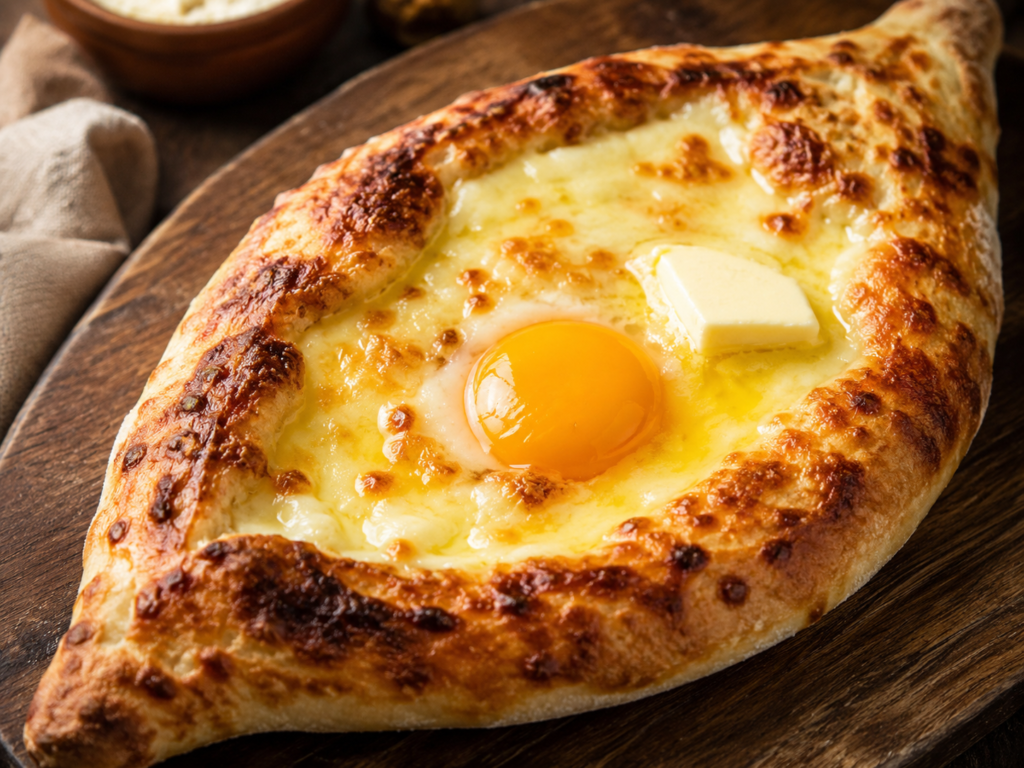
Khachapuri: Georgia’s beloved cheese-filled bread, with many regional styles. The Ajarian version is famous for its boat shape, molten cheese center, egg, and butter.
Khinkali: Hand-pleated dumplings usually filled with spiced meat and broth, though mushroom, cheese, and potato versions are also enjoyed.
Qvevri wine: Traditional Georgian wine made in large clay vessels, often buried underground for fermentation and storage. UNESCO recognizes the ancient Georgian qvevri wine-making method as intangible cultural heritage.
Flavor profile: Walnuts, pomegranate, coriander, garlic, tarragon, blue fenugreek, fresh herbs, plum sauce, beans, cheese, bread, and slow-cooked depth.
Why Georgian Food Feels So Personal
In some cuisines, you can separate the food from the atmosphere. In Georgia, that separation disappears quickly.
A meal is not only about what is on the plate. It is about who is gathered, how the food is served, and the way the table invites people to stay a little longer.
The Georgian supra is one of the clearest examples of this. It may include bread, cheeses, salads, grilled meats, dumplings, sauces, sweets, and wine, but the meaning of the meal stretches beyond the menu.
The supra is a social ritual. It brings food, memory, respect, humor, gratitude, and welcome into one shared space.
That matters because Georgian cuisine is best understood through this spirit of abundance. Dishes often arrive family-style. People tear, scoop, dip, pour, taste, and offer. Khachapuri is made for sharing. Khinkali turns a table lively. Sauces like tkemali and walnut-based spreads invite dipping and passing. Bread is not decoration. It is part of the conversation.
What stays with people after a Georgian meal is not only the cheese, wine, dumplings, or herbs. It is the feeling that food can still be sacred enough to honor and ordinary enough to share warmly.
Khachapuri: The Cheese Bread That Became a Cultural Symbol
Khachapuri is often the first Georgian dish people recognize, and honestly, it deserves the attention.
Calling khachapuri “cheese bread” is technically true, but it barely captures the comfort, skill, and regional pride inside a good one.
Khachapuri is not one single bread. It changes by region, shape, cheese, baking method, and local tradition.
In Imereti, khachapuri is commonly round, soft, and filled with cheese. In Adjara, khachapuri becomes one of the most visually memorable breads in the world. The dough is shaped like a boat, filled with melted cheese, topped with an egg, and finished with butter.
A good khachapuri is rich without feeling careless. The dough should be tender but strong enough to hold the filling. The cheese should be generous, warm, and satisfying. The Ajarian version invites you to tear the edge and dip it into the center while it is still hot.
Khachapuri is comfort food, yes, but it is also cultural storytelling in bread form.
Khinkali: The Dumplings That Bring the Table to Life
Khinkali are large Georgian dumplings, often filled with spiced meat and broth. Mushroom, cheese, and potato versions are also common, which makes them flexible for different tastes and food traditions.
The joy of khinkali is partly in the technique.
You hold the dumpling by its twisted top, take a careful bite, sip the broth inside, and then continue eating around the pleated body. That first bite matters. Rush it, and the broth escapes. Respect it, and the dumpling rewards you.
But khinkali are more than a fun food ritual. They show how Georgian cooking balances richness, practicality, and pleasure.
The dough is sturdy enough to hold the filling. The broth brings warmth. The pepper and herbs wake everything up. A plate of khinkali can turn a quiet table into a lively one because everyone becomes part of the experience.
People compare technique. Someone nearly spills. Someone orders more. The meal loosens up.
That is the beauty of Georgian food. It does not just feed people. It gives them something to do together.
A Georgian food tour that helps readers see how khinkali, khachapuri, and other traditional dishes appear in real dining settings.
Beyond the Famous Dishes: The Rest of the Georgian Table
Khachapuri and khinkali may be the headline dishes, but Georgian cuisine becomes even more interesting when you look across the whole table.
There is mtsvadi, Georgian grilled skewered meat, often cooked over fire with a simplicity that lets smoke and salt do the talking.
There is badrijani nigvzit, eggplant filled with walnut-garlic paste and often finished with pomegranate seeds. It is earthy, creamy, bright, and beautiful without needing to be overcomplicated.
There is churchkhela, a traditional sweet made by dipping strings of nuts into thickened grape juice, then drying them. Georgia Travel connects churchkhela to grape harvest traditions and describes it as a natural food made with grape juice, flour, and walnuts.
There are herb-packed dishes, slow-cooked beans, clay-pot preparations, tart plum sauces, cheese breads, walnut sauces, and seasonal greens. In spring, pkhali can be made with field greens and mixed with walnuts, oil, vinegar, and seasoning.
This is why Georgian cuisine should not be reduced to cheese and dumplings. Those dishes are important, but the full table is much wider.
Georgian food is rich, yes, but it is also green, tart, herbal, nutty, smoky, and deeply seasonal.
Qvevri Wine: Georgia’s Ancient Clay Vessel Tradition
Georgia’s wine story is older than many readers realize.
One of Georgia’s most distinctive wine traditions is the qvevri, a large clay vessel used for fermenting, aging, and storing wine. UNESCO describes qvevri wine-making as a traditional Georgian method where wine is fermented and stored in distinctive earthenware vessels, and the practice is part of Georgia’s intangible cultural heritage.
The National Wine Agency of Georgia explains that qvevri wine generally involves fermenting, vinifying, and aging grape juice with grape skins and pips, often called chacha.
For Georgian culture, wine is not only about what is poured into a glass. It is tied to agriculture, craftsmanship, celebration, oral tradition, family memory, and identity.
Even for readers who do not drink alcohol, this history matters. It shows how food and beverage traditions can hold memory across generations.
How Georgia’s Geography Shows Up on the Plate
One reason Georgian cuisine feels so layered is that the country’s landscapes are varied.
Mountains, valleys, wine regions, Black Sea influences, and local agricultural traditions all shape the food. Some regions are known for breads and cheeses. Others lean into grilled meats, herbs, beans, sauces, or regional wines.
That variety keeps Georgian food from becoming one-note.
There is comfort, but also brightness. There is richness, but also acid from plum and pomegranate. There is meat, but also beans, greens, walnuts, breads, herbs, and vegetables strong enough to carry the meal on their own.
This is one of the reasons Georgian food wins people over so quickly. It feels complete.
Traditional Georgian Dishes to Know
Khachapuri
A cheese-filled Georgian bread with many regional variations. The Ajarian version is especially famous for its boat shape, melted cheese center, egg, and butter.
Khinkali
Large hand-pleated dumplings, often filled with spiced meat and broth. They are usually eaten by hand so the broth inside can be sipped before eating the rest of the dumpling.
Mtsvadi
Georgian skewered meat, often grilled over open fire. It is simple, smoky, and deeply satisfying.
Churchkhela
A traditional sweet made with nuts and thickened grape juice. It is closely tied to grape harvest culture and Georgian family food traditions.
Badrijani Nigvzit
Eggplant rolls filled with walnut-garlic paste, often finished with pomegranate seeds.
Pkhali
A family of vegetable and herb-based dishes, often made with greens, walnuts, vinegar, garlic, and spices.
Chakapuli
A bright, herb-heavy stew often made with lamb or veal, tarragon, and tart plum.
How to Explore Georgian Food Respectfully
Georgian cuisine deserves more than a quick label.
Do not flatten it into “just Eastern European comfort food.” Georgia has its own food language, regional diversity, ancient wine traditions, and hospitality rituals.
When learning about the supra, treat it as a living cultural practice, not simply a party table.
When learning about khachapuri, remember that one version does not represent every Georgian table.
When learning about qvevri wine, keep the focus on culture, history, agriculture, and craftsmanship.
Most importantly, keep the tone human. Hospitality is not a side note in Georgian food culture. It is central.
Before You Leave This Table
Georgia has a way of pulling people in with cheese bread and keeping them there with everything else.
The dumplings. The clay vessels. The walnut sauces. The herbs. The toasts. The bread. The village memory. The feeling that food is still allowed to mean something.
So here is the real question:
If one country can turn bread, wine, and welcome into an entire worldview, what happens when you follow the next dish deeper into the mountains, vineyards, kitchens, and stories still waiting to be shared?
What to Try First
New to Georgian food? Start with this simple tasting path:
- Start with khachapuri for comfort, bread culture, and regional pride.
- Try khinkali for the joy of broth-filled dumplings and shared table technique.
- Look for badrijani nigvzit if you love eggplant, walnuts, garlic, and pomegranate.
- Add pkhali for a fresh, herbal, vegetable-based side.
- Taste churchkhela for a sweet connection to grape harvest traditions.
- Learn about qvevri wine for cultural context, even if you do not drink.
Frequently Asked Questions
What is Georgian food known for?
Georgian food is known for khachapuri, khinkali, supra feasts, walnut sauces, fresh herbs, plum sauce, pomegranate, grilled meats, cheese breads, vegetable dishes, and ancient qvevri wine traditions.
What is khachapuri?
Khachapuri is a traditional Georgian cheese-filled bread. It has many regional styles, including Imeretian khachapuri and Ajarian khachapuri.
What is khinkali?
Khinkali are Georgian dumplings often filled with spiced meat and broth. They are usually eaten by hand so the broth inside can be sipped before eating the rest of the dumpling.
What is a Georgian supra?
A supra is a Georgian feast centered on food, hospitality, toasts, conversation, and shared abundance.
Why is Georgian wine important?
Georgia is known for one of the world’s oldest living wine cultures. The qvevri method uses clay vessels for fermentation and storage, and UNESCO recognizes the traditional Georgian qvevri wine-making method as intangible cultural heritage.
References and Further Reading
Georgia Travel. “Food and Wine in Georgia.”
https://georgia.travel/food-wine
UNESCO. “Ancient Georgian Traditional Qvevri Wine-Making Method.”
https://ich.unesco.org/en/RL/ancient-georgian-traditional-qvevri-wine-making-method-00870
UNESCO Multimedia Archives. “Ancient Georgian Traditional Qvevri Wine-Making Method.”
https://www.unesco.org/archives/multimedia/document-3515
National Wine Agency of Georgia. “Qvevri Wine.”
https://wine.gov.ge/En/KvevriWine