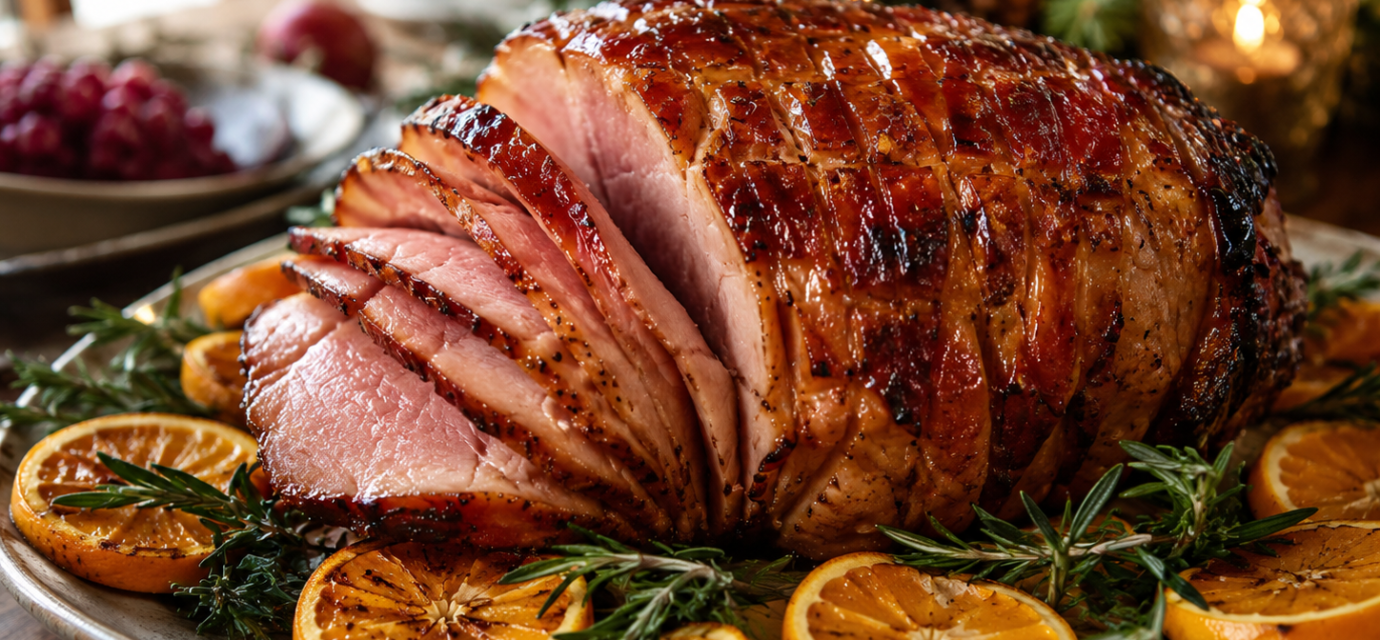
Honey-Glazed Holiday Ham with Citrus
A beautiful holiday ham has a way of slowing the room down. Before anyone even reaches for a plate, the kitchen fills with that warm, unmistakable aroma of savory pork, honey, citrus, clove, and caramelized edges. It feels generous. It feels familiar. It feels like the kind of dish that says, “Come on in, there is enough for everybody.”
This honey-glazed holiday ham is made for Christmas dinners, Easter tables, Sunday gatherings, and those big family meals where the main dish needs to feel special without making the cook feel overwhelmed. The glaze is bright but cozy: honey for shine, orange juice and zest for lift, Dijon mustard for balance, brown sugar for depth, and a little cinnamon and clove for that old-fashioned holiday warmth.
The beauty of a fully cooked ham is that most of the hard work has already been done. Your job is to warm it gently, keep it juicy, and build a glossy glaze that clings to the outside without burning. This recipe walks you through that process with practical timing, doneness cues, and food-safety notes so the final ham comes out tender, sliceable, and worthy of the center of the table.
This is not a fussy recipe. It is the kind of centerpiece that lets you focus on the people around you: the auntie bringing macaroni and cheese, the cousin sneaking a taste of glaze from the spoon, the quiet moment when orange and honey hit the warm pan, and the whole kitchen starts to smell like celebration.
Quick Recipe Snapshot
- Prep Time: 15 minutes
- Cook Time: 1 hour 45 minutes to 2 hours
- Total Time: About 2 hours 15 minutes, including resting
- Servings: 10-14 servings
- Difficulty Level: Easy to moderate
- Best For: Christmas dinner, Easter dinner, Thanksgiving alternatives, family gatherings, potlucks, and celebration tables
- Expected Result: A juicy, tender, fully warmed ham with a sticky honey-citrus glaze, lightly caramelized edges, warm spice, and a bright orange finish.
Why You’ll Love This Recipe
- It turns a fully cooked ham into a polished holiday centerpiece without complicated steps.
- The honey-citrus glaze balances sweet, salty, tangy, and savory flavors.
- Gentle oven heat helps keep the ham moist instead of dry or tough.
- The glaze is layered near the end, helping it caramelize without scorching.
- It feeds a crowd and gives you delicious leftovers for sandwiches, soups, breakfast hash, and casseroles.
- The recipe works for Christmas, Easter, Thanksgiving, New Year’s, or any family celebration.
- It includes clear temperature guidance so beginner and intermediate cooks can feel confident.
Cultural and Seasonal Background
Ham has a long history as a preserved pork product. Traditionally, ham refers to the rear leg of a hog prepared fresh or preserved through curing methods such as salting, smoking, or drying. Before modern refrigeration, curing and smoking helped extend the life of pork while also developing the deep, savory flavors people still associate with ham today.
Holiday ham traditions vary by region, religion, household, and culture. In many American homes, glazed ham became a familiar centerpiece for Easter, Christmas, and special Sunday dinners because it was practical, generous, and easier to serve to a crowd than many smaller cuts of meat. In some families, ham sits beside cornbread dressing, greens, sweet potatoes, rolls, or macaroni and cheese. In others, it appears with roasted vegetables, citrus salads, mashed potatoes, or biscuits.
It is important to speak about food traditions with care. Ham is meaningful in many Christian and secular holiday meals, but pork is not eaten in all cultures or faith traditions. For Fly By Eats, the heart of the dish is not claiming one single origin story. It is recognizing how preserved meats, seasonal gatherings, and family tables shaped the way glazed ham became a celebratory dish in many homes.
Citrus also has a natural place at the winter table. Oranges and other citrus fruits bring brightness during cooler months, cutting through the richness of roasted meats and buttery side dishes. In this recipe, orange juice and zest do more than add flavor—they help make the glaze feel fresh, fragrant, and balanced.
Why This Recipe Works
This recipe works because it treats fully cooked ham gently. Since many holiday hams are already cooked, the goal is reheating, not aggressive roasting. A moderate 325°F oven warms the ham without drying it out too quickly, while foil helps hold in moisture during the first stage of cooking.
The glaze is added toward the end because honey and brown sugar can darken fast. When brushed on in layers, the glaze has time to thicken, shine, and cling to the ham instead of burning before the center is warm. The orange juice adds acidity and freshness, while Dijon mustard and apple cider vinegar keep the sweetness from becoming heavy.
The spices are intentionally restrained. Cinnamon and clove can easily overpower ham, so this recipe uses just enough to give a holiday aroma without turning the glaze bitter or perfume-like. Orange zest is added because the peel contains fragrant oils that make the citrus flavor more vivid than juice alone.
Resting matters, too. A short rest after baking gives the ham time to settle before carving, helping the slices stay moist and clean.
Ingredients
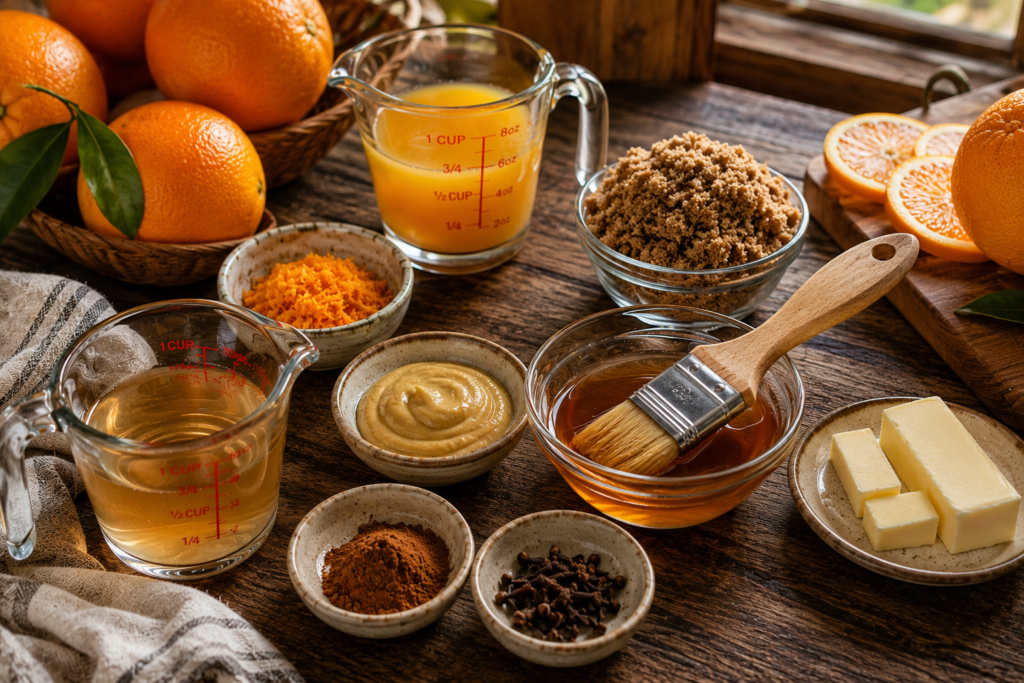
Ingredients for honey citrus ham glaze with oranges, honey, mustard, brown sugar, and spices.
1 fully cooked bone-in ham, 7-9 pounds
A bone-in ham gives a traditional presentation and excellent flavor. A spiral-sliced ham is convenient for serving, while an unsliced ham gives you more control over carving. Check the label to confirm whether it is fully cooked and whether it comes from a USDA-inspected plant.
1 cup orange juice, preferably fresh
Orange juice brings brightness and gentle acidity to the glaze. It helps balance the saltiness of the ham and the sweetness of the honey.
1/2 cup honey
Honey gives the glaze its shine, body, and floral sweetness. Its natural sugars help create a glossy, sticky finish when heated.
1/3 cup light brown sugar, packed
Brown sugar deepens the glaze with molasses-like warmth and helps build caramelized edges.
2 tablespoons Dijon mustard
Dijon adds tang and savory depth. It keeps the glaze from tasting flat or overly sweet.
1 tablespoon apple cider vinegar
A small amount of vinegar sharpens the glaze and helps cut through the richness of the ham.
1 tablespoon orange zest
Orange zest gives the glaze a stronger citrus aroma than juice alone. Zest only the colorful outer peel, avoiding the bitter white pith.
2 tablespoons unsalted butter
Butter rounds out the glaze and gives it a smooth, silky texture.
1/2 teaspoon ground cinnamon
Cinnamon adds gentle holiday warmth without overwhelming the citrus.
1/4 teaspoon ground cloves
Clove is classic with ham, but a little goes a long way. This small amount adds depth and aroma.
1/4 teaspoon black pepper
Black pepper gives the glaze a subtle savory edge.
Optional garnish: orange slices, rosemary sprigs, thyme sprigs, or fresh parsley
These make the platter feel festive and fresh without changing the core recipe.
Ingredient Notes and Smart Substitutions
If you do not have orange juice, use pineapple juice, apple cider, or a blend of orange and lemon juice. Pineapple will make the glaze sweeter and more tropical, while apple cider gives it a cozy fall flavor.
Maple syrup can replace honey for a deeper, woodsy sweetness. Use the same amount, but expect a slightly thinner glaze.
Whole-grain mustard can replace Dijon if you want more texture. Yellow mustard will work in a pinch, but it gives a sharper, simpler flavor.
For a less sweet glaze, reduce the brown sugar to 1/4 cup. Do not remove all the sweetener, because the sugar helps the glaze thicken and shine.
For a dairy-free version, replace butter with a neutral cooking oil or a plant-based butter that works well with heat.
For a gluten-free version, check the labels on the ham, mustard, vinegar, and any packaged ingredients. Most basic ingredients are naturally gluten-free, but processed ham and condiments can vary by brand.
Equipment You’ll Need
- Large roasting pan
- Roasting rack or a bed of sliced onions/oranges
- Aluminum foil
- Small saucepan
- Whisk
- Pastry brush or basting brush
- Meat thermometer
- Sharp carving knife
- Cutting board
- Serving platter
Step-by-Step Directions
1. Bring the ham out of the refrigerator briefly.
Remove the ham from the refrigerator about 30 minutes before baking. This takes the chill off slightly and helps it warm more evenly. Do not leave it at room temperature for more than two hours.
2. Preheat the oven.
Preheat the oven to 325°F. Place the oven rack low enough so the ham fits comfortably without touching the top of the oven.
3. Prepare the roasting pan.
Place a roasting rack inside a large pan. If you do not have a rack, lay thick orange slices or onion slices on the bottom of the pan and place the ham on top. This keeps the ham from sitting directly in its juices and encourages more even heating.
4. Position the ham.
Place the ham cut-side down in the roasting pan. This helps protect the sliced or cut surface from drying out. If your ham is spiral-sliced, avoid deep scoring because it is already cut. If your ham is not spiral-sliced, lightly score the surface in a diamond pattern about 1/4 inch deep.
5. Add moisture and cover.
Add about 1/2 cup of water, orange juice, or low-sodium broth to the bottom of the pan. Cover the ham loosely but securely with foil. This first covered bake warms the ham gently and helps prevent dryness.
6. Begin baking.
Bake the ham for about 10 to 15 minutes per pound, depending on the shape, thickness, and label directions. A 7-9 pounds fully cooked ham usually takes around 1 hour 30 minutes to 2 hours total. Start checking the internal temperature early so it does not overcook.
7. Make the honey-citrus glaze.
While the ham warms, combine orange juice, honey, brown sugar, Dijon mustard, apple cider vinegar, orange zest, butter, cinnamon, cloves, and black pepper in a small saucepan. Bring to a gentle simmer over medium heat, whisking often. Simmer for 6 to 8 minutes, or until slightly reduced and glossy. It should coat the back of a spoon but still brush easily.
8. Uncover and glaze.
When the ham is mostly warmed through, remove it from the oven and carefully uncover it. Brush a generous layer of glaze over the surface, letting it settle into the cuts and edges. Return the ham to the oven uncovered.
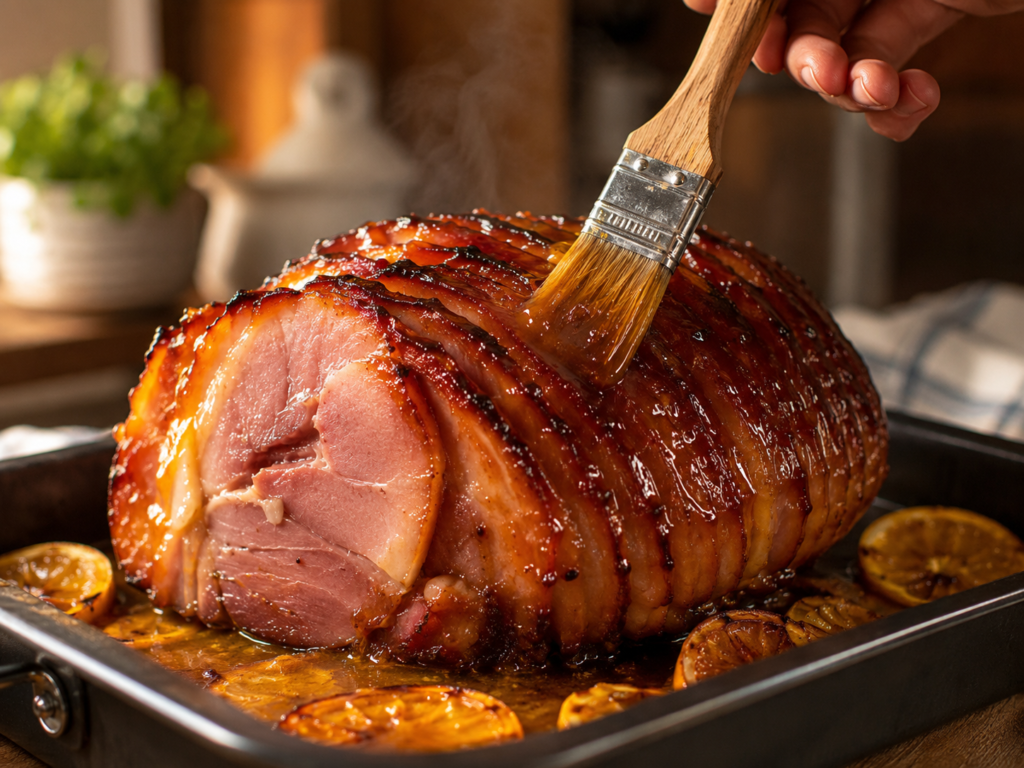
Brushing honey citrus glaze over a baked holiday ham.
9. Build the glaze in layers.
Bake uncovered for 20 to 30 minutes, brushing with more glaze every 10 minutes. Watch the color closely. You want a glossy golden-brown finish with lightly caramelized edges, not a burnt sugar crust. If the glaze darkens too quickly, tent the ham loosely with foil.
10. Check the internal temperature.
Use a meat thermometer inserted into the thickest part of the ham, avoiding the bone. Reheat fully cooked ham according to the package and safety guidance. Many cooked hams packaged in USDA-inspected plants are reheated to 140°F. If the ham is repackaged, not from a USDA-inspected plant, or if you are reheating leftovers, heat to 165°F.
11. Rest before carving.
Transfer the ham to a cutting board and let it rest for 10-15 minutes. Resting helps the juices settle and makes carving easier.
12. Slice and serve.
Carve around the bone, arrange slices on a platter, and spoon a little warm glaze over the top. Garnish with orange slices and herbs if desired. Serve warm.
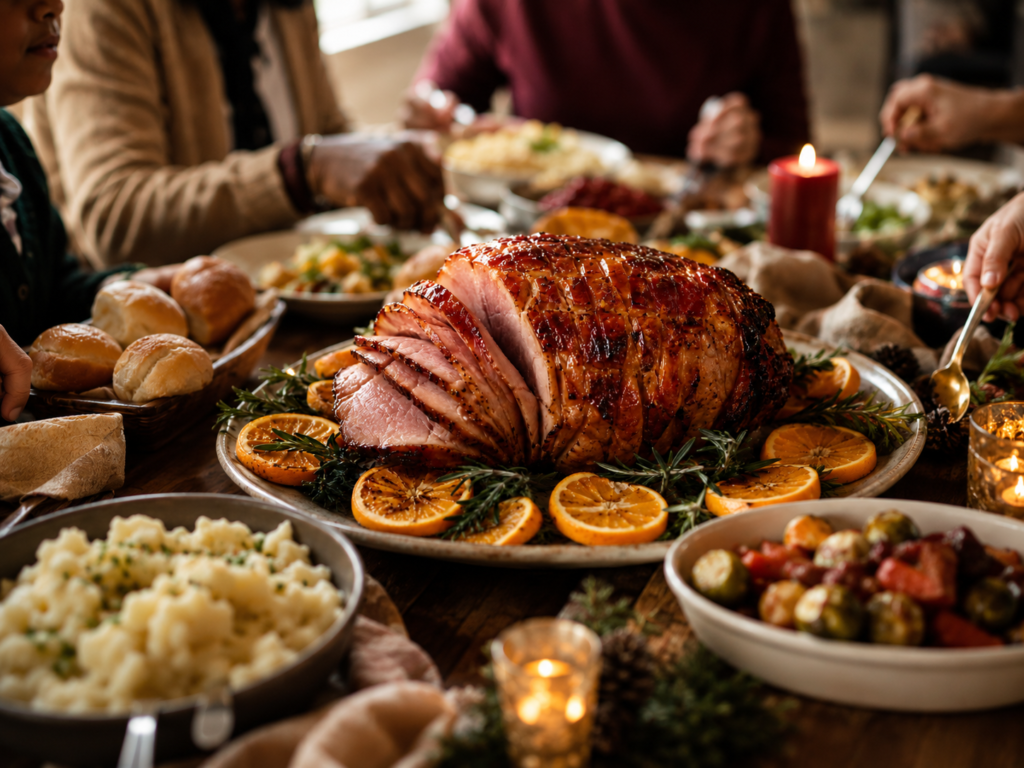
Holiday dinner table with honey-glazed citrus ham and classic side dishes.
Pro Tips for Best Results
- Read the ham label before cooking; timing and reheating temperature can vary by ham type.
- Keep the ham covered during the first stage so it stays moist.
- Add the glaze near the end to prevent the honey and sugar from burning.
- Use fresh orange zest for the brightest citrus aroma.
- Simmer the glaze just until glossy; reducing it too much can make it sticky and hard to brush.
- Use a thermometer instead of guessing by time alone.
- If using spiral ham, baste gently so the glaze gets between slices without drying them out.
- Let the ham rest before slicing to protect the texture.
- Save the bone for beans, greens, soups, or stock.
- Serve extra glaze on the side for guests who love a sweeter finish.
Common Mistakes to Avoid
Adding the glaze too early: Honey and sugar can burn during a long bake. Add the glaze near the end.
Skipping the thermometer: Ham can look ready before it is properly reheated. Use internal temperature as your guide.
Overbaking the ham: Fully cooked ham only needs reheating. Too much time in the oven can make it dry.
Using too much clove: Clove is strong. Keep it measured and balanced.
Letting the ham sit out too long: Keep food safety in mind. Do not leave cooked ham at room temperature for more than two hours.
Carving immediately: Give the ham a short rest, so slices stay moist.
Forgetting to check the label: “Fully cooked,” “cook before eating,” “spiral sliced,” and “fresh ham” are not the same. This recipe is written for fully cooked ham.
Flavor Variations
Maple Orange Ham: Replace honey with pure maple syrup and add a pinch of smoked paprika.
Pineapple Citrus Ham: Replace half the orange juice with pineapple juice and garnish with pineapple rings.
Spicy Honey Ham: Add 1/4 to 1/2 teaspoon crushed red pepper flakes or a small pinch of cayenne.
Bourbon Citrus Ham: Add 2 tablespoons of bourbon to the glaze and simmer it well so the flavor mellows.
Herb Citrus Ham: Add chopped rosemary or thyme to the glaze for a more savory finish.
Cranberry Orange Ham: Stir 2 tablespoons cranberry sauce into the glaze for a tart holiday twist.
Serving Suggestions
Serve this honey-glazed holiday ham with creamy mashed potatoes, baked macaroni and cheese, green bean casserole, roasted carrots, cornbread dressing, sweet potato casserole, or buttery dinner rolls.
For a brighter table, pair it with a citrus salad, shaved fennel salad, cranberry relish, roasted Brussels sprouts, or garlicky green beans. The ham is rich and savory, so fresh, acidic sides help keep the plate balanced.
For drinks, consider sparkling cider, iced tea with lemon, ginger ale, citrus mocktails, or a crisp white wine for adults who serve wine with dinner.
For plating, arrange slices slightly overlapping on a large platter. Tuck orange slices, rosemary sprigs, thyme, or parsley around the edges. Spoon a little glaze over the ham just before serving so it catches the light and looks glossy.
Storage, Freezing, and Reheating
Let leftover ham cool slightly, then slice it from the bone and store it in shallow airtight containers. Refrigerate within two hours of serving.
Cooked ham slices, half hams, and spiral-cut ham generally keep in the refrigerator for 3-5 days when stored at 40°F or below. For the best freezer quality, wrap portions tightly and freeze for 1-2 months. Frozen foods kept continuously at 0°F remain safe longer, but quality may decline.
To reheat leftover ham, place slices in a covered baking dish with a splash of water, broth, orange juice, or leftover glaze. Heat in a 325°F oven until warmed through. Leftovers should be reheated to 165°F.
For quick reheating, warm slices in a covered skillet over medium-low heat with a spoonful of liquid. Avoid high heat, which can dry the ham and scorch the glaze.
Make-Ahead Tips
You can make the glaze up to 3 days in advance. Store it in an airtight container in the refrigerator, then warm it gently before brushing it onto the ham.
You can also prepare garnishes the day before. Slice oranges, wash herbs, and choose your serving platter ahead of time.
If you are cooking for a holiday meal, plan your oven schedule around the ham. Since the ham rests well for 10-20 minutes, you can use that window to warm rolls, finish vegetables, or make gravy for other dishes.
Leftover ham can be diced and portioned for future meals. Store some for breakfast scrambles, soup, fried rice, casseroles, or sandwiches.
Frequently Asked Questions
Can I use a spiral-sliced ham for this recipe?
Yes. Spiral-sliced ham works very well because it is easy to serve and the glaze can slip between the slices. Keep it covered during the first part of baking so the slices do not dry out.
Do I need to score the ham?
Score an unsliced ham lightly to help the glaze cling. If your ham is spiral-sliced, you can skip scoring because the slices already create openings for the glaze.
What temperature should fully cooked ham reach?
Check the package directions. Many cooked hams packaged in USDA-inspected plants are reheated to 140°F. Other precooked hams and leftovers should be reheated to 165°F.
Can I make honey-glazed holiday ham without brown sugar?
Yes, but the glaze will be lighter and less caramel-like. You can use maple syrup, coconut sugar, or a little extra honey, though the texture and flavor will change.
How do I keep ham from drying out?
Bake it covered at first, place it cut-side down, add a little liquid to the pan, glaze near the end, and avoid overheating.
Can I make the glaze ahead of time?
Yes. Make it up to 3 days ahead, refrigerate it, and gently rewarm it before using.
What can I do with leftover ham?
Use it in omelets, breakfast casseroles, soups, beans, greens, fried rice, sandwiches, sliders, pasta, or scalloped potatoes.
Can I freeze leftover glazed ham?
Yes. Wrap it tightly in freezer-safe portions and freeze for the best quality within 1-2 months. Thaw in the refrigerator before reheating.
Final Thoughts
A honey-glazed holiday ham is one of those dishes that proves celebration food does not have to be complicated to feel meaningful. Sometimes the most memorable recipes are built on simple, dependable steps: warm the ham gently, stir together a glaze that smells like the season, brush it on slowly, and give everyone at the table something beautiful to gather around.
What makes this version special is the balance. Honey brings the shine, brown sugar brings depth, orange brings brightness, mustard brings a little spark, and warm spices bring that familiar holiday feeling without taking over the whole plate. It is festive but not fussy. Elegant but still down-to-earth. The kind of recipe that looks impressive on the platter and still leaves room for real life, the side dishes running late, the kids asking when dinner is ready, the last-minute guest, the cousin who wants extra glaze on everything.
At Fly By Eats, food is never just food. It is memory, comfort, culture, curiosity, and care. This ham belongs on that kind of table. It honors the old-fashioned beauty of a shared main dish while giving home cooks clear, safe, practical steps for making it well. Whether you serve it for Christmas, Easter, Sunday dinner, or a special gathering of your own making, let it be more than a centerpiece. Let it be an invitation.
Slice it generously. Spoon over a little extra glaze. Save the bone for tomorrow’s pot of beans or greens. And when the table gets quiet for that first bite, enjoy the small joy of knowing you made something warm, welcoming, and worth remembering.
Quick Recipe Card
Recipe Name: Honey Glazed Holiday Ham with Citrus
Description:
A tender, fully cooked ham warmed gently in the oven and finished with a glossy honey-citrus glaze made with orange juice, honey, brown sugar, Dijon mustard, apple cider vinegar, and warm holiday spices.
Prep Time: 15 minutes
Cook Time: 1 hour 45 minutes to 2 hours
Total Time: About 2 hours 15 minutes
Servings: 10–14
Ingredients:
- 1 fully cooked bone-in ham, 7 to 9 pounds
- 1 cup orange juice, preferably fresh
- 1/2 cup honey
- 1/3 cup light brown sugar, packed
- 2 tablespoons Dijon mustard
- 1 tablespoon apple cider vinegar
- 1 tablespoon orange zest
- 2 tablespoons unsalted butter
- 1/2 teaspoon ground cinnamon
- 1/4 teaspoon ground cloves
- 1/4 teaspoon black pepper
- Optional garnish: orange slices, rosemary, thyme, or parsley
Instructions:
- Remove ham from the refrigerator about 30 minutes before baking.
- Preheat oven to 325°F.
- Place ham cut-side down on a rack in a roasting pan. Add 1/2 cup water, broth, or orange juice to the pan.
- Cover loosely with foil and bake until mostly warmed through, about 10 to 15 minutes per pound.
- In a saucepan, combine orange juice, honey, brown sugar, Dijon, vinegar, orange zest, butter, cinnamon, cloves, and pepper. Simmer 6 to 8 minutes until glossy.
- Uncover ham and brush generously with glaze.
- Return to oven uncovered and bake 20 to 30 minutes more, brushing with glaze every 10 minutes.
- Reheat according to package guidance. Many cooked hams packaged in USDA-inspected plants should reach 140°F; other precooked hams and leftovers should reach 165°F.
- Rest 10 to 15 minutes before carving.
- Slice, garnish, and serve with extra warm glaze.
Notes:
- If using spiral-sliced ham, keep it covered during the first stage to prevent dryness.
- If the glaze darkens too quickly, tent the ham loosely with foil.
- Always check the package label for ham type and heating instructions.
Storage:
Store leftovers in shallow airtight containers and refrigerate within two hours. Keep refrigerated for 3 to 5 days or freeze for best quality within 1 to 2 months. Reheat leftovers to 165°F.
Nutrition Disclaimer:
Nutrition information, if provided, is an estimate and may vary based on ingredients and preparation methods.
References
- Britannica Editors. (2026, April 28). Ham. Encyclopaedia Britannica. https://www.britannica.com/topic/ham-meat
- Britannica Editors. (2026, May 25). Smoking. Encyclopaedia Britannica. https://www.britannica.com/topic/smoking-food-preservation
- Doner, L. (2003). Honey. United States Department of Agriculture, Agricultural Research Service. https://www.ars.usda.gov/research/publications/publication/?seqNo115=126568
- FoodSafety.gov. (2023, September 19). Cold food storage chart. U.S. Department of Health & Human Services. https://www.foodsafety.gov/food-safety-charts/cold-food-storage-charts
- U.S. Department of Agriculture, Food Safety and Inspection Service. (2020, July 31). Leftovers and food safety. https://www.fsis.usda.gov/food-safety/safe-food-handling-and-preparation/food-safety-basics/leftovers-and-food-safety
- U.S. Department of Agriculture, Food Safety and Inspection Service. (2025, January 15). Hams and food safety. https://www.fsis.usda.gov/food-safety/safe-food-handling-and-preparation/meat-catfish/hams-and-food-safety
- U.S. Department of Agriculture, Food Safety and Inspection Service. (n.d.). Safe minimum internal temperature chart. https://www.fsis.usda.gov/food-safety/safe-food-handling-and-preparation/food-safety-basics/safe-temperature-chart
- U.S. Department of Agriculture, Food Safety and Inspection Service. (n.d.). Keep food safe! Food safety basics. https://www.fsis.usda.gov/food-safety/safe-food-handling-and-preparation/food-safety-basics/steps-keep-food-safe