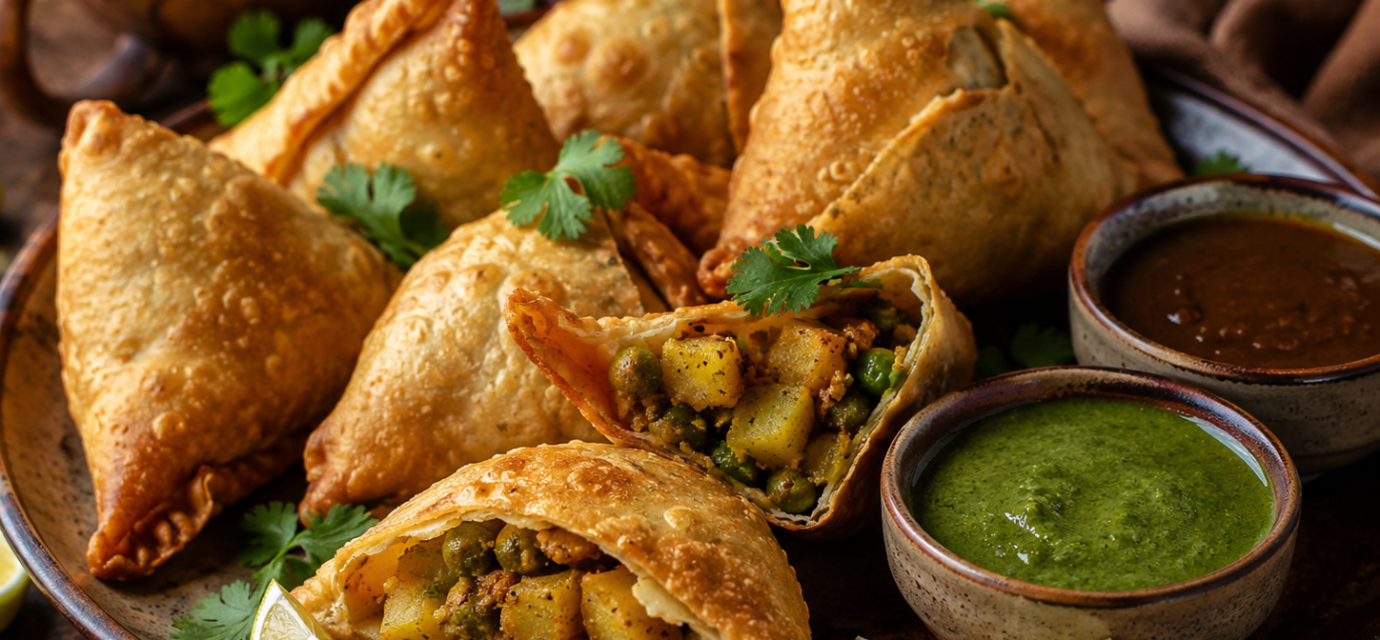
Indian Samosa Hand Pies with Spiced Potato Filling
A hot samosa has a way of stopping time for a second. The crust gives a gentle crackle, the steam rises with cumin, ginger, and garam masala, and the potato filling lands somewhere between comfort food and celebration food. These Indian samosa hand pies are inspired by the classic aloo samosa: a crisp, golden pastry filled with spiced potatoes, peas, green chile, fresh herbs, and just enough tang to make every bite feel awake.
This recipe honors the spirit of traditional South Asian samosas while making the process approachable for a home kitchen. The dough is firm, lightly enriched with ghee or oil, and flavored with ajwain seeds for that familiar savory aroma. The filling is not mashed into a paste; it stays slightly chunky, so the hand pies feel hearty, textured, and satisfying.
Samosas are often enjoyed as street food, tea-time snacks, party appetizers, and festive bites across India and the wider South Asian diaspora. They feel just as welcome on a Diwali table as they do at a family game night, a potluck, or a slow Sunday afternoon when you want something warm, crisp, and made with care.
This version gives you the traditional fried method for the best flaky crunch, plus baked and air-fryer notes for flexibility. The goal is simple: golden Indian samosa hand pies with a crisp shell, a flavorful potato-pea filling, and enough practical guidance to help you feel confident from the first fold to the final dip.
Quick Recipe Snapshot
- Prep Time: 40 minutes
- Cook Time: 30 minutes
- Total Time: 1 hour 10 minutes
- Servings: Makes 12 medium samosas
- Difficulty Level: Moderate, beginner-friendly with patience
- Best For: Tea-time snacks, appetizers, Diwali, potlucks, family gatherings, vegetarian comfort food
- Expected Result: Flaky, crisp samosa hand pies filled with warmly spiced potatoes, peas, ginger, cumin, cilantro, and a lightly tangy finish
Why You’ll Love This Recipe
- The filling is cozy, savory, and gently spiced without being overwhelming.
- The dough uses simple pantry ingredients and creates a crisp, flaky shell.
- Ajwain seeds give the pastry an authentic samosa-style aroma.
- The recipe includes fried, baked, and air-fryer options.
- The samosas can be made ahead and frozen for later.
- The filling is vegetarian and easy to adapt with lentils, paneer, or extra vegetables.
- The step-by-step shaping guidance makes homemade samosas feel less intimidating.
Cultural and Seasonal Background
Samosas are one of South Asia’s most recognizable savory snacks, especially in India, Pakistan, Bangladesh, Sri Lanka, and diaspora communities around the world. The word and concept have a layered history. Food historians generally connect the samosa to a wider family of filled pastries found across Central Asia, the Middle East, and South Asia. Britannica describes the samosa as part of a broad global tradition of filled pastries, related in spirit to foods such as sambusak and other stuffed doughs.
The exact origin story is complex, and it is best approached with care. Earlier forms of stuffed pastries appear in medieval Middle Eastern and Central Asian foodways, and similar pastries likely traveled through trade routes, courts, and migration before becoming deeply rooted in South Asian cooking. Over time, the samosa adapted to local ingredients, regional tastes, and everyday eating habits.
The potato-filled samosa most familiar today is not necessarily the earliest form. Potatoes arrived in South Asia after the Columbian Exchange, and the beloved aloo samosa developed later as potatoes became widely used in Indian cooking. That does not make the potato samosa any less traditional in modern South Asian food culture. It simply reminds us that food traditions are alive. They travel, change, settle, and become loved through repetition.
In many Indian homes and snack shops, samosas are enjoyed with chutneys, chai, and conversation. They are popular during festivals such as Diwali, Eid gatherings in South Asian communities, family celebrations, rainy-day tea breaks, and casual street-food meals. The version here leans toward a North Indian or Punjabi-style potato samosa, using a firm flour dough, ajwain, peas, cumin, coriander, ginger, garam masala, and amchur or lemon for brightness.
Reference note: Cultural background supported by Encyclopaedia Britannica’s samosa entry and broader culinary history sources listed in the APA references.
Why This Recipe Works
A great samosa depends on three things: a firm pastry dough, a dry but flavorful filling, and steady temperature control.
The dough uses all-purpose flour, salt, ajwain, and ghee or oil. Rubbing the fat into the flour before adding water helps create a tender, flaky texture. This is similar to the logic behind many pastry doughs: fat coats some of the flour, which limits excess gluten development and helps the cooked shell feel crisp instead of tough.
The water is added slowly because the samosa dough should be firm, not soft. A soft dough may roll easily at first, but it can absorb too much oil and lose structure during frying. Resting the dough gives the flour time to hydrate and makes rolling easier.
The potato filling is cooked until flavorful but not wet. Drained potatoes, peas, and spices are cooked together so the moisture evaporates, and the filling holds its shape. A wet filling can steam the inside of the pastry and make the shell soggy.
Frying at a moderate temperature gives the pastry time to become crisp and evenly golden. If the oil is too hot, the outside browns before the dough cooks through. If it is too cool, the samosas can become greasy. A thermometer is helpful, especially for beginners.
Ingredients
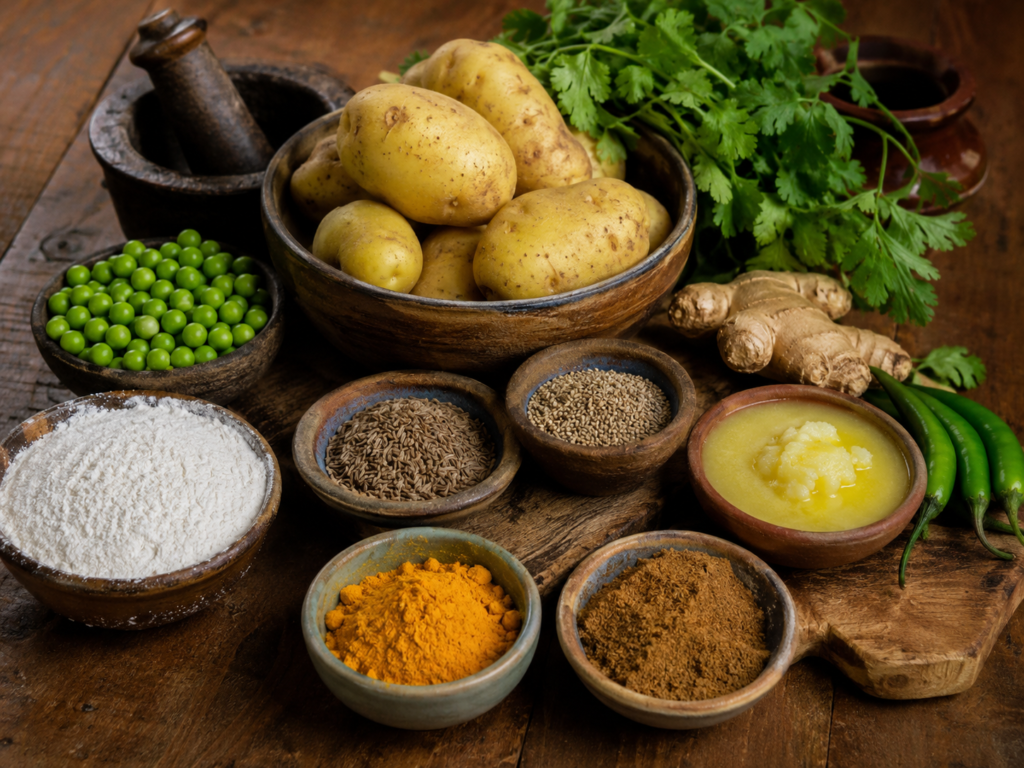
Ingredients for Indian samosa hand pies including potatoes, peas, flour, ajwain, cumin, ginger, cilantro, and spices
For the Samosa Dough
2 cups all-purpose flour, plus more for rolling
This forms the structure of the pastry. Traditional samosa dough is often made with maida, a refined wheat flour. All-purpose flour works well for home kitchens.
1 teaspoon ajwain seeds, lightly crushed
Ajwain, also called carom seed, gives the pastry a savory, thyme-like aroma often associated with classic samosas.
1/2 teaspoon fine salt
Salt seasons the dough so the pastry tastes good on its own, not just around the filling.
4 tablespoons ghee or neutral oil
This is the “shortening” element that helps create a crisp, flaky shell. Ghee gives a deeper flavor; oil keeps the recipe dairy-free.
6 to 8 tablespoons cold water, added gradually
Water binds the dough. Add only enough to form a firm dough.
For the Spiced Potato Filling
1 1/2 pounds Yukon Gold or russet potatoes, peeled and cut into chunks
Potatoes create the hearty base. Yukon Golds give a creamy but structured filling; russets make a fluffier texture.
1 cup green peas, fresh or frozen
Peas add sweetness, color, and a gentle pop of texture.
2 tablespoons neutral oil or ghee
This helps bloom the spices and carry their flavor through the filling.
1 teaspoon cumin seeds
Cumin adds earthy warmth and classic Indian flavor.
1 teaspoon crushed coriander seeds or 1 1/2 teaspoons ground coriander
Coriander adds citrusy, floral depth that balances the potato.
1 tablespoon grated fresh ginger
Ginger brightens the filling and adds warm sharpness.
1 small green chile, finely chopped, optional
Use for heat. Serrano or Indian green chile works well.
1/2 teaspoon turmeric
Turmeric adds golden color and earthy warmth.
1 teaspoon garam masala
This finishing spice blend brings warmth, aroma, and complexity.
1/2 teaspoon Kashmiri chili powder or mild paprika
Kashmiri chili adds color and gentle heat. Paprika is a mild substitute.
1 teaspoon amchur powder, or 1 tablespoon fresh lemon juice
Amchur, dried mango powder, adds tang. Lemon juice works if amchur is unavailable.
3/4 to 1 teaspoon salt, or to taste
Potatoes need enough seasoning to taste lively inside the pastry.
1/4 cup chopped fresh cilantro
Cilantro adds freshness at the end.
For Frying
4-6 cups neutral high-heat oil, such as canola, vegetable, sunflower, or peanut oil
Use enough oil so the samosas can fry without touching the bottom too much. The exact amount depends on your pot.
Optional for Serving
Mint cilantro chutney
Tamarind chutney
Plain yogurt or cucumber raita
Lemon wedges
Chai tea
Ingredient Notes and Smart Substitutions
All-purpose flour: All-purpose flour is the easiest substitute for traditional maida. Whole wheat flour can be used for part of the flour, but the crust will be denser and more rustic.
Ghee vs. oil: Ghee gives the pastry a rich, nutty flavor. Oil keeps the recipe vegan if the filling is also cooked in oil. Avoid butter unless you are baking the samosas, because butter’s water content can change the fried texture.
Ajwain seeds: Ajwain is strongly flavored, so a little goes a long way. If you cannot find it, use a small pinch of dried thyme, but the flavor will not be exactly the same.
Potatoes: Yukon Golds are creamy and hold together nicely. Russets are fluffier and drier. Either works. Avoid very waxy potatoes if you want a classic soft filling.
Peas: Frozen peas are convenient. Add them directly to the skillet; they will warm through quickly.
Amchur powder: This is a traditional way to add tang without adding liquid. Lemon juice is more available, but add it at the end so the filling does not become too wet.
Heat level: Use green chile and chili powder to taste. For a mild family-friendly version, skip the chile and use paprika.
Gluten-free note: Traditional samosa pastry relies on wheat flour. Gluten-free doughs may crack when shaped and will need a tested gluten-free pastry formula.
Allergy-aware note: If using peanut oil, label the dish clearly for guests. Canola, sunflower, or vegetable oil are more neutral options for gatherings.
Equipment You’ll Need
- Large mixing bowl
- Measuring cups and spoons
- Saucepan for boiling potatoes
- Skillet or sauté pan
- Potato masher or fork
- Rolling pin
- Knife or bench scraper
- Small bowl of water for sealing
- Heavy-bottomed pot or Dutch oven for frying
- Deep-fry or candy thermometer
- Slotted spoon or spider strainer
- Wire rack or paper towel-lined tray
- Baking sheet if baking or reheating
Step-by-Step Directions
1. Make the dough.
In a large bowl, whisk together the flour, ajwain seeds, and salt. Add the ghee or oil. Rub it into the flour with your fingertips until the mixture looks sandy and holds together slightly when squeezed. This step matters because evenly distributed fat helps create a flaky, crisp pastry.
2. Add water gradually.
Add 6 tablespoons of cold water and mix. Add more water, 1 tablespoon at a time, only until the dough comes together. The dough should feel firm, not sticky or soft. Knead for 3-4 minutes until smooth. Cover with a towel or wrap and rest for 30 minutes.
3. Cook the potatoes.
Place the potato chunks in a saucepan and cover with cold water. Add a generous pinch of salt. Bring to a boil, then simmer until the potatoes are fork-tender, about 12-15 minutes depending on size. Drain immediately and let them steam-dry for a few minutes. This helps keep the filling from becoming watery.
4. Lightly mash the potatoes.
Use a fork or masher to break the potatoes into small chunks. Do not make them completely smooth. A slightly chunky filling gives the samosas a better texture.
5. Bloom the spices.
Heat 2 tablespoons of oil or ghee in a skillet over medium heat. Add cumin seeds and crushed coriander seeds, if using. Cook for 30-45 seconds, just until fragrant. Do not let the spices burn.
6. Build the filling.
Add the ginger and green chile. Stir for about 30 seconds. Add turmeric, garam masala, and Kashmiri chili powder or paprika. Stir briefly to coat the aromatics in spice.
7. Add potatoes and peas.
Add the potatoes and peas to the skillet. Fold gently until the spices coat everything evenly. Cook for 4-6 minutes, stirring often, until the peas are hot and the filling looks dry rather than wet.
8. Finish the filling.
Stir in amchur powder or lemon juice, salt, and cilantro. Taste and adjust seasoning. The filling should taste slightly bold on its own because the pastry will soften the flavor. Spread the filling on a plate and let it cool before shaping.
9. Divide the dough.
Divide the rested dough into 6 equal balls. Keep the dough covered while working so it does not dry out.
10. Roll and cut.
Roll one dough ball into an oval about 6-7 inches long. Cut it in half crosswise to make two half-moon pieces.
11. Shape the cone.
Take one half-moon with the straight edge facing you. Brush a little water along half of the straight edge. Fold one side over the other to form a cone, pressing the seam firmly to seal. Hold it like a small open pocket.
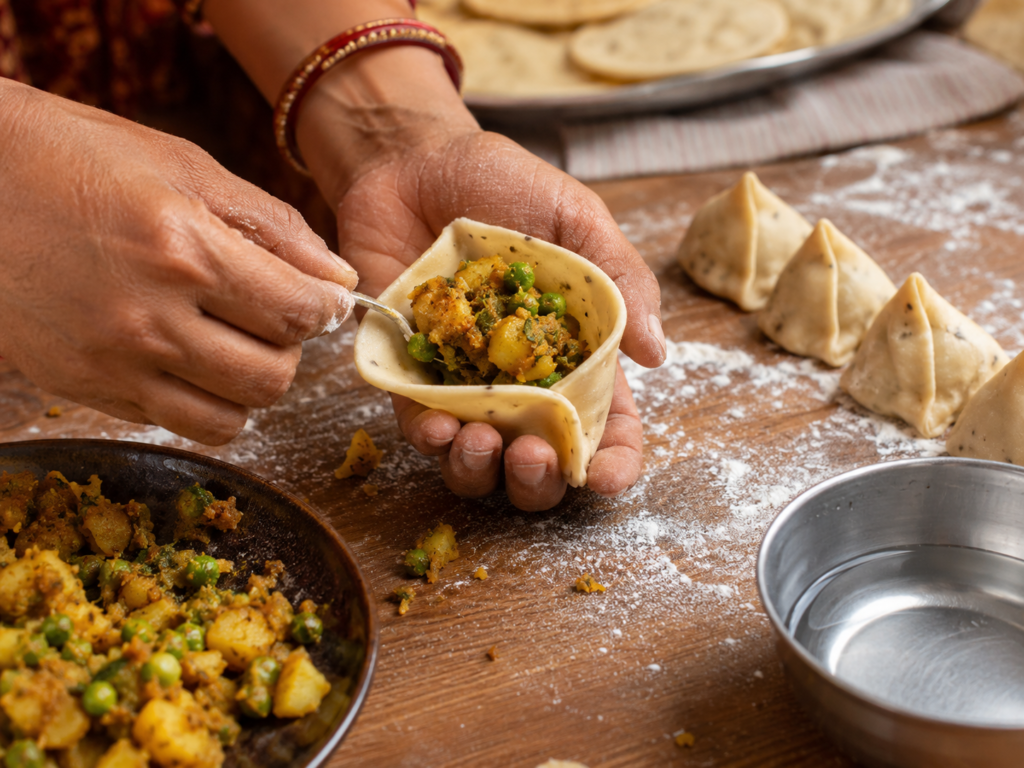
Hands shaping samosa dough cone with spiced potato and pea filling
12. Fill the samosa.
Add 2-3 tablespoons of cooled potato filling. Do not overfill. Leave enough dough at the top to seal.
13. Seal tightly.
Brush the inside top edge with water. Pinch the opening closed, pressing out any trapped air. For a stronger seal, fold or crimp the edge. Set the shaped samosa on a tray and cover lightly. Repeat with the remaining dough and filling.
14. Heat the oil safely.
Pour oil into a heavy pot, filling it no more than halfway. Heat to about 320°F to 330°F. Keep the pot stable, dry, and attended. Use a thermometer for accuracy, and keep water away from hot oil.
15. Fry in batches.
Carefully lower 3-4 samosas into the oil. Do not crowd the pot. Fry for 8-12 minutes, turning occasionally, until deeply golden and crisp. Adjust the heat as needed to keep the oil steady. If the samosas brown too quickly, lower the heat.
16. Drain and rest.
Transfer fried samosas to a wire rack or paper towel-lined tray. Let them rest for 5 minutes before serving. The filling will be very hot.
17. Optional baked method.
For a baked version, preheat the oven to 400°F. Place shaped samosas on a parchment-lined baking sheet, brush lightly with oil, and bake for 25-30 minutes, flipping once, until golden and crisp. The texture will be firmer and less blistered than fried samosas, but still delicious.
18. Optional air-fryer method.
Brush samosas lightly with oil. Air fry at 375°F for 12-16 minutes, turning halfway, until crisp and golden. Work in batches so air can circulate.
19. Let the samosas rest briefly.
After frying, baking, or air frying, let the samosas rest for about 5 minutes before serving. The filling will be very hot, and this short rest helps the pastry settle while staying crisp.
20. Arrange them for serving.
Place the warm samosas on a platter in a single layer or slightly stacked. Avoid covering them tightly, because trapped steam can soften the crust.
21. Add chutneys and fresh garnishes.
Serve with small bowls of mint cilantro chutney and tamarind chutney. Add fresh cilantro, lemon wedges, and optional thinly sliced red onions for brightness, color, and balance.
22. Serve warm.
Samosas are best enjoyed warm, when the pastry is crisp, and the potato filling is soft and fragrant. Serve them as a tea-time snack, appetizer, party bite, or part of a larger Indian-inspired meal.
23. Optional chaat-style serving.
For a heartier street-food-inspired plate, gently break one or two warm samosas into a shallow bowl. Top with chickpea curry, yogurt, mint chutney, tamarind chutney, chopped onions, cilantro, and sev. Serve right away so the crisp and saucy textures stay balanced.
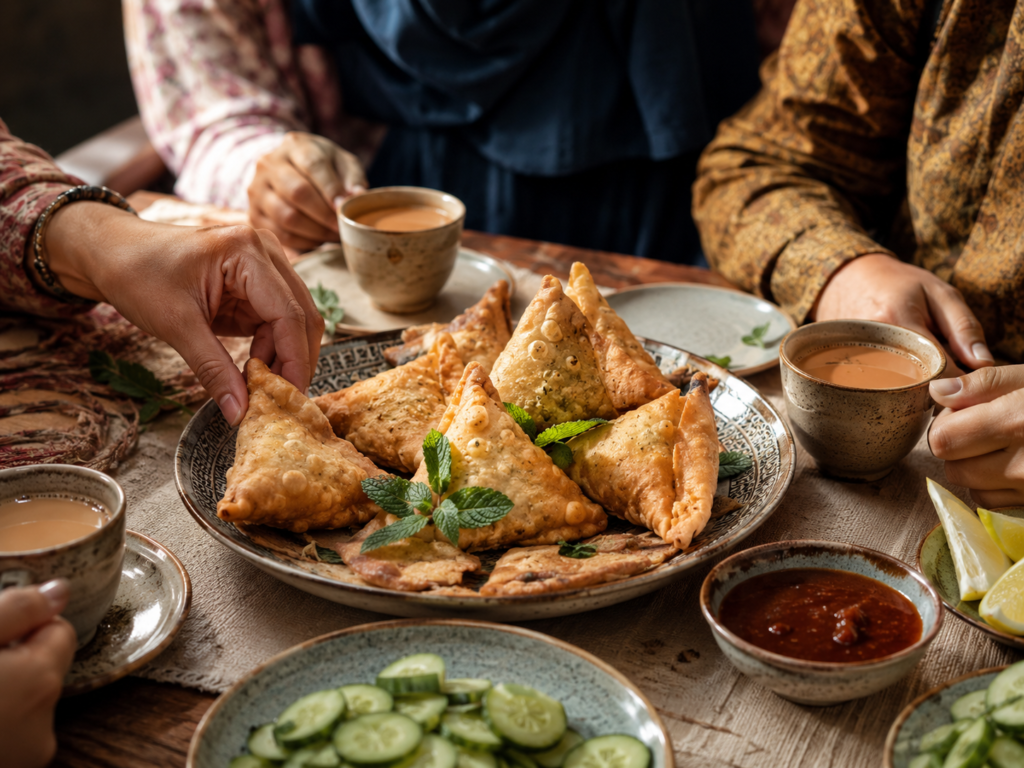
Tea-time table with Indian samosa hand pies, chai, chutneys, cucumbers, and lemon wedges
Pro Tips for Best Results
- Keep the dough firm. Soft dough may absorb more oil and lose crispness.
- Rub the fat into the flour thoroughly before adding water.
- Rest the dough for at least 30 minutes so it rolls more smoothly.
- Drain potatoes immediately and let them steam-dry to avoid a wet filling.
- Cool the filling before shaping so the steam does not soften the pastry.
- Do not overfill; a modest amount seals better and fries more evenly.
- Seal every edge firmly with water and pressure.
- Fry at a moderate temperature so the pastry cooks through before browning.
- Use a wire rack after frying to keep the bottoms crisp.
- Serve with chutney for balance; the tang cuts through the richness.
Common Mistakes to Avoid
- Making the dough too soft: Add water slowly. Samosa dough should feel firm and smooth.
- Skipping the dough rest: Resting helps hydration and makes rolling easier.
- Using wet filling: Cook the filling until it looks dry and holds together.
- Over-mashing the potatoes: Leave some texture so the filling does not become gluey.
- Overfilling the cones: Too much filling can cause bursting during frying.
- Frying too hot: The crust may brown before the inside layers cook through.
- Crowding the pot: Too many samosas lower the oil temperature and create uneven frying.
- Microwaving leftovers uncovered: The crust will soften. Use the oven or air fryer for the best texture.
Flavor Variations
Paneer Potato Samosas: Add 1/2 cup crumbled paneer to the cooled filling for a richer vegetarian version.
Lentil Samosas: Replace half the potatoes with cooked brown lentils or split peas. Keep the filling dry.
Spicy Street-Style Samosas: Add extra green chile, a pinch of chaat masala, and more amchur for a sharper flavor.
Sweet Potato Samosas: Use roasted sweet potatoes for a sweeter filling, balanced with extra ginger, cumin, and lemon.
Spinach Potato Samosas: Stir in finely chopped cooked spinach, squeezing out excess moisture first.
Mini Party Samosas: Roll smaller dough portions and use 1 tablespoon filling per samosa. Reduce frying time slightly.
Baked Samosa Hand Pies: Shape into half-moon hand pies instead of cones, brush with oil, and bake until crisp.
Serving Suggestions
Serve these Indian samosa hand pies warm with mint cilantro chutney and tamarind chutney. The green chutney brings freshness and heat, while tamarind adds sweet-sour depth.
For a cozy tea-time plate, pair samosas with masala chai, sliced cucumbers, and a small bowl of yogurt or raita. For a celebration table, arrange them on a platter with lemon wedges, cilantro, thinly sliced red onions, and two chutneys for color.
They also work beautifully as part of a larger Indian-inspired spread with chana masala, dal, basmati rice, naan, cucumber salad, or roasted cauliflower. For a casual gathering, serve mini samosas as appetizers with small dipping bowls so guests can build their own bites.
For a chaat-style serving, break one or two samosas into a shallow bowl and top with chickpea curry, yogurt, tamarind chutney, mint chutney, chopped onions, cilantro, and sev. It becomes a bold, messy, joyful snack-meal.
Storage, Freezing, and Reheating
Let cooked samosas cool before storing, but do not leave them at room temperature for more than 2 hours. If the room is above 90°F, refrigerate within 1 hour. Store leftovers in an airtight container in the refrigerator for 3-4 days.
To freeze cooked samosas, cool completely, place on a tray until firm, then transfer to a freezer-safe bag or container. Freeze for best quality for up to 2 months. They remain safe longer if kept continuously frozen, but the texture is best within that window.
To freeze uncooked samosas, shape them, place them on a parchment-lined tray, and freeze until solid. Transfer to a freezer-safe container. Fry from frozen at a slightly lower temperature, giving them extra time, or bake from frozen until hot and crisp.
For reheating, the oven or air fryer gives the best texture. Reheat at 350°F-375°F until crisp and heated through. USDA guidance recommends reheating leftovers to 165°F as measured with a food thermometer. Avoid relying on appearance alone, especially when reheating from frozen.
Microwaving is safe if the food reaches the proper temperature, but it will soften the crust. For best quality, microwave briefly only to warm the center, then crisp in the oven or air fryer.
Make-Ahead Tips
The dough can be made up to 24 hours ahead and refrigerated. Let it sit at room temperature for about 20 minutes before rolling so it is easier to handle.
The potato filling can be made 1-2 days ahead. Cool it quickly, store it covered in the refrigerator, and bring it closer to room temperature before shaping.
Shaped uncooked samosas can be refrigerated for several hours before frying. Keep them covered so the dough does not dry out.
For parties, freeze shaped samosas in advance and cook them the day you plan to serve. This gives you fresh texture without doing all the prep at once.
Frequently Asked Questions
What are Indian samosa hand pies?
Indian samosa hand pies are savory pastries inspired by classic South Asian samosas. They are usually made with a firm flour dough, filled with spiced potatoes and peas, sealed, and fried or baked until crisp.
Are samosas traditionally fried or baked?
Many classic Indian-style samosas are fried, which gives them their crisp, flaky texture. Baked versions are a modern home-kitchen adaptation and can still be delicious, though the texture is different.
Can I make samosas without ajwain?
Yes. Ajwain adds a distinct traditional flavor, but you can leave it out if unavailable. A tiny pinch of dried thyme can offer a similar herbal note, though it will not taste exactly the same.
Why did my samosas turn greasy?
The dough may have been too soft, the oil temperature may have been too low, or the pot may have been overcrowded. Keep the dough firm and fry in small batches at a steady moderate temperature.
Can I freeze samosas before frying?
Yes. Shape the samosas, freeze them on a tray, then store them in a freezer-safe bag or container. Fry from frozen at a slightly lower temperature so the pastry cooks through before browning.
Can I bake these samosa hand pies instead?
Yes. Brush them lightly with oil and bake at 400°F for 25-30 minutes, flipping once. They will be crisp but not as flaky or blistered as fried samosas.
What chutney goes best with potato samosas?
Mint cilantro chutney and tamarind chutney are classic pairings. Mint chutney is bright and fresh, while tamarind chutney is tangy, sweet, and rich.
How do I keep samosas crispy after frying?
Drain them on a wire rack instead of stacking them. Keep them uncovered or loosely tented. If needed, re-crisp in a 350°F oven for a few minutes before serving.
Final Thoughts
Homemade samosas ask for a little patience, but they give so much back. They remind us that comfort food is not only about ease; sometimes it is about rhythm. Rubbing fat into flour. Waiting for the dough to rest. Letting potatoes steam-dry. Folding each pastry by hand. Watch the oil bubble gently around the edges until the dough turns golden and crisp. Every step has a purpose, and every step brings you closer to that first warm bite.
These Indian samosa hand pies are more than an appetizer. They are a bridge between street-food joy and home-kitchen care. They carry the fragrance of cumin, ginger, coriander, and garam masala, but they also carry the feeling of gathering: a platter set in the center of the table, chutneys passed from hand to hand, someone reaching for “just one more” before dinner has even started.
What makes samosas beautiful is how adaptable they are. They can be festive or casual, spicy or mild, fried for tradition or baked for convenience. They can sit beside chai on a quiet afternoon or become the first thing guests notice at a celebration. The filling can shift with the season, the spice level can change with the crowd, and the shape can become easier each time you make them.
Start with this recipe as your foundation. Let the dough be firm, let the filling be flavorful and dry, and give yourself grace with the folding. The first few may look handmade because they are. That is part of their charm. By the time the last batch comes out golden, crisp, and fragrant, you will have made something that feels generous, grounded, and full of life, exactly the kind of food Fly By Eats loves to bring to the table.
Quick Recipe Card
Recipe Name: Indian Samosa Hand Pies with Spiced Potato Filling
Description: Crispy, flaky Indian samosa hand pies filled with spiced potatoes, peas, ginger, cumin, garam masala, cilantro, and a tangy finish. Serve with mint chutney, tamarind chutney, or chai.
Prep Time: 40 minutes
Cook Time: 30 minutes
Total Time: 1 hour 10 minutes
Servings: 12 samosas
Ingredients:
For the Dough:
- 2 cups all-purpose flour, plus more for rolling
- 1 teaspoon ajwain seeds, lightly crushed
- 1/2 teaspoon fine salt
- 4 tablespoons ghee or neutral oil
- 6 to 8 tablespoons cold water, as needed
For the Filling:
- 1 1/2 pounds Yukon Gold or russet potatoes, peeled and cut into chunks
- 1 cup green peas, fresh or frozen
- 2 tablespoons neutral oil or ghee
- 1 teaspoon cumin seeds
- 1 teaspoon crushed coriander seeds or 1 1/2 teaspoons ground coriander
- 1 tablespoon grated fresh ginger
- 1 small green chile, finely chopped, optional
- 1/2 teaspoon turmeric
- 1 teaspoon garam masala
- 1/2 teaspoon Kashmiri chili powder or mild paprika
- 1 teaspoon amchur powder or 1 tablespoon fresh lemon juice
- 3/4 to 1 teaspoon salt, or to taste
- 1/4 cup chopped fresh cilantro
For Frying:
- 4 to 6 cups neutral high-heat oil, such as canola, vegetable, sunflower, or peanut oil
For Serving:
- Mint cilantro chutney
- Tamarind chutney
- Plain yogurt or raita
- Lemon wedges
- Chai tea
Instructions:
- In a bowl, combine flour, ajwain, and salt. Add ghee or oil and rub into the flour until sandy.
- Add cold water slowly until a firm dough forms. Knead 3-4 minutes, cover, and rest 30 minutes.
- Boil potatoes in salted water until fork-tender, about 12-15 minutes. Drain immediately and let steam-dry.
- Lightly mash potatoes, leaving some small chunks.
- Heat oil or ghee in a skillet. Add cumin and coriander seeds and cook until fragrant.
- Add ginger and green chile. Stir briefly.
- Add turmeric, garam masala, and chili powder or paprika.
- Add potatoes and peas. Cook 4-6 minutes until the filling is flavorful and dry.
- Stir in amchur or lemon juice, salt, and cilantro. Cool filling completely.
- Divide the dough into 6 balls. Roll each into an oval and cut in half.
- Shape each half into a cone, seal with water, and fill with 2-3 tablespoons of potato filling.
- Seal tightly and repeat with the remaining dough and filling.
- Heat oil in a heavy pot to 320°F to 330°F. Fry samosas in batches for 8-12 minutes, turning occasionally, until golden and crisp.
- Drain on a wire rack and serve warm with chutney.
- Let the samosas rest for 5 minutes after frying, baking, or air frying. The filling will be very hot, and a short rest helps the crust stay crisp.
- Arrange the warm samosas on a serving platter with small bowls of mint cilantro chutney and tamarind chutney.
- Garnish with fresh cilantro, thin lemon wedges, and optional sliced red onions for color, brightness, and a fresh finish.
- Serve warm as an appetizer, tea-time snack, party bite, or part of a larger Indian-inspired meal with chai, cucumber raita, chana masala, dal, or a simple salad.
- For a chaat-style serving, gently break one or two samosas into a shallow bowl and top with chickpea curry, yogurt, chutneys, chopped onions, cilantro, and sev. Serve immediately so the crisp texture remains.
Notes:
- Keep the dough firm for the best crisp texture.
- Cool filling before shaping to prevent soggy pastry.
- Do not overfill.
- For baked samosas, brush with oil and bake at 400°F for 25-30 minutes, flipping once.
- For air-fryer samosas, brush with oil and air fry at 375°F for 12-16 minutes.
Storage:
Cool cooked samosas and refrigerate in an airtight container within 2 hours, or within 1 hour if the room is above 90°F. Store refrigerated for 3-4 days. Reheat to 165°F. Freeze cooked or uncooked samosas for the best quality up to 2 months.
Nutrition Disclaimer: Nutrition information, if provided, is an estimate and may vary based on ingredients and preparation methods.
References
- Encyclopaedia Britannica. (2026, February 18). Samosa. In Encyclopaedia Britannica. https://www.britannica.com/topic/samosa
- Encyclopaedia Britannica. (2026, February 27). Indian cuisine. In Encyclopaedia Britannica. https://www.britannica.com/topic/Indian-cuisine
- North Dakota State University Extension. (2024). A pocket guide to preparing potatoes. https://www.ndsu.edu/agriculture/extension/publications/pocket-guide-preparing-potatoes
- Sharma, N. (2025, March 12). Aloo samosa: Samosa stuffed with spiced potato and peas. Serious Eats. https://www.seriouseats.com/aloo-samosas-5205059
- U.S. Department of Agriculture, Food Safety and Inspection Service. (n.d.). Deep fat frying and food safety. https://www.fsis.usda.gov/food-safety/safe-food-handling-and-preparation/food-safety-basics/deep-fat-frying
- U.S. Department of Agriculture, Food Safety and Inspection Service. (2020, July 31). Leftovers and food safety. https://www.fsis.usda.gov/food-safety/safe-food-handling-and-preparation/food-safety-basics/leftovers-and-food-safety
- U.S. Food and Drug Administration. (2024, March 5). Safe food handling. https://www.fda.gov/food/buy-store-serve-safe-food/safe-food-handling