Tacos al Pastor Under City Lights: Mexico’s Nighttime Street Food Story
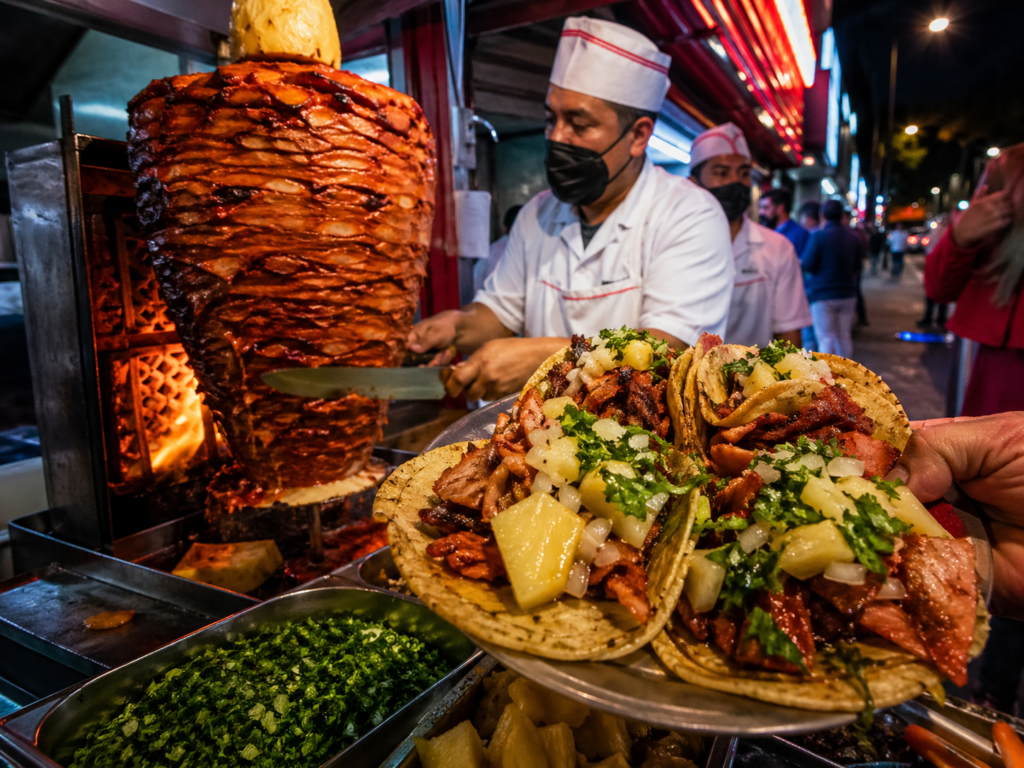
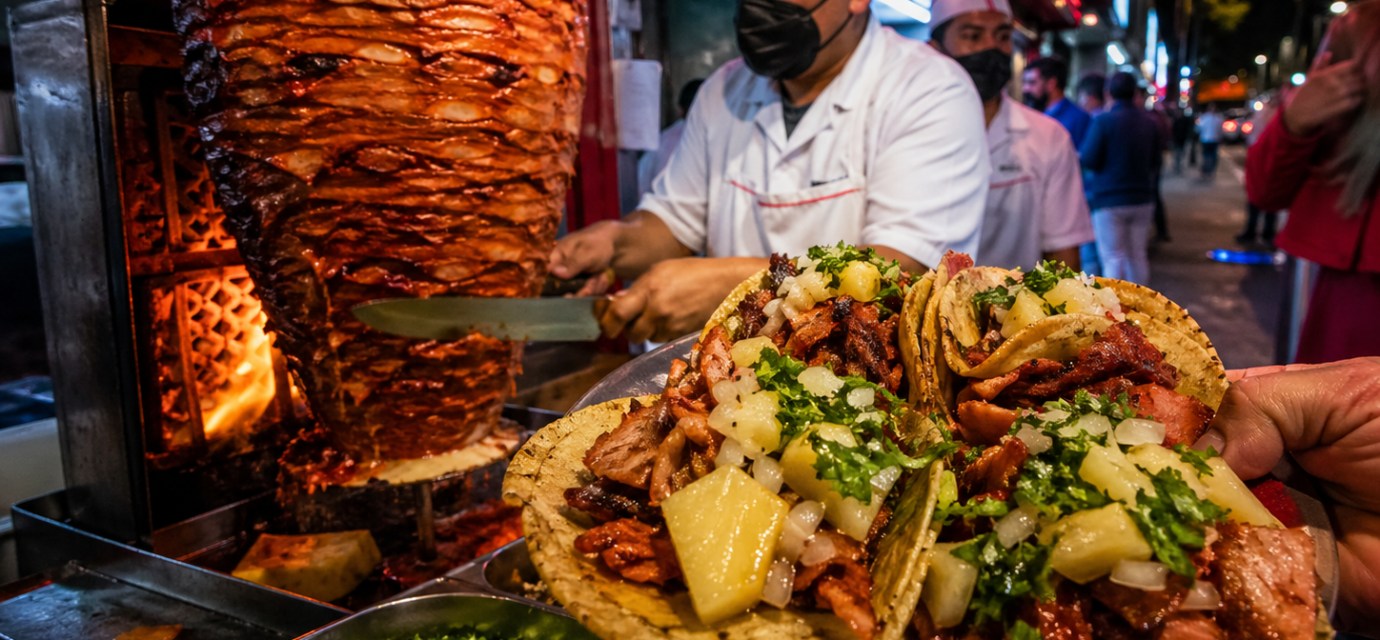
A lively street-food moment features tacos al pastor being carved fresh from the trompo under neon city lighting. The scene feels bold, energetic, and full of movement.
The City Tastes Different at Night
There are some foods that do not simply arrive at the table. They pull you into a scene.
Tacos al pastor are one of those foods.
Before the first bite, there is the sound of traffic passing by, the glow of streetlights on the sidewalk, the quick movement of hands warming tortillas, and the slow spin of the trompo, that vertical tower of marinated pork turning beside the flame. The meat catches heat, color, and smoke. The edges darken. The pineapple above softens. The taquero moves with the kind of confidence that makes cooking look like choreography.
Then comes the taco.
A warm tortilla. Thin slices of seasoned pork. A flash of pineapple. Cilantro. Onion. Salsa. Lime. One small plate, but somehow it feels like a whole city in your hands.
Tacos al pastor are widely associated with Mexico City’s nighttime street food culture, where the trompo is both a cooking method and a performance. Food writer Lesley Téllez describes tacos al pastor as marinated pork roasted on a vertical spit and especially popular in Mexico City at night, with skilled taqueros slicing caramelized meat and pineapple directly into tortillas.
Why Tacos al Pastor Feel So Alive
Part of the magic is visual. Al pastor is not hidden in a kitchen. It is cooked in public.
The trompo turns slowly, building flavor layer by layer. The outside of the pork caramelizes first, giving each taco a mix of crisp edges, tender meat, spice, fat, and smoke. The pineapple adds brightness, while onion, cilantro, salsa, and lime keep everything fresh.
A good taco al pastor is not heavy for the sake of being heavy. It is balanced. It is savory, smoky, sweet, spicy, acidic, and deeply comforting all at once.
Food & Wine describes pastor tacos as pork shoulder stacked on a rotating vertical spit, often crowned with pineapple, then shaved into tortillas with charred pineapple and toppings. The same guide notes that adobo marinades may include dried chiles, vinegar, orange juice, achiote, garlic, and aromatics, depending on the taquería or cook.
That is what makes al pastor so memorable. It carries bold flavor, but it also carries movement. It feels social. It feels late-night. It feels like the kind of food people gather around before they even realize they are gathering.
All the Tacos: Al Pastor in Mexico City
A Taco With a Migration Story
One of the most beautiful things about tacos al pastor is that they tell a story of cultural meeting.
The dish is often traced to Lebanese immigration to Mexico in the early twentieth century. Lebanese cooks brought vertical spit-roasting traditions connected to shawarma. In Mexico, those techniques slowly adapted to local ingredients, local tastes, and local foodways. Over time, lamb or beef traditions connected to tacos árabes helped shape what many people now recognize as al pastor: marinated pork cooked on a vertical spit and served on tortillas.
That history matters because it reminds us that food is rarely frozen in one place or one moment. Food moves with people. It changes with language, memory, ingredients, neighborhood preference, and necessity.
Al pastor is not less Mexican because it carries Lebanese influence. In many ways, it shows how Mexican cuisine has always been alive, adaptive, layered, and deeply regional. UNESCO describes traditional Mexican cuisine as a living heritage rooted in community, territory, sustainable practices, and techniques passed from generation to generation.
That is the heart of this taco.
It is not just pork and pineapple. It is movement. It is migration. It is an adaptation. It is the story of people making a new home and letting the food speak both of where they came from and where they now belong.
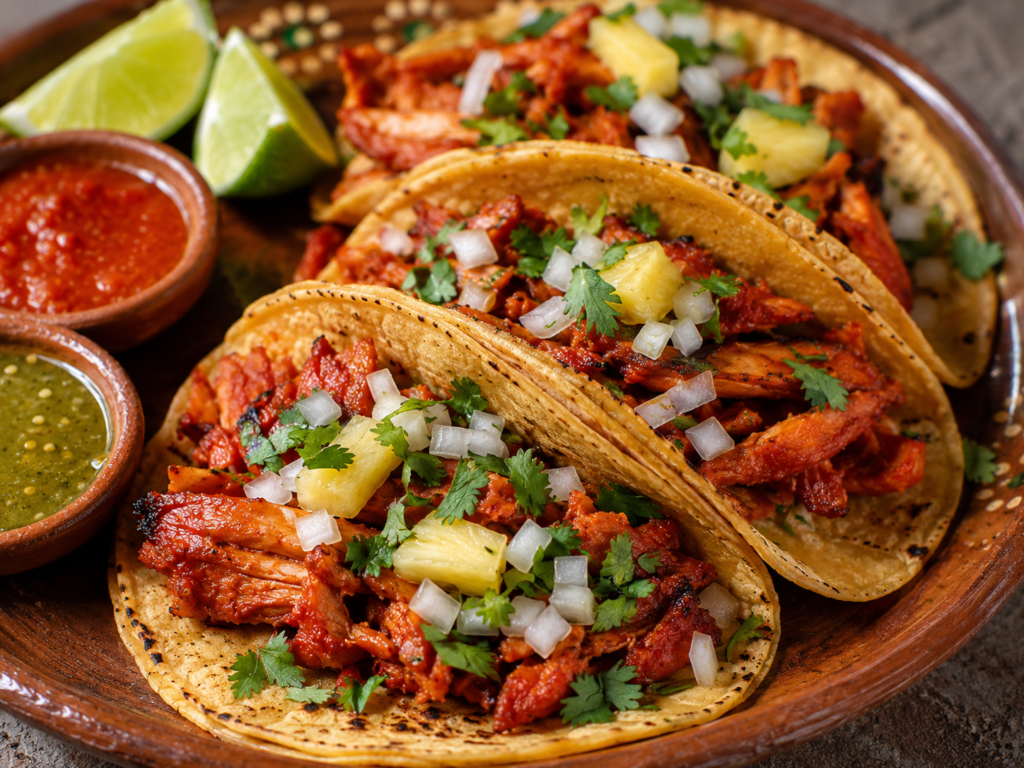
The beauty of al pastor is in the balance: smoke, spice, sweetness, acid, and warmth.
The Flavor Architecture of Al Pastor
A taco al pastor may look simple, but its flavor is carefully built.
The pork is usually marinated in a red adobo that may include dried chiles, achiote, garlic, vinegar, citrus, spices, and salt. The marinade does more than season the meat. It gives al pastor its color, aroma, tenderness, and personality.
Achiote brings earthiness and that deep red-orange glow. Dried chiles bring fruitiness and warmth. Vinegar and citrus help cut through the richness of the pork. Pineapple adds sweetness and brightness. Onion and cilantro lift the taco at the end. Lime wakes everything up.
Chef and Mexican cuisine expert Rick Bayless includes ancho chile, achiote paste, vinegar, garlic, Mexican oregano, cumin, pineapple, warm corn tortillas, cilantro, and lime in his home-style al pastor approach, while noting that home cooks can get close to “al pastor flavors” even without a traditional trompo.
That is helpful for readers because not everyone has access to a vertical spit at home. But the lesson still matters: al pastor is about layering flavor thoughtfully.
It is not just spicy.
It is not just smoky.
It is not just sweet.
It is the meeting point of all three.
How to Experience Tacos al Pastor Like a Curious Food Lover
When you see a taquería with a trompo, slow down for a moment before ordering. Watch how the taquero works. Notice whether the meat has crisp edges. Notice whether the tortillas are warmed before serving. Notice the salsa options. Notice if the pineapple is sliced straight from the top or added separately.
Then build your bite with intention.
Start simple: al pastor, onion, cilantro, pineapple, salsa, and lime. Taste it before adding too much extra heat. A great taco already has rhythm. The salsa should support the taco, not erase it.
For a fuller experience, order more than one. Try one with salsa verde and one with salsa roja. Try one with extra lime. Try one with just onion and cilantro. Let each bite teach you something about balance.
That is part of the joy of street food. It invites participation. You are not just eating. You are paying attention.
Episode 1201: A Tour of Tacos al Pastor, Rick Bayless “Mexico: One Plate At A Time”
Bringing the Al Pastor Feeling Home
Not every home cook can recreate the full street-side trompo experience. That is okay.
The goal at home is not to pretend your kitchen is a Mexico City taquería. The goal is to honor the flavor with care.
Use thinly sliced pork shoulder or pork butt if possible. Give the marinade time to settle into the meat. Cook with enough heat to create browned edges. Warm the tortillas. Do not skip the lime. Do not let the toppings become an afterthought.
If you do not eat pork, the flavor idea can still inspire you. Mushrooms, jackfruit, cauliflower, chicken, or plant-based proteins can be seasoned with al pastor-style adobo and paired with pineapple, onion, cilantro, salsa, and lime. It will not be traditional al pastor, but it can still be a respectful, flavorful adaptation when clearly described as al pastor-inspired.
That distinction matters for trust. Readers deserve clarity. Traditional dishes should be honored honestly, and creative versions should be named honestly.
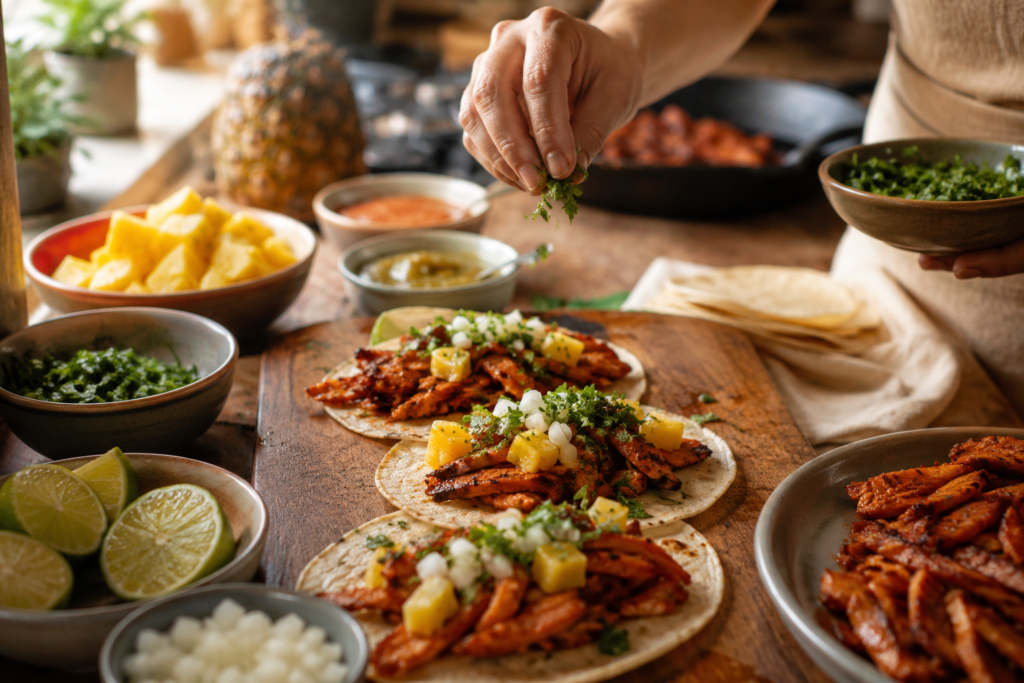
At home, al pastor-inspired cooking begins with respect for the original and attention to balance.
What Tacos al Pastor Teach Us
Tacos al pastor remind us that food can be both everyday and extraordinary.
They are affordable street food, but they are also cultural storytelling. They are fast, but they are not shallow. They are familiar to many people, but their history is layered with migration, adaptation, and belonging.
That is why this taco deserves more than a quick caption. It deserves to be seen as a dish that carries memory.
Under city lights, al pastor becomes more than dinner. It becomes a meeting place. A small table. A sidewalk pause. A shared laugh. A late-night craving. A reminder that culture is not only preserved in museums or books. Sometimes, it spins slowly beside a flame, waiting to be carved into a warm tortilla.
And maybe that is why tacos al pastor stay with people.
Because the best food does not only feeds hunger.
It helps us feel connected.
Reader Note
Tacos al pastor vary by region, taquería, family tradition, and cook. This article highlights widely documented cultural and culinary connections while honoring the fact that living food traditions are never limited to one single version
References
- Traditional Mexican cuisine is recognized by UNESCO as living cultural heritage connected to community, territory, technique, and generational knowledge.
- The Lebanese influence on tacos al pastor, including tacos árabes and shawarma-style cooking, is discussed in University of Alabama’s Global Foodways project with references to food historians and Mexican food scholarship.
- Lesley Téllez’s Epicurious recipe and notes describe tacos al pastor as Mexico City nighttime street food connected to Lebanese shawarma traditions and adapted through Mexican ingredients and cooking culture.
- Rick Bayless provides a home-cook approach to al pastor flavors using ingredients such as ancho chile, achiote, vinegar, pineapple, corn tortillas, cilantro, and lime.
- Food & Wine’s chef-informed taquería meat guide explains pastor tacos through the trompo, pork shoulder, pineapple, adobada marinade, and modern taquería practice.