
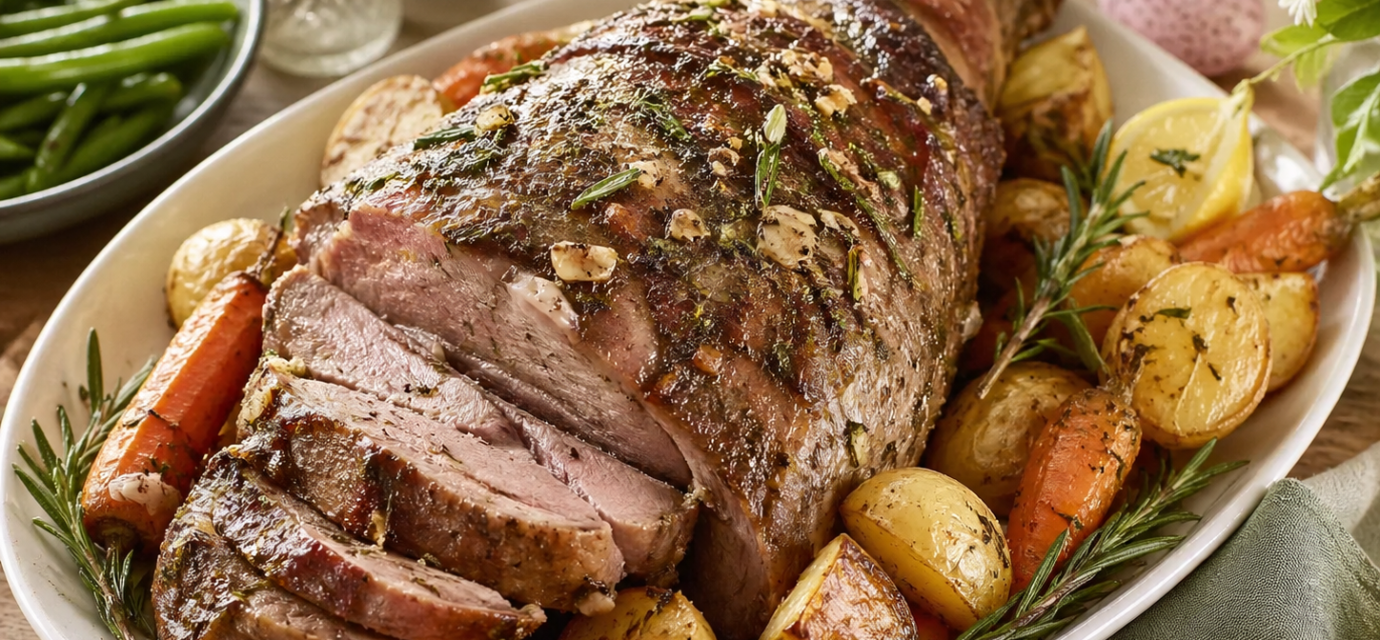
Easter Garlic Rosemary Roast Lamb: A Tender Holiday Centerpiece Full of Spring FlavorEaster Garlic Rosemary Roast Lamb
Tender oven-roasted lamb with fresh herbs, golden edges, and rich holiday flavor
There is something deeply grounding about a roast at the center of a holiday table. It asks everyone to slow down. It fills the kitchen before it ever reaches the plate. It gives the meal a sense of occasion without needing to be complicated.
This Easter garlic rosemary roast lamb is made for that kind of moment. It is savory, fragrant, tender, and elegant enough for Easter Sunday, spring celebrations, family dinners, and special gatherings where you want the food to feel warm, intentional, and memorable.
Lamb has a long connection to Easter and springtime tables. Britannica notes that Easter is one of Christianity’s principal feasts, centered on the Resurrection, and that the Easter lamb is tied to Jewish Passover symbolism as applied within Christian tradition to “the Lamb of God.” For many families, roast lamb is not just a main dish. It is a reminder of renewal, gathering, sacrifice, heritage, and the beauty of preparing something meaningful with your hands.
This version keeps the flavor focused and approachable: garlic for depth, rosemary and thyme for earthy aroma, lemon for brightness, olive oil for richness, and a steady oven roast for juicy slices with golden edges. The result is a holiday lamb recipe that feels classic, welcoming, and deeply satisfying without feeling intimidating.
Expected Result: A fragrant, beautifully roasted leg of lamb with savory garlic-herb flavor, a tender center, and rich pan juices that make the whole Easter table feel complete.
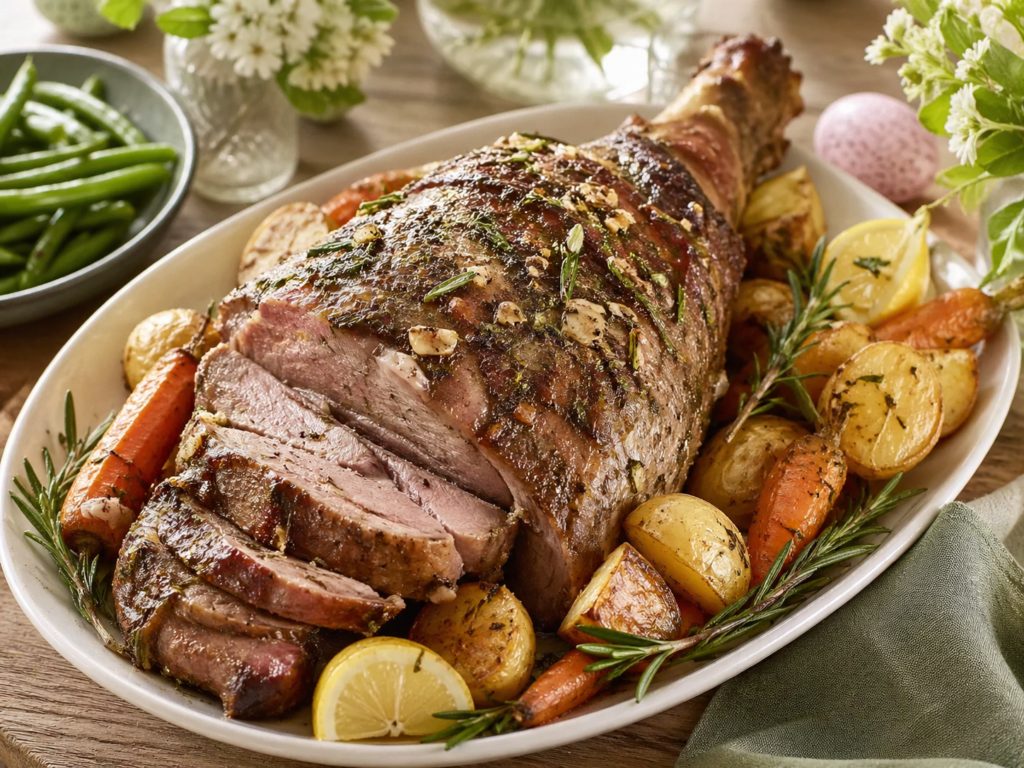
Easter garlic rosemary roast lamb served with lemon, herbs, and roasted vegetables.
Why This Easter Roast Lamb Works
This recipe is designed for real home cooks who want a special meal without unnecessary stress.
The garlic-herb paste seasons the lamb from the outside in, creating a savory crust as it roasts. Lemon zest and juice brighten the richness of the meat, while rosemary and thyme bring the kind of aroma that instantly feels like a holiday kitchen. A little broth in the roasting pan helps protect the drippings, making it easier to spoon flavorful pan juices over the sliced lamb.
Most importantly, this recipe uses temperature as the guide instead of guessing by time alone. FoodSafety.gov advises using a food thermometer to confirm safe internal temperature, and lists lamb roasts at 145°F with a 3-minute rest as the safe minimum. FoodSafety.gov also recommends roasting meat and poultry at 325°F or higher, which supports the 350°F oven temperature used here.
Recipe Details
- Prep Time: 25 minutes
- Optional Rest Before Roasting: 30 to 45 minutes
- Cook Time: 1 hour 25 minutes to 1 hour 45 minutes, depending on size and shape
- Rest Time After Roasting: 15 to 20 minutes
- Total Time: About 2 hours to 2 hours 30 minutes
- Servings: 8 to 10
- Best For: Easter dinner, spring holidays, Sunday supper, family gatherings, non-pork holiday main dish
- Cooking Method: Oven-roasted
Ingredients
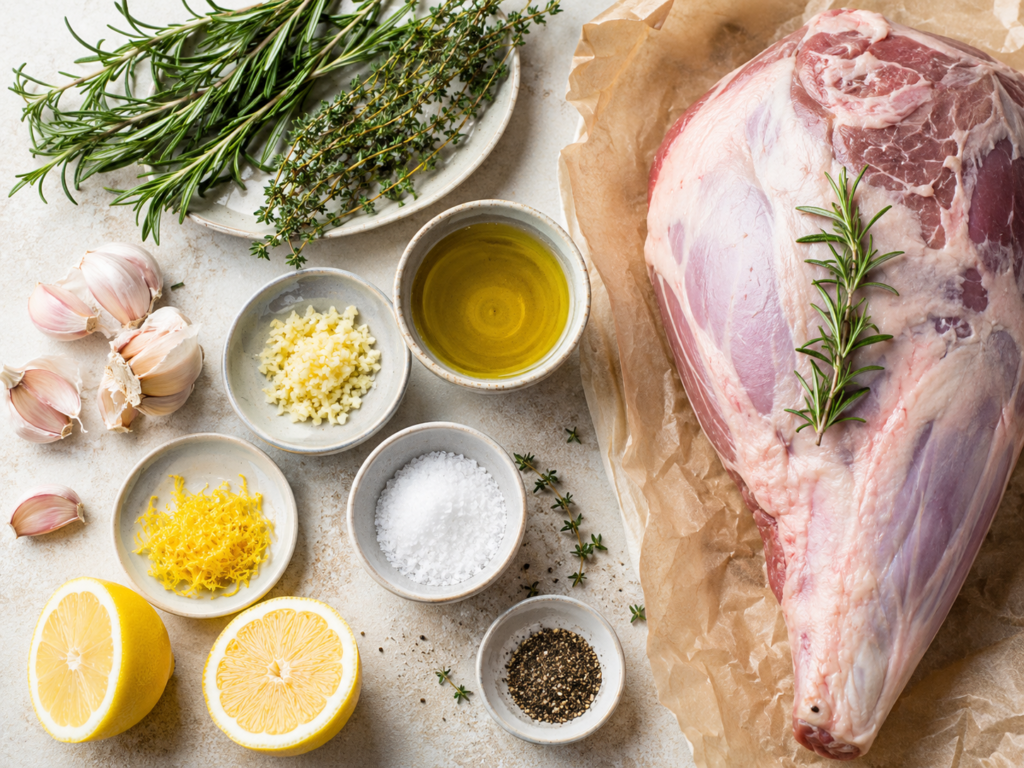
Fresh ingredients for garlic rosemary roast lamb, including garlic, rosemary, thyme, lemon, olive oil, salt, and pepper.
- 1 bone-in or boneless leg of lamb, 5 to 6 pounds
Perfect for Easter and large enough to feed a holiday table - 3 tablespoons olive oil
Helps the herbs cling and encourages browning - 6 garlic cloves, minced
Builds deep savory flavor throughout the roast - 2 tablespoons fresh rosemary, finely chopped
Classic herb pairing with lamb - 1 tablespoon fresh thyme leaves
Adds earthy balance - 1 tablespoon lemon zest
Brightens the richness of the lamb - 2 tablespoons lemon juice
Adds fresh acidity and lift - 2 teaspoons kosher salt
Essential for seasoning the roast evenly - 1 teaspoon black pepper
Adds mild heat and depth - 1 cup low-sodium chicken broth or water
Helps keep the roasting pan moist and supports pan juices
Optional Add-Ins
- 1 tablespoon Dijon mustard for a sharper, more savory crust
- 1 teaspoon dried oregano for a Mediterranean-style flavor
- 1 tablespoon chopped parsley for finishing
- Extra lemon wedges for serving
Directions
1. Let the Lamb Sit Briefly Before Roasting
Remove the lamb from the refrigerator about 30 to 45 minutes before roasting. This helps take the deep chill off the meat so it can cook more evenly.
Do not leave the lamb out for hours. The goal is not to warm it fully to room temperature. The goal is simply to reduce the extreme temperature difference between the cold center and the hot oven.
2. Preheat the Oven
Preheat the oven to 350°F.
Set a roasting rack inside a roasting pan if you have one. If you do not have a rack, you can place thick slices of onion, carrots, or celery under the lamb to lift it slightly from the bottom of the pan.
3. Dry the Lamb Well
Pat the lamb dry on all sides with paper towels. This step matters because moisture on the surface can prevent browning. A dry surface helps the garlic, rosemary, thyme, lemon, and olive oil cling better.
4. Make the Garlic Rosemary Paste
In a small bowl, mix together:
- Olive oil
- Minced garlic
- Rosemary
- Thyme
- Lemon zest
- Lemon juice
- Kosher salt
- Black pepper
The mixture should look thick, glossy, and spoonable. If you are using Dijon mustard or oregano, stir it into the paste now.
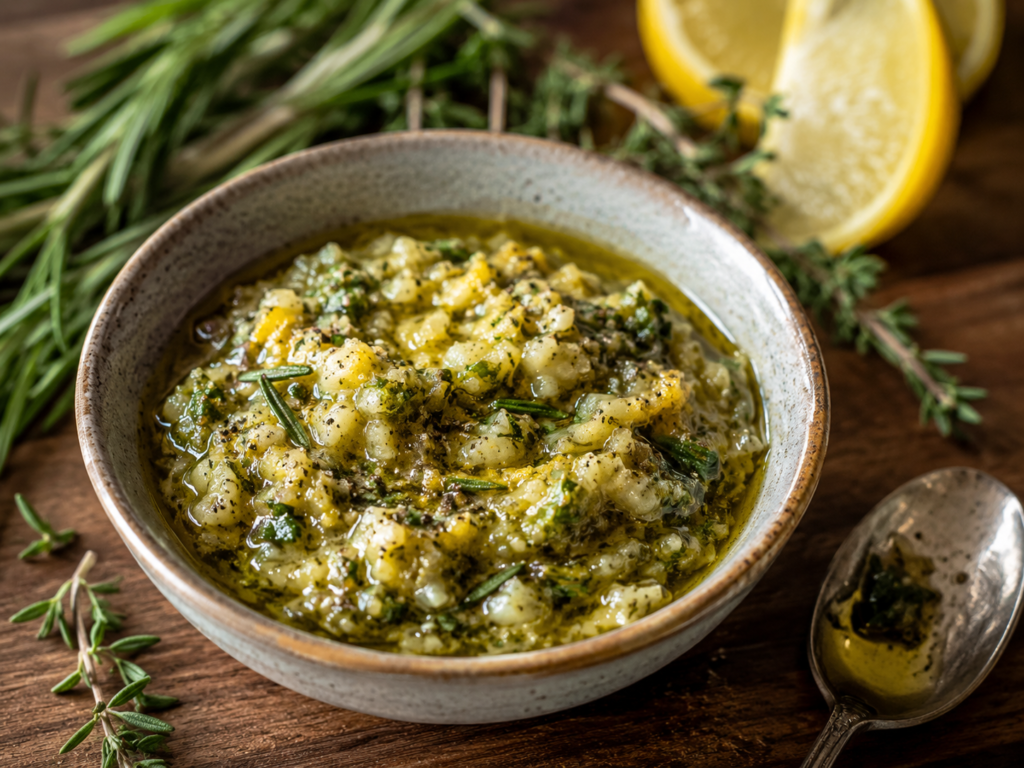
Garlic, rosemary, lemon herb paste prepared for roast lamb.
5. Season the Lamb Generously
Rub the garlic rosemary paste all over the lamb, including the sides, folds, and any natural openings in the meat.
If the lamb has a fat cap, place it fat-side up in the roasting pan. As it cooks, the fat helps protect the meat and adds flavor to the pan juices.
Pour the broth or water into the bottom of the roasting pan. Try not to pour it directly over the seasoned lamb, because you want the herb paste to stay on the surface.
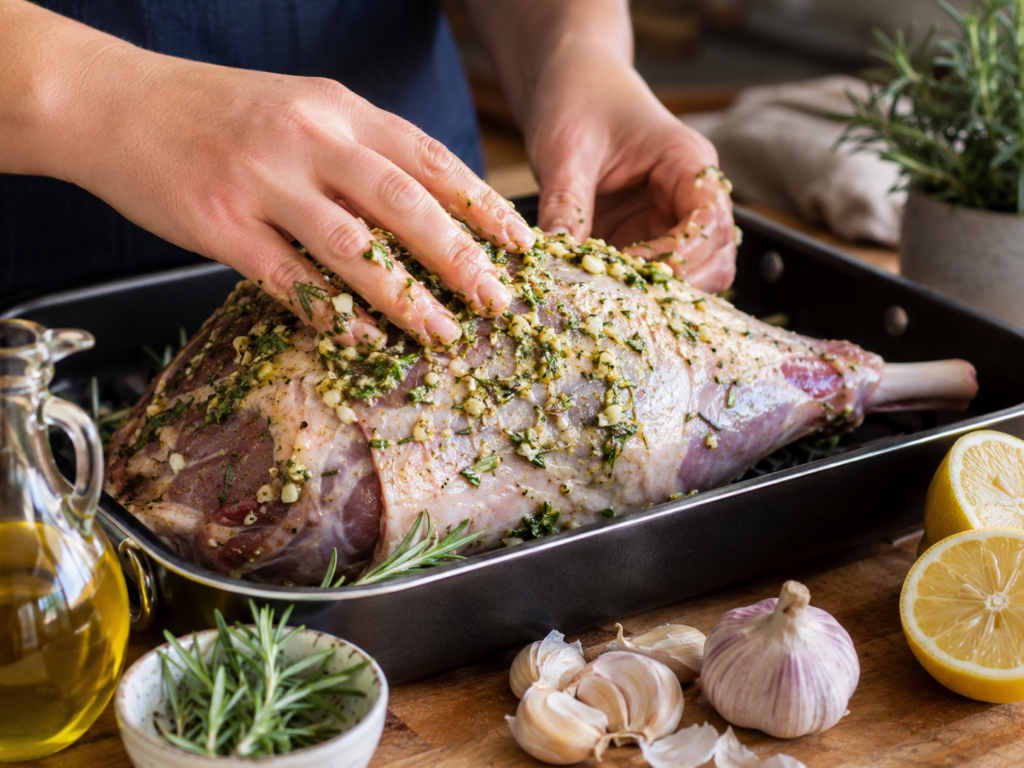
Garlic rosemary herb paste is being rubbed onto a leg of lamb before roasting.
6. Roast Until Fragrant and Golden
Roast the lamb uncovered until the outside begins to brown and the kitchen smells like garlic, herbs, and lemon.
Begin checking the internal temperature around 1 hour and 20 minutes, especially if your lamb is boneless or closer to 5 pounds. Bone-in lamb may take longer, and the shape of the roast can change the timing.
The American Lamb Board recommends roasting the leg of lamb at 325°F and using a thermometer to monitor doneness rather than depending only on minutes per pound. Their guide also notes classic lamb seasonings such as rosemary, thyme, garlic, olive oil, oregano, and lemon zest.
7. Check the Temperature Correctly
Insert an instant-read thermometer into the thickest part of the lamb. Avoid touching the bone, because the bone can give an inaccurate reading.
Use these temperature goals as a practical guide:
- Medium-rare: 130°F to 135°F before resting
- Medium: 140°F to 145°F before resting
- Medium-well: 150°F to 155°F before resting
For food safety, whole lamb roasts should reach at least 145°F followed by a 3-minute rest, according to FoodSafety.gov. Some cooks prefer lamb cooked lower for texture, but for a public-facing recipe, especially one prepared for families and monetized content, it is best to clearly state the official safe minimum.
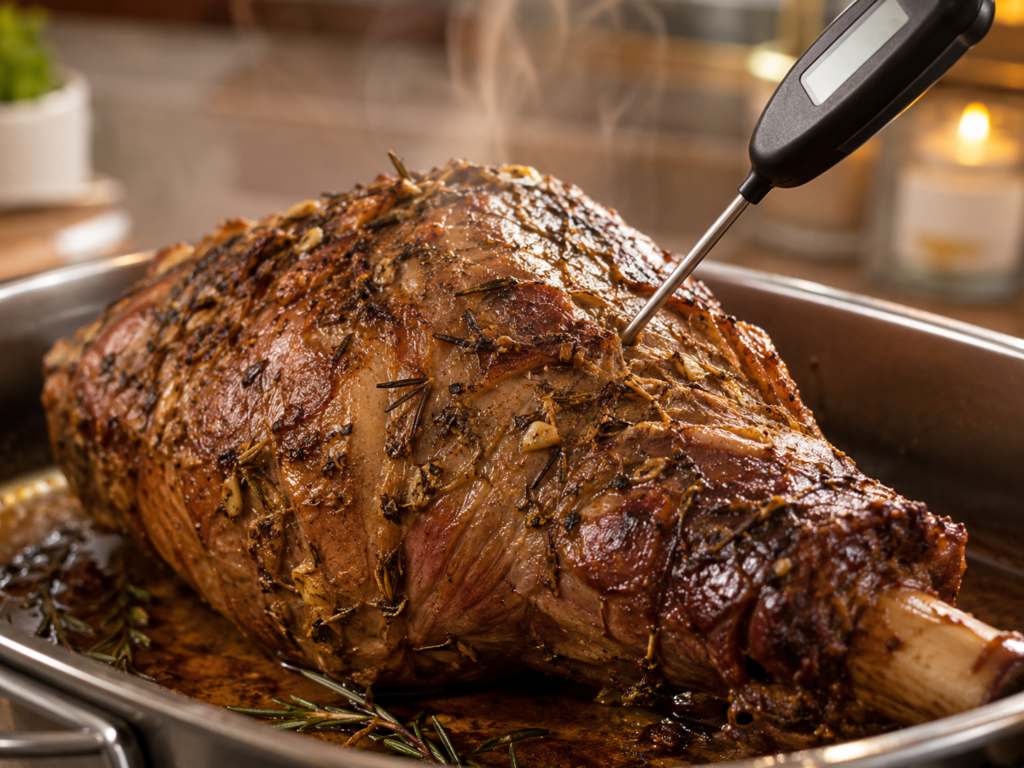
An instant-read thermometer checking the internal temperature of roast lamb.
8. Add Extra Browning If Needed
If the lamb reaches your desired internal temperature but you want more color, increase the oven temperature to 425°F for the last 5 to 10 minutes.
Watch it closely. Garlic can burn quickly at higher heat.
9. Rest Before Slicing
Transfer the lamb to a cutting board and tent it loosely with foil. Let it rest for 15 to 20 minutes.
This rest is one of the biggest differences between a juicy roast and a dry one. It allows the juices to settle back into the meat instead of spilling out as soon as you slice.
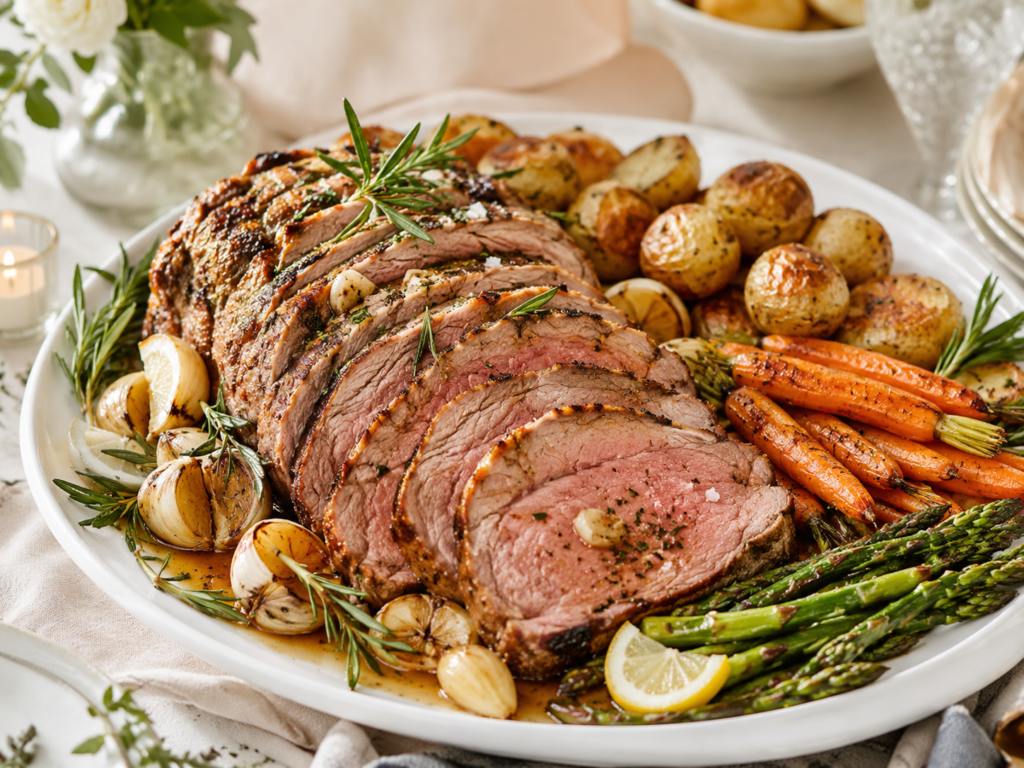
Sliced Easter roast lamb with rosemary, lemon, and pan juices.
10. Slice and Serve
Slice the lamb thinly across the grain when possible. For bone-in lamb, follow the natural muscle lines and carve around the bone.
Spoon a little of the warm pan juice over the sliced lamb before serving. Finish with fresh parsley, rosemary, or a squeeze of lemon if desired.
How to Cook a Leg of Lamb | Jamie Oliver
What to Serve with Garlic Rosemary Roast Lamb
This lamb pairs beautifully with sides that balance richness, brightness, and comfort.
Try it with:
- Roasted baby potatoes with herbs
- Honey-glazed carrots
- Lemon asparagus
- Spring peas with butter and mint
- Garlic mashed potatoes
- Warm dinner rolls
- Cucumber tomato salad
- Lemony yogurt sauce
- Mint chimichurri
- Simple pan gravy
For an Easter table, keep the sides colorful and fresh. Lamb is rich, so bright vegetables, herbs, citrus, and soft starches help the whole plate feel balanced.
Flavor Variations
- Mediterranean-Style Roast Lamb – Add oregano, lemon slices, and a few smashed garlic cloves to the roasting pan. Serve with roasted potatoes, cucumber salad, olives, and yogurt sauce.
- Dijon Garlic Rosemary Lamb – Add 1 tablespoon of Dijon mustard to the herb paste. This gives the crust a deeper savory flavor and a gentle tang.
- Mint and Parsley Spring Lamb – After roasting, finish the sliced lamb with chopped parsley, mint, lemon juice, and olive oil. This gives the dish a fresher spring profile.
- Extra Garlic Holiday Lamb – Cut small slits into the lamb and tuck thin slices of garlic into the meat before rubbing on the herb paste. This creates pockets of savory flavor throughout the roast.
Common Mistakes to Avoid
- Overcooking the Lamb – Lamb can go from juicy to dry if it is roasted too long. Use a thermometer and start checking early.
- Skipping the Rest Time – Resting is not optional for a roast. Cutting too soon causes the juices to run out.
- Underseasoning the Center – A thick roast needs bold surface seasoning. Salt, garlic, herbs, lemon, and pepper help the slices taste flavorful from edge to center.
- Relying Only on Color – Color alone does not confirm safety or doneness. FoodSafety.gov recommends using a food thermometer to make sure meat reaches a safe internal temperature.
- Forgetting the Pan Juices – The pan juices are part of the reward. Spoon them over the lamb or reduce them briefly on the stovetop for a more concentrated sauce.
Storage and Reheating
Store leftover lamb in an airtight container in the refrigerator for 3 to 4 days. FoodSafety.gov lists cooked meat and poultry leftovers as safe in the refrigerator for 3 to 4 days, and frozen cooked meat leftovers for 2 to 6 months.
To reheat without drying it out:
- Place sliced lamb in a covered baking dish.
- Add a splash of broth or pan juices.
- Warm at 300°F until heated through.
- Avoid overheating, because lamb can become tough when reheated too aggressively.
Leftover lamb is also delicious in pita wraps, grain bowls, omelets, salads, sandwiches, and quick skillet meals.
Reader Experience Note
This recipe is meant to feel special, but not stressful. A holiday roast does not have to be perfect to be meaningful. What matters most is that the food brings people closer to the table, gives them something beautiful to share, and leaves the kitchen smelling like care was poured into the meal.
Final Thoughts
Easter garlic rosemary roast lamb is more than a main dish. It is a centerpiece with history, aroma, and presence. It carries the feeling of spring, the comfort of family-style cooking, and the quiet joy of preparing something that makes people pause before the first bite.
With a few simple ingredients, a reliable thermometer, and enough time to let the roast rest properly, this lamb becomes tender, fragrant, and deeply satisfying. Serve it with roasted vegetables, bright herbs, warm bread, and a table full of conversation.
Explore more comforting, cultural, and celebration-ready recipes at Fly By Eats, where kitchen, culture, and flavor meet.
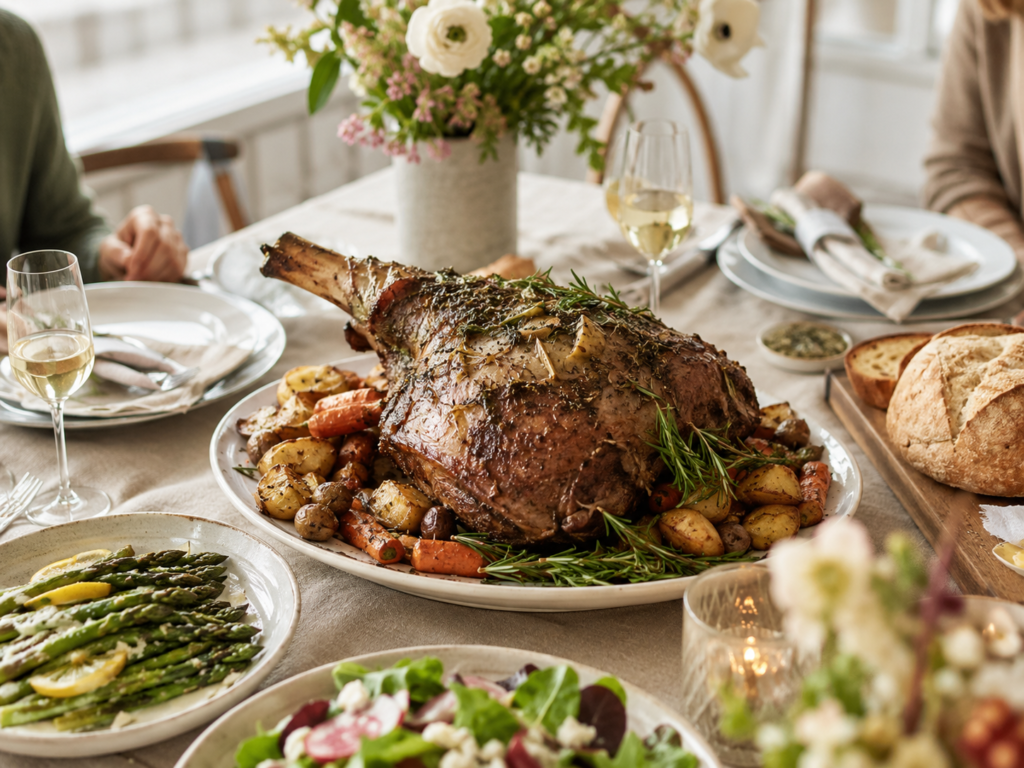
Easter dinner table with roast lamb, spring vegetables, bread, and family-style side dishes.
References
- FoodSafety.gov: Lamb roasts should reach a safe minimum internal temperature of 145°F with a 3-minute rest, and leftovers should be reheated to 165°F.
- FoodSafety.gov: Meat and poultry roasting should be done at 325°F or higher, and lamb roasting charts support using thermometer-based doneness.
- FoodSafety.gov: Cooked meat and poultry leftovers should be refrigerated for 3 to 4 days.
- Britannica: Easter is a principal Christian feast, and Easter lamb symbolism is connected to Passover and Christian “Lamb of God” tradition.
- American Lamb Board: Leg of lamb is a tender, flavorful hindquarter cut commonly roasted for holiday meals, and classic seasonings include rosemary, thyme, garlic, olive oil, lemon zest, and oregano.