Oven-Roasted Herb Chicken for a Crowd
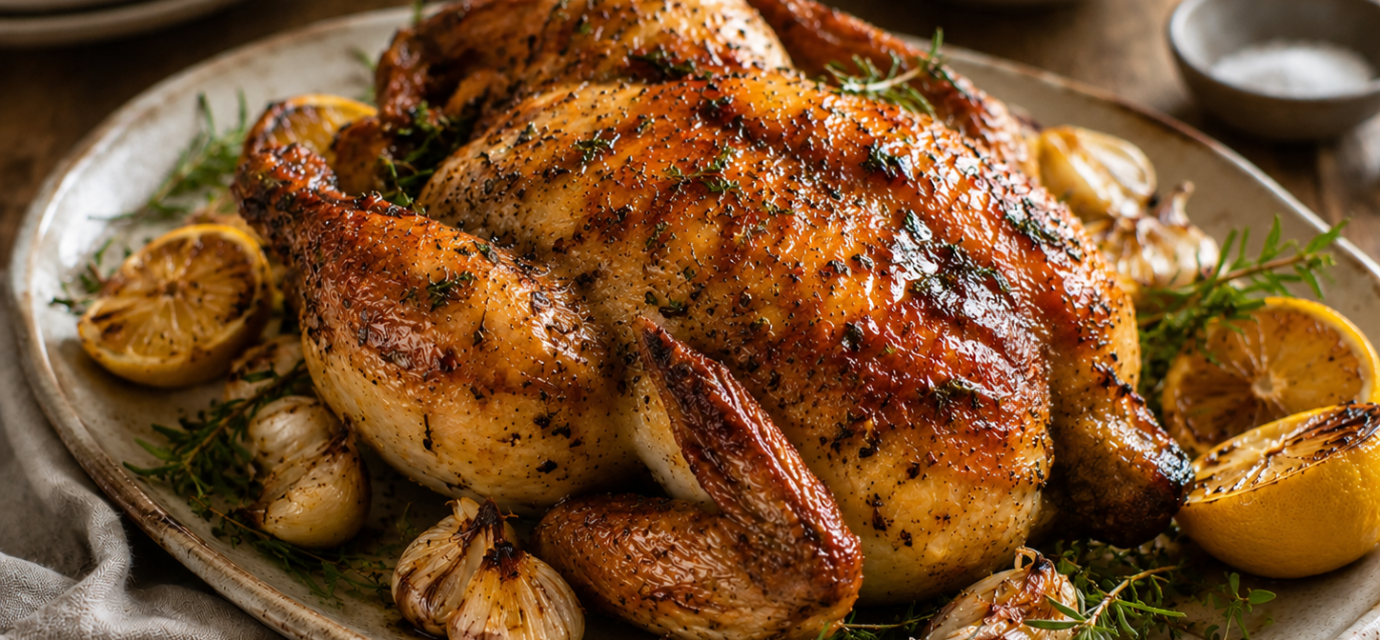
There is something beautifully old-fashioned and deeply comforting about a whole roasted chicken. It arrives at the table golden and fragrant, with crisp skin, tender meat, warm garlic, lemon, and herbs tucked into every corner. It feels generous without being complicated, elegant without being stiff, and familiar in the best possible way.
This whole oven-roasted herb chicken is written for a crowd, so instead of using chicken pieces, this version roasts two whole chickens side by side or on separate pans. That gives you enough food for a family gathering, holiday dinner, Sunday supper, or meal where people naturally go back for seconds.
The flavor is simple and timeless: rosemary, thyme, garlic, lemon, olive oil, paprika, onion, and a little butter for richness. The method focuses on practical home-kitchen technique: dry the skin well, season under and over the skin, roast hot at first for browning, then finish at a steady temperature until the thickest parts of the chicken reach a safe internal temperature.
Quick Recipe Snapshot
- Prep Time: 25 minutes
- Cook Time: 1 hour 20 minutes to 1 hour 40 minutes
- Rest Time: 15-20 minutes
- Total Time: About 2 hours
- Servings: 8-10
- Difficulty Level: Beginner-friendly to moderate
- Best For: Holidays, Sunday supper, potlucks, family gatherings, cozy dinner parties
- Expected Result: Juicy whole roasted chickens with crisp golden skin, bright lemon flavor, savory garlic-herb aroma, and tender meat
Why You’ll Love This Recipe
- It uses whole chickens, giving the table a beautiful centerpiece.
- Roasting two chickens makes the recipe practical for feeding a crowd.
- The garlic-herb butter seasons both the skin and the meat.
- The method is simple enough for newer cooks but polished enough for holidays.
- Lemon, rosemary, and thyme create a warm, classic flavor.
- The leftovers are wonderful for sandwiches, soups, salads, rice bowls, and wraps.
- A thermometer makes the recipe safer and more reliable.
Cultural and Seasonal Background
Roasted chicken is one of those dishes that crosses borders gracefully. Chickens are among the most widely domesticated fowl in the world, raised for meat and eggs across many cultures and food traditions. Britannica notes that chickens are primarily descended from wild red jungle fowl and have spread through many regions over thousands of years.
This recipe is not tied to one strict regional tradition. It is best described as an American-style family roast chicken with Mediterranean-inspired herbs. Rosemary is native to the Mediterranean region and is commonly used to season meats, vegetables, soups, and other savory foods. Thyme is also widely used with poultry, meats, sauces, vegetables, and soups, making it a natural partner for roasted chicken.
Seasonally, whole roasted chicken fits almost anywhere. It can stand in as a holiday main dish, serve as a cozy Sunday dinner, or become the anchor of a casual gathering with roasted potatoes, vegetables, rolls, and a bright salad. It carries the same spirit as many roast dinners around the world: a warm oven, a fragrant kitchen, and people gathered around a table that feels cared for.
Why This Recipe Works
A whole chicken needs a slightly different approach than chicken pieces. With thighs and drumsticks, every piece has direct heat exposure. With a whole bird, the breast, thighs, wings, and cavity all cook at different speeds. That is why this recipe uses a hot oven at the beginning to encourage browning, then a slightly lower temperature to finish cooking the meat more gently.
Patting the chicken dry is one of the most important steps. Moisture on the surface creates steam, and steam works against crispy skin. Seasoning under the skin helps flavor the breast meat directly instead of only seasoning the outside. The cavity aromatics, like lemon, onion, garlic, and herbs, perfume the bird from the inside without turning the recipe into a stuffed chicken.
A food thermometer is essential. The FDA states that color and texture are not reliable indicators of food safety, and whole poultry should reach 165°F when measured with a food thermometer. The CDC also notes that a thermometer is the only way to know food is safely cooked and lists 165°F for all poultry.
Ingredients
2 whole chickens, about 4 to 4½ pounds each
This serves 8–10 people comfortably. For a smaller dinner, use one chicken and cut the seasoning roughly in half.
4 tablespoons olive oil
Helps the seasonings spread evenly and encourages browning.
4 tablespoons softened unsalted butter
Adds richness and helps create a flavorful golden skin. Use all olive oil if you prefer a dairy-free version.
8 garlic cloves, finely minced or grated
Garlic gives the chicken its savory backbone. Grating helps it melt into the herb butter.
2 tablespoons fresh rosemary, finely chopped
Rosemary brings a woodsy, aromatic flavor that works beautifully with poultry.
2 tablespoons fresh thyme leaves
Thyme adds earthy warmth and balances the sharpness of garlic and lemon.
2 teaspoons kosher salt, plus more as needed
Salt seasons the meat and helps the roast taste full and balanced. If using table salt, reduce slightly.
1½ teaspoons black pepper
Adds gentle heat and depth.
2 teaspoons sweet paprika
Gives the skin a warm golden color and mild savory flavor.
1 teaspoon onion powder
Rounds out the garlic and gives the seasoning blend more body.
2 lemons
Use zest and juice in the herb butter, then place lemon halves or wedges in the cavity and around the pan.
2 yellow onions, quartered
One can go into the pan, and a few pieces can go inside the cavity for aroma.
2 heads garlic, halved crosswise, optional
Roasts in the pan and becomes soft, sweet, and spreadable.
Fresh parsley, for garnish
Adds freshness and color before serving.
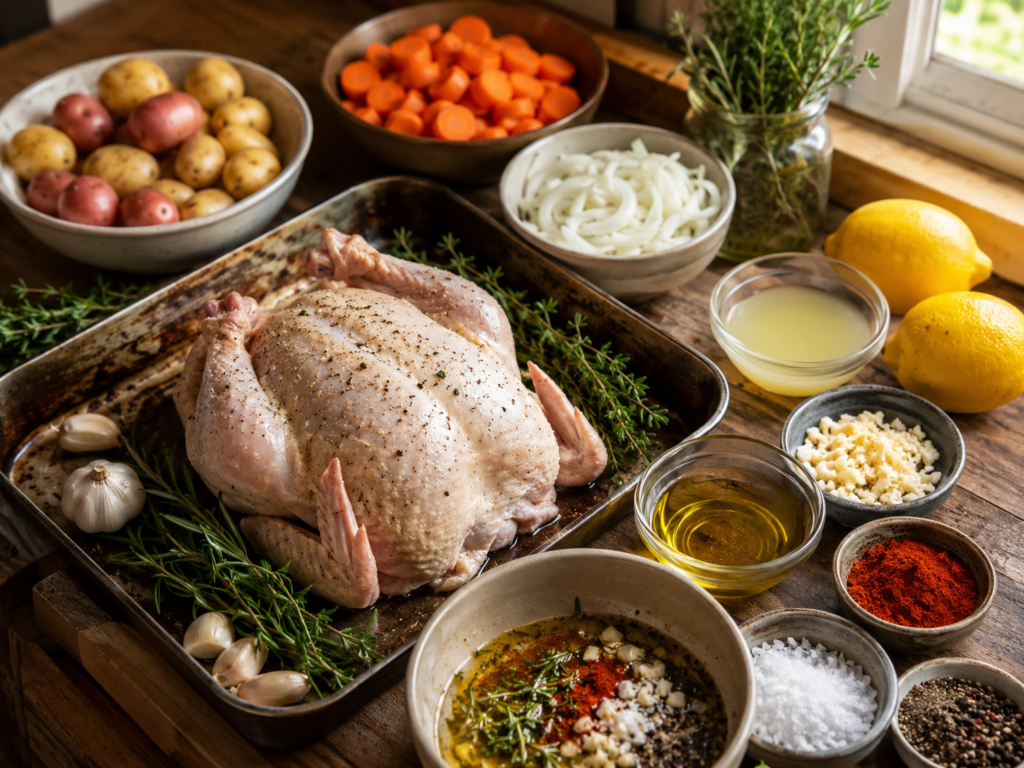
Ingredients for oven-roasted herb chicken including chicken, garlic, lemon, rosemary, thyme, and paprika.
Ingredient Notes and Smart Substitutions
For a richer roast, keep the butter. For a lighter or dairy-free version, replace the butter with additional olive oil.
Fresh rosemary and thyme are ideal, but dried herbs work in a pinch. Use about one-third the amount of dried herbs because dried herbs are more concentrated.
Do not pack the cavity tightly. Aromatics are fine, but dense stuffing inside poultry can complicate safe cooking because the stuffing must also reach 165°F. For this recipe, keep the cavity lightly filled with lemon, onion, garlic, and herbs only.
If you want a stronger citrus flavor, add more lemon zest instead of more lemon juice. Too much liquid on the skin can slow browning.
Equipment You’ll Need
- Large roasting pan or two rimmed baking sheets
- Roasting rack, optional but helpful
- Kitchen twine, optional
- Small bowl
- Paper towels
- Microplane or zester
- Tongs
- Instant-read food thermometer
- Cutting board
- Sharp carving knife
- Serving platter
Step-by-Step Directions
1. Preheat the oven.
Preheat your oven to 425°F. Place oven racks so the chickens can roast in the center of the oven. If using two pans, make sure air can circulate around both.
2. Prepare the roasting pan.
Add onion wedges, lemon wedges, and halved garlic heads to the bottom of a large roasting pan. If using a rack, place it over the vegetables. The vegetables help flavor the pan juices and keep the chickens lifted slightly.
3. Handle the chicken safely.
Remove the chickens from their packaging and take out any giblets from the cavity. Do not rinse the raw chickens. The CDC explains that raw chicken does not need to be washed and that washing can spread germs to the sink, counter, and nearby foods.
4. Pat the chickens very dry.
Use paper towels to dry the outside and inside cavity of each chicken. This step helps the skin crisp instead of steaming. Discard the towels and wash your hands well.
5. Make the garlic-herb butter.
In a small bowl, combine olive oil, softened butter, garlic, rosemary, thyme, salt, pepper, paprika, onion powder, lemon zest, and 1 tablespoon lemon juice. Stir until it forms a soft paste.
6. Season under the skin.
Gently loosen the skin over the breast meat with your fingers, being careful not to tear it. Rub some of the herb butter under the skin of each chicken. This flavors the meat directly and helps keep the breast tender.
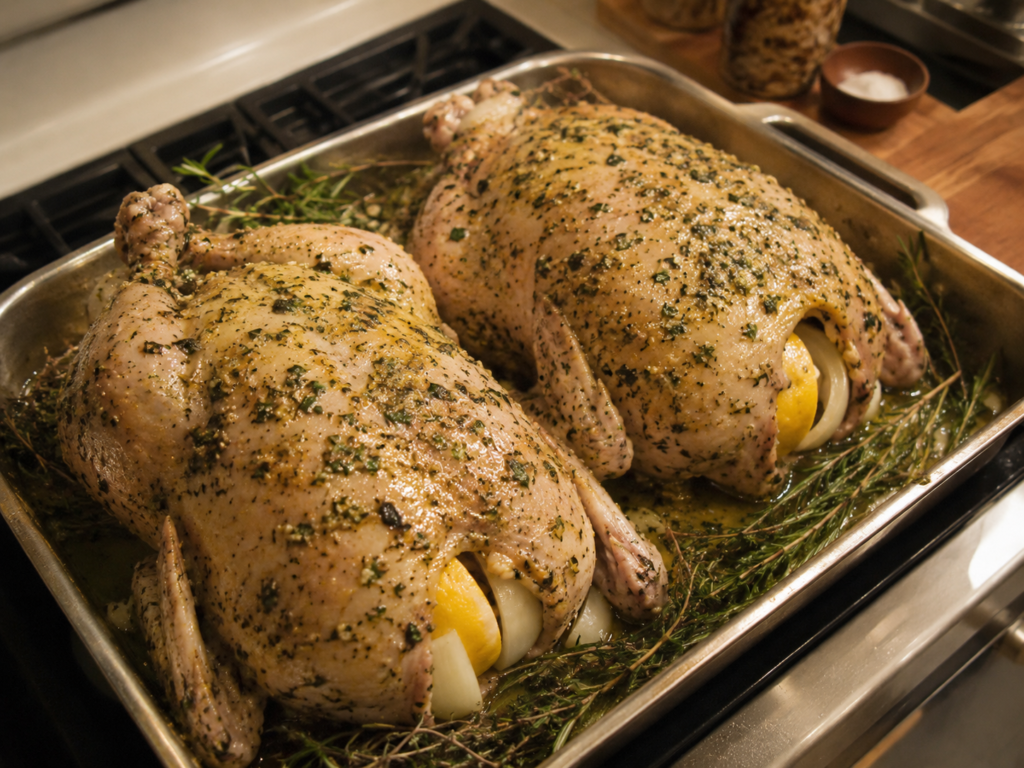
Whole chickens seasoned with garlic-herb butter before roasting.
7. Season the outside.
Rub the remaining herb butter all over the outside of both chickens, including the legs, wings, and back. Make sure the skin is evenly coated.
8. Add aromatics to the cavity.
Place a lemon half or wedges, onion pieces, a few garlic cloves, and herb sprigs inside each cavity. Keep it loose. Do not tightly pack the cavity.
9. Tie the legs, if desired.
Use kitchen twine to gently tie the legs together. This helps the birds hold their shape, but do not tie them too tightly. Tuck the wing tips under the chickens to prevent burning.
10. Start roasting at high heat.
Roast at 425°F for 20 minutes. This jump-starts browning and helps the skin begin to crisp.
11. Lower the heat and finish roasting.
Reduce the oven temperature to 375°F and continue roasting for 60-80 minutes, depending on the size of the chickens and your oven. Rotate the pan halfway through if needed.
12. Check the temperature carefully.
Insert a food thermometer into the thickest part of the breast and the innermost part of the thigh, avoiding bone. The chicken is safely cooked when all checked areas reach 165°F. Whole poultry, poultry parts, ground poultry, and stuffing should reach 165°F according to FDA safe temperature guidance.
13. Rest before carving.
Transfer the chickens to a cutting board and let them rest for 15-20 minutes. Resting helps the juices settle and makes carving easier.
14. Carve and serve.
Carve the chickens into breasts, thighs, drumsticks, and wings. Arrange on a platter with roasted onions, lemon wedges, garlic, parsley, and pan juices.

Whole roasted herb chicken dinner table with classic side dishes.
Pro Tips for Best Results
- Dry the chicken very well before seasoning.
- Use softened butter, not melted butter, so it stays on the chicken better.
- Season under the skin for deeper flavor.
- Roast two smaller chickens instead of one oversized chicken for easier crowd serving.
- Keep the cavity lightly filled, not packed.
- Use a thermometer in both the breast and thigh.
- Let the chicken rest before carving.
- Save the carcasses for homemade broth if desired.
- Roast on a rack for better airflow and crisper skin.
- If the skin browns too quickly, loosely tent with foil near the end.
Common Mistakes to Avoid
- Using chicken pieces instead of whole chickens: This version is built specifically for whole birds.
- Skipping the thermometer: Whole chickens can look done before the thickest areas are safe.
- Rinsing the chicken: Pat dry instead to reduce splashing and support browning.
- Packing the cavity tightly: Keep aromatics loose so heat can circulate.
- Carving immediately: Resting helps keep the meat juicy.
- Using only one pan for two crowded chickens: Leave space so the birds roast instead of steaming.
- Letting leftovers sit out too long: Refrigerate cooked chicken within 2 hours, or within 1 hour if the room or outdoor temperature is above 90°F. The FDA and CDC both recommend prompt refrigeration for perishable foods.
Flavor Variations
Classic Lemon-Rosemary Roast Chicken: Use extra rosemary, lemon zest, and garlic.
Garlic Butter Holiday Chicken: Add a little sage and parsley to the herb butter.
Mediterranean Herb Chicken: Add oregano, lemon zest, and a pinch of crushed red pepper.
Smoky Paprika Roast Chicken: Replace sweet paprika with smoked paprika.
Honey-Lemon Herb Chicken: Add 1 tablespoon honey to the herb butter for a lightly glazed finish.
Citrus Herb Roast Chicken: Add orange zest along with lemon zest for a softer, sweeter citrus aroma.
Serving Suggestions
Serve this whole oven-roasted herb chicken with mashed potatoes, roasted carrots, green beans, rice pilaf, stuffing served on the side, dinner rolls, cranberry relish, or a bright garden salad.
For a holiday table, place the carved chicken on a large platter with roasted lemons, onions, garlic, and fresh herbs. For Sunday supper, serve it with gravy, roasted potatoes, and buttered vegetables. For a lighter meal, pair it with couscous, cucumber salad, and a lemony yogurt sauce.
Storage, Freezing, and Reheating
Refrigerate leftovers in shallow airtight containers within 2 hours of cooking, or within 1 hour if the temperature is above 90°F. The FDA recommends keeping the refrigerator at 40°F or below and the freezer at 0°F or below.
Cooked poultry leftovers are best used within 3-4 days in the refrigerator. FDA storage guidance lists cooked poultry leftovers, including cooked poultry dishes and plain pieces, at 3-4 days refrigerated.
To freeze, remove the meat from the bones, store it in freezer-safe containers, and freeze for up to 3 months for best quality. Reheat leftovers to 165°F before serving.
How to Use a Food Thermometer
Make-Ahead Tips
You can make the garlic-herb butter up to 2 days ahead and refrigerate it. Let it soften slightly before rubbing it onto the chickens.
You can also season the chickens up to 12 hours ahead. Place them uncovered or loosely covered in the refrigerator to help dry the skin. Keep raw poultry refrigerated and separate from ready-to-eat foods.
For hosting, prep your vegetables, lemon wedges, garnish, serving platter, and carving station before the chicken goes into the oven.
Frequently Asked Questions
Can I make this recipe with one whole chicken instead of two?
Yes. Use one 4 to 4½-pound chicken and cut the seasoning roughly in half. Start checking for doneness around 1 hour total roasting time.
How many people does one whole chicken serve?
One 4 to 4½-pound chicken usually serves about 4 people, depending on appetite and side dishes. Two whole chickens are better for 8–10 people.
What temperature should a whole roasted chicken reach?
Whole chicken should reach 165°F in the thickest part of the breast and the innermost part of the thigh. Use a thermometer for accuracy.
Do I need to cover the chicken while roasting?
No. Roast uncovered for crisp skin. If the skin browns too quickly before the meat reaches 165°F, loosely tent with foil.
Can I stuff the chicken?
This recipe uses loose aromatics, not dense stuffing. If you use stuffing, it must also reach 165°F, which can make timing more complicated.
Can I roast vegetables in the same pan?
Yes. Carrots, potatoes, onions, and garlic work well. Cut vegetables into similar sizes and avoid overcrowding.
How do I keep the breast meat from drying out?
Season under the skin, do not overcook, and rest the chicken before carving. Pull the chicken from the oven as soon as the thickest areas reach 165°F.
Quick Recipe Card
Recipe Name: Oven-Roasted Herb Chicken for a Crowd
Description:
A juicy, golden whole roasted chicken recipe made with two whole chickens, garlic-herb butter, lemon, rosemary, thyme, paprika, onions, and roasted garlic. Perfect for holidays, Sunday supper, and family gatherings.
Prep Time: 25 minutes
Cook Time: 1 hour 20 minutes to 1 hour 40 minutes
Rest Time: 15-20 minutes
Total Time: About 2 hours
Servings: 8-10
Ingredients:
- 2 whole chickens, about 4 to 4½ pounds each
- 4 tablespoons olive oil
- 4 tablespoons softened unsalted butter
- 8 garlic cloves, finely minced or grated
- 2 tablespoons fresh rosemary, finely chopped
- 2 tablespoons fresh thyme leaves
- 2 teaspoons kosher salt
- 1½ teaspoons black pepper
- 2 teaspoons sweet paprika
- 1 teaspoon onion powder
- Zest of 2 lemons
- 1 tablespoon fresh lemon juice
- 2 lemons, halved or quartered
- 2 yellow onions, quartered
- 2 heads garlic, halved crosswise, optional
- Fresh parsley, for garnish
Instructions:
- Preheat oven to 425°F.
- Add onions, lemon wedges, and garlic heads to the roasting pan.
- Remove giblets from chickens. Do not rinse. Pat chickens very dry with paper towels.
- In a bowl, mix olive oil, butter, garlic, rosemary, thyme, salt, pepper, paprika, onion powder, lemon zest, and lemon juice.
- Loosen the skin over the breast meat and rub some herb butter underneath.
- Rub the remaining herb butter over the outside of both chickens.
- Lightly fill each cavity with lemon, onion, garlic, and herb sprigs.
- Tie legs loosely with kitchen twine if desired and tuck wing tips under.
- Roast at 425°F for 20 minutes.
- Reduce oven temperature to 375°F and roast for 60-80 more minutes.
- Check the breast and thigh with a food thermometer. Chicken is done when all checked areas reach 165°F.
- Rest for 15-20 minutes before carving.
- Serve with roasted onions, garlic, lemon wedges, parsley, and pan juices.
Notes:
- For one chicken, halve the seasoning.
- Do not pack the cavity tightly.
- If skin browns too quickly, loosely tent with foil.
- Use a thermometer instead of relying on color.
Storage:
Refrigerate leftovers in shallow airtight containers within 2 hours, or within 1 hour if temperatures are above 90°F. Store refrigerated for 3–4 days. Reheat to 165°F.
Nutrition Disclaimer:
Nutrition information, if provided, is an estimate and may vary based on ingredients and preparation methods.
References
- U.S. Food and Drug Administration. (2024, March 5). Safe food handling. https://www.fda.gov/food/buy-store-serve-safe-food/safe-food-handling
- Adler, J., & Lawler, A. (2012, June). How the chicken conquered the world. Smithsonian Magazine. https://www.smithsonianmag.com/history/how-the-chicken-conquered-the-world-87583657/
- Centers for Disease Control and Prevention. (2024, April 29). Chicken and food poisoning. https://www.cdc.gov/food-safety/foods/chicken.html
- Encyclopaedia Britannica. (2026, May 25). Chicken. https://www.britannica.com/animal/chicken
- Encyclopaedia Britannica. (2026, May 2). Rosemary. https://www.britannica.com/plant/rosemary
- Encyclopaedia Britannica. (n.d.). Thyme. Retrieved June 7, 2026, from https://www.britannica.com/plant/thyme
- FoodSafety.gov. (2024, November 21). Cook to a safe minimum internal temperature. https://www.foodsafety.gov/food-safety-charts/safe-minimum-internal-temperatures
- Modernist Cuisine. (2013, March 20). The Maillard reaction. https://modernistcuisine.com/mc/the-maillard-reaction/
- U.S. Department of Agriculture, Food Safety and Inspection Service. (2020, July 31). Leftovers and food safety. https://www.fsis.usda.gov/food-safety/safe-food-handling-and-preparation/food-safety-basics/leftovers-and-food-safety